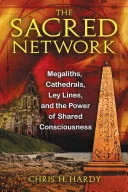
The Sacred Network
 79
79

The Sacred Network
Chris H. Hardy's "The Sacred Network" offers a compelling, albeit speculative, framework for understanding the energetic connections between Earth's sacred sites. Hardy presents a lucid argument for a global grid, particularly focusing on the geometric alignments and ley lines of Paris. His assertion that consciousness itself is a tangible energy form interacting with this network is a significant theoretical leap. While the book provides extensive geographical and geometrical analysis, its primary limitation lies in the empirical verification of these energetic fields and their direct influence on consciousness, which remains within the realm of esoteric hypothesis. A particularly strong section details the specific alignments within Paris, illustrating the macrocosmic theory on a microcosmic scale. The work is a valuable contribution to geomantic literature, pushing the boundaries of conventional Earth-energy theories.
📝 Description
79
### What It Is Chris H. Hardy's "The Sacred Network" (2011) proposes that sacred sites worldwide are not mere historical markers but integral nodes in a global energetic matrix. The book meticulously examines how geometric patterns, particularly ley lines, connect these locations, suggesting they form a cohesive "sacred network." This network, the author argues, actively influences and amplifies human consciousness, Earth's energies, and cosmic forces. Hardy posits that this interconnectedness is a fundamental aspect of reality, influencing spiritual development and collective awareness.
### Who It's For This work is intended for readers interested in the intersection of geography, spirituality, and energetic phenomena. It will appeal to those who study sacred geometry, ancient megalithic sites, and the concept of Earth energies. Individuals exploring the nature of consciousness as a tangible force, or those seeking to understand the energetic underpinnings of global spiritual traditions, will find "The Sacred Network" particularly relevant. It is also for researchers of esoteric traditions and ley line studies.
### Historical Context The book situates its thesis within a long tradition of geomancy and sacred landscape studies. It draws on and potentially extends the work of earlier researchers like Alfred Watkins and John Michell, who explored ley lines and ancient sites. Hardy's contribution lies in his emphasis on the *active* energetic role of this network in shaping collective consciousness, a concept that gained traction in esoteric circles during the late 20th and early 21st centuries, a period marked by renewed interest in global consciousness and interconnectedness.
### Key Concepts Hardy introduces the idea of a "sacred network" formed by geometrically aligned sacred sites and ley lines. He presents consciousness not as an emergent property of the brain, but as a fundamental, quantifiable energy that interacts with this network. The book details how this global web of energy is theorized to influence human evolution, particularly towards a future state of shared consciousness. Specific focus is given to the Parisian network as a microcosm of this global phenomenon.
💡 Why Read This Book?
• Gain a unique perspective on how ancient sites and geometric patterns form a global energetic web, as explored through the specific case of the Parisian ley line network, offering a new lens for understanding Earth's spiritual geography. • Understand consciousness as a tangible energy interacting with this proposed sacred network, providing a conceptual tool for exploring non-local awareness and collective consciousness shifts. • Discover how this network is theorized to fuel a coming state of shared consciousness for humanity, offering insights into potential future human development and spiritual evolution.
⭐ Reader Reviews
Honest opinions from readers who have explored this book.
❓ Frequently Asked Questions
What is the primary argument of Chris H. Hardy's "The Sacred Network"?
The book argues that sacred sites worldwide are interconnected by geometric patterns, forming a "sacred network" of ley lines that amplifies consciousness, Earth energies, and universal forces, influencing human spiritual development.
What is a 'sacred network' according to the book?
A sacred network is a global web of energetic connections formed by geometrically aligned sacred sites and ley lines, which Hardy suggests actively influences planetary and human consciousness.
Which city's sacred network is given special focus in "The Sacred Network"?
The book provides a special focus on the sacred network of ley lines within Paris, examining its specific geometrical patterns and energetic significance.
How does the book define consciousness?
Hardy defines consciousness as a tangible form of energy that interacts with the sacred network, suggesting it is not merely an emergent property of the brain but a fundamental force.
What future state of humanity does the book suggest is fueled by the sacred network?
The book suggests that the sacred network is fueling a coming state of shared consciousness for humanity, indicating a potential evolution in collective awareness.
When was "The Sacred Network" first published?
"The Sacred Network" by Chris H. Hardy was first published on February 23, 2011.
🔮 Key Themes & Symbolism
Global Geomantic Grids
The core concept is the existence of an invisible, geometrically defined network connecting sacred sites worldwide. Hardy posits that these sites, often marked by megalithic structures, are nodes within this energetic grid. The work explores how ley lines, often dismissed as folklore, function as conduits within this larger system, influencing not just local energies but global consciousness patterns. The book uses examples from various cultures to demonstrate the universality of this geomantic principle.
Consciousness as Tangible Energy
A radical proposition within "The Sacred Network" is that consciousness is not an abstract phenomenon but a measurable, tangible form of energy. Hardy suggests this energetic consciousness interacts directly with the planetary sacred network. This perspective reframes spiritual experiences and collective awareness as phenomena that can be understood through energetic principles, bridging the gap between metaphysics and a form of subtle physics.
The Parisian Sacred Network
Paris is presented as a microcosm of the global sacred network. Hardy meticulously details the geometrical alignments and ley lines within the city, showing how its layout and key monuments form a potent energetic nexus. This specific geographical focus serves to illustrate the broader theory, demonstrating how urban planning and historical architecture can embody and amplify these subtle energies, influencing the consciousness of inhabitants and visitors.
Evolution Towards Shared Consciousness
The book forecasts a future where humanity's collective consciousness is elevated and unified, a process it attributes to the increasing activation of the sacred network. Hardy suggests that as the energetic connections between sites strengthen, they facilitate a greater degree of interconnectedness among human minds. This evolutionary trajectory points towards a new phase of global awareness and spiritual unity, directly influenced by the Earth's energetic infrastructure.
💬 Memorable Quotes
“Sacred sites amplify the energies of consciousness, the earth, and the universe.”
— This core assertion posits that locations imbued with historical or spiritual significance are not passive but active participants in energetic exchange, acting as focal points for cosmic and terrestrial forces.
“The world is linked by a web of geometrical patterns.”
— This highlights the underlying order and interconnectedness of sacred places, suggesting that their arrangement follows precise mathematical and geometrical principles that bind them together globally.
“Consciousness is a tangible form of energy.”
— This redefines consciousness, moving it from an abstract concept to a physical force capable of interacting with the energetic structures of the planet and the cosmos.
“The sacred network is fueling a coming state of shared consciousness for humanity.”
— This points to an evolutionary teleology, suggesting the Earth's energetic grid is actively preparing humanity for a future of collective mental and spiritual unity.
“Paris exemplifies the sacred network of ley lines.”
— This specific example grounds the abstract theory in a concrete location, indicating that the principles of the global sacred network can be observed and studied within specific urban environments.
🌙 Esoteric Significance
Tradition
Hardy's work aligns with the tradition of geomancy and sacred landscape studies, drawing parallels with ancient traditions that recognized the energetic properties of the Earth. It can be seen as a modern extension of Hermetic principles concerning correspondence between the microcosm and macrocosm, applying them to a global energetic grid. While not strictly adhering to a single lineage like Kabbalah or Gnosticism, it synthesizes elements of earth mysteries, sacred geometry, and consciousness studies into a unique, contemporary esoteric framework.
Symbolism
The primary symbol is the 'sacred network' itself – a conceptual web representing interconnectedness and energetic flow. Ley lines function as symbolic conduits of this energy, akin to meridians in traditional Chinese medicine but on a planetary scale. Sacred sites act as nodes or 'chakras' of the Earth, symbolizing focal points where cosmic and terrestrial energies converge and are amplified, influencing human consciousness.
Modern Relevance
Contemporary practitioners of Earth mysteries, ley line researchers, and geomancers continue to explore Hardy's concepts. Thinkers in consciousness studies and those exploring global interconnectedness through fields like quantum entanglement analogies might find resonance. The book's ideas also inform contemporary discussions on sacred geometry's role in energetic fields and the potential for consciously interacting with planetary grids for spiritual evolution.
👥 Who Should Read This Book
• Students of geomancy and Earth mysteries seeking a contemporary model for understanding sacred sites and ley lines. • Researchers interested in the energetic connections between geography, history, and consciousness, particularly those examining global patterns. • Individuals exploring esoteric theories on consciousness, collective awareness, and humanity's spiritual evolutionary path.
📜 Historical Context
Published in 2011, "The Sacred Network" emerged during a period of heightened interest in global consciousness, New Age spirituality, and the re-examination of ancient sites. Chris H. Hardy's work builds upon earlier geomantic traditions popularized by figures like Alfred Watkins in the early 20th century and John Michell in the latter half. While scholars like Paul Devereux explored ley lines and archaeoastronomy, Hardy's contribution lies in his explicit linking of these phenomena to a tangible energetic network directly influencing collective human consciousness towards a specific evolutionary outcome. The book engaged with a milieu that also included writers like Graham Hancock, who explored ancient mysteries, and thinkers within the Theosophical and New Age movements, though Hardy's focus on geometric energetic grids offered a more structured, geographically specific approach than many contemporaries.
📔 Journal Prompts
The energetic amplification of consciousness at sacred sites.
Geometrical patterns as links in the Sacred Network.
Consciousness as a tangible energy interacting with Earth grids.
The Parisian sacred network's influence.
Future states of shared human consciousness.
🗂️ Glossary
Sacred Network
A global system of energetic connections formed by geometrically aligned sacred sites and ley lines, theorized to influence planetary and human consciousness.
Ley Lines
Alleged straight alignments or energy pathways connecting ancient sites, megaliths, and natural features across the landscape, seen here as integral to the Sacred Network.
Sacred Sites
Locations of historical or spiritual significance, such as ancient temples, stone circles, and natural landmarks, identified as crucial nodes within the Sacred Network.
Consciousness Energy
The concept that consciousness is a tangible, measurable form of energy that interacts dynamically with the Earth's energetic grid and the Sacred Network.
Geomancy
The practice of divination by geographic signs, often extended in modern contexts to include the study of Earth energies, sacred landscapes, and energetic grids.
Shared Consciousness
A hypothesized future state of human existence characterized by interconnected mental and spiritual awareness across the global population, facilitated by the Sacred Network.
Megalithic Ancestors
Refers to the ancient peoples who constructed large stone monuments (megaliths) worldwide, whose sites are considered key points in the Sacred Network.