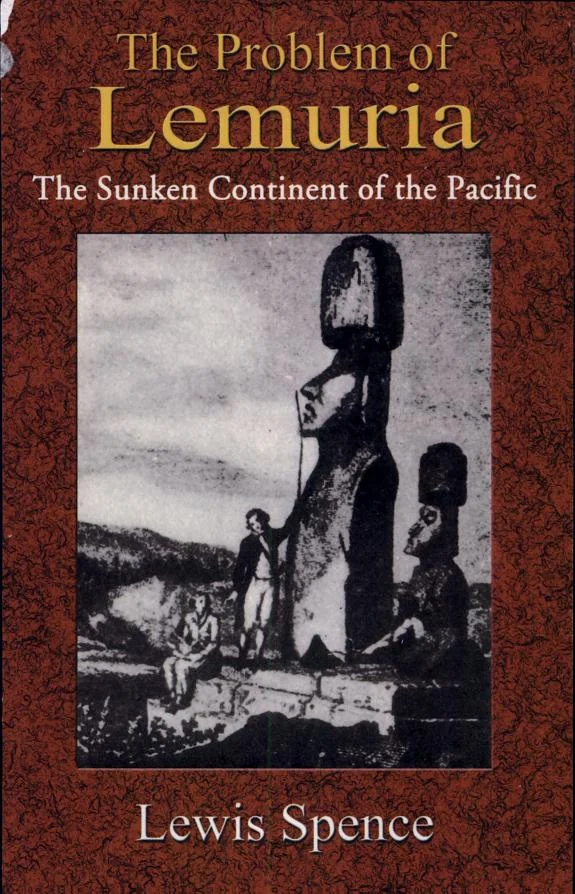
The problem of Lemuria
 77
77

The problem of Lemuria
Lewis Spence's "The Problem of Lemuria" offers a diligent, if somewhat dry, chronicle of a persistent myth. Spence meticulously traces the hypothesis of Lemuria from its zoological origins, through its assimilation by Theosophy and subsequent esoteric branches. The book's strength lies in its thorough cataloging of the various claims and counter-claims surrounding this lost continent, presenting a broad overview of the literature. However, the narrative occasionally feels like a catalogue rather than a flowing analysis, and Spence's own voice is often subdued. A particularly illustrative section details the elaborate genealogies and spiritual hierarchies attributed to Lemurians by figures like Rudolf Steiner, showcasing the imaginative leaps taken within occult thought. While it may lack the dramatic flair of some occult explorations, its scholarly approach provides a solid foundation for understanding the Lemurian concept's place in esoteric history.
📝 Description
77
### What It Is Lewis Spence's "The Problem of Lemuria," first published in 1992, is an examination of the lost continent of Lemuria, a mythical landmass proposed in the 19th century to explain certain biological and linguistic connections. Spence, a prolific author on folklore and mythology, surveys the origins of the Lemuria hypothesis and its subsequent development within esoteric and occult circles.
### Who It's For This work is intended for readers interested in the history of pseudoscientific theories and their influence on occultism and speculative anthropology. It will appeal to those who study the development of mythic civilizations, the origins of Theosophy, and the enduring fascination with sunken continents. Students of comparative mythology and the history of ideas will find it particularly relevant.
### Historical Context The concept of Lemuria emerged in the mid-19th century, notably through the work of zoologist Philip Sclater in 1864, who posited it to explain the distribution of lemurs. This idea was later adopted and elaborated upon by figures like Helena Blavatsky, founder of Theosophy, who integrated Lemuria into her cosmology as the homeland of an ancient, spiritually advanced race. Spence's book places this hypothesis within the broader intellectual climate of late Victorian and early 20th-century occultism.
### Key Concepts Spence investigates the evolution of the Lemurian myth from a scientific speculation into a foundational element of esoteric lore. He scrutinizes the claims made by various occultists regarding Lemurian history, its inhabitants, and their advanced spiritual or technological achievements. The book traces how the idea of Lemuria became intertwined with other lost continent narratives, such as Atlantis, and its role in shaping modern esoteric belief systems.
💡 Why Read This Book?
• Understand the zoological and anthropological origins of the Lemuria hypothesis, as Spence details the 1864 proposal by Philip Sclater to explain the distribution of lemurs. • Grasp how Helena Blavatsky and Theosophy incorporated Lemuria into their spiritual cosmology, differentiating it from Atlantis. • Trace the persistent influence of Lemurian narratives on subsequent occult traditions and speculative history beyond its initial conception.
⭐ Reader Reviews
Honest opinions from readers who have explored this book.
❓ Frequently Asked Questions
When was Lewis Spence's "The Problem of Lemuria" first published?
Lewis Spence's "The Problem of Lemuria" was first published in 1992, though the ideas explored within it draw from much earlier periods of esoteric thought and speculation.
What is the primary subject of "The Problem of Lemuria"?
The book's primary subject is the mythical lost continent of Lemuria, examining its origins as a scientific hypothesis and its subsequent development within esoteric and occult literature.
Who were key figures associated with the Lemuria hypothesis discussed in the book?
Key figures discussed include zoologist Philip Sclater, who first proposed Lemuria, and Helena Blavatsky, founder of Theosophy, who integrated it into her cosmology.
How does "The Problem of Lemuria" relate to the myth of Atlantis?
Spence explores how the Lemuria narrative became intertwined with the myth of Atlantis, often serving as a distinct, yet related, lost civilization concept within esoteric traditions.
What kind of reader would find "The Problem of Lemuria" most interesting?
Readers interested in the history of speculative theories, comparative mythology, occultism, and the development of esoteric cosmologies, particularly those concerning lost continents, will find this book of interest.
Does the book present Lemuria as a factual place?
No, the book examines "The Problem of Lemuria" as a hypothesis and a myth, analyzing its origins and evolution within scientific speculation and esoteric thought, rather than asserting its physical existence.
🔮 Key Themes & Symbolism
The Lemurian Hypothesis
The work scrutinizes the scientific and pseudoscientific origins of Lemuria, a hypothesized continent in the Indian or Pacific Ocean. Spence details how zoological observations by Philip Sclater in 1864 led to the proposition of Lemuria as a land bridge. The book then charts its transformation into a spiritual homeland for ancient races within occult traditions, particularly Theosophy, distinguishing it from the more widely known Atlantis.
Esoteric Cosmologies
Spence analyzes how figures like Helena Blavatsky and Rudolf Steiner incorporated Lemuria into their complex esoteric systems. This theme explores the creation of entire histories, spiritual hierarchies, and evolutionary cycles centered around Lemurian civilization. The book examines the imaginative scope required to build these alternative cosmologies, often positing Lemurians as spiritually advanced beings preceding humanity as we know it.
Myth and Speculative History
This theme focuses on the persistence of lost continent narratives and their function in speculative history and mythology. Spence demonstrates how the idea of Lemuria, like Atlantis, fulfills a cultural need for ancient, advanced civilizations and hidden knowledge. The book considers the psychological and philosophical underpinnings that drive the creation and acceptance of such myths within occult and fringe scientific discourse.
Theosophical Influence
The significant role of Theosophy in popularizing and developing the Lemuria myth is a central focus. Spence discusses how Helena Blavatsky's "The Secret Doctrine" (1888) expanded upon the initial hypothesis, detailing Lemurian root races and their spiritual evolution. The work traces how this Theosophical interpretation became a dominant strain in subsequent esoteric literature concerning Lemuria.
💬 Memorable Quotes
“Lemuria was a continent sunk beneath the waves, a homeland of ancient races.”
— This encapsulates the core premise of the Lemurian myth as presented and analyzed by Spence, highlighting its status as a lost geographical entity central to various esoteric narratives.
“The hypothesis arose from attempts to explain zoological distribution.”
— This refers to the scientific origins of the Lemuria concept, specifically the mid-19th century zoological theories that sought to account for the presence of lemurs in Madagascar and India.
“Blavatsky integrated Lemuria into her grand cosmic evolutionary scheme.”
— This interpretation highlights how Helena Blavatsky transformed a scientific speculation into a key component of Theosophical doctrine, placing Lemuria at a crucial stage of human spiritual development.
“Later occultists elaborated extensively on Lemurian civilization and its people.”
— This points to the proliferation of theories and detailed descriptions of Lemurian society, culture, and spiritual attainments that emerged in esoteric circles following the initial hypothesis.
“The problem of Lemuria lies in reconciling myth with historical evidence.”
— This paraphrased concept suggests the central tension Spence explores: the difficulty of finding factual basis for a myth that has taken deep root in esoteric traditions and speculative thought.
🌙 Esoteric Significance
Tradition
Spence's work falls within the broad tradition of esoteric studies, particularly those concerned with lost continents and ancient wisdom. It directly engages with Theosophy, the esoteric lineage founded by Helena Blavatsky, which is central to the Lemurian narrative. The book examines how Lemuria was integrated into a larger, cyclical view of human and planetary evolution, a hallmark of Theosophical cosmology and other related movements like Anthroposophy.
Symbolism
The continent of Lemuria itself functions as a potent symbol of primordial origins and lost spiritual knowledge. It represents a pre-Atlantean era, often associated with a more innocent, spiritually attuned humanity. The inhabitants, frequently depicted as giants or beings of pure spirit, symbolize ancient archetypes and the potential for higher evolutionary states, embodying a golden age before material corruption.
Modern Relevance
Contemporary esoteric practitioners and thinkers, particularly within New Age and spiritualist circles, continue to draw upon the Lemurian mythos. Concepts of Lemurian wisdom, healing techniques, and spiritual lineages are sometimes invoked in modern spiritual practices and channeled material. The idea of Lemuria persists as a symbol of an idealized past and a source of forgotten spiritual or energetic knowledge.
👥 Who Should Read This Book
• Students of comparative mythology and the history of speculative theories, who will find a comprehensive overview of the Lemurian hypothesis's origins and evolution. • Practitioners and scholars of Theosophy and related esoteric traditions, who can explore the detailed integration of Lemuria into these cosmologies. • Enthusiasts of lost continent narratives, who will gain a deeper understanding of Lemuria's place alongside Atlantis and its cultural impact.
📜 Historical Context
Lewis Spence's "The Problem of Lemuria" emerged in a period marked by continued fascination with occultism and lost civilizations, building upon a legacy established in the late 19th and early 20th centuries. The concept of Lemuria itself, first proposed by zoologist Philip Sclater in 1864 to explain lemur distribution, was quickly adopted and radically transformed by Helena Blavatsky in her 1888 work "The Secret Doctrine." Blavatsky positioned Lemuria as the home of the Third Root Race, a spiritually advanced precursor to humanity, fundamentally altering its nature from a scientific hypothesis to a central tenet of Theosophy. Spence's work engages with this lineage, situating it within a broader intellectual current that included other speculative theories about ancient history and pre-diluvian civilizations, often discussed alongside Atlantis. While Spence himself was a prolific folklorist and occult researcher, his book is part of a larger scholarly and popular engagement with these ideas, which often ran counter to mainstream archaeological and historical consensus.
📔 Journal Prompts
The Lemurian hypothesis as a scientific speculation versus an esoteric doctrine.
The role of lost continents like Lemuria in shaping collective consciousness.
Rudolf Steiner's interpretations of Lemurian root races.
The symbolic meaning of Lemuria in esoteric literature.
Comparing the Lemurian narrative to other ancient civilization myths.
🗂️ Glossary
Lemuria
A hypothetical lost continent, first proposed scientifically in the 19th century to explain the distribution of lemurs, later adopted and elaborated upon in esoteric traditions as the homeland of an ancient, spiritually advanced race.
Theosophy
An esoteric spiritual movement founded by Helena Blavatsky in the late 19th century, which incorporates elements of Eastern and Western mysticism and posits a complex cosmology of cosmic and human evolution.
Root Race
A concept within Theosophy referring to successive stages of humanity's evolution on Earth, with Lemurians representing the Third Root Race.
Philip Sclater
A 19th-century zoologist credited with proposing the existence of Lemuria in 1864 as a scientific explanation for the biogeographical distribution of lemurs.
Helena Blavatsky
The principal founder of Theosophy, whose influential book "The Secret Doctrine" significantly expanded upon the Lemuria hypothesis, integrating it into her detailed esoteric cosmology.
Rudolf Steiner
An Austrian philosopher and esotericist, founder of Anthroposophy, who elaborated on Theosophical ideas, including detailed descriptions of Lemurian evolution and culture.
Atlantis
Another mythical lost continent, often discussed in conjunction with Lemuria, representing a later stage of human evolution in esoteric traditions, typically characterized by advanced technology and eventual downfall.