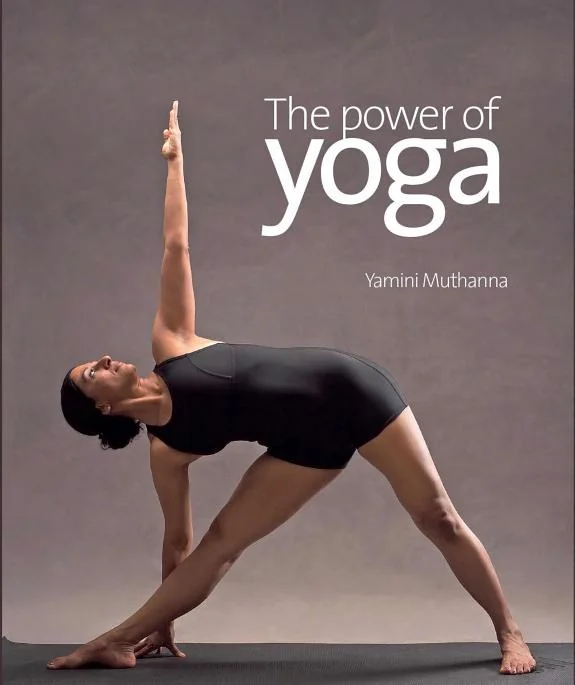
The Power of Yoga
 82
82

The Power of Yoga
Yamini Muthanna's "The Power of Yoga" confronts the often-obscured philosophical depth of yoga with refreshing clarity. Its signal achievement lies in presenting complex Sanskrit teachings, including the foundational Yoga Sutras, in a manner that feels immediate rather than relegated to historical curiosity. The inclusion of 21 specific sequences for modern ailments is a concrete strength, moving the practice from abstract principle to applied therapy. However, the book occasionally leans towards oversimplification in its effort to demystify, potentially glossing over nuances that more advanced practitioners might seek. A particularly effective passage discusses the application of specific pranayama techniques for stress reduction, directly linking ancient breathwork to modern physiological responses. The work provides a valuable, if sometimes generalized, bridge between yogic tradition and contemporary health needs.
📝 Description
82
### What It Is Yamini Muthanna's "The Power of Yoga" offers a contemporary lens on an ancient discipline. It systematically breaks down complex Sanskrit texts and philosophical underpinnings of yoga, rendering them accessible for today's practitioners. The book moves beyond mere physical postures, exploring the science and philosophy that govern yogic practice.
### Who It's For This work is an essential resource for modern individuals grappling with lifestyle-related ailments. It caters to both neophytes seeking a clear introduction and seasoned yogis desiring a deeper philosophical grounding. Anyone looking to integrate yoga's benefits into a demanding contemporary life will find practical guidance here.
### Historical Context The book situates yoga within its historical trajectory, acknowledging foundational texts like Patanjali’s Yoga Sutras. It bridges the gap between classical yogic philosophy, which has roots stretching back thousands of years in India, and the urgent health concerns of the 21st century, making ancient wisdom applicable to modern stress and disorder.
### Key Concepts Muthanna unpacks core yogic principles, translating archaic terminology into understandable language. A significant contribution is the presentation of 21 specific Yoga Sequences. These sequences are not arbitrary; they are designed to address particular modern afflictions, demonstrating a practical application of yogic science to contemporary well-being.
💡 Why Read This Book?
• Gain a practical understanding of yoga's philosophical underpinnings, moving beyond physical asana by exploring concepts like those found in Patanjali’s Yoga Sutras, first compiled around 400 CE. • Discover 21 targeted Yoga Sequences specifically designed by Yamini Muthanna to address modern lifestyle-related disorders, offering direct therapeutic applications. • Learn to interpret ancient Sanskrit texts and yogic philosophies through modern relevance, making the profound science of yoga actionable for your daily life.
⭐ Reader Reviews
Honest opinions from readers who have explored this book.
❓ Frequently Asked Questions
When was "The Power of Yoga" first published?
Yamini Muthanna's "The Power of Yoga" was first published in 2015, aiming to make ancient yogic wisdom accessible for contemporary readers.
What is the significance of Patanjali's Yoga Sutras in this book?
Patanjali's Yoga Sutras, a foundational text from around 400 CE, are presented as the essential roadmap for understanding the science and philosophy of yoga within Muthanna's work.
Does the book offer practical yoga sequences?
Yes, "The Power of Yoga" includes 21 detailed Yoga Sequences specifically developed to address common modern lifestyle-related disorders.
Is "The Power of Yoga" suitable for beginners?
Absolutely. The book is written in simple language to demystify complex Sanskrit texts and philosophies, making it an excellent resource for those new to yoga's deeper aspects.
What kind of 'modern disorders' does the book address?
The book focuses on ailments arising from contemporary lifestyles, such as stress, anxiety, and physical discomfort often associated with sedentary work and fast-paced living.
What is the author's approach to yoga?
Yamini Muthanna approaches yoga as a comprehensive science, integrating its philosophical depth, ancient texts, and practical application for holistic well-being in the modern era.
🔮 Key Themes & Symbolism
Yoga as Science
This work positions yoga not merely as physical exercise but as a sophisticated science with a philosophical framework. It emphasizes understanding the underlying principles that govern its practice, drawing connections to ancient Indian traditions. The book aims to elucidate how these principles, meticulously detailed in texts like Patanjali's Yoga Sutras (circa 400 CE), can be scientifically applied to enhance well-being and address specific health concerns prevalent today.
Modern Lifestyle Application
A central theme is making ancient yogic wisdom directly relevant to contemporary life. The book tackles the challenge of modern disorders, such as those stemming from stress and sedentary habits, by offering practical, actionable solutions. The 21 Yoga Sequences are a prime example, translating yogic philosophy into targeted therapeutic interventions designed for the 21st-century practitioner.
Demystifying Sanskrit Texts
The book dedicates significant effort to unraveling the complexities of classical Sanskrit yoga literature. It acts as a bridge, translating archaic language and esoteric concepts into accessible terms. By clarifying the philosophical underpinnings and historical context, Muthanna empowers readers to engage with these profound texts without being intimidated by their original form.
Holistic Well-being
Ultimately, "The Power of Yoga" advocates for a holistic approach to health, integrating mind, body, and spirit. It suggests that by understanding and applying the science and philosophy of yoga, individuals can achieve a more balanced and fulfilling existence. This perspective moves beyond symptom management to fostering overall vitality and resilience against life's challenges.
💬 Memorable Quotes
“The Yoga Sutras provide us the roadmap to understand the way of this science.”
— This highlights the book's view of yoga as a structured discipline, with Patanjali's seminal work serving as a guide to its systematic study and practice.
“21 Yoga Sequences for modern lifestyle-related disorders.”
— This phrase signifies the book's practical, therapeutic orientation, offering specific routines designed to counteract the physical and mental challenges of contemporary living.
“making them relevant to present times.”
— This points to the core mission of the book: to bridge the gap between ancient yogic philosophy and the immediate needs and challenges faced by individuals today.
“presented in simple language”
— This emphasizes the author's commitment to accessibility, ensuring that the profound teachings of yoga are understandable to a broad audience, not just scholars.
“explores the profound nature of yoga”
— This indicates the book's intention to go beyond superficial explanations, delving into the deeper philosophical and scientific aspects of the yogic tradition.
🌙 Esoteric Significance
Tradition
While yoga is a vast tradition with roots in ancient Indian philosophies, "The Power of Yoga" aligns with the Neo-Vedantic and modern yogic interpretations that emerged in the late 19th and early 20th centuries. It bridges classical Hatha Yoga and Raja Yoga principles, as codified by figures like Patañjali (circa 400 CE), with contemporary wellness paradigms. It departs from strictly ascetic traditions by focusing on practical application for modern ailments, rather than solely on liberation or Samadhi.
Symbolism
The book implicitly engages with the symbolism inherent in yogic practice. While not overtly focusing on esoteric symbols, the '21 Yoga Sequences' can be seen as a modern manifestation of symbolic 'maps' for the body and mind. Concepts like 'prana' (life force energy) and the subtle body, though not always explicitly detailed with symbolic iconography, are central. The practice itself, as presented, symbolizes the integration of physical discipline with mental focus and energetic cultivation for holistic health.
Modern Relevance
This work directly addresses the modern fascination with mindfulness, stress reduction, and holistic health practices. It resonates with contemporary thinkers and practitioners who seek evidence-based or philosophically grounded approaches to well-being that extend beyond conventional medicine. Schools of thought focusing on psychosomatic health and integrative medicine can find valuable conceptual frameworks and practical tools within Muthanna's synthesis of ancient yoga and modern concerns.
👥 Who Should Read This Book
• Beginning students of classical yoga seeking to understand its philosophical depth beyond physical postures, particularly those interested in texts like Patanjali’s Yoga Sutras. • Individuals experiencing stress, anxiety, or other lifestyle-related disorders who are looking for practical, integrated solutions rooted in ancient wisdom. • Yoga instructors and therapists aiming to deepen their understanding of yoga's therapeutic applications and historical context to better serve their students.
📜 Historical Context
Published in 2015, "The Power of Yoga" emerged in an era where yoga had become globally popular, often presented primarily as a fitness trend. Muthanna's work sought to counter this by re-emphasizing its philosophical and therapeutic roots, drawing directly from classical Indian texts. This period saw a proliferation of yoga studios and online resources, yet many lacked deep engagement with sources like Patanjali’s Yoga Sutras, a text compiled around 400 CE. While contemporary authors like Georg Feuerstein were exploring yogic history and philosophy extensively, Muthanna’s contribution focused on making these complex ideas directly applicable to modern health issues. The reception of such works often navigates the tension between commodified wellness culture and the preservation of yoga’s ancient lineage, a dynamic particularly relevant in the early 21st century.
📔 Journal Prompts
The roadmap provided by Patanjali’s Yoga Sutras: what fundamental principle resonates most with your current understanding of well-being?
Modern lifestyle-related disorders: how do the 21 Yoga Sequences offer a tangible solution to challenges you currently face?
The profound nature of yoga: reflect on how integrating its science, beyond mere asana, could impact your daily life.
Ancient Sanskrit texts and present times: identify one concept you wish to explore further in its modern application.
The holistic approach to health: how can the principles discussed in this book foster greater balance in your life?
🗂️ Glossary
Yoga Sutras
A foundational text of yoga philosophy, traditionally attributed to Patañjali, compiled around 400 CE. It outlines the theory and practice of yoga, aiming for the cessation of mental fluctuations (citta vritti nirodha).
Sanskrit Texts
Ancient Indian scriptures written in the Sanskrit language, forming the basis of many philosophical and spiritual traditions, including yoga. These texts often contain complex philosophical and technical terminology.
Lifestyle-related Disorders
Health issues arising from modern living habits, such as chronic stress, poor diet, lack of exercise, and inadequate sleep. Examples include cardiovascular problems, anxiety, and metabolic syndromes.
Asana
Literally 'seat' in Sanskrit, referring to the physical postures or poses practiced in yoga. While often emphasized in modern yoga, it is one of the eight limbs of yoga according to Patañjali.
Pranayama
The practice of breath control or regulation in yoga. It is considered a vital component for managing energy (prana) and calming the mind.
Philosophy of Yoga
The underlying metaphysical and ethical principles that guide the practice of yoga, exploring concepts such as consciousness, the nature of reality, and the path to self-realization.
Demystify
To remove the mystery or obscurity surrounding a subject, making it clearer and more understandable. In this context, it refers to simplifying complex yogic concepts.