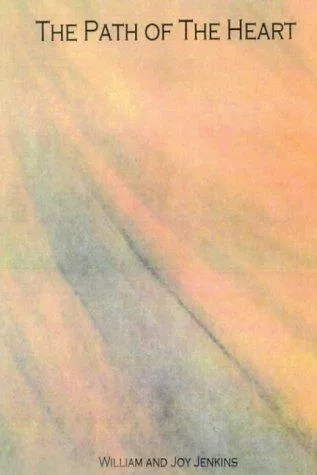
The Path of the Heart
 76
76

The Path of the Heart
William and Joy Jenkins' The Path of the Heart, released in 2001, presents a sustained argument for the heart as the seat of true knowing, a concept often relegated to poetic metaphor. The authors meticulously build their case, referencing philosophical underpinnings that lend weight to this somewhat unconventional thesis. Their exploration of 'inner work' is particularly strong, offering a nuanced perspective on self-cultivation that avoids the pitfalls of simplistic self-help. However, the book's dense prose, while precise, can occasionally feel overly academic, potentially alienating readers seeking more direct spiritual instruction. A passage discussing the 'subtle anatomy' of the heart's energetic centers, for instance, is both illuminating and challenging. The work ultimately serves as a robust philosophical treatise on consciousness, albeit one that requires patient engagement from its reader.
📝 Description
76
Published in 2001, The Path of the Heart examines the spiritual and psychological dimensions of human experience.
The Path of the Heart, by William and Joy Jenkins, investigates the spiritual and psychological aspects of human life, drawing on various philosophical and mystical traditions. It does not offer strict instructions but rather describes internal states and the principles that guide them. The book presents a view of the self not as fixed but as an ongoing process.
This work is for individuals wanting a deeper understanding of their inner lives and their place in larger existential questions. It suits those who value philosophical thought that connects the secular and the sacred, and who are interested in how older wisdom traditions can apply to modern life. Readers involved in contemplative practices or personal growth will find its content beneficial.
In 2001, The Path of the Heart appeared during a time of growing interest in spirituality beyond organized religion. While much self-help literature emerged then, Jenkins' book distinguishes itself by grounding its inquiries in more traditional philosophical and esoteric thought. It aligns with thinkers who sought to articulate universal truths about consciousness, separate from more mainstream New Age trends.
The book's core ideas center on the heart as a place of deep wisdom and intuition. It discusses 'inner work,' stressing self-awareness, ethical growth, and unifying the conscious and unconscious parts of the mind. The work also suggests that all things are connected, and personal change is tied to a larger cosmic order. It proposes that the true spiritual path involves understanding these connections.
💡 Why Read This Book?
• You will gain a structured understanding of the heart's role in spiritual development, moving beyond mere sentimentality, by engaging with the Jenkins' detailed explanation of the 'inner work' as presented in the book. • You can learn to differentiate between intellectual assent and intuitive knowing, a core theme in the book, which offers practical ways to cultivate direct experience. • You will discover how the concept of the 'subtle anatomy' is explored, providing a unique framework for understanding the energetic body that differs from common New Age interpretations.
⭐ Reader Reviews
Honest opinions from readers who have explored this book.
❓ Frequently Asked Questions
What is the core philosophy behind The Path of the Heart?
The book posits the heart as the primary center for wisdom and authentic knowing, suggesting that true spiritual development arises from cultivating this inner faculty rather than solely through intellectual pursuit or external dogma.
Who are William and Joy Jenkins and what is their background?
William and Joy Jenkins are the authors of The Path of the Heart, first published in 2001. While specific biographical details about their backgrounds are not widely publicized, their writing suggests a deep engagement with esoteric philosophy and contemplative traditions.
Does The Path of the Heart offer practical exercises for spiritual growth?
While not a manual of step-by-step exercises, the book encourages practices related to self-awareness and the cultivation of inner knowing, framing them within a broader philosophical context of 'inner work'.
What esoteric traditions influence The Path of the Heart?
The work draws upon a wide array of philosophical and mystical thought, suggesting influences from traditions that emphasize inner experience and consciousness, though it primarily focuses on articulating its own unique synthesis.
When was The Path of the Heart first published?
The Path of the Heart was first published in 2001, a period marked by growing interest in personalized spirituality and philosophical inquiry outside of traditional religious structures.
Is this book suitable for beginners in esoteric studies?
The book offers a profound exploration of spiritual and psychological themes, making it suitable for those with some prior interest in philosophical inquiry or contemplative practices, though its depth may require dedicated study.
🔮 Key Themes & Symbolism
The Heart as an Organ of Perception
This theme asserts that the heart is not merely a biological pump but a sophisticated center of consciousness and intuition. The book argues that true understanding and spiritual insight arise from this core faculty, transcending the limitations of the rational mind. It explores how to attune oneself to this 'heart-knowledge,' differentiating it from emotional reactivity. This concept challenges conventional materialism by positing a deeper, felt intelligence within the human being, accessible through focused inner work and self-awareness.
The Nature of Inner Work
Inner work, as presented in the text, refers to the disciplined process of self-exploration, ethical refinement, and psychological integration. It is the active engagement with one's internal landscape to foster growth and alignment with a higher purpose. This involves cultivating self-observation, understanding the interplay between conscious and unconscious elements of the psyche, and developing a conscious relationship with one's inner guidance. The Jenkinses frame this as a fundamental practice for anyone seeking genuine spiritual realization.
Consciousness and Interconnectedness
The book posits that individual consciousness is not isolated but part of a larger, interconnected web of existence. This theme suggests that personal transformation has ripple effects, contributing to a broader cosmic harmony. It explores the idea that recognizing this fundamental unity can lead to a profound sense of purpose and responsibility. The text encourages a shift in perspective from a purely individualistic view to one that embraces the inherent relationships and mutual dependence within the universe.
The Subtle Body and Energetic Anatomy
The Path of the Heart explores concepts of subtle anatomy, moving beyond purely physical descriptions of the human form. It discusses energetic centers and pathways within the individual that are crucial for spiritual development and the reception of heart-centered wisdom. This exploration provides a framework for understanding how subtle energies influence psychological states and spiritual perception, offering a more holistic view of human existence that integrates the physical, energetic, and spiritual dimensions.
💬 Memorable Quotes
Direct passages from the work, attributed to the author.
“The heart is the locus where the infinite touches the finite.”
— This statement suggests the heart serves as the primary point of contact between our limited, physical existence and the boundless, spiritual reality. It implies that within this organ lies the capacity for direct experience of the divine or ultimate truth.
“True perception arises not from analysis, but from presence.”
— This highlights a core tenet of the book: wisdom is gained through attentive, mindful being rather than through intellectual dissection. It encourages a shift from active thinking to receptive awareness as the means to deeper understanding.
“The inner work is the conscious alignment of will with the heart's intelligence.”
— This defines the practice of spiritual development as a deliberate effort to harmonize one's intentions and actions with the intuitive guidance originating from the heart's deeper wisdom.
“Each individual's journey is a unique unfolding of universal principles.”
— This emphasizes both the personal nature of spiritual paths and their grounding in fundamental, timeless truths that apply to all beings. It validates individual experience while situating it within a larger cosmic order.
“The greatest obstacle to knowing is the illusion of separation.”
— This points to the ego's tendency to perceive itself as distinct from others and the world as a fundamental barrier to spiritual realization and true connection.
🌙 Esoteric Significance
Tradition
The work aligns with contemplative traditions that emphasize the heart as a primary spiritual center, echoing sentiments found in Sufism, certain schools of Christian mysticism, and Neoplatonism. It departs from strictly codified systems by focusing on the universal principles of inner perception and consciousness, synthesizing various philosophical currents into a cohesive exploration of the 'heart's path.' It emphasizes direct experience over dogma, fitting within a broader modern esoteric movement that seeks personal gnosis.
Symbolism
Central to the book's symbolism is the 'heart' itself, representing not just emotion but a profound organ of perception and wisdom. Another motif is the 'inner work,' symbolizing the internal landscape and the active process of cultivating consciousness. The concept of 'subtle anatomy' functions symbolically to represent the energetic dimensions of being, suggesting unseen structures that govern spiritual and psychological states, bridging the material and the immaterial.
Modern Relevance
Contemporary thinkers and practitioners focused on consciousness studies, integral spirituality, and depth psychology often find resonance with Jenkins' work. Its emphasis on the heart as a source of wisdom and its exploration of 'inner work' are relevant to modern mindfulness practices and the growing interest in non-dual awareness. Schools of thought that seek to integrate ancient wisdom with contemporary understanding of the psyche can draw upon its philosophical underpinnings.
👥 Who Should Read This Book
• Serious students of esoteric philosophy and contemplative traditions seeking a nuanced exploration of consciousness and inner perception. • Individuals interested in the philosophical underpinnings of spiritual development who are looking for a text that bridges intellectual inquiry with experiential wisdom. • Readers disillusioned with superficial spiritual literature, who desire a text that offers depth, rigor, and a focus on the heart's role in authentic knowing.
📜 Historical Context
The Path of the Heart, published in 2001, emerged in an era characterized by a burgeoning interest in personalized spirituality and a growing disillusionment with purely materialist worldviews. The late 20th and early 21st centuries saw a significant proliferation of literature exploring consciousness, mysticism, and personal growth, often drawing from Eastern philosophies or synthesizing various esoteric traditions. While contemporary authors like Eckhart Tolle were gaining prominence with works emphasizing presence, Jenkins' approach distinguished itself by grounding its explorations in a more philosophical, almost scholastic, examination of esoteric principles and the nature of consciousness. The book offered an alternative to the more superficial New Age trends, providing a more rigorous framework for understanding the spiritual life, appealing to those seeking depth and intellectual substance alongside spiritual inquiry. Its reception was likely within circles already engaged with philosophical mysticism, distinct from mainstream self-help.
📔 Journal Prompts
The heart's intelligence: How does its wisdom manifest beyond logical thought?
Reflect on moments where 'presence' offered greater clarity than 'analysis.'
Consider the concept of 'inner work' in relation to your daily activities.
Explore the 'illusion of separation' in your interpersonal relationships.
What does the 'subtle anatomy' of your own energetic being suggest about your current state?
🗂️ Glossary
Inner Work
The disciplined, ongoing process of self-exploration, ethical refinement, and psychological integration undertaken to foster spiritual growth and conscious evolution.
Heart's Intelligence
A faculty of direct knowing and intuitive understanding believed to reside in the heart, distinct from rational thought or emotional impulse, serving as a primary organ of spiritual perception.
Subtle Anatomy
The concept of energetic structures and centers within the human being (e.g., chakras, nadis) that influence psychological states, consciousness, and spiritual development, existing beyond the purely physical form.
Presence
A state of alert, receptive, and non-judgmental awareness of the present moment, often cultivated in contemplative practices as a means to deeper insight and connection.
Illusion of Separation
The egoic perception of oneself as fundamentally distinct from others and the universe, which obscures the underlying interconnectedness of all existence.
Locus
A central point or place, particularly used in the context of the heart as the primary center for spiritual wisdom and experience.
Finite
Having limits or boundaries; in this context, referring to the limited, material existence of the individual.
🔮 Readers Also Liked
Browse all →









More by William Jenkins, Joy Jenkins
All books →
More Free Occult Philosophy Books
View all →







![ERIC ED051965: The Remedial [Reading] Teacher: Special Training and Professional Responsibilities.](/img/thumb/eric-ed051965-the-remedial-reading-teacher-special-training-and-professional-responsibilities-eric.webp)

