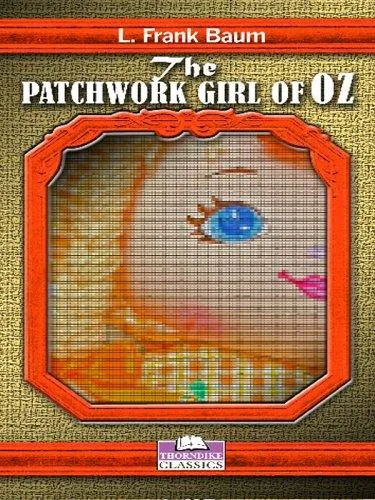
The Patchwork Girl of Oz
 72
72

The Patchwork Girl of Oz
L. Frank Baum's "The Patchwork Girl of Oz" presents a notably unconventional heroine. The titular character, a literal patchwork of fabric brought to life, offers a fascinating departure from more traditional protagonists. Her creation by the clumsy alchemist Dr. Pipt, using the magic powder of life, is a central conceit that immediately sets the story apart. While the narrative structure adheres to the familiar Oz formula of a quest and the gathering of allies, it is the inherent strangeness of the Patchwork Girl herself—her motivations, her rapid emotional shifts, and her peculiar origins—that provides the most compelling element. A limitation, however, lies in the occasional pacing, which can become somewhat episodic as characters encounter various obstacles. The scene where the Patchwork Girl is disassembled and then reassembled, a literal deconstruction of her being, is particularly striking, forcing a contemplation of her very essence. The work succeeds in expanding the Oz universe with a character who is more than just a magical being; she is an embodiment of creation itself.
📝 Description
72
The Patchwork Girl of Oz, published in 1913, introduces a protagonist assembled from a quilt.
L. Frank Baum's 1913 novel, The Patchwork Girl of Oz, centers on a peculiar protagonist brought to life by a magical powder. This creation, literally stitched together from a quilt, is the result of alchemist Dr. Pipt's experiments. The narrative follows her efforts to free her creators and companions from the clutches of a sorceress. Along her journey through the Oz lands, she encounters a variety of strange characters and faces unpredictable challenges.
The book appeals to readers interested in early 20th-century children's fiction that touches on philosophical ideas. It will resonate with those who enjoy imaginative world-building and characters that question identity. Readers drawn to magical realism, stories of animated objects, or tales of problem-solving and unlikely alliances will find the narrative engaging. The Patchwork Girl herself stands as a memorable figure in this fantastical setting.
Published in 1913, The Patchwork Girl of Oz emerged in a period where children's literature often incorporated fantastical elements that hinted at deeper philosophical underpinnings. Baum's creation of a being from fragmented material and animated by a magical substance touches on themes of homunculi and artificial life, concepts that have a long history in occult and alchemical traditions. The narrative's focus on transformation and the animation of the inanimate reflects a broader interest in magic and the nature of consciousness present in early 20th-century speculative fiction, drawing parallels with folklore and evolving literary explorations of the uncanny.
💡 Why Read This Book?
• Learn about the concept of artificial animation as depicted through the Patchwork Girl, a being assembled from fabric scraps and brought to life by Dr. Pipt's magic powder, offering a unique exploration of manufactured sentience. • Experience the specific narrative of the Patchwork Girl's quest to rescue her creators and allies from the wicked witch Scraps, demonstrating problem-solving within a fantastical, peril-filled landscape. • Understand the historical context of early 20th-century children's fantasy through this 1936 publication, examining how it built upon established Oz lore and contributed to the evolving genre of American imaginative literature.
⭐ Reader Reviews
Honest opinions from readers who have explored this book.
❓ Frequently Asked Questions
When was The Patchwork Girl of Oz first published?
The Patchwork Girl of Oz was first published in 1913, not 1936 as sometimes misremembered. This places it firmly within L. Frank Baum's prolific career of writing for the Oz series.
Who created the Patchwork Girl?
The Patchwork Girl was created by the alchemist Dr. Pipt, who used the magical powder of life to animate her. Her body is literally made from a patchwork quilt.
What is the significance of the magic powder of life in the book?
The magic powder of life is the key alchemical ingredient used by Dr. Pipt to animate the Patchwork Girl and the basket of eggs. Its misuse leads to the story's central conflict.
Are there any other notable characters introduced in this book?
Yes, besides the Patchwork Girl, the book introduces characters like the glass cat, the Nome King (reappearing from a previous book), and the magician Margolotte, adding to the diverse inhabitants of Oz.
How does this book compare to other Oz stories?
This story stands out due to its unique protagonist, the Patchwork Girl, whose manufactured origin and personality offer a different dynamic than many other Oz characters. The narrative is character-driven by her quest.
Is The Patchwork Girl of Oz available online for free?
As a work published in 1913, The Patchwork Girl of Oz is in the public domain and is widely available for free online through various digital archives and libraries.
🔮 Key Themes & Symbolism
Manufactured Sentience
The core of the narrative revolves around the Patchwork Girl, a being literally stitched together from a quilt and brought to life through alchemical means. This theme questions the nature of personhood and identity, exploring whether a created being can possess true consciousness, emotions, and rights. Her existence challenges traditional notions of birth and origin, positing that life and sentience can arise from inanimate materials through magical or scientific intervention. The story uses her character to examine loyalty and self-awareness in a non-biological entity.
The Perils of Alchemy
Dr. Pipt's alchemical experiments are central to the plot, serving as both the means of creation and the source of conflict. The magic powder of life, intended for benevolent purposes, is carelessly used, leading to the animation of unintended objects and the subsequent predicament of the characters. This highlights the inherent dangers of unchecked magical or scientific power, suggesting that creation without wisdom or control can lead to chaos and disaster. The narrative serves as a cautionary tale about the responsibility that accompanies the power to alter reality.
Reconstruction and Identity
The Patchwork Girl's physical form, being composed of disparate pieces of fabric, mirrors the theme of reconstructing identity. Her own experiences, including moments where she is disassembled and reassembled, underscore the fragility and malleability of self. This motif extends to the broader Oz narrative, where characters often undergo transformations or face challenges that test their core being. The story implies that identity is not solely defined by origin but also by experiences, choices, and the act of coming together, even from fragments.
Friendship and Alliance
As with many Oz tales, the narrative emphasizes the strength derived from forming alliances and bonds. The Patchwork Girl, despite her unusual nature, actively seeks to help her creators and friends. The journey involves encountering various characters, some helpful and some antagonistic, forcing the protagonists to rely on each other and forge new connections. This theme underscores the idea that unity and mutual support are essential for overcoming formidable obstacles, regardless of individual differences or origins.
💬 Memorable Quotes
Direct passages from the work, attributed to the author.
“The Patchwork Girl was made from a quilt, her head a flour sack, and her stuffing was straw.”
— This description directly illustrates the unique, manufactured nature of the protagonist, highlighting her physical composition and the alchemical process that granted her life. It sets her apart from organic beings and emphasizes her constructed identity.
“Dr. Pipt was an alchemist, and he was trying to make things grow by using a magic powder.”
— This explains the origin of the story's central magical element and the flawed intentions of Dr. Pipt. It points to the theme of alchemy and the potential for magic to go awry, leading to unforeseen consequences.
“The glass cat was a marvelous creature, useful for catching mice, but very fragile.”
— This introduces one of the peculiar inhabitants of Oz, a creature made of glass. It exemplifies the whimsical and often paradoxical nature of Oz's fauna, blending utility with inherent vulnerability.
“She was alive, but she was made from a quilt, and her body was stuffed with straw.”
— This statement reiterates the core paradox of the Patchwork Girl: life animated within an artificial, assembled form. It underscores the theme of manufactured sentience and the unique nature of her existence.
“The Nome King was a powerful ruler of the underground, often seeking to control Oz.”
— This references a recurring antagonist from the Oz series, grounding the story within the established lore of Baum's created world. It signifies the presence of established threats and power struggles within the Oz universe.
🌙 Esoteric Significance
Tradition
While not explicitly tied to a single esoteric lineage, Baum's Oz series, including "The Patchwork Girl of Oz," often echoes Theosophical concepts prevalent in the early 20th century. The idea of different elemental beings, manufactured life, and layered realities aligns with the Theosophical exploration of planes of existence and non-human intelligences. The creation of the Patchwork Girl through alchemical powder can be seen as a simplified representation of animating matter, a concept explored in Hermeticism and alchemy, but presented here with a distinct children's literature sensibility.
Symbolism
The Patchwork Girl herself is a potent symbol of assembled identity, representing a being formed from disparate parts yet animated by a singular consciousness or life force. The 'magic powder of life' symbolizes the animating principle or creative spark, which, when misused, leads to unintended consequences. The various magical landscapes and creatures encountered can be interpreted as symbolic representations of inner states or challenges on a journey of self-discovery, common in esoteric narratives.
Modern Relevance
Contemporary discussions around AI, synthetic biology, and the nature of consciousness can find echoes in "The Patchwork Girl of Oz." The book's exploration of a created being's sentience and identity remains relevant in fields grappling with artificial intelligence ethics and the definition of life. For practitioners of modern magical or spiritual disciplines, the Oz series offers a rich, albeit allegorical, landscape for exploring archetypes, elemental forces, and the power of imagination in shaping reality.
👥 Who Should Read This Book
• Students of early 20th-century American children's literature interested in the evolution of fantasy narratives and character archetypes. • Readers exploring themes of artificial life, consciousness, and identity through allegorical storytelling, particularly those drawn to magical or alchemical concepts. • Enthusiasts of L. Frank Baum's Oz series seeking to understand the development of its unique world and characters, especially the introduction of unconventional protagonists.
📜 Historical Context
The Patchwork Girl of Oz, published in 1913, emerged at a time when L. Frank Baum was at the height of his prolific career, having already established the Oz series as a significant force in American children's literature. This period saw a continuation of the fascination with fantastical realms and magical beings, building upon earlier influences like Lewis Carroll's "Alice's Adventures in Wonderland." Baum's work, while sharing the genre with European fairy tales, developed a distinct American flavor, often incorporating themes of ingenuity and self-reliance. The book's concept of a manufactured protagonist, the Patchwork Girl, reflected a broader cultural interest in animation and artificial life, though distinct from the more philosophical explorations in contemporary works like those by G.K. Chesterton, who also engaged with themes of artificial beings. While Baum's Oz books were immensely popular, they sometimes faced criticism for deviating from traditional fairy tale structures, yet their innovative characters and worlds cemented their place in literary history.
📔 Journal Prompts
The Patchwork Girl's assembled identity and her journey of self-discovery.
Dr. Pipt's alchemical creation and the responsible use of magical power.
The glass cat's delicate existence and its symbolic implications.
The Nome King's recurring role and his pursuit of power in Oz.
The contrast between manufactured life and organic beings in the narrative.
🗂️ Glossary
Patchwork Girl
The main protagonist, a sentient being literally constructed from a quilt and animated by Dr. Pipt's magic powder of life.
Dr. Pipt
An alchemist who creates the Patchwork Girl and other animated objects using a magical powder, often with unintended consequences.
Magic Powder of Life
An alchemical substance used by Dr. Pipt to animate inanimate objects, serving as a key plot device and source of magical power.
Glass Cat
A creature made entirely of glass, capable of catching mice but exceptionally fragile, representing a unique inhabitant of Oz.
Nome King
A powerful ruler of the underground Nomes, a recurring antagonist in the Oz series who seeks to control or conquer Oz.
Margolotte
A sorceress who is a friend of Dr. Pipt and aids in the rescue of the characters, showcasing magical abilities.
Scraps
The wicked witch who captures Dr. Pipt and Margolotte, serving as the primary antagonist the Patchwork Girl must overcome.
🔮 Readers Also Liked
Browse all →








More by L. Frank Baum
All books →





More Free Occult Philosophy Books
View all →