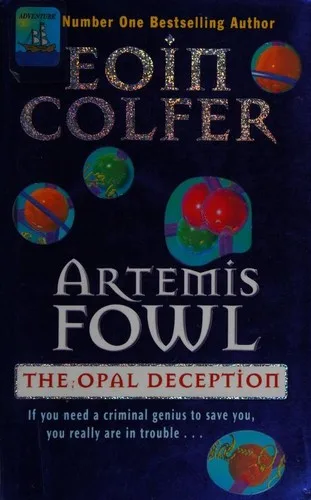
The Opal Deception
 78
78

The Opal Deception
Colfer's "The Opal Deception" is a curious beast, a YA novel that hints at deeper philosophical currents without fully committing to them. The central conceit of a world built on manufactured realities is intriguing, particularly in its exploration of how readily characters accept their imposed truths. I found the pacing in the latter half to be somewhat rushed, with plot resolutions feeling a touch too convenient. However, the concept of the "Opal Deception" itself—a pervasive, self-sustaining illusion—is a potent image. The strength lies in its initial premise and the questions it raises about authenticity. A limitation is its tendency to keep these complex ideas at a surface level, perhaps to maintain accessibility for its target demographic. Ultimately, "The Opal Deception" offers a thought-provoking premise that leaves the reader pondering the nature of their own constructed realities.
📝 Description
78
Eoin Colfer's 2017 novel, The Opal Deception, questions the nature of reality through a young adult lens.
Published in 2017, The Opal Deception is a young adult fantasy novel by Eoin Colfer that delves into themes of identity and perception. The story follows a protagonist caught in a world where truth is not fixed, but manipulated. Characters navigate a fabricated existence, and the narrative examines how individuals build and understand their own truths. The consequences of these constructed realities being challenged or exposed as false are central to the plot. This work appeals to readers who enjoy stories with complex plots and philosophical depth. It is especially suited for those interested in speculative fiction that questions consciousness and the self.
While Colfer is well-known for his Artemis Fowl series, The Opal Deception moves into more introspective territory. The book reflects a wider literary trend from the mid-2010s, a period marked by growing interest in meta-narratives and self-aware storytelling. The rise of digital media had already begun to blur the lines between the real and the simulated for many, and this novel taps into that contemporary unease. It engages with earlier literary explorations of similar ideas, contributing to a broader conversation about questioning established norms of reality and truth.
The Opal Deception engages with esoteric ideas by focusing on the subjective construction of reality and the nature of illusion. The 'Opal Deception' itself serves as a metaphor for a manufactured world or a deeply ingrained falsehood that characters inhabit. This concept resonates with Gnostic traditions that posit a flawed demiurge creating a material world that obscures true spiritual reality. It also touches upon philosophical idealism, where consciousness is primary and external reality is dependent on the mind, and the skeptical inquiry into whether our perceptions accurately reflect an objective world.
💡 Why Read This Book?
• Understand the nature of manufactured realities: Learn how the concept of the "Opal Deception" illustrates the power of pervasive illusions and the difficulty of discerning truth, as presented in the book's 2017 publication context. • Explore character-driven identity formation: Gain insight into how characters in "The Opal Deception" actively construct their identities in response to their environment, a narrative device Colfer employs effectively. • Question perception and authenticity: Experience a story that challenges your assumptions about what is real, prompting reflection on personal beliefs and the narratives we accept, mirroring contemporary societal discourse.
⭐ Reader Reviews
Honest opinions from readers who have explored this book.
❓ Frequently Asked Questions
What is the 'Opal Deception' in Eoin Colfer's novel?
The 'Opal Deception' refers to a pervasive, constructed illusion or fabricated reality within the narrative. It represents a fundamental falsehood that characters often inhabit or struggle against, shaping their perceptions and experiences.
Who is the author of 'The Opal Deception'?
The author is Eoin Colfer, an Irish author widely recognized for his popular Artemis Fowl series. 'The Opal Deception' was first published in 2017.
What genre does 'The Opal Deception' fall into?
While often categorized as Young Adult fiction, 'The Opal Deception' incorporates elements of fantasy and speculative fiction, exploring themes of identity and reality.
What are the main themes explored in 'The Opal Deception'?
The book primarily explores themes of identity, the nature of reality, perception versus truth, self-creation, and the consequences of living within or challenging manufactured worlds.
When was 'The Opal Deception' first published?
The novel 'The Opal Deception' by Eoin Colfer was first published in 2017.
Does 'The Opal Deception' have connections to Colfer's other works?
While Colfer is known for the Artemis Fowl series, 'The Opal Deception' is a standalone novel that explores different thematic territory, focusing more on existential and perceptual questions.
🔮 Key Themes & Symbolism
The Nature of Manufactured Reality
The central pillar of 'The Opal Deception' is the exploration of a world constructed from falsehoods. This isn't merely a personal delusion but a shared, pervasive illusion that shapes the very fabric of existence for its inhabitants. The narrative questions how such deceptions are created and maintained, and more importantly, how individuals navigate a reality they cannot trust. It examines the psychological impact of living within a system where truth is a negotiable commodity, often for the benefit of unseen manipulators or societal structures.
Identity and Self-Creation
Within the context of the 'Opal Deception,' personal identity becomes a fluid and often constructed entity. Characters are forced to grapple with whether their sense of self is authentic or merely a product of the illusions they are fed. The work probes the human capacity for self-deception and self-reinvention, suggesting that in a world of artifice, forging one's own identity might be the only true act of agency. This theme is particularly relevant as characters seek to understand who they are beyond the confines of the deception.
Perception vs. Truth
The novel critically examines the chasm between what characters perceive and what objectively might be true. The 'Opal Deception' actively manipulates perception, making the subjective experience of reality paramount. The narrative challenges the reader to consider how much of our own understanding of the world is shaped by external influences and internal biases. It highlights the difficulty in distinguishing genuine experience from manufactured sensation, a concept that becomes a driving force for the characters' quests for understanding.
The Consequences of Illusion
Living within the 'Opal Deception' comes with significant consequences, both personal and societal. The book illustrates how the perpetuation of falsehoods can lead to stagnation, fear, and a loss of genuine connection. When the illusion begins to fray, the resulting chaos and the characters' reactions reveal the fragility of their constructed existence. This theme serves as a cautionary tale about the dangers of unchecked deception and the importance of confronting uncomfortable truths, even when they are painful.
💬 Memorable Quotes
Direct passages from the work, attributed to the author.
“Truth is a luxury few can afford.”
— This statement implies that in certain environments or social structures, honesty and factual accuracy are secondary to maintaining comfort, power, or the status quo. It suggests a world where deception is a necessary tool for survival or advancement.
“We build our worlds from the stories we choose to believe.”
— This reflects the idea that reality is subjective and heavily influenced by individual and collective narratives. It highlights how our beliefs, rather than objective facts, often form the foundation of our perceived world.
“The most convincing lies are those we tell ourselves.”
— This points to the power of self-deception. It suggests that internal rationalizations and the avoidance of difficult truths are often more potent and harder to overcome than external falsehoods.
“Once you see the threads, the range unravels.”
— This metaphor describes the moment of realization when the underlying artifice of a situation or reality is exposed. It signifies the point of no return, where the illusion can no longer be maintained once its structure is understood.
“Freedom tastes like the air outside the cage.”
— This evokes the profound sense of liberation and clarity that comes from escaping confinement, whether literal or metaphorical. It contrasts the stifling nature of the 'cage' with the invigorating experience of genuine freedom.
🌙 Esoteric Significance
Tradition
While 'The Opal Deception' does not align strictly with any single esoteric tradition like Hermeticism or Gnosticism, it appeals to Gnostic themes concerning illusion (the material world as a false creation) and the search for true knowledge or gnosis. The 'Opal Deception' itself can be viewed as a modern metaphor for the Demiurge's flawed creation or the veils of Maya in Eastern philosophies. The protagonist's journey to uncover the truth reflects the Gnostic quest for liberation from ignorance.
Symbolism
The 'Opal Deception' is the primary symbol, representing a many-sided, shifting illusion that distorts perception and obscures truth. The concept of a 'cage' or confined space often appears, symbolizing the limitations imposed by these manufactured realities. Characters might also encounter symbols of fragmented or distorted reflections, signifying the broken or false self that arises within such deceptive environments.
Modern Relevance
Contemporary thinkers in fields like transhumanism and digital philosophy often engage with concepts similar to the 'Opal Deception,' questioning the nature of simulated realities and augmented experiences. The book's exploration of manufactured identity and perception is relevant to discussions around social media's influence, AI-generated content, and the increasing blur between the physical and digital realms in modern life.
👥 Who Should Read This Book
• Young adults and readers new to speculative fiction: Those seeking an engaging narrative with accessible explorations of complex ideas about reality and identity. • Fans of philosophical thrillers: Readers who enjoy stories that blend plot-driven adventure with deeper questions about perception and truth. • Students of modern narrative: Individuals interested in how contemporary authors use fantasy and sci-fi elements to comment on societal and existential concerns.
📜 Historical Context
Eoin Colfer's 'The Opal Deception,' published in 2017, arrived in a literary landscape increasingly fascinated with meta-narratives and the deconstruction of reality, a trend amplified by the pervasive influence of digital media. The novel emerged at a time when authors like Blake Crouch were exploring high-concept speculative fiction with significant philosophical weight. While not directly engaging with the occult in a traditional sense, the book tapped into a broader cultural zeitgeist questioning authenticity and perception, echoing themes explored in earlier speculative works that challenged audience assumptions. The reception of such novels often involved discussions about their complexity and their ability to engage younger readers with adult philosophical quandaries. Unlike earlier fantastical traditions that often presented clear moral dichotomies, Colfer's work in this period frequently explored the gray areas of motivation and reality.
📔 Journal Prompts
The constructs of the Opal Deception: What personal 'deceptions' might one maintain to navigate their own world?
The protagonist's search for authenticity: How does one verify the reality of their own experiences?
The nature of self-creation: What elements define your identity independent of external validation?
The power of narrative: Identify a personal 'story' you tell yourself and explore its origins.
The moment of disillusionment: Reflect on a time when a deeply held belief was challenged.
🗂️ Glossary
Opal Deception
A pervasive, manufactured illusion or fabricated reality within the narrative that characters inhabit or struggle against, distorting their perception of truth.
Constructed Reality
A world or existence that is artificially created or maintained, often through manipulation of information or perception, rather than being based on objective truth.
Authenticity
The state of being genuine and true to oneself; in the context of the book, it refers to the quality of experiences and identity that are not fabricated or illusory.
Perception
The way in which something is regarded, understood, or interpreted. In the novel, perception is often manipulated by the 'Opal Deception'.
Self-Creation
The process by which an individual actively shapes their own identity, beliefs, and the narrative of their life, particularly relevant when external realities are unreliable.
Metanarrative
An overarching story or explanatory system that shapes how individuals understand the world; the 'Opal Deception' can function as a metanarrative.
Fabricated Existence
A life or reality that is based on falsehoods or artificial constructs, lacking genuine substance or truth.
🔮 Readers Also Liked
Browse all →








More by Eoin Colfer
All books →





More Free Occult Philosophy Books
View all →