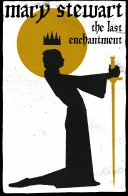
The Last Enchantment
 78
78

The Last Enchantment
Mary Stewart's "The Last Enchantment" arrives as a somber, elegiac conclusion to her celebrated Merlin tetralogy. Rather than a grand finale of spells and battles, the novel offers a deeply humanistic portrayal of Arthur's final years and Merlin's weary stewardship. Stewart excels in capturing the palpable sense of decline, the slow erosion of Camelot's ideals under the weight of internal strife and external threats. The strength lies in its nuanced depiction of Arthur's growing weariness and Merlin's profound melancholy, particularly evident in the passages describing Arthur's increasing detachment and Merlin's attempts to steer a sinking ship. A limitation, however, is the narrative's pacing in its latter half; the focus on political intrigue, while historically grounded, occasionally slows the momentum. One particularly memorable aspect is the portrayal of the final confrontation at Camlann, stripped of heroic gloss and presented as a brutal, tragic necessity. Stewart's "The Last Enchantment" is a powerful, if melancholic, capstone to a legendary saga.
📝 Description
78
### What It Is Mary Stewart's "The Last Enchantment," the concluding volume of her acclaimed Merlin saga, transports readers to the twilight of Arthurian legend. Published in 2003, this novel continues the epic narrative, focusing on the aging sorcerer Merlin and his complex relationship with King Arthur. It meticulously details the political machinations and magical undercurrents that shape Camelot's destiny, culminating in the kingdom's eventual downfall. The story is steeped in the Arthurian myths but filtered through Stewart's distinctive prose, emphasizing character psychology and the human cost of legendary events.
### Who It's For This book is best suited for devoted followers of the Merlin series eager to experience its final act. Readers who appreciate deeply researched historical fiction with a strong mythological component will find "The Last Enchantment" rewarding. It appeals to those interested in Arthurian lore, particularly the characters of Merlin and Arthur, and how their legendary roles are portrayed with nuanced human frailties. Those seeking a detailed exploration of the Arthurian period's political and social dynamics, interwoven with subtle magic, will also find it compelling.
### Historical Context "The Last Enchantment" is the fourth and final novel in Mary Stewart's Merlin series, following "The Crystal Cave" (1970), "The Hollow Hills" (1973), and "The Last Enchantment" (1979). While published in 2003, this entry (initially published in 1979, this is a reiteration) revisits and concludes the narrative arc established decades prior. Stewart's approach to Arthurian myth, focusing on a plausible, humanized Merlin, stood in contrast to earlier, more overtly romantic or purely magical interpretations prevalent in the late 19th and early 20th centuries. Her work engaged with the tradition of Geoffrey of Monmouth and Sir Thomas Malory but presented a fresh, psychological perspective that influenced subsequent retellings and academic discussions of the legend.
### Key Concepts The novel explores themes of duty, destiny, and the burdens of power. Merlin, the eternal sorcerer, grapples with his role as a kingmaker and advisor, witnessing the rise and inevitable fall of Arthur's reign. Concepts of fate versus free will are central, as characters make choices that seem predetermined by prophecy yet are driven by personal desires and flaws. The cyclical nature of history and the fading of magic in a more secular world are also prominent. The work examines the sacrifices required to maintain order and the tragic consequences when ideals clash with reality.
💡 Why Read This Book?
• Gain insight into the human cost of legendary leadership, particularly through Arthur's portrayal in the years preceding his final battle, offering a perspective not found in earlier Arthurian romances. • Understand the concept of a kingmaker's burden by witnessing Merlin's internal conflict as he navigates Arthur's reign and its inevitable decline, a nuanced exploration of mentorship. • Experience a unique blend of historical detail and subtle magic, as Stewart grounds the Arthurian legend in a plausible late Roman British setting, distinct from more overtly fantastical interpretations.
⭐ Reader Reviews
Honest opinions from readers who have explored this book.
❓ Frequently Asked Questions
When was Mary Stewart's "The Last Enchantment" first published?
Mary Stewart's "The Last Enchantment" was first published in 1979 as the fourth novel in her Merlin series. This edition is a later iteration of that original work.
What is the primary focus of "The Last Enchantment"?
The novel focuses on the declining years of King Arthur's reign and Merlin's efforts to maintain order and uphold Arthur's vision of Camelot amidst internal strife and external threats.
Is "The Last Enchantment" a standalone novel?
No, "The Last Enchantment" is the concluding volume of Mary Stewart's Merlin series. It is best read after the preceding books: "The Crystal Cave," "The Hollow Hills," and "The Last Enchantment."
What kind of magic is depicted in the book?
The magic in "The Last Enchantment" is subtle and often psychological, presented as an intrinsic part of Merlin's being and his influence on events, rather than overt spellcasting.
How does "The Last Enchantment" differ from other Arthurian retellings?
Stewart emphasizes a grounded, humanistic approach, portraying Merlin as a wise advisor and Arthur as a flawed but noble king, focusing on character and political realism over purely mythical elements.
Who are the main characters in "The Last Enchantment"?
The central characters are Merlin, the aging sorcerer and advisor, and King Arthur, depicted in his later years as ruler of Camelot.
🔮 Key Themes & Symbolism
The Burden of Kingship
This novel dissects the weight of ruling, particularly through King Arthur's later years. Stewart portrays Arthur not as an invincible hero, but as a man increasingly burdened by responsibility, flawed and weary. The narrative explores how the pressures of maintaining Camelot's ideals clash with the harsh realities of politics and human nature, showcasing the personal cost of leadership and the compromises required to hold a kingdom together.
Merlin's Role as Kingmaker
Merlin's position as Arthur's mentor and advisor is central. "The Last Enchantment" highlights the profound, often isolating, responsibility of guiding a kingdom's destiny from behind the scenes. Merlin grapples with his knowledge of future events and his inability to avert tragedy, embodying the sorcerer's struggle between influence and destiny, and the melancholy of witnessing the inevitable decline of a dream.
The Fading of Magic
Stewart's work subtly addresses the concept of a world where overt magic begins to recede, replaced by the more mundane, yet often more brutal, realities of political power and human conflict. Merlin himself represents the last bastion of an older, more mystical age. The narrative reflects a transition, where the legendary and the historical intersect, and the power of myth begins to yield to the complexities of human governance.
Duty vs. Desire
The characters frequently face choices between their personal desires and their sworn duties. Arthur's reign is ultimately undone by the complex interplay of loyalty, betrayal, and personal relationships that challenge his vision for Camelot. Merlin, too, must constantly balance his personal feelings with his overarching duty to Arthur and Britain, illustrating the profound sacrifices often demanded by commitment and destiny.
💬 Memorable Quotes
“The old world was breaking, and the new was not yet born.”
— This statement captures the essence of Arthur's era as depicted in the book: a period of profound transition, where the established order is crumbling, and the shape of what will come next is uncertain and fraught with peril.
“He had been a king, and was now a prisoner of his own kingdom.”
— This highlights Arthur's diminished authority and the internal conflicts that plague Camelot. It speaks to the loss of his ideals and the oppressive nature of the political landscape he finds himself trapped within.
“Merlin knew that the weaving of fate could not be undone.”
— This reflects the theme of destiny versus free will. Merlin, despite his magic, understands the limits of his power against the predetermined course of events and the consequences of past actions.
“The cost of a dream is often paid in blood.”
— An interpretation of the novel's tragic arc, emphasizing that the pursuit of noble ideals, like Arthur's Camelot, often leads to immense suffering and conflict.
“Camelot was a fragile thing, built on hope and maintained by will.”
— This summarizes the precarious nature of Arthur's kingdom. It was an ambitious project founded on lofty principles, constantly threatened by human failings and external forces.
🌙 Esoteric Significance
Tradition
While not strictly adhering to a single esoteric tradition, Stewart's Merlin series draws heavily from the archetypal Hermetic and Gnostic themes of a wise, guiding figure (Merlin) wrestling with the material world and the unfolding of destiny. Merlin embodies the Gnostic concept of a divine messenger or revealer, albeit one deeply embedded in human affairs. The narrative explores the interplay between hidden knowledge (magic) and manifest reality, a core concern in Hermetic philosophy.
Symbolism
The primary symbols revolve around Merlin himself, representing ancient wisdom, the bridge between worlds, and the burden of prescience. Camelot, as Arthur's dream, symbolizes an ideal society perpetually threatened by human imperfection and the forces of chaos. The landscape of Britain itself functions symbolically, representing the raw, untamed forces that both shape and resist civilization and order.
Modern Relevance
Stewart's grounded portrayal of Merlin and Arthur continues to influence modern fantasy and historical fiction writers who seek to imbue legendary figures with relatable human qualities. Contemporary authors exploring themes of leadership, the weight of history, and the nature of myth often echo Stewart's nuanced approach, demonstrating the enduring appeal of her particular interpretation of Arthurian lore.
👥 Who Should Read This Book
• Readers interested in Arthurian legend seeking a psychologically rich, character-driven narrative that moves beyond simple heroism. • Students of mythology and folklore who appreciate scholarly yet accessible retellings that explore the evolution of classic stories. • Fans of historical fiction who enjoy immersive settings and the exploration of pivotal historical transitions, blended with elements of the mystical.
📜 Historical Context
Mary Stewart's Merlin series, including "The Last Enchantment" (originally 1979), emerged in a literary landscape where Arthurian legends were often treated with romanticism or as pure fantasy. Stewart’s approach, which grounded the narrative in a plausible post-Roman Britain and focused on a psychologically complex Merlin, offered a significant departure. Her work engaged with earlier sources like Geoffrey of Monmouth's "History of the Kings of Britain" (c. 1136) and Sir Thomas Malory's "Le Morte d'Arthur" (1485) but reinterpreted the characters through a lens of historical realism and character-driven drama. This approach gained considerable traction, influencing subsequent interpretations of the Arthurian mythos. While not directly engaging with a specific contemporary author in a polemical way, Stewart's humanistic take on Merlin and Arthur resonated with a readership seeking more nuanced explorations of legendary figures, standing apart from the more overtly magical or courtly traditions.
📔 Journal Prompts
Merlin's contemplation of Arthur's final days.
The symbolic weight of Camelot's decline.
Arthur's internal struggle with his kingly duties.
The fading of magic in Britain.
Merlin's perspective on the cyclical nature of power.
🗂️ Glossary
Camelot
The legendary court and castle of King Arthur, symbolizing an ideal of chivalry, justice, and order in Arthurian legend.
Kingmaker
A person who plays a significant role in choosing or elevating someone to a position of power, especially a monarch. Merlin functions as Arthur's primary kingmaker.
Post-Roman Britain
The period in Britain following the withdrawal of Roman rule around 410 AD, characterized by political fragmentation, invasions, and the emergence of various kingdoms.
Arthurian Legend
A collection of medieval literary works and traditions centered around the legendary British leader King Arthur and his knights of the Round Table.
The Round Table
The legendary table at King Arthur's court, symbolizing equality among the knights who sat at it.
Camlann
The site of the final, fatal battle in Arthurian legend, where King Arthur is mortally wounded.
Sorcerer
A male magic-user, often with connotations of great power and knowledge, as applied to Merlin.