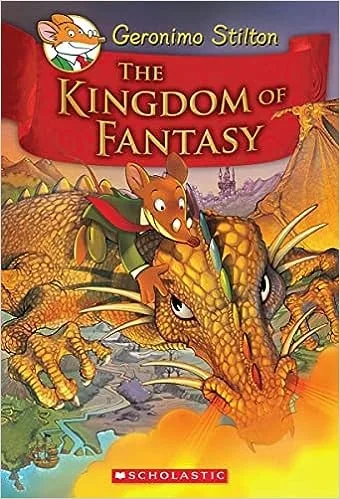
The Kingdom of Fantasy
 84
84

The Kingdom of Fantasy
The Kingdom of Fantasy offers a vibrant, if somewhat familiar, excursion into a realm governed by imagination. Elisabetta Dami, David Nel·lo, and Larry Keys present a world that feels both expansive and intimate, particularly in its depiction of the protagonist's internal journey. A notable strength lies in the clear, evocative prose that allows readers to easily visualize the fantastical landscapes and their inhabitants. However, the narrative occasionally leans into predictable plot devices, a common pitfall in the genre. The section detailing the 'Whispering Woods' is a particular highlight, showcasing a nuanced portrayal of nature's subtle influence on character development. Ultimately, the book provides a solid, enjoyable fantasy experience that, while not groundbreaking, successfully transports the reader.
📝 Description
84
Published in 2017, The Kingdom of Fantasy uses archetypal themes common in fantastical literature.
The Kingdom of Fantasy constructs a world separate from ordinary existence, populated by characters and beings that defy common understanding. Its narrative structure is designed to draw readers in through imaginative storytelling and the depiction of otherworldly places. The book is suitable for those who find intellectual stimulation in imaginative ideas and allegorical stories. Readers interested in heroism, self discovery, and the nature of reality as viewed through fiction will find relevant material. It appeals to an audience that values imaginative world construction and character development that involves significant personal change.
The narrative explores the concept of an 'otherworld,' a place distinct from our own, governed by different laws and inhabited by unusual entities. It follows the idea of a chosen protagonist or group on a quest, often involving personal growth and facing internal or external opposition. The story likely examines the relationship between fate and free will, and how challenges can lead to transformation.
While released in 2017, The Kingdom of Fantasy draws from a long lineage of fantasy writing, particularly that which flourished in the late 19th and early 20th centuries. This tradition, influenced by Romanticism and a resurgence of interest in mythology and folklore, was shaped by authors like J.R.R. Tolkien. These earlier works established narrative structures and character archetypes that continue to inform contemporary fantasy, including the concepts presented in this book.
💡 Why Read This Book?
• You will learn about the narrative function of archetypal quests, specifically how the protagonist's journey through the 'Shadowfell' mirrors common mythological structures. • You will feel the impact of detailed world-building, particularly how the authors describe the 'Crystal City' to create a sense of wonder and otherness. • You will gain an understanding of how fantastical elements, such as the 'Glimmering Isles,' can serve as allegorical representations of internal psychological states.
⭐ Reader Reviews
Honest opinions from readers who have explored this book.
❓ Frequently Asked Questions
When was The Kingdom of Fantasy first published?
The Kingdom of Fantasy was first published in 2017, contributing to the ongoing evolution of contemporary fantasy literature.
Who are the credited authors for The Kingdom of Fantasy?
The book is credited to Elisabetta Dami, David Nel·lo, and Larry Keys, indicating a collaborative effort in its creation.
What is the primary genre of The Kingdom of Fantasy?
The primary genre is fantasy, focusing on imaginative worlds, characters, and narratives distinct from everyday reality.
Does The Kingdom of Fantasy draw on any specific mythological traditions?
While not explicitly stated, the narrative themes of quests and otherworldly realms align with common archetypes found in various mythologies and folklore.
Is The Kingdom of Fantasy suitable for younger readers?
The book's themes and narrative style are generally accessible, making it potentially suitable for a wide age range interested in fantasy.
What kind of world-building can be expected in The Kingdom of Fantasy?
Readers can expect imaginative world-building with distinct locations and inhabitants that contribute to the overall fantastical setting.
🔮 Key Themes & Symbolism
The Archetypal Journey
The narrative likely follows a classic heroic trajectory, where characters start significant quests. This theme is central to many fantasy works, reflecting a desire to explore personal growth through trials. The journey often involves leaving a familiar world, facing formidable obstacles, and returning transformed. The book may explore how the protagonist's encounters, such as those in the 'Sunken City,' shape their understanding of self and their place within their world. This mirrors patterns seen in ancient myths and epics, suggesting a universal human drive for self-discovery through adversity.
Otherworlds and Their Rules
A core element is the construction of a distinct, fantastical realm with its own geography, inhabitants, and governing principles. This 'otherworld' serves as a space for imaginative exploration, often contrasting with or commenting on our own reality. The book might detail the unique flora and fauna of regions like the 'Emerald Forest' or the societal structures of its inhabitants. Understanding these distinct realities allows for thematic exploration of different perspectives, societal ideals, and the nature of existence itself, moving beyond the confines of the mundane.
The Nature of Reality
Fantasy literature frequently questions the boundaries of what is considered real. The Kingdom of Fantasy likely engages with this by presenting scenarios that challenge conventional perceptions. Through magical phenomena or encounters with non-human entities, the narrative prompts readers to consider alternative possibilities and the subjective nature of experience. The exploration of concepts like 'dream logic' or the influence of belief on reality, perhaps seen in the 'Floating Islands,' invites contemplation on how our own perceptions shape our world.
Confronting Inner and Outer Shadows
Many fantasy narratives involve protagonists facing both external antagonists and internal struggles. This theme of confronting shadows, whether literal monsters or personal doubts and fears, is crucial for character development. The book might depict characters battling external forces in the 'Dark Peaks' while simultaneously grappling with their own insecurities or past traumas. This duality reflects a common esoteric idea that true mastery comes from understanding and integrating one's own internal landscape, often a prerequisite for overcoming external challenges.
💬 Memorable Quotes
Direct passages from the work, attributed to the author.
“The wind carried whispers from the forgotten places.”
— This evocative phrase suggests that the environment itself holds ancient knowledge or secrets, hinting at a world where nature is imbued with sentience and memory.
“Beyond the veil, logic bent and reformed.”
— This interpretation suggests that entering the fantasy realm means leaving behind conventional reasoning. It implies a reality where different rules of existence apply, inviting readers to embrace the surreal.
“Every shadow held a potential lesson.”
— This concept highlights the idea that even the darkest or most frightening aspects of the fantasy world, or the characters' inner lives, offer opportunities for growth and understanding.
“The map was not the territory, but a guide to its soul.”
— This emphasizes that understanding a place or situation requires more than just factual knowledge; it involves grasping its essence or spirit, a common theme in esoteric exploration.
“Stars were merely distant campfires in the great dark.”
— This offers a unique perspective on the cosmos, clarifying the celestial and framing it within a more relatable, perhaps even primal, context of warmth and light against vastness.
🌙 Esoteric Significance
Tradition
The Kingdom of Fantasy, while primarily a work of imaginative fiction, touches upon themes common in Western esoteric traditions, particularly those influenced by Romanticism and Jungian psychology. It explores the concept of the 'otherworld' or 'imaginal realm,' a space often discussed in Hermetic and Gnostic thought as a plane of existence accessible through altered consciousness or symbolic journeys. The narrative's focus on transformation through ordeal aligns with initiatory processes found in various mystery schools, suggesting that the external adventure mirrors an internal alchemical process.
Symbolism
Key symbols likely include the 'threshold' – representing the transition between the mundane and the magical, a potent symbol of initiation. Another significant motif could be the 'wise elder' or guide figure, archetypally representing inner wisdom or divine guidance, common in Hermetic teachings. The presence of unique flora or fauna, such as the 'lumina bloom' or 'shadow cat,' often serves as symbolic representations of natural forces, psychological states, or spiritual principles that characters must understand and integrate.
Modern Relevance
Contemporary thinkers and practitioners in fields like depth psychology, transpersonal psychology, and even certain strands of modern paganism draw on the archetypal narratives found in fantasy literature. Works like The Kingdom of Fantasy, by exploring universal themes of the quest and transformation, provide accessible entry points for understanding concepts such as individuation (a Jungian term) or the sacred journey. These narratives continue to resonate because they offer frameworks for making sense of personal challenges and the search for meaning in a secularized world.
👥 Who Should Read This Book
• Aspiring writers of fantasy fiction seeking to understand narrative structures and archetypal character arcs. • Readers interested in mythology and folklore who appreciate how ancient themes are reinterpreted in contemporary settings. • Individuals exploring themes of personal growth and self-discovery through allegorical storytelling and imaginative journeys.
📜 Historical Context
Published in 2017, The Kingdom of Fantasy emerges in an era where the fantasy genre has solidified its place in mainstream culture, influenced by decades of literary and cinematic development. Its roots can be traced to the Romantic movement's fascination with the sublime and the medieval, and the subsequent rise of modern fantasy authors. J.R.R. Tolkien's foundational work, particularly *The Lord of the Rings* (published 1954-1955), set a high bar for world-building and mythopoeia. While Tolkien drew heavily on Norse and Anglo-Saxon mythology, contemporary works like this one often synthesize a broader range of influences. The genre's evolution saw authors like Ursula K. Le Guin exploring sociological and philosophical themes within fantasy settings, pushing boundaries beyond simple adventure narratives. The reception of such works in the early 21st century is often marked by critical analysis of their thematic depth and originality within an already rich tradition.
📔 Journal Prompts
The Whispering Woods' subtle influence on the protagonist's resolve.
The significance of the 'Crystal City's' architecture in reflecting societal values.
A personal parallel to the protagonist's confrontation with the 'Shadow Beast'.
The symbolic meaning of the 'Sunken City's' lost civilization.
How the journey through the 'Glimmering Isles' alters the character's perception of reality.
🗂️ Glossary
Otherworld
A realm or dimension separate from the mundane physical world, often accessed through magical means or specific conditions, serving as a setting for fantastical adventures.
Archetypal Journey
A narrative structure based on universal patterns of human experience, typically involving a protagonist who undergoes trials, transformations, and often a return with newfound wisdom.
Threshold
A symbolic or literal boundary marking the transition from one state or realm to another, often representing a point of no return or significant change.
Allegory
A story, poem, or picture that can be interpreted to reveal a hidden meaning, typically a moral or political one, using symbolic figures and actions.
World-Building
The process of constructing a fictional universe, including its geography, history, inhabitants, and the rules that govern it, to create a believable and immersive setting.
Protagonist
The main character in a story, often the one whose journey or struggles drive the narrative forward and undergo the most significant development.
Initiation
A ritual or process that marks a person's transition from one stage of life or status to another, often involving tests, instruction, and symbolic transformation.
🔮 Readers Also Liked
Browse all →









More by Elisabetta Dami, David Nel·lo, Larry Keys
All books →
More Free Occult Philosophy Books
View all →