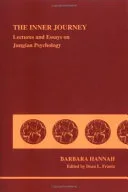
The Inner Journey
 71
71

The Inner Journey
Barbara Hannah's The Inner Journey offers a clear, if somewhat dated, exposition of Jungian principles as practiced by the Zurich school. Her direct connection to Jung's inner circle lends an air of authority, and her explanations of complex ideas like the Self and the individuation process are remarkably accessible. A particular strength lies in her grounded approach, drawing from extensive clinical experience. For instance, her discussion of the anima/animus as projected figures offers concrete examples of their impact on relationships. However, the book's limitation is its adherence to a specific analytical paradigm; it rarely engages with later developments in psychology or alternative interpretive frameworks. The lectures, while insightful, can feel somewhat didactic, lacking the dynamic interplay found in more contemporary dialogues. Nevertheless, for those seeking an unadorned introduction to classical Jungian thought from a direct inheritor of the tradition, it provides a solid foundation.
📝 Description
71
### What It Is The Inner Journey presents a series of lectures given by Barbara Hannah, a prominent Jungian analyst active during the foundational years of analytical psychology. First published in 2000, this collection captures Hannah's direct engagement with the core tenets of Carl Jung's work, as amplified by her own clinical experience and that of her esteemed colleagues. The book serves as an accessible entry point into complex psychological concepts, offering a distillation of ideas that guided a generation of analysts and seekers.
### Who It's For This volume is particularly suited for individuals engaged with Jungian psychology, depth psychology, and the application of psychological principles to spiritual and personal development. It will appeal to those interested in the practical application of archetypal symbolism and the process of individuation as explored through the lens of classical Jungian analysis. Readers seeking to understand the lineage of Jungian thought, especially the contributions of women analysts, will find significant value here.
### Historical Context Barbara Hannah was a key figure in the Zurich analytic community during the mid-20th century, a period of intense development for Jungian psychology. Her contemporaries included M. Esther Harding, Irene Claremont de Castillejo, Eleanor Bertine, Emma Jung, and Marie-Louise von Franz. Their collective work, often published within series like the 'Studies in Jungian Psychology,' solidified and expanded Jung's original theories. Hannah's lectures, preserved in this book, emerged from this vibrant intellectual milieu, offering a direct transmission of the analytical approach championed by these pioneers.
### Key Concepts The lectures explore the inherent drive towards psychological wholeness, often termed individuation. Hannah discusses the role of the unconscious, the significance of dreams and symbols in revealing psychic content, and the transformative potential of engaging with these inner realities. The work emphasizes the subjective nature of psychological healing and the importance of confronting one's shadow aspects to achieve greater integration. The concept of the Self as the organizing principle of the psyche is central to her exposition.
💡 Why Read This Book?
• Understand the core mechanics of individuation as articulated by a direct student of Jung's work, gaining insight into the psychological drive for wholeness that Hannah outlines. • Grasp the significance of dream analysis and symbolic interpretation within classical Jungian psychology, learning how Hannah used these tools to illuminate the unconscious. • Connect with the historical development of Jungian psychology through Barbara Hannah's own experiences and her interactions with key figures like Marie-Louise von Franz, placing the book within its specific intellectual lineage.
⭐ Reader Reviews
Honest opinions from readers who have explored this book.
❓ Frequently Asked Questions
What is the primary focus of Barbara Hannah's The Inner Journey?
The book focuses on the principles of Jungian psychology, particularly the process of individuation and the journey toward psychological wholeness, as understood and practiced by Barbara Hannah and her contemporaries in the Zurich analytical school.
Who were Barbara Hannah's notable colleagues in Jungian psychology?
Barbara Hannah was a colleague of prominent figures such as M. Esther Harding, Irene Claremont de Castillejo, Eleanor Bertine, Emma Jung, and Marie-Louise von Franz, all active during the formative years of Jungian analysis.
When was The Inner Journey first published?
The Inner Journey by Barbara Hannah was first published in the year 2000.
What does the book suggest about the role of symbols in psychological exploration?
The book suggests that symbols, particularly those appearing in dreams and fantasies, are crucial messengers from the unconscious, guiding the individual toward greater self-understanding and psychic integration.
Is this book suitable for beginners in psychology?
Yes, it is suitable for beginners interested in Jungian psychology, as Hannah's lectures are designed to explain complex concepts in an accessible manner, drawing from her extensive clinical experience.
What is the 'individuation process' as described by Hannah?
The individuation process, as described by Hannah, is the lifelong psychological journey of becoming one's true, whole self, involving the integration of conscious and unconscious aspects of the personality.
🔮 Key Themes & Symbolism
The Individuation Process
The central theme is the lifelong journey of individuation, the natural psychological process of becoming a complete and integrated individual. Hannah explains this as the psyche's inherent drive towards wholeness, moving beyond mere ego-consciousness to encompass the totality of one's being. She illustrates how this journey involves confronting unconscious contents, integrating opposing forces within the personality, and realizing the Self as the center of psychic life, distinct from the ego.
The Role of the Unconscious
Hannah emphasizes the active and crucial role of the unconscious in psychological development. She details how the unconscious communicates through dreams, symbols, and projections, offering vital information for personal growth. Understanding and engaging with unconscious material is presented not as a passive observation but as an active dialogue essential for healing and achieving psychic balance.
Symbolism and Psychic Language
The book highlights the profound significance of symbols as the language of the unconscious. Hannah explores how archetypal symbols, appearing in myths, dreams, and active imagination, provide pathways to understanding deeper psychological structures and dynamics. Recognizing and interpreting these symbols is key to navigating the inner landscape and facilitating the individuation process.
The Analyst's Role
Drawing from her practice, Hannah implicitly and explicitly discusses the function of the analyst. This role involves facilitating the client's own inner exploration, helping them to understand their psychic material without imposing personal interpretations. The focus is on guiding the analysand to discover their own inner truth and potential for healing, fostering an autonomous psychological development.
💬 Memorable Quotes
“The goal of analysis is to help the individual become aware of the totality of their being.”
— This statement encapsulates Hannah's view of individuation not merely as symptom alleviation but as a process of realizing one's full psychological potential, integrating all aspects of the self.
“Dreams are the psyche's attempt to communicate what is needed for wholeness.”
— Hannah highlights the compensatory and prospective functions of dreams, seeing them as vital messages from the unconscious designed to guide the dreamer towards a more balanced and complete psychological state.
“The anima and animus are projections that reveal our relationship to the opposite sex within.”
— This concept points to the inner masculine (animus) and feminine (anima) principles, explaining how their projection onto external figures profoundly impacts interpersonal dynamics and our internal psychic balance.
“Confronting the shadow is essential for authentic psychological development.”
— Hannah emphasizes that acknowledging and integrating the darker, less desirable aspects of oneself, often referred to as the shadow, is a necessary step for genuine personal growth and self-acceptance.
“The Self is the organizing center of the psyche, distinct from the ego.”
— This interpretation clarifies the Jungian concept of the Self as the ultimate psychic authority and source of meaning, which the ego must learn to relate to for psychological health.
🌙 Esoteric Significance
Tradition
The Inner Journey is firmly rooted in the Western Esoteric tradition, specifically within the analytical psychology lineage established by Carl Jung. While not overtly mystical in the Theosophical or Hermetic sense, Jungian psychology deeply engages with Gnostic ideas of the soul's journey towards wholeness, alchemical symbolism of transformation, and Hermetic principles of correspondence. Hannah's work fits within this tradition by exploring the 'as above, so below' principle as applied to the inner psychic world, seeking to unify the conscious and unconscious realms.
Symbolism
Key symbols explored include the Self, often represented by mandalas or divine figures, symbolizing psychic totality and the ultimate organizing principle. The anima and animus are discussed as crucial archetypal figures representing the contrasexual aspects within the psyche, essential for understanding projections and relational dynamics. Dreams themselves are treated as symbolic messages from the unconscious, requiring interpretation to reveal deeper psychological truths and guide the process of individuation.
Modern Relevance
Contemporary thinkers and practitioners in depth psychology, transpersonal psychology, and even certain therapeutic modalities like archetypal astrology continue to draw from Hannah's work. Her accessible explanations of individuation and the unconscious remain foundational for many seeking psychological and spiritual integration. The focus on symbolic life and the dialogue between conscious and unconscious mirrors current interests in mindfulness, dream work, and the integration of psychological insights with spiritual practices.
👥 Who Should Read This Book
• Individuals exploring the path of psychological self-discovery, particularly those interested in Jungian theory, will gain a foundational understanding of concepts like individuation and the unconscious from a direct lineage. • Students of comparative religion and mythology can benefit from Hannah's insights into how archetypal symbols function universally across cultures and spiritual traditions. • Therapists and counselors seeking to deepen their understanding of depth psychology will find practical applications and historical context for analytical techniques in Hannah's clinical approach.
📜 Historical Context
Barbara Hannah's The Inner Journey emerged from the vibrant intellectual milieu of mid-20th century Zurich, a period when Jungian psychology was solidifying its theoretical and practical foundations. Hannah herself was a direct colleague and associate of Carl Jung, as well as a close collaborator with other key figures like Marie-Louise von Franz and M. Esther Harding. This book, first published in 2000, collects lectures that reflect the 'golden years' of Jungian analysis, a time characterized by rigorous clinical work and theoretical refinement. The analytical psychology of the era was distinct from emerging psychoanalytic trends, particularly Freud's focus on libido as primarily sexual, and Adler's emphasis on social striving. Hannah’s work, representative of the 'Classical Jungians,' amplified Jung's message, particularly his concepts of archetypes and the collective unconscious, through decades of practical application. The 'Studies in Jungian Psychology by Jungian Analysts' series, in which this book appeared as the 88th title, itself signifies the established academic and clinical legitimacy this school of thought had achieved.
📔 Journal Prompts
The individuation process as a lifelong journey toward wholeness.
Symbolic interpretations of recurring motifs in your dreams.
The relationship between your conscious aspirations and unconscious patterns.
Identifying projections in your relationships and their inner source.
The function of the Self as an organizing principle in your life.
🗂️ Glossary
Individuation
The lifelong psychological process of differentiation of the self from the external world and the integration of conscious and unconscious aspects of the personality to achieve wholeness.
The Unconscious
The part of the mind of which one is not aware and which influences one's behavior and feelings. In Jungian psychology, it is divided into the personal unconscious and the collective unconscious.
Archetype
In Jungian psychology, universal, archaic patterns and images that derive from the collective unconscious and are the psychic counterpart of instincts. They manifest in myths, fairy tales, dreams, and art.
Self
In Jungian psychology, the totality of the psyche, encompassing both the conscious and unconscious aspects. It is the archetype of wholeness and the organizing center of psychic life, distinct from the ego.
Anima/Animus
The contrasexual aspect of the psyche: the anima is the feminine principle in the male psyche, and the animus is the masculine principle in the female psyche. They influence relationships and projections.
Shadow
The unconscious aspect of the personality that the conscious ego does not identify in itself. It contains repressed weaknesses, deficiencies, and instincts, but also undeveloped positive potentials.
Projection
An unconscious defense mechanism whereby unacceptable qualities of the self are attributed to others. In Jungian psychology, it's a key aspect of how archetypes like the anima/animus manifest in relationships.