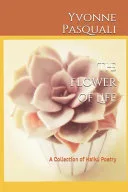
The Flower of Life
 78
78

The Flower of Life
Yvonne Marie Pasquali's *The Flower of Life* presents a collection of haiku that, while adhering to form, often feels more like a series of observations punctuated by inspirational aphorisms. The strength lies in its unfussy presentation; the poems and accompanying photographs create a quiet space for contemplation. However, the integration of motivational mantras occasionally disrupts the natural flow of the seasonal imagery, feeling somewhat imposed rather than organically arising from the natural world depicted. A notable passage, "Winter's hush descends / White blanket on silent earth / Hope sleeps, waits for sun," effectively captures the haiku's essence of stillness and anticipation. Ultimately, *The Flower of Life* offers brief, accessible moments of nature-inspired reflection, though its impact is somewhat diluted by its dual focus.
📝 Description
78
### What It Is The Flower of Life is a collection of haiku poetry that adheres to the traditional syllable structure, offering concise observations on nature and the changing seasons. Interspersed within the verse are lines intended for motivation and inspiration, acting as short mantras. The author, Yvonne Marie Pasquali, complements several poems with accompanying photographs, which either directly illustrate the verse or offer a contrasting, yet related, visual element. The overarching aesthetic emphasizes simplicity and directness.
### Who It's For This work is suitable for readers who appreciate the haiku form and its inherent constraints, finding beauty in brevity and nature's cycles. Those seeking gentle encouragement and motivational phrases woven into artistic expression will find value here. Individuals who enjoy a multi-sensory approach to literature, where visual art enhances poetic themes, will also connect with this book. It appeals to those who prefer direct, unadorned communication in their reading material.
### Historical Context While this specific collection, *The Flower of Life*, was first published in 2019, its form, haiku, has a lineage stretching back centuries in Japan. The haiku's emphasis on nature, seasons, and fleeting moments aligns with broader aesthetic and philosophical traditions that value observation and mindfulness. The inclusion of motivational mantras echoes a modern surge in self-help and inspirational literature, seeking to integrate practical wisdom with artistic creation. Pasquali's work situates itself within contemporary poetry while drawing on ancient forms.
### Key Concepts The core of *The Flower of Life* lies in its engagement with the haiku's structured simplicity. Nature serves as a primary muse, with frequent references to seasonal shifts and animal imagery, reflecting a deep connection to the natural world. The integration of motivational mantras introduces an element of personal development and upliftment, encouraging reflection and positive mindset. The juxtaposition of poetry and photography highlights the interplay between textual and visual perception, inviting readers to experience the work on multiple levels.
💡 Why Read This Book?
• You will learn to appreciate the concise beauty of haiku, particularly how Yvonne Marie Pasquali uses nature imagery like "seasons and animals" to evoke specific moods, mirroring the techniques seen in classic Japanese haiku masters. • You will discover how motivational mantras, such as those found within this 2019 collection, can be subtly woven into poetry to offer moments of personal inspiration without overpowering the core natural themes. • You will experience the synergy between text and image, as the book's photography, explicitly mentioned in the blurb, provides a visual counterpoint to Pasquali's verses, enhancing the reader's sensory engagement.
⭐ Reader Reviews
Honest opinions from readers who have explored this book.
❓ Frequently Asked Questions
What is the main focus of the poetry in The Flower of Life?
The poetry primarily focuses on nature, specifically the seasons and animals, rendered in the structured syllable format of haiku. It also interweaves motivational and inspirational mantras.
Who is the author of The Flower of Life?
The author is Yvonne Marie Pasquali. The book was first published on November 15, 2019.
Does The Flower of Life include any visual elements?
Yes, the book features photographs that are either directly related to the poems or juxtaposed with them, offering a visual dimension to the verses.
What is the intended reading experience of this book?
The author encourages readers to consider the essence of simplicity and directness while engaging with the poetry and accompanying images.
What makes the poetry in this collection distinct?
Its distinctiveness lies in its adherence to haiku structure, the blend of natural imagery with motivational mantras, and the integration of photography alongside the verse.
What genre does The Flower of Life fall under?
The book is categorized under Esoteric literature, specifically focusing on poetry with elements of nature, inspiration, and visual art.
🔮 Key Themes & Symbolism
Seasonal Observation
The haiku in *The Flower of Life* meticulously captures the essence of changing seasons. Pasquali uses precise imagery, often referencing flora and fauna specific to different times of the year, to evoke the transient beauty and cyclical nature of the world. This focus aligns with traditional Japanese haiku, which often uses kigo (season words) to ground the poem in a specific temporal context, inviting readers to connect with the rhythms of the natural calendar.
Motivational Mantras
Interwoven within the nature-focused haiku are short, impactful phrases designed for inspiration and motivation. These mantras serve as moments of introspection, offering gentle encouragement and a positive perspective. They function almost as secular prayers or affirmations, providing a lift to the reader's spirit amidst the contemplative verses, adding a layer of self-help to the poetic experience.
Poetry and Photography Synergy
Pasquali pairs her haiku with photographs, creating a dialogue between word and image. These visuals either directly illustrate the poem's content or offer a complementary perspective, enhancing the reader's sensory engagement. This combination underscores the book's commitment to simplicity and directness, allowing the combined elements to communicate meaning efficiently and powerfully.
Simplicity and Directness
The collection champions an aesthetic of simplicity and directness, a principle evident in both the haiku form and the author's approach. Each poem, image, and mantra is presented without embellishment, aiming for clear, unadorned communication. This deliberate choice encourages readers to focus on the core message and feeling conveyed, fostering a more immediate and unmediated connection with the work.
💬 Memorable Quotes
“White snow falls softly / World sleeps beneath frozen ground / Life waits for the thaw.”
— This haiku captures the stillness and dormancy of winter, emphasizing the potential for renewal hidden beneath the surface. It speaks to patience and the inevitable return of life, a common theme in seasonal poetry.
“Sun warms the green shoot / A new beginning unfolds / Nature's gentle push.”
— This verse celebrates the arrival of spring, symbolizing growth, rebirth, and the subtle yet persistent force of nature. It serves as a direct inspirational message about new beginnings.
“Brief moment of peace / Birdsong fills the quiet air / Joy in simple things.”
— This quote highlights the aesthetic principle of finding happiness and profound meaning in the small, often overlooked, details of the natural world.
“Find strength in stillness / Let your inner light shine bright / You are capable.”
— This is an example of a motivational mantra, offering direct encouragement and affirmation to the reader, separate from the natural imagery but intended to uplift.
“Autumn leaves descend / Colors blaze before the fall / Beauty in goodbye.”
— This haiku reflects on the transient beauty of autumn, framing the end of a cycle not as a loss, but as a moment of vibrant display and acceptance.
🌙 Esoteric Significance
Tradition
While *The Flower of Life* is not explicitly rooted in a single, codified esoteric tradition like Hermeticism or Kabbalah, its emphasis on nature, cycles, and inner light aligns with broader Neopagan and Nature-based spiritualities. The haiku form itself, with its focus on capturing the essence of a moment and its connection to seasonal changes, can be seen as a meditative practice, akin to mindfulness exercises found in various contemplative traditions. The motivational mantras echo New Age principles of positive affirmation and self-empowerment.
Symbolism
The 'Flower of Life' itself, though not extensively detailed in the blurb, is a potent symbol in sacred geometry, representing the seven days of creation and the interconnectedness of all life. In the context of this poetry collection, the broader symbolism likely extends to the cyclical patterns of nature—seasons, birth, death, and rebirth—as reflected in the haiku. Animal imagery would carry its own traditional symbolic weight, varying by species, while the interplay of light and dark, growth and dormancy, would speak to universal dualities.
Modern Relevance
Contemporary interest in mindfulness, nature-based spirituality, and accessible self-help literature makes *The Flower of Life* relevant today. Its blend of concise poetry, visual art, and positive affirmations appeals to individuals seeking quick moments of reflection and inspiration in a fast-paced world. Thinkers and practitioners in fields like ecopsychology, mindful living, and even contemporary art exploring nature and symbolism might find resonance with Pasquali's direct yet evocative approach.
👥 Who Should Read This Book
• Readers new to Japanese poetry forms like haiku will appreciate the clear structure and accessible nature themes, providing an entry point to the genre. • Individuals seeking brief, uplifting messages and affirmations interwoven with natural imagery will find value in the motivational mantras. • Art and literature enthusiasts who enjoy the synergy between visual elements and text will benefit from the accompanying photography that complements the poems.
📜 Historical Context
Yvonne Marie Pasquali's *The Flower of Life*, published in 2019, arrives in a literary landscape where the haiku, a form originating in 17th-century Japan, continues to find new expressions. While the haiku's traditional focus on nature and fleeting moments has endured, contemporary poets often integrate personal reflection and modern sensibilities. Pasquali’s work situates itself within this ongoing evolution, particularly by blending the structured observation of haiku with the self-help currents prevalent in the early 21st century. This era saw a rise in accessible, inspirational literature, a trend reflected in the inclusion of motivational mantras. Unlike earlier revivals of haiku in the West, such as those influenced by poets like R.H. Blyth in the mid-20th century who focused heavily on Zen Buddhist philosophy, Pasquali’s collection presents a more direct, less philosophically dense approach. The book does not appear to have been part of a specific reception event like a major award or notable censorship, but rather contributes to the broader contemporary poetry market seeking connections between nature, mindfulness, and personal well-being.
📔 Journal Prompts
Reflect on the seasonal imagery of 'Winter's hush' and its connection to personal periods of stillness.
Consider the concept of 'Nature's gentle push' as depicted in the spring verses.
Analyze the juxtaposition of a specific poem and its accompanying photograph.
How do the motivational mantras in the collection reinforce or contrast with the natural themes?
Explore the 'beauty in goodbye' presented through autumn's symbolism.
🗂️ Glossary
Haiku
A traditional Japanese form of poetry consisting of three phrases with a 5, 7, 5 syllable structure, often focusing on nature and seasonal references.
Mantra
A sacred utterance, sound, syllable, word, or group of words, often used in spiritual traditions for meditation or to invoke a specific state of mind or energy.
Juxtaposition
The act or an instance of placing two or more things side by side, often to compare or contrast them or to create an interesting effect.
Kigo
A word or phrase in Japanese haiku that indicates the season of the poem.
Esoteric
Intended for or likely to be understood by only a small number of people with a specialized knowledge or interest.
Sacred Geometry
The study of geometric shapes, proportions, and mathematical ratios that are believed to be found in nature and have symbolic or spiritual significance.
Neopaganism
A modern religious movement, particularly in the Western world, that attempts to revive or acknowledge the practices and beliefs of ancient European pagan religions.