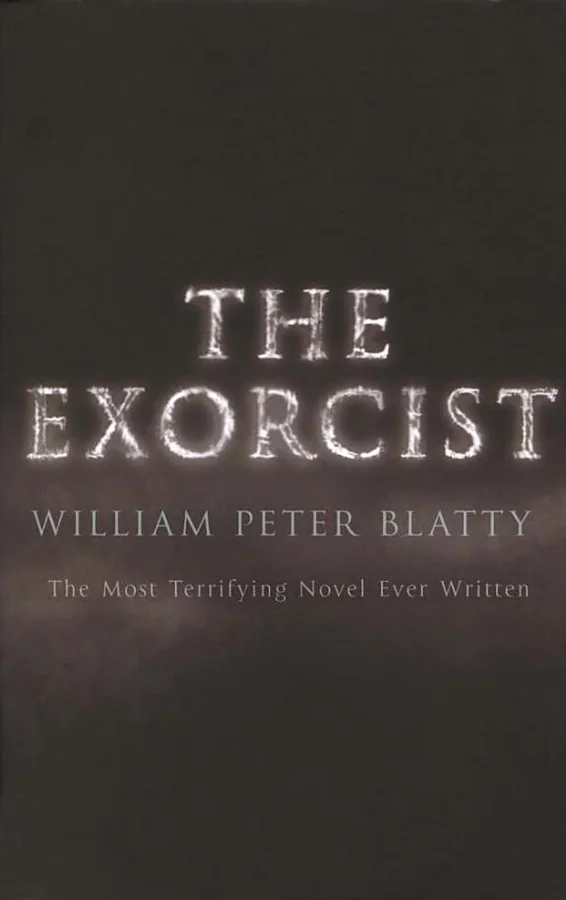
The Exorcist
 83
83

The Exorcist
William Peter Blatty's "The Exorcist" transcends its genre trappings to offer a profound, albeit disturbing, examination of faith under siege. The novel's strength lies in its meticulous depiction of the psychological and spiritual disintegration of the MacNeil household and the crisis of faith it ignites in Father Karras. Blatty masterfully builds dread, not through cheap scares, but through the insidious corruption of innocence and the agonizing doubt that afflicts those who witness Regan's descent. A particular strength is the depiction of the theological arguments and the sheer theological weight placed upon Father Karras, highlighting the immense spiritual battle. However, the novel, perhaps mirroring the intensity of its subject, can feel relentless in its bleakness, offering little respite and potentially overwhelming readers with its sustained depiction of suffering. Despite this, the work's exploration of spiritual warfare remains potent. It is a somber and unflinching look at the battle for a soul.
📝 Description
83
### What It Is William Peter Blatty's "The Exorcist," first published in 2007, is a harrowing fictional account that probes the depths of faith, doubt, and the terrifying unknown. The narrative centers on the possession of young Regan MacNeil and the desperate attempts by her mother and two priests to combat a malevolent entity. It is not merely a horror story but an exploration of spiritual warfare and the struggle between good and evil.
### Who It's For This work is intended for readers who appreciate psychological depth and theological inquiry within their fiction. It appeals to those interested in the nature of belief, the manifestations of psychic phenomena, and the challenges faced by religious institutions when confronted with inexplicable events. Those seeking a visceral narrative that also engages the intellect will find "The Exorcist" compelling.
### Historical Context While "The Exorcist" was published in its final form in 2007, its genesis and impact stem from earlier periods. Blatty's inspiration came from a documented case of exorcism in 1949 involving a Jesuit priest and a 14-year-old boy, which was reported in the press. The novel's themes of demonic possession and religious crisis resonated with a society grappling with counter-culture movements and shifting spiritual landscapes in the late 20th century.
### Key Concepts The novel engages with the concept of spiritual possession as a tangible force, contrasting it with psychological explanations. It examines the role of faith and ritual in confronting perceived evil, particularly through the Catholic Church's rites of exorcism. The narrative also explores the psychological toll on individuals and families subjected to such extreme spiritual and psychological distress.
💡 Why Read This Book?
• You will gain a visceral understanding of the theological arguments surrounding exorcism, as depicted through the theological debates and rites explored by Father Karras, offering a unique perspective on spiritual warfare. • You will experience a deep dive into the psychological impact of alleged demonic possession, as shown through Regan MacNeil's terrifying transformation and the distress it causes her mother, Chris MacNeil. • You will confront the existential questions of faith and doubt through the character of Father Damien Karras, whose internal struggles mirror the external battle against a perceived demonic entity.
⭐ Reader Reviews
Honest opinions from readers who have explored this book.
❓ Frequently Asked Questions
What inspired William Peter Blatty to write "The Exorcist"?
William Peter Blatty was inspired by a real-life case of alleged demonic possession and exorcism that occurred in St. Louis in 1949. The details of this case were published in newspapers and fascinated Blatty, leading him to research and eventually write the novel.
Is "The Exorcist" based on a true story?
While the novel "The Exorcist" is a work of fiction, it is heavily inspired by a documented case of alleged demonic possession and exorcism that took place in 1949. Blatty extensively researched this event for his book.
What is the significance of Father Damien Karras in "The Exorcist"?
Father Damien Karras is a central character, a Jesuit priest and psychiatrist who grapples with his own faith and doubts. He is tasked with performing the exorcism on Regan MacNeil, representing the struggle between spiritual conviction and rational skepticism.
When was "The Exorcist" originally published?
William Peter Blatty's "The Exorcist" was first published in 2007. However, the novel gained widespread recognition and cultural impact primarily through its 1973 film adaptation, which was based on the earlier manuscript.
What are the main themes explored in "The Exorcist"?
The novel explores themes of faith versus doubt, the nature of evil, spiritual warfare, the psychological impact of possession, and the challenges faced by religious institutions when confronted with the inexplicable.
Does the book "The Exorcist" differ from the famous movie?
Yes, the novel "The Exorcist" offers a more extensive exploration of Father Karras's psychological and spiritual turmoil, his past, and the theological underpinnings of the exorcism ritual than is possible in the film adaptation.
🔮 Key Themes & Symbolism
Spiritual Warfare
The narrative presents a stark view of spiritual warfare, positioning demonic possession not merely as a psychological aberration but as a direct assault by malevolent entities. The rites of exorcism, as detailed by Blatty, are depicted as the Church's formalized battleground against these forces. This theme is central to the novel's tension, contrasting the faith and spiritual fortitude of the priests with the overwhelming power of the possessing entity.
Faith and Doubt
A cornerstone of "The Exorcist" is the examination of faith challenged by inexplicable horror. Father Damien Karras embodies this conflict, a man of the cloth whose psychiatric training and personal tragedies create a profound internal struggle. The possession of Regan MacNeil forces characters, particularly Karras, to confront the limits of their belief systems and the terrifying possibility of forces beyond human comprehension.
The Nature of Evil
Blatty grapples with the manifestation of evil, portraying it as an active, intelligent, and corrupting force. The entity possessing Regan MacNeil exhibits cruelty, blasphemy, and a deep understanding of its victims' vulnerabilities, particularly Father Karras's past traumas. This depiction moves beyond simple malevolence to explore evil as an invasive presence that seeks to dominate and destroy.
Innocence Corrupted
The possession of young Regan MacNeil serves as a potent symbol of corrupted innocence. Her transformation from a normal, albeit sensitive, child into a vessel for demonic activity is one of the most disturbing aspects of the novel. This theme underscores the vulnerability of the pure and highlights the profound tragedy of a soul being violated and enslaved.
💬 Memorable Quotes
“'Where is Regan?' 'In here. With us.'”
— This exchange starkly illustrates the horrifying reality of possession: Regan's consciousness is no longer her own, but subsumed by the entity that now occupies her. It signifies the loss of self and the terrifying presence of an alien will within a familiar form.
“The terror begins unobtrusively. Noises in Regan's room, an odd smell, the displacement of furniture, an icy chill.”
— This passage captures Blatty's method of building dread. The initial manifestations are subtle, allowing for rationalization, before escalating into undeniable supernatural phenomena, mirroring the insidious way perceived evil can infiltrate and disrupt normal life.
“The devil is a realist.”
— This aphorism suggests the calculated, strategic nature of demonic influence. It implies that evil operates with intelligence and purpose, exploiting weaknesses and understanding human psychology to achieve its aims, rather than acting on mere impulse.
“When you confront the impossible, your faith is tested.”
— This concept speaks to the core conflict within the novel. The inexplicable events surrounding Regan MacNeil's possession push the characters, especially Father Karras, to the brink of their spiritual understanding, forcing a re-evaluation of belief in the face of overwhelming, unexplainable phenomena.
“Evil is not a shadow; it is a presence.”
— This highlights the novel's theological stance. The entity is presented as an active, conscious force, not merely an absence of good, but a palpable, invasive power that seeks dominion and causes tangible suffering.
🌙 Esoteric Significance
Tradition
While "The Exorcist" is framed within the Catholic tradition, its exploration of possession and spiritual warfare touches upon universal themes found in many esoteric lineages, including Gnosticism and certain branches of Western occultism that posit a struggle against malevolent spiritual forces or 'archons.' The novel depicts the exorcism as a ritualistic battle for a soul, a concept common in traditions concerned with spiritual liberation and protection against psychic or spiritual intrusion.
Symbolism
The most potent symbol is Regan MacNeil herself, representing the corrupted vessel of innocence, a theme resonant in Gnostic ideas of the soul trapped in matter. The recurring motif of the icy chill and foul odors signifies the intrusion of the demonic into the mundane, a sensory manifestation of spiritual corruption. The crucifix, when an object of profane abuse by the possessing entity, becomes a symbol of blasphemy and the direct assault on sacred symbols.
Modern Relevance
Contemporary discussions around spiritual abuse, psychological manipulation, and the efficacy of various faith-based or energy-healing practices echo the core concerns of "The Exorcist." Thinkers and practitioners in fields ranging from comparative religion to parapsychology continue to analyze and debate the phenomena depicted, with the novel serving as a touchstone for understanding extreme states of consciousness and perceived spiritual antagonism.
👥 Who Should Read This Book
• Students of comparative religion and demonology seeking fictionalized, yet deeply researched, accounts of Catholic exorcism rites and theological perspectives on evil. • Readers interested in psychological thrillers that explore the intersection of mental health, faith, and the supernatural, particularly those examining the strain on family dynamics. • Individuals fascinated by the occult and esoteric themes of spiritual warfare, possession, and the battle between divine and demonic forces, presented through a gripping narrative.
📜 Historical Context
William Peter Blatty's "The Exorcist," published in 2007, draws heavily from a documented 1949 exorcism case that garnered significant media attention. The novel emerged within a cultural milieu in the late 20th century that was both fascinated and disturbed by the supernatural, particularly following the success of the 1973 film adaptation. This period saw a resurgence of interest in paranormal phenomena, often viewed against the backdrop of social upheaval and a questioning of traditional institutions, including religious ones. Blatty's work was part of a broader wave of occult and horror literature that tapped into societal anxieties. While not directly engaging with established esoteric orders, its themes of spiritual struggle and demonic influence resonated with a populace exploring alternative spiritualities and confronting anxieties about unseen forces, standing apart from the more academic or ritualistic occultism of figures like Aleister Crowley.
📔 Journal Prompts
Father Damien Karras's crisis of faith regarding the events surrounding Regan MacNeil.
The tangible manifestations of the demonic presence described in the MacNeil household.
Regan MacNeil's transformation from innocent child to possessed entity.
The theological implications of the devil's 'realism' in manipulating its victims.
The contrast between scientific explanations and spiritual interpretations of Regan's affliction.
🗂️ Glossary
Exorcism
A religious rite or ritual intended to expel demons or other evil spirits from a person or place. In "The Exorcist," it is depicted as a formal, often violent, spiritual battle conducted by ordained clergy.
Possession
The state of being controlled or inhabited by a spirit or demon. In the context of the book, it refers to a malevolent entity taking control of a human body and consciousness.
Demonic Entity
A supernatural being considered evil or malevolent, often associated with hell or the underworld. The novel portrays such an entity as intelligent, cruel, and capable of immense spiritual and psychological damage.
Faith
Complete trust or confidence in someone or something, especially in God or a religion. The novel intensely scrutinizes the nature and limits of faith when confronted with extreme evil.
Doubt
A feeling of uncertainty or lack of conviction. Father Karras's character arc is defined by his struggle with doubt, both in his faith and his ability to combat the demonic forces.
Spiritual Warfare
The concept that Christians (or adherents of other faiths) are engaged in a cosmic battle against evil spiritual forces. The novel dramatizes this conflict through the exorcism.
Psychiatry
The branch of medicine focused on the diagnosis, treatment, and prevention of mental, emotional, and behavioral disorders. Father Karras's background in psychiatry creates a tension with the supernatural events.