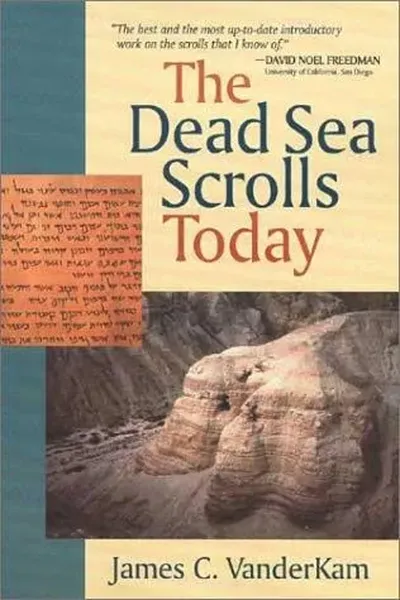
The Dead Sea scrolls today

 82
82

The Dead Sea scrolls today
VanderKam's "The Dead Sea Scrolls Today" presents a refreshingly direct assessment of these seminal artifacts. Rather than succumbing to the often-sensationalist narratives surrounding them, the work focuses on the scholarly consensus and the tangible evidence. A notable strength is its clear exposition of the paleographic dating methods, allowing readers to grasp the basis for assigning specific texts to particular centuries. However, the book occasionally feels more like a comprehensive overview than a deeply analytical critique, sometimes glossing over the more contentious debates with a light touch. The discussion of the scrolls' relationship to early Christian thought, while informative, could benefit from a more robust engagement with alternative scholarly viewpoints beyond the primary Qumran sect hypothesis. Ultimately, VanderKam provides a solid, fact-based foundation for understanding the scrolls' immediate context and importance.
📝 Description
82
### What It Is James C. VanderKam's "The Dead Sea Scrolls Today" offers a lucid exploration of the discovery, content, and significance of the ancient manuscripts unearthed near the Dead Sea. First published in 2010, this work synthesizes decades of archaeological and scholarly investigation into a accessible narrative. It moves beyond sensationalism to present a scholarly yet understandable account of these pivotal texts, examining their origins, the communities that produced them, and their impact on our understanding of early Judaism and Christianity.
### Who It's For This book is for anyone seeking a clear, reliable introduction to the Dead Sea Scrolls without being overwhelmed by dense academic jargon. Students of religious studies, history, archaeology, and those with a general curiosity about ancient texts will find it particularly beneficial. It serves as an excellent primer for those encountering the scrolls for the first time or looking to solidify their foundational knowledge.
### Historical Context The discovery of the Dead Sea Scrolls, beginning in 1947 with Bedouin shepherds near Qumran, occurred during a period of intense scholarly interest in the origins of Western religions. The scrolls, dating from the 3rd century BCE to the 1st century CE, provided an unprecedented window into the diverse sectarian landscape of Second Temple Judaism. Their examination challenged prevailing assumptions and sparked debates that continue to shape biblical scholarship, influencing figures like Geza Vermes and scholars engaging with the works of Philo of Alexandria.
### Key Concepts VanderKam unpacks complex concepts such as the various interpretations of the Qumran community, the textual variations found within the scrolls compared to later biblical texts, and the ongoing debates surrounding their dating and provenance. The book addresses the nature of apocryphal texts, the development of Jewish law, and the relationship between scroll-producing groups and mainstream Judaism of the Second Temple period. It clarifies the distinction between biblical scrolls and sectarian documents, offering a nuanced view of the collection.
💡 Why Read This Book?
• Gain a precise understanding of the paleographic dating techniques used for the scrolls, allowing you to critically assess claims about their age. • Grasp the scholarly debate surrounding the Qumran community, distinguishing between established facts and ongoing hypotheses about its inhabitants. • Appreciate the textual differences between scrolls like the Great Isaiah Scroll and later Masoretic texts, illuminating the evolution of biblical transmission.
⭐ Reader Reviews
Honest opinions from readers who have explored this book.
❓ Frequently Asked Questions
When were the Dead Sea Scrolls actually discovered?
The initial discovery of the Dead Sea Scrolls occurred in 1947, when Bedouin shepherds stumbled upon several ancient jars containing scrolls in caves near the site of Qumran. Subsequent expeditions over the next decade uncovered thousands of additional fragments.
What languages are the Dead Sea Scrolls written in?
The vast majority of the Dead Sea Scrolls are written in Hebrew. However, a significant portion is in Aramaic, and a smaller number are in Greek. This linguistic diversity reflects the cultural milieu of Judea during the Second Temple period.
Who is considered the primary author or community behind the scrolls?
While scholarly debate continues, a prominent theory suggests the Essenes, a Jewish ascetic sect, were responsible for creating or collecting many of the scrolls found at Qumran. However, other groups may have also contributed texts.
How do the Dead Sea Scrolls compare to the biblical texts we have today?
The scrolls include copies of books found in the Hebrew Bible, offering textual variants that sometimes differ from the Masoretic Text. They also contain many non-biblical texts, including sectarian rules, commentaries, and apocryphal works.
What is the historical significance of the Dead Sea Scrolls?
The scrolls are crucial for understanding the diversity of Jewish thought and practice in the Second Temple period (roughly 3rd century BCE to 1st century CE). They provide invaluable context for the origins of both Rabbinic Judaism and early Christianity.
Are the Dead Sea Scrolls public domain and available online?
While the original scrolls are housed in museums and archives, many scholarly editions and transcriptions of the Dead Sea Scrolls are available in published books and online databases, though access to high-resolution images may vary.
🔮 Key Themes & Symbolism
Qumran Community Identity
VanderKam meticulously examines the evidence pointing to the Essenes as the likely inhabitants of Qumran and custodians of many scrolls. The book dissects their communal rules, theological beliefs, and separatist tendencies, as detailed in texts like the Community Rule (Serekh HaYahad). It contrasts their ascetic lifestyle and strict adherence to purity laws with other Jewish groups of the Second Temple period, offering a nuanced picture of sectarianism.
Textual Transmission and Variants
A core theme is the comparative analysis of biblical scrolls found at Qumran, such as the Great Isaiah Scroll, against later standardized texts like the Masoretic Text. VanderKam explains how these ancient manuscripts reveal variations in wording and scribal practices, shedding light on the dynamic process of biblical text transmission before its eventual canonization and standardization.
Diversity of Second Temple Judaism
Beyond the Qumran sect, the work emphasizes the rich diversity of Jewish religious life during the Second Temple era. It discusses the presence of various Jewish movements and the broad spectrum of literature produced, including apocryphal works, pseudepigrapha, and commentaries on biblical books. This highlights that the scrolls represent a broader collection than just one group's library.
Scholarly Reception and Debate
VanderKam addresses the ongoing scholarly discourse surrounding the scrolls' origins, dating, and interpretation. He touches upon key debates, such as the precise identity of the Qumran settlers and the relationship of the scrolls to the origins of Christianity. The book navigates these complex discussions, presenting the prevailing academic viewpoints and acknowledging areas of continued investigation.
💬 Memorable Quotes
“The scrolls were discovered between 1947 and 1956.”
— This factual statement anchors the book's narrative in the concrete timeline of the Dead Sea Scrolls' physical recovery, setting the stage for understanding their subsequent study.
“The Community Rule outlines the organizational structure and ideals of the Qumran sect.”
— This highlights a key sectarian text that provides direct insight into the communal life, ethos, and legalistic framework of the group presumed to have inhabited Qumran.
“Paleographic analysis is crucial for dating the scrolls.”
— This emphasizes the scientific method used to determine the age of the manuscripts based on the evolution of ancient Hebrew script, forming a cornerstone of scholarly consensus.
“Many scrolls are copies of biblical books, but others are not.”
— This distinguishes between the canonical biblical texts found and the wider array of non-biblical literature, underscoring the diverse nature of the Dead Sea Scrolls collection.
“The scrolls offer a window into Judaism before the destruction of the Second Temple in 70 CE.”
— This statement underscores the paramount historical importance of the scrolls, providing unparalleled contemporary documentation of a critical period for religious development.
🌙 Esoteric Significance
Tradition
While "The Dead Sea Scrolls Today" is primarily a work of historical and textual scholarship, its subject matter deeply intersects with esoteric traditions that explore early mysticism and proto-Gnostic ideas. The scrolls provide primary source material for understanding ascetic Jewish movements, dualistic cosmologies, and messianic expectations prevalent in the Hellenistic and Roman periods. These themes are foundational for later Gnostic and Hermetic developments, offering a glimpse into the spiritual currents that fed into diverse mystical lineages.
Symbolism
Within the Qumran texts, symbols like light and darkness often represent dualistic forces, mirroring concepts found in Manichaeism and later Gnostic traditions. The emphasis on ritual purity and strict adherence to divine law can be interpreted esoterically as practices aimed at spiritual purification and separation from the profane world. The anticipation of apocalyptic events and messianic figures speaks to a tradition of prophetic unveiling and divine intervention central to many mystical paths.
Modern Relevance
Contemporary esoteric scholars and practitioners frequently revisit the Dead Sea Scrolls for insights into early Jewish mysticism, angelology, and apocalyptic thought. Groups exploring the roots of Western esotericism, including some Kabbalistic and Gnostic revival movements, find in the scrolls a crucial link to ancient spiritual practices and beliefs. The texts continue to inform discussions on the historical Jesus, the origins of Christian cosmology, and the development of mystical interpretations of scripture across various traditions.
👥 Who Should Read This Book
• Students of Second Temple Judaism seeking primary source context for the period leading up to the rise of Rabbinic Judaism and early Christianity. • Archaeologists and historians interested in the material culture and textual evidence surrounding the Qumran caves and their inhabitants. • General readers curious about the discovery and significance of one of the most important archaeological finds of the 20th century, presented accessibly.
📜 Historical Context
The discovery of the Dead Sea Scrolls, commencing in 1947, unfolded during a pivotal era for biblical and religious studies. The mid-20th century saw scholars actively seeking primary sources to illuminate the development of Judaism and early Christianity. The scrolls, dating from the 3rd century BCE to the 1st century CE, provided an unparalleled, contemporaneous view into sectarian Judaism, challenging established notions derived from later rabbinic texts or early Christian writings. Their emergence coincided with intense archaeological activity in the region and a burgeoning academic interest in textual criticism. Key figures like Eleazar Sukenik and later scholars such as Geza Vermes engaged deeply with these finds. The sheer volume and variety of texts, including biblical manuscripts, commentaries, and sectarian documents, immediately positioned them as essential artifacts for understanding religious diversity prior to the Roman destruction of the Jerusalem Temple in 70 CE.
📔 Journal Prompts
The Qumran sect's interpretation of biblical law.
The textual variations found in the Great Isaiah Scroll.
The community's dualistic worldview (light vs. darkness).
The significance of the period between 3rd century BCE and 1st century CE.
The role of paleography in dating ancient manuscripts.
🗂️ Glossary
Masoretic Text
The authoritative Hebrew and Aramaic text of the Jewish Bible, codified by Jewish scholars (Masoretes) between the 6th and 10th centuries CE. It serves as a primary basis for modern translations of the Old Testament.
Paleography
The study of ancient handwriting. In relation to the Dead Sea Scrolls, it involves analyzing the style and evolution of script to determine the age of the manuscripts.
Second Temple Period
The era of Jewish history from the rebuilding of the Second Temple in Jerusalem (c. 516 BCE) until its destruction by the Romans in 70 CE. This period saw significant religious and political developments.
Essenes
A Jewish ascetic sect active during the Second Temple period. Many scholars associate them with the community that produced or collected the scrolls found at Qumran, though this is debated.
Community Rule (Serekh HaYahad)
A key sectarian document found among the Dead Sea Scrolls, detailing the laws, organization, and beliefs of the Qumran community.
Apocrypha
Biblical or related writings not included in the canonical Hebrew Bible or the standard Christian Old Testament. Some apocryphal texts were found among the Dead Sea Scrolls.
Qumran
An archaeological site near the Dead Sea where the majority of the Dead Sea Scrolls were discovered in caves. It is believed to have been inhabited by a Jewish sect.