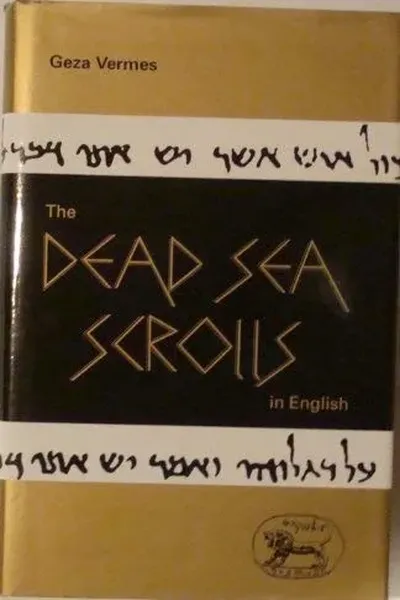
The Dead Sea scrolls in English

 84
84

The Dead Sea scrolls in English
Géza Vermès’s "The Dead Sea Scrolls in English" is less a popular retelling and more a rigorous scholarly tool. Its strength lies in Vermès’s meticulous translation and his persistent, often revisionist, interpretations that have shaped decades of scholarship. He consistently anchors his arguments in textual evidence, urging readers to confront the scrolls directly rather than relying on secondary accounts. However, the sheer density of scholarly apparatus, while valuable, can present a steep learning curve for the uninitiated. The 1995 edition, while updated, retains the academic focus of its predecessors. For instance, Vermès’s detailed arguments regarding the Essene hypothesis and the scrolls’ relationship to figures like John the Baptist offer a distinct perspective, but one that requires careful consideration of his extensive footnotes. It remains an indispensable, if demanding, resource for serious study.
📝 Description
84
### What It Is
The Dead Sea Scrolls in English presents a pivotal translation and commentary on the ancient manuscripts discovered near the Dead Sea. Géza Vermès’s work offers access to texts that significantly altered scholarly understanding of Second Temple Judaism and early Christianity. This edition focuses on providing the original Hebrew and Aramaic texts alongside their English renderings, accompanied by Vermès’s extensive notes.
### Who It's For
This volume is essential for scholars of ancient religion, early biblical studies, and the historical Jesus movement. It also serves students and general readers interested in the origins of Western religious thought and the textual history of key religious traditions. Anyone seeking direct engagement with these foundational documents will find this a crucial resource.
### Historical Context
The scrolls, primarily dating from the 3rd century BCE to the 1st century CE, were discovered between 1947 and 1956. Their contents reveal a diverse landscape of Jewish belief and practice in the period preceding the rise of Rabbinic Judaism and Christianity. Vermès’s initial publication in 1962, and subsequent revisions like the 1995 edition, engaged directly with the ongoing scholarly debate surrounding the scrolls' interpretation, challenging previous assertions about their origins and sectarian affiliations.
### Key Concepts
The texts include biblical manuscripts, apocryphal works, and sectarian documents, offering unique insights into Jewish law, messianic expectations, and eschatological beliefs prevalent at the time. Vermès’s analysis highlights the community’s distinct interpretations of scripture and their communal practices, providing a window into a form of Judaism that coexisted with, and influenced, the development of early Christianity.
💡 Why Read This Book?
• Understand the specific sectarian context of Second Temple Judaism by examining texts attributed to groups like the Essenes, as translated and analyzed by Vermès. • Gain direct access to ancient Hebrew and Aramaic religious writings, moving beyond secondary interpretations to engage with primary source material. • Appreciate the scholarly debates surrounding the scrolls' origins and meaning, particularly Vermès’s influential arguments from the 1960s onwards, which challenged previous assumptions.
⭐ Reader Reviews
Honest opinions from readers who have explored this book.
❓ Frequently Asked Questions
When were the Dead Sea Scrolls discovered and by whom?
The Dead Sea Scrolls were discovered between 1947 and 1956 in caves near the ancient settlement of Qumran on the northwest shores of the Dead Sea. The initial discoveries were made by local Bedouin shepherds.
What languages are the Dead Sea Scrolls written in?
The majority of the Dead Sea Scrolls are written in Hebrew, with a significant portion in Aramaic. A smaller number are written in Greek. This translation by Géza Vermès focuses on providing English renderings of these original languages.
What is the significance of Géza Vermès's translation?
Géza Vermès's translation is highly regarded for its scholarly rigor and its contribution to understanding the historical Jesus and early Judaism. His work, first published in the 1960s, offered influential interpretations of the scrolls' sectarian context.
Are the Dead Sea Scrolls religious texts?
Yes, the Dead Sea Scrolls are primarily religious texts. They include copies of books from the Hebrew Bible, as well as other Jewish writings from the Second Temple period that discuss theology, law, and eschatology.
What is the Qumran community?
The Qumran community is the name given to the likely inhabitants of Qumran, a settlement near the caves where the scrolls were found. Many scholars, including Vermès, associate this community with the Essenes, a Jewish sect of the Second Temple period.
How does this book differ from other translations of the Dead Sea Scrolls?
Vermès's 1995 edition of 'The Dead Sea Scrolls in English' is distinguished by its comprehensive scholarly commentary and its focus on presenting the texts within their specific historical and religious milieu, particularly its engagement with Second Temple Judaism.
🔮 Key Themes & Symbolism
Sectarian Judaism of the Second Temple Period
This translation illuminates the diverse religious landscape of Judaism before the destruction of the Second Temple in 70 CE. Vermès’s commentary emphasizes the distinct beliefs and practices of groups like the Essenes, whose texts constitute a significant portion of the scrolls. The work explores their unique interpretations of biblical law, their communal structures, and their eschatological outlook, revealing a form of Judaism that existed alongside, and influenced, the nascent Christian movement. It challenges monolithic views of ancient Judaism, presenting it as a dynamic field of competing interpretations and communal expressions.
Messianic and Eschatological Expectations
A central theme in the scrolls is the anticipation of future redemption and the coming of messianic figures. Vermès’s analysis highlights the variety of these expectations, which often differed from later Christian interpretations. The texts reveal a deep concern with divine judgment, the end of days, and the establishment of a new covenant or kingdom. Understanding these varied prophetic and apocalyptic visions, as presented in this translation, is crucial for grasping the spiritual climate that fostered both early Jewish messianic movements and the emergence of Christianity.
Textual Criticism and Biblical Interpretation
The Dead Sea Scrolls represent the oldest known manuscripts of many books of the Hebrew Bible. This volume, through Vermès’s scholarship, engages directly with issues of textual transmission and biblical interpretation. It showcases how ancient Jewish communities understood and utilized their sacred texts, often in ways that diverged from later rabbinic or Christian traditions. The work’s detailed textual notes and comparative analyses demonstrate the critical importance of these scrolls for understanding the development of the biblical canon and the history of religious thought.
The Historical Jesus and Early Christianity
Vermès’s work is particularly noted for its engagement with the question of the historical Jesus. By providing translations and context for Jewish texts contemporary to Jesus, the book allows readers to assess his teachings and the origins of Christianity against the backdrop of Second Temple Judaism. The scrolls reveal parallels in language, concepts, and eschatological fervor, suggesting that Jesus and his early followers were deeply embedded within the existing Jewish religious milieu. This translation serves as a vital primary source for anyone studying the roots of Christianity.
💬 Memorable Quotes
“The scrolls reveal a Judaism that was far from monolithic.”
— This statement captures the essence of Vermès's argument: the discovery shattered previous assumptions of a uniform Jewish practice before 70 CE, instead exposing a vibrant, diverse, and often contentious religious landscape.
“The community of Qumran saw itself as the true remnant of Israel.”
— This highlights the strong sense of identity and perceived divine election within the sect associated with the scrolls, suggesting a belief in their unique role in fulfilling ancient prophecies and awaiting divine intervention.
“Messianic expectations were varied and complex.”
— This paraphrase points to the multiplicity of figures and roles envisioned as messianic within the scroll texts, contrasting with more singular or later-developed concepts and underscoring the dynamic nature of these beliefs.
“Biblical interpretation was a living, evolving practice.”
— This reflects the understanding that the ancient Jews who produced the scrolls did not simply read scripture passively but actively reinterpreted it through commentaries and new legal or theological formulations.
“Jesus and his early followers were deeply rooted in their Jewish context.”
— This interpretation underscores Vermès's central thesis: to understand early Christianity, one must first understand the Jewish world from which it emerged, as illuminated by the Dead Sea Scrolls.
🌙 Esoteric Significance
Tradition
While not strictly an 'esoteric' text in the vein of Hermeticism or Kabbalah, the Dead Sea Scrolls, particularly the sectarian documents, possess significant esoteric appeal due to their exploration of hidden knowledge, spiritual purity, and apocalyptic visions. They fit within the broader tradition of Jewish mysticism and apocalyptic literature that predates and influences later esoteric developments. Vermès’s work makes these texts accessible, allowing engagement with a form of ancient Jewish spirituality that sought direct divine revelation and understanding of cosmic events, aligning with esoteric interests in hidden truths and spiritual transformation.
Symbolism
The scrolls contain rich symbolism pertinent to esoteric interpretation. Concepts like 'the New Covenant' represent not just a legal or religious agreement but a spiritual renewal and a purified community, often symbolized by light versus darkness. The emphasis on ritual purity and separation from the profane world can be seen as a symbolic shedding of the material to achieve spiritual clarity. Furthermore, the apocalyptic imagery of cosmic battles between forces of good and evil reflects a dualistic worldview common in many esoteric traditions, signifying the ongoing struggle for spiritual ascendancy.
Modern Relevance
Contemporary scholars of Jewish mysticism, comparative religion, and even certain branches of New Age spirituality continue to draw upon the insights Vermès provided regarding the Dead Sea Scrolls. Thinkers exploring the roots of Gnosticism, the historical Jesus, and early Christian heterodoxies often reference Vermès’s work for its detailed textual analysis and contextualization. Practices that emphasize communal living, rigorous spiritual discipline, and the pursuit of 'hidden' scriptural meanings find echoes in the Qumran texts, demonstrating the enduring relevance of this ancient material for contemporary spiritual seekers.
👥 Who Should Read This Book
• Students of comparative religion and biblical studies seeking to understand the diverse landscape of Second Temple Judaism and its relationship to early Christianity. • Researchers interested in the historical Jesus and the origins of Christian thought, who require direct access to primary texts and scholarly interpretation. • Individuals drawn to ancient apocalyptic literature and messianic prophecies, looking to explore these themes within their original historical and religious context.
📜 Historical Context
The discovery of the Dead Sea Scrolls between 1947 and 1956 occurred during a period of intense scholarly interest in the origins of Christianity and the nature of Second Temple Judaism. The post-World War II era saw a surge in archaeological and textual research aimed at understanding the historical Jesus. Géza Vermès’s initial translation and commentary, published in 1962, emerged amidst debates dominated by figures like William F. Albright and Roland de Vaux, who were grappling with the scrolls' attribution and implications. Vermès's work was notable for challenging prevailing theories, particularly those that sought to isolate the Qumran community from broader Jewish trends or to minimize its connection to early Christianity. The reception was significant; while initially controversial, his scholarship profoundly influenced subsequent generations of researchers, shifting the discourse towards viewing Jesus and early Christianity as deeply embedded within the diverse Jewish matrix of the 1st century CE.
📔 Journal Prompts
The concept of the 'Community Rule' and its implications for communal living.
The variety of messianic expectations present in the scrolls.
Qumran's interpretation of biblical law versus later traditions.
The symbolism of light and darkness in sectarian texts.
The scrolls' contribution to understanding the historical Jesus.
🗂️ Glossary
Second Temple Period
The era of Jewish history from the rebuilding of the Second Temple in Jerusalem around 516 BCE to its destruction by the Romans in 70 CE. This period was marked by significant religious, political, and social developments.
Essenes
A Jewish sect of the Second Temple period, known for its asceticism, communal living, and strict adherence to purity laws. Many scholars associate the Qumran community with the Essenes.
Apocalyptic Literature
A genre of literature that typically deals with revelations about the end of the world, divine judgment, and the ultimate triumph of good over evil, often featuring symbolic visions and prophecies.
Messiah
In Jewish tradition, a divinely appointed leader or savior, often expected to restore Israel and establish an era of peace and justice. The scrolls show varied expectations regarding messianic figures.
Qumran
An ancient settlement near the Dead Sea, associated with the caves where the Dead Sea Scrolls were discovered. It is believed by many to have been a center for a Jewish sectarian community.
Hebrew Bible
The collection of sacred books considered the authoritative scripture in Judaism, comprising the Torah (Law), Nevi'im (Prophets), and Ketuvim (Writings). The scrolls include many of its earliest manuscripts.
Aramaic
An ancient Semitic language closely related to Hebrew, widely spoken in the Near East during the Second Temple period. Many of the Dead Sea Scrolls are written in Aramaic.