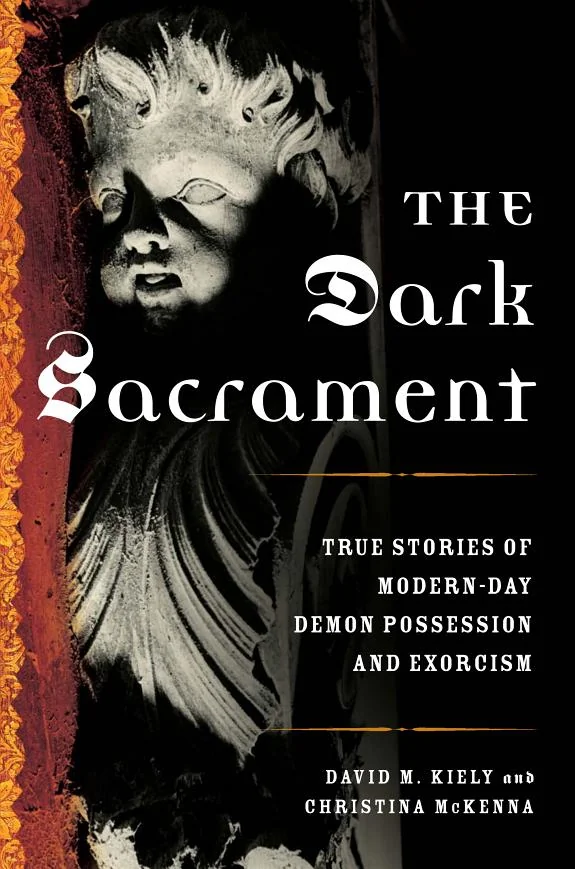
The Dark Sacrament
 74
74

The Dark Sacrament
David Kiely and Christina McKenna's *The Dark Sacrament* eschews theoretical abstraction for raw, reported experience, offering a stark look at ten modern cases of demonic influence and exorcism. The strength lies in its direct reporting; the authors interviewed victims, families, and clergy, including Protestant Canon William Lendrum and Catholic Father Ignatius McCarthy, lending an air of authenticity to the harrowing accounts. The book doesn't shy away from the visceral reality of these alleged possessions, presenting the rituals and their aftermath with unflinching detail. However, its limitation is a lack of critical analysis; the collected testimonies are presented largely without skeptical counterpoint or deeper theological deconstruction, leaving the reader to weigh the evidence themselves. One particularly potent section details the extensive preparatory rites before an exorcism, underscoring the gravity and methodical nature of the clergy's involvement. Ultimately, *The Dark Sacrament* serves as a compelling, if uncritical, compendium of contemporary exorcism cases.
📝 Description
74
### What It Is
The Dark Sacrament presents ten contemporary accounts of alleged demonic possession, hauntings, and the subsequent rites of exorcism. Co-authored by David Kiely and Christina McKenna, this 2007 work meticulously details these cases, drawing on extensive interviews with those directly involved: victims, families, witnesses, and the clergy who performed the exorcisms. The book focuses on the practical application of spiritual warfare, offering a ground-level view of these often-misunderstood phenomena.
### Who It's For
This volume is intended for readers with a serious interest in the paranormal and the occult, specifically those who seek documented evidence and firsthand accounts rather than speculative fiction. It appeals to researchers of religious phenomena, comparative religion students, and individuals exploring the boundaries of faith and the supernatural. Those curious about the efficacy and practice of exorcism within both Protestant and Catholic traditions will find substantial material here.
### Historical Context
Published in 2007, The Dark Sacrament emerged during a period of renewed public fascination with the occult and paranormal, fueled by popular culture and the internet. While not a direct academic discourse, it contributes to the ongoing dialogue surrounding spiritual warfare and unexplained phenomena. The work contrasts with purely sensationalist accounts by grounding its narratives in reported interviews and the documented actions of specific religious figures.
### Key Concepts
The book fundamentally explores the concept of spiritual warfare, presenting alleged demonic possession not as mere psychological distress but as an external, malevolent spiritual influence requiring direct intervention. It examines the rituals of exorcism as practiced by distinct religious authorities, highlighting the differing approaches and theological underpinnings. The role of faith, community support, and the psychological states of those involved are implicitly or explicitly addressed throughout the case studies.
💡 Why Read This Book?
• Gain insight into the practical application of exorcism rites as performed by both Protestant and Roman Catholic clergy, as detailed through interviews with figures like Father Ignatius McCarthy. • Understand the reported psychological and spiritual states of individuals allegedly experiencing demonic possession, as documented in the ten contemporary case studies presented. • Explore the concept of spiritual warfare through firsthand accounts, examining the methods and beliefs surrounding confronting malevolent spiritual forces, as described by victims and their families.
⭐ Reader Reviews
Honest opinions from readers who have explored this book.
❓ Frequently Asked Questions
What specific types of paranormal phenomena are documented in 'The Dark Sacrament'?
The book documents ten contemporary cases focusing on alleged demonic possession, haunted houses, and the performance of exorcism rites by both Protestant and Catholic clergy.
Who are the primary religious figures profiled in the book?
The work profiles two living, active exorcists: Canon William Lendrum, a Protestant, and Father Ignatius McCarthy, a Roman Catholic.
What was the original publication year of 'The Dark Sacrament'?
The book was first published on October 9, 2007, by David Kiely and Christina McKenna.
Did the authors conduct interviews for the book?
Yes, David Kiely and Christina McKenna conducted extensive interviews with victims, families, witnesses, and clergy involved in multiple exorcism rites.
What is the main focus of the case studies in 'The Dark Sacrament'?
The case studies focus on contemporary accounts of demon possession, haunted houses, and the rituals of exorcism, providing detailed narratives from those directly involved.
What traditions of exorcism does the book explore?
The book explores the practices of exorcism within both Roman Catholic and Protestant traditions, profiling specific clergy members from each.
🔮 Key Themes & Symbolism
Contemporary Exorcism Practices
The work meticulously details modern instances of alleged demonic possession and the subsequent rites of exorcism. It highlights the involvement of specific religious figures like Canon William Lendrum and Father Ignatius McCarthy, showcasing the practical, hands-on approach to spiritual warfare. The book contrasts with historical accounts by focusing on very recent cases, drawn from extensive interviews, offering a grounded perspective on these often-taboo subjects within both Protestant and Catholic contexts.
Spiritual Warfare and Demonic Influence
At its core, The Dark Sacrament posits the reality of malevolent spiritual entities and their influence on human lives and locations. It presents possession and hauntings not as mere psychological phenomena but as direct spiritual attacks requiring targeted intervention. The book explores the theological underpinnings and practical application of confronting these forces, emphasizing the faith and ritual required for such spiritual battles as described by witnesses and clergy.
The Role of Clergy and Witnesses
The book underscores the critical role of religious authorities and community members in addressing alleged demonic activity. By profiling active exorcists and interviewing victims, families, and witnesses, Kiely and McKenna illuminate the collaborative effort involved in these complex situations. The narratives emphasize the trust placed in clergy like Father Ignatius McCarthy and the support networks necessary for those undergoing or assisting in exorcism rites.
Haunted Houses and Poltergeist Activity
Beyond individual possession, The Dark Sacrament also investigates cases of alleged hauntings and poltergeist activity. These accounts are presented through the lens of spiritual intervention, exploring how religious rites are applied to locations believed to be afflicted by negative spiritual presences. The focus remains on documented events and the responses of faith-based practitioners, providing a consistent, investigative approach to these diverse paranormal claims.
💬 Memorable Quotes
“Ten contemporary cases of demon possession, haunted houses, and exorcism.”
— This concise summary highlights the book's core subject matter, establishing its focus on modern occurrences of supernatural phenomena and the religious responses to them.
“Profiles of two living, active exorcists: Canon William Lendrum and Father Ignatius McCarthy.”
— This points to the book's unique angle of examining contemporary, active practitioners, offering direct insight into the current state of exorcism within different Christian denominations.
“Interviews with victims, families, witnesses, and clergy.”
— This emphasizes the book's reliance on firsthand accounts and primary source testimony, suggesting a grounded, investigative approach to sensitive and often debated topics.
“Many of the accounts are very recent.”
— This detail underscores the contemporary relevance of the cases presented, differentiating the work from historical surveys and focusing on phenomena as they are reported today.
“Faithfully recount...”
— The authors' stated intent to 'faithfully recount' suggests a commitment to objective reporting of the events and testimonies, aiming to present the facts as they were gathered.
🌙 Esoteric Significance
Tradition
While not strictly adhering to a single lineage like Hermeticism or Gnosticism, *The Dark Sacrament* operates within the broader tradition of Christian demonology and spiritual warfare. It examines practical applications of faith-based practices aimed at confronting perceived malevolent spiritual forces, a theme present across various esoteric interpretations of Christianity. The work's focus on empirical accounts and ritualistic practices aligns with traditions that emphasize direct experience and intervention in the spiritual realm.
Symbolism
The primary symbolism revolves around the ritualistic elements of exorcism itself, representing the battle between divine authority and demonic influence. Symbols of purity, divine invocation (e.g., prayers, holy water), and the physical confinement or expulsion of perceived entities are central. The 'haunted house' motif symbolizes a space corrupted by negative spiritual energy, requiring purification and restoration through sacred rites. These symbols function to demarcate spiritual boundaries and enact perceived cosmic order.
Modern Relevance
Contemporary interest in spiritual warfare, deliverance ministries, and paranormal investigations continues to draw on the kind of documented case studies found in *The Dark Sacrament*. Thinkers and practitioners exploring the intersection of psychology, religion, and the supernatural often reference such accounts. The book remains relevant for those studying modern religious movements, fringe spiritual practices, and the ongoing cultural dialogue surrounding unexplained phenomena and their perceived spiritual causes.
👥 Who Should Read This Book
• Researchers of comparative religion and paranormal phenomena: Individuals seeking documented case studies of alleged demonic possession and exorcism from contemporary Christian traditions will find detailed accounts. • Students of spiritual warfare and deliverance ministries: Those interested in the practical application of religious rites to combat perceived negative spiritual influences will benefit from the profiles of Canon William Lendrum and Father Ignatius McCarthy. • General readers fascinated by occult and supernatural accounts: Individuals curious about firsthand testimonies of hauntings and exorcisms, presented through extensive interviews, will find compelling narratives.
📜 Historical Context
Published in 2007, *The Dark Sacrament* arrived during a resurgence of interest in paranormal investigation and occult themes, amplified by digital media. It stands apart from purely sensationalist ghost stories by grounding its narratives in extensive interviews with individuals directly involved in alleged possession and exorcism cases. The work engaged with a public discourse increasingly fascinated by the supernatural, offering documented accounts that contrasted with more speculative or fictionalized portrayals. While not directly engaging with academic critiques of demonology, the book’s focus on active practitioners like Canon William Lendrum and Father Ignatius McCarthy provided a contemporary counterpoint to historical theological debates. Its reception was likely influenced by a broader cultural trend exploring religious experiences and unexplained phenomena, a trend also seen in contemporaries like the works of popular paranormal investigators and the continued presence of figures such as televangelists discussing spiritual warfare.
📔 Journal Prompts
The reported preparatory rites for exorcism.
The distinction between Protestant and Catholic exorcism approaches.
The role of family and community support in possession cases.
The nature of alleged demonic influence on locations.
The psychological states of those involved in exorcism.
🗂️ Glossary
Demon Possession
The alleged state where a malevolent spiritual entity is believed to have taken control of an individual's body and/or mind, influencing their thoughts and actions.
Exorcism
A religious rite or ritual performed to expel a demon or malevolent spirit from a person, place, or object, typically involving prayers, incantations, and sacred objects.
Haunted House
A location, typically a building, believed to be inhabited by spirits of the deceased or other non-physical entities, often manifesting as unexplained phenomena.
Spiritual Warfare
The concept of engaging in a conflict against perceived malevolent spiritual forces, often through prayer, ritual, and adherence to religious doctrine.
Clergy
Ordained ministers or religious officials within a religious institution, such as priests or pastors, who may be involved in performing spiritual rites.
Contemporary Cases
Refers to events or phenomena that have occurred in the recent past, as opposed to historical accounts, highlighting the book's focus on current reported instances.
Poltergeist Activity
A type of alleged paranormal phenomenon characterized by physical disturbances such as loud noises, moving objects, and physical assaults, often attributed to a specific human agent or unseen entity.