The Context of Scripture
 71
71

The Context of Scripture
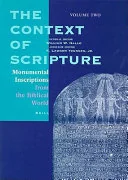
Volume II of The Context of Scripture presents a sober, scholarly approach to ancient Near Eastern commemorative and devotional texts. The strength lies in its direct presentation of primary materials, allowing the historical weight of royal decrees and personal appeals to speak for themselves, a welcome departure from overly interpretive secondary analyses. The editors' commitment to historical context is evident, particularly in the sections detailing inscriptions meant to memorialize rulers. However, the sheer volume of academic apparatus, while necessary for scholarly rigor, can occasionally obscure the immediate impact of the texts for a less specialized reader. A standout element is the careful curation of texts that demonstrate the symbiotic relationship between imperial ambition and religious expression, such as the examination of Mesopotamian royal inscriptions. The work serves as an essential, if dense, resource for understanding ancient societies through their own recorded words, functioning as a critical reference rather than a narrative exploration.
📝 Description
71
### What It Is
The Context of Scripture, Volume II, offers a critical examination of ancient Near Eastern texts, focusing specifically on documents intended to commemorate rulers' achievements and express the piety of ordinary individuals. Published initially in 1997, this collection presents primary source material, allowing readers direct access to the historical and religious expressions of ancient civilizations. It moves beyond purely theological discourse to encompass the broader social and political functions of written records in antiquity.
### Who It's For
This volume is designed for scholars, students, and serious researchers of ancient history, comparative religion, and Near Eastern studies. It appeals to those who seek to understand ancient societies through their own inscribed words, particularly where royal propaganda and personal devotion intersect. Individuals interested in the genesis of monumental inscription and the expression of loyalty in pre-modern contexts will find this work particularly valuable.
### Historical Context
This compilation emerges from a period of intense scholarly interest in the comparative study of ancient Mediterranean and Near Eastern cultures. The late 20th century saw a drive to move beyond isolated textual analyses, fostering an environment where works like Hallo and Younger's could synthesize disparate materials. The intention was to provide a foundational resource for understanding the cultural milieu that shaped early religious and political thought, situating these texts within their original historical settings, a practice championed by scholars like Thorkild Jacobsen in earlier decades.
### Key Concepts
The core concepts revolve around the function of ancient texts as instruments of power, memory, and devotion. The volume examines how rulers commissioned inscriptions for self-aggrandizement and statecraft, while also considering how common people articulated their faith and social standing. This duality highlights the varied roles of writing in ancient societies, from official pronouncements to personal prayers and votive offerings, underscoring the interplay between the elite and the populace.
💡 Why Read This Book?
• Gain direct access to ancient Near Eastern commemorative and devotional texts, understanding firsthand how rulers memorialized achievements and subjects expressed piety, as presented in the 1997 publication. • Explore the historical function of inscriptions in shaping memory and expressing loyalty, moving beyond theological interpretations to grasp their socio-political roles. • Analyze the interplay between elite pronouncements and personal devotion through specific examples within the collection, revealing the diverse uses of writing in antiquity.
⭐ Reader Reviews
Honest opinions from readers who have explored this book.
❓ Frequently Asked Questions
What distinguishes Volume II of 'The Context of Scripture' from other ancient text collections?
Volume II specifically focuses on 'historical' texts, emphasizing those where rulers documented their accomplishments and commoners expressed loyalty or piety, distinguishing it from collections focused solely on myths or legal codes.
Who are the primary editors of 'The Context of Scripture' Volume II?
The primary editors responsible for this volume, first published in 1997, are William W. Hallo, K. Lawson Younger, and David E. Orton.
What types of ancient monuments are discussed in Volume II?
The volume discusses monuments where rulers sought to immortalize their achievements and where lesser mortals conveyed their devotion or allegiance, encompassing a range of official and personal inscriptions.
Does 'The Context of Scripture' Volume II include translations or original languages?
While the original publication primarily presents texts within their historical and scholarly context, it typically includes translations and critical apparatus for accessibility to a wider academic audience.
What is the main purpose of the 'historical' texts featured in this volume?
The main purpose of these texts is to serve as historical records, documenting significant events, ruler's self-portrayals, and expressions of public or private devotion, thereby offering insights into ancient societal values.
When was 'The Context of Scripture' Volume II first published?
The Context of Scripture, Volume II, was first published in 1997, reflecting scholarly understanding and research from that period.
🔮 Key Themes & Symbolism
Royal Self-Memorialization
This volume meticulously examines inscriptions commissioned by ancient rulers, such as Mesopotamian kings, designed to immortalize their reigns and military victories. These texts functioned as early forms of propaganda and historical record-keeping, aiming to legitimize power and ensure lasting fame. The careful selection of monuments allows readers to analyze the rhetoric of kingship and the construction of dynastic narratives, revealing how authority was projected and maintained through written and monumental means.
Expression of Piety and Loyalty
Beyond the grand pronouncements of rulers, Volume II delves into the expressions of devotion and loyalty from individuals of lesser status. This includes votive offerings, personal prayers inscribed on objects, and dedications to deities or sovereigns. These texts offer a crucial counterpoint to royal narratives, illuminating the religious landscape and the social fabric of ancient societies by showing how ordinary people interacted with divine and political powers.
Text as Historical Artifact
The collection treats ancient writings not merely as literature or religious doctrine but as critical historical artifacts. By presenting these texts within their original contexts, the editors underscore their function in shaping memory, communicating social values, and serving political ends. This perspective highlights the active role of inscription in the ancient world, demonstrating how written records were integral to the functioning of societies and the projection of power.
Comparative Cultural Studies
The compilation facilitates comparative studies by bringing together diverse textual traditions from across the ancient Near East. This allows for an examination of common themes in commemoration and piety, as well as unique cultural expressions. By situating these texts side-by-side, scholars can identify broader patterns in human attempts to record achievements, express faith, and solidify social bonds across different civilizations and eras.
💬 Memorable Quotes
“monuments in which the rulers attempted to memorialize their achievements”
— This phrase encapsulates the core focus on texts serving as historical records of royal accomplishments, highlighting their function in constructing a lasting legacy for the sovereign.
“lesser mortals expressed their loyalty or piety”
— This points to the inclusion of texts from non-elite individuals, revealing personal religious devotion and allegiance to rulers or deities, offering a glimpse into common societal values.
“historical texts: the monuments”
— This direct statement emphasizes the volume's commitment to primary source material that functions as a historical document, specifically focusing on inscriptions found on monuments.
“Volume II emphasizes "historical" texts”
— This highlights the specific editorial decision to prioritize documents with direct bearing on historical events and societal structures, rather than purely mythological or ritualistic content.
“memorialize their achievements”
— This describes the deliberate act by rulers to create lasting records of their accomplishments, serving purposes of remembrance, self-aggrandizement, and historical narrative construction.
🌙 Esoteric Significance
Tradition
While not explicitly esoteric in the Hermetic or Kabbalistic sense, this work serves as foundational research for esoteric traditions that draw heavily on ancient Near Eastern mythologies and historical accounts. It provides the raw source material, uninterpreted by modern occultists, allowing for direct engagement with the ancient worldview. Its value lies in offering the historical 'bones' upon which later esoteric interpretations are built, respecting the original cultural context before overlaying mystical frameworks.
Symbolism
The texts within this volume often contain nascent forms of symbolism that later esoteric traditions would adopt or adapt. For instance, royal inscriptions frequently employ symbols of divine kingship, authority (like sceptres or crowns), and cosmic order, reflecting an ancient understanding of the ruler as a mediator between the divine and earthly realms. Expressions of piety might involve symbols of protection, purification, or divine favor, which echo in later magical and religious practices.
Modern Relevance
Contemporary scholars and practitioners interested in the historical roots of Western esotericism, particularly those exploring the origins of Gnostic ideas or early mystical interpretations of scripture, find this volume indispensable. It informs studies on the historical Jesus movement, early Christianity's Jewish context, and the evolution of divine imagery. Thinkers engaged in deep historical research for occult or philosophical systems often consult such foundational texts to ground their work in verifiable ancient realities.
👥 Who Should Read This Book
• Researchers in Ancient Near Eastern History: Individuals studying the political, social, and religious structures of civilizations like Mesopotamia and Egypt will find primary source material crucial for their work. • Comparative Religion Scholars: Those interested in the development of religious thought, piety, and the expression of loyalty across ancient cultures will benefit from the diverse textual examples. • Students of Monumental Inscriptions: Anyone focusing on the history and function of public monuments and their inscribed texts, particularly concerning royal propaganda and historical commemoration, should consult this volume.
📜 Historical Context
Published in 1997, The Context of Scripture, Volume II, emerged during a period of robust interdisciplinary engagement with ancient Near Eastern studies. The late 20th century saw a concerted effort to synthesize disparate textual evidence from civilizations like Mesopotamia, Egypt, and Canaan, moving beyond philological isolation. This volume directly contributed to that trend by providing scholars with access to key 'historical' texts—those concerning royal commemoration and personal piety—that were central to understanding the socio-political and religious dynamics of the era. It stood alongside contemporaneous works from scholars like James K. Hoffmeier and the ongoing efforts in comparative literature and history. The intellectual currents favored contextualization, seeking to understand ancient texts within their original cultural and political frameworks, a methodology that had been significantly advanced by earlier scholars like Samuel Noah Kramer.
📔 Journal Prompts
Royal self-memorialization: How did ancient rulers use inscriptions to construct their legacy?
Lesser mortals' expressions: What do devotional texts reveal about the common person's worldview?
The function of monuments: Beyond art, what purpose did inscribed monuments serve in antiquity?
Comparing ancient texts: What commonalities and differences appear in commemorative texts across cultures?
Historical records: How do these texts function as primary sources for understanding ancient societies?
🗂️ Glossary
Commemorative Texts
Written or inscribed materials created to honor or remember significant events, achievements, or individuals, often serving historical and propagandistic purposes.
Devotional Texts
Writings or inscriptions expressing religious faith, prayer, or worship, typically intended to communicate with or honor a deity or divine power.
Monumental Inscriptions
Texts carved or inscribed onto large structures like temples, palaces, stelae, or statues, intended for public display and often recording royal deeds or religious dedications.
Rulers' Achievements
The accomplishments, victories, building projects, or administrative successes of kings and sovereigns, frequently documented in official inscriptions for posterity.
Expression of Loyalty
The act of demonstrating allegiance, faithfulness, or support towards a sovereign, authority figure, or deity, often through written dedication or public declaration.
Primary Source Material
Original documents or artifacts from the time period under study, offering direct evidence of events, people, or ideas, such as ancient inscriptions.
Near Eastern Civilizations
Ancient societies that flourished in the geographical region of Western Asia and Northeast Africa, including Mesopotamia, Egypt, Anatolia, and the Levant.










![The Complete Tales & Poems of Edgar Allan Poe [67 stories, 50 poems, 5 essays]](/img/thumb/the-complete-tales-poems-of-edgar-allan-poe-67-stories-50-poems-5-essays-edgar-allan-poe-994433.webp)