The codex

 71
71

The codex
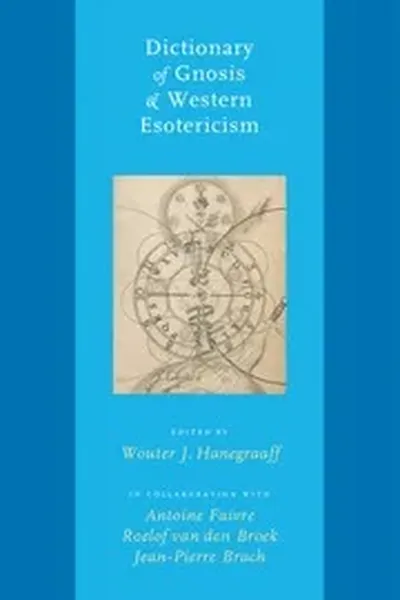
Cyrus Rumi's The Codex is a challenging, almost daunting, compendium that demands considerable prior knowledge. Its strength lies in its sheer density of information and its unique visual presentation, offering intricate diagrams that are themselves keys to understanding. The author’s refusal to simplify complex ideas is refreshing, though it can also be its primary limitation for those not already immersed in esoteric studies. A particularly striking section explores the relationship between specific alchemical symbols and astronomical conjunctions, demonstrating a meticulous, if esoteric, methodology. While not an easy read, it offers significant rewards for the dedicated scholar. The Codex serves as a potent reference for those seeking to map the unseen architecture of reality.
📝 Description
71
### What It Is The Codex, first published in 2008 by Cyrus Rumi, presents a dense exploration of esoteric philosophies and hidden knowledge. It is not a narrative text but rather a compilation of symbols, diagrams, and fragmented texts intended to guide the reader through complex metaphysical concepts. Its approach is axiomatic, offering pronouncements and structures for contemplation rather than explicit step-by-step instructions.
### Who It's For This work is designed for serious students of comparative mysticism and occult traditions. Readers should possess a foundational understanding of symbolic language and a willingness to engage with abstract ideas. It appeals to those who seek to synthesize disparate esoteric systems and uncover underlying universal principles, rather than beginners looking for introductory material.
### Historical Context Published in 2008, The Codex emerged during a period of increased interest in digital dissemination of esoteric knowledge, juxtaposed with a continued academic and popular fascination with ancient wisdom traditions. Rumi’s work can be seen as contributing to the late-20th and early-21st-century revival of interest in Gnosticism and Hermeticism, often presented through a lens that seeks commonalities across diverse spiritual paths.
### Key Concepts The book frequently references the concept of the 'Anima Mundi,' or World Soul, as a unifying principle. It also details intricate geometric patterns, often related to the Platonic solids and their perceived energetic correspondences. Another recurring theme is the exploration of 'liminal spaces,' understood as transitional states or dimensions crucial for spiritual progression.
💡 Why Read This Book?
• Gain an understanding of the 'Anima Mundi' as presented by Rumi, exploring its role in unifying disparate spiritual concepts, a key theme discussed in the book's foundational chapters. • Decipher the symbolic language of intricate geometric patterns, specifically the detailed diagrams connecting Platonic solids to energetic correspondences, offering unique visual keys. • Explore the concept of 'liminal spaces' as crucial transitional dimensions for spiritual advancement, a theoretical framework Rumi elaborates on extensively, providing new perspectives on personal transformation.
⭐ Reader Reviews
Honest opinions from readers who have explored this book.
❓ Frequently Asked Questions
What esoteric traditions does Cyrus Rumi draw upon in The Codex?
The Codex synthesizes elements from Gnosticism, Hermeticism, and Neoplatonism, focusing on universal symbolic language and metaphysical structures common across these ancient wisdom traditions.
Is The Codex suitable for absolute beginners in esoteric studies?
No, The Codex is best suited for readers with a foundational understanding of esoteric concepts, symbolism, and comparative mysticism due to its dense and abstract nature.
What is the significance of the geometric diagrams within The Codex?
The diagrams illustrate complex metaphysical relationships, often connecting Platonic solids to cosmic principles and energetic correspondences, serving as visual aids for abstract concepts.
When was The Codex first published and by whom?
The Codex was first published in 2008 by Cyrus Rumi, contributing to the early 21st-century discourse on esoteric philosophy.
Does The Codex offer practical exercises or meditations?
While not explicitly structured as a guide to practical exercises, the book's dense symbolic material and conceptual frameworks are intended to inspire contemplation and personal interpretation.
What does 'Anima Mundi' refer to in the context of The Codex?
'Anima Mundi' signifies the World Soul, a concept Rumi uses to explore the interconnectedness of all things and the underlying sentient principle of the universe.
🔮 Key Themes & Symbolism
The Unified Field of Being
The Codex posits an underlying 'Anima Mundi,' or World Soul, as the fundamental unifying principle of existence. Rumi meticulously outlines how diverse esoteric traditions, from Hermeticism to Gnosticism, implicitly or explicitly reference this singular consciousness. The work suggests that apparent divisions in reality are illusory, stemming from a limited human perception that fails to grasp the interconnectedness of all phenomena. This unified field is not merely passive but an active, sentient force shaping the cosmos.
Geometric Architectures of Reality
Central to Rumi's exploration are the intricate geometric diagrams, particularly those involving Platonic solids and their symbolic associations. The text argues that these forms are not abstract mathematical constructs but fundamental blueprints of creation, reflecting cosmic order and energetic frequencies. Each solid is presented as a key to understanding specific energetic potentials and their manifestation in both the macrocosm and microcosm, guiding the reader to perceive the geometric underpinnings of existence.
Liminality and Transmutation
The concept of 'liminal spaces' is explored as critical junctures in spiritual development and cosmic cycles. These are not physical locations but transitional states where transformation occurs. The Codex suggests that understanding and navigating these threshold energies is paramount for any meaningful esoteric progression. It implies that consciousness itself operates in flux, moving between states of being, and that mastery lies in comprehending the dynamics of these fluid, in-between realms.
The Language of Symbols
Rumi treats symbols not as mere representations but as living keys that unlock deeper layers of meaning. The Codex compiles and analyzes a vast array of esoteric symbols, from alchemical glyphs to astrological figures, demonstrating their interconnectedness and shared archetypal roots. The work emphasizes that true understanding comes from perceiving the pattern and resonance between disparate symbols, revealing a universal symbolic grammar that underlies all spiritual traditions.
💬 Memorable Quotes
“The geometry of the cosmos mirrors the geometry of the soul.”
— This statement encapsulates Rumi's view that the external order of the universe, expressed through mathematical and geometric principles, has a direct correspondence with the internal structure and potential of the human spirit.
“All paths converge upon the singular point of origin.”
— This paraphrase suggests that despite the apparent diversity of spiritual and mystical traditions, they ultimately lead back to a common source or ultimate reality, emphasizing unity over multiplicity.
“The void is not emptiness, but the matrix of all possibility.”
— This interpretation highlights Rumi's perspective on the primordial state, suggesting that what appears as nothingness is, in fact, the fertile ground from which all forms and potentials emerge.
“Liminality is the crucible of consciousness.”
— This interpretation emphasizes Rumi's belief that transitional states or 'in-between' moments are essential for profound change and the evolution of awareness.
“The World Soul breathes through every atom.”
— This paraphrase conveys the idea of the 'Anima Mundi' as a pervasive, animating force that imbues all of existence with life and consciousness.
🌙 Esoteric Significance
Tradition
The Codex deeply engages with the Hermetic and Gnostic traditions, drawing heavily on their emphasis on hidden knowledge, symbolic language, and the concept of a divine spark within humanity. It also incorporates Neoplatonic ideas regarding emanation and the unity of being. Rumi's contribution lies in his structured, almost architectural, presentation of these concepts, particularly through geometric symbolism, which offers a unique synthesis within the Western esoteric lineage.
Symbolism
Key symbols include the Platonic solids (tetrahedron, cube, octahedron, dodecahedron, icosahedron), which are presented not merely as geometric forms but as fundamental energetic archetypes corresponding to cosmic principles and elements. The 'Anima Mundi' serves as a central symbolic motif, representing the pervasive, sentient consciousness that connects all aspects of existence, from the smallest atom to the grandest cosmic structures.
Modern Relevance
Contemporary practitioners of Western esotericism, particularly those interested in Hermeticism, Gnosticism, and sacred geometry, frequently reference The Codex. Its structured approach appeals to modern thinkers seeking to integrate ancient wisdom with contemporary understanding. Schools focusing on consciousness studies and symbolic interpretation also find value in Rumi's detailed analysis of universal patterns and archetypes.
👥 Who Should Read This Book
• Students of Hermeticism and Gnosticism: Those seeking to deepen their understanding of these traditions will find Rumi's synthesis of symbolic and geometric principles illuminating. • Researchers of Comparative Mysticism: Individuals interested in tracing universal patterns across diverse spiritual paths will benefit from the book's cross-traditional analysis. • Practitioners of Sacred Geometry: Readers drawn to the metaphysical implications of geometric forms will appreciate the detailed exploration of Platonic solids and their cosmic correspondences.
📜 Historical Context
Published in 2008, Cyrus Rumi's The Codex emerged within a landscape increasingly shaped by the internet's capacity to disseminate esoteric texts, yet it retained the gravitas of traditional scholarship. The early 21st century saw a resurgence of interest in Gnostic and Hermetic traditions, often filtered through contemporary interpretations. Rumi's work contributed to this by offering a synthesized, geometrically-focused approach, distinct from the more purely textual analyses prevalent at the time. While not directly engaging with a specific contemporary author in its initial reception, its thematic concerns echoed broader discussions within comparative mysticism and the perennial philosophy. The work implicitly challenged purely materialistic scientific paradigms by presenting detailed symbolic and metaphysical frameworks for understanding reality, a stance shared by figures like the influential Theosophist Helena Blavatsky decades prior.
📔 Journal Prompts
The geometric architecture of the cosmos as a mirror to the soul.
Perceiving the 'Anima Mundi' in everyday phenomena.
The nature of 'liminal spaces' in personal transformation.
Interpreting the symbolic resonance between disparate esoteric symbols.
The relationship between Platonic solids and energetic potentials.
🗂️ Glossary
Anima Mundi
Latin for 'World Soul,' a concept referring to the inherent consciousness or animating principle believed to pervade and connect all of existence, unifying the cosmos.
Liminal Space
A transitional state or threshold between two different phases, conditions, or realms. In esoteric contexts, these are often seen as potent spaces for transformation and spiritual development.
Platonic Solids
The five convex regular polyhedra (tetrahedron, cube, octahedron, dodecahedron, icosahedron) believed by ancient philosophers, particularly Plato, to be fundamental building blocks of the universe and associated with specific elements or cosmic principles.
Esoteric
Intended for or likely to be understood by only a small number of people with a specialized knowledge or interest; pertaining to hidden or secret knowledge, particularly in mystical or spiritual traditions.
Gnosticism
A complex set of religious and philosophical ideas and systems that emerged in the first century CE, emphasizing salvation through secret knowledge (gnosis) and often positing a dualistic worldview.
Hermeticism
A religious, philosophical, and esoteric tradition based on writings attributed to Hermes Trismegistus, emphasizing the unity of all things and the potential for human spiritual ascent through understanding cosmic principles.
Metaphysics
A branch of philosophy that deals with the fundamental nature of reality, including the relationship between mind and matter, substance, attribute, cause and effect.