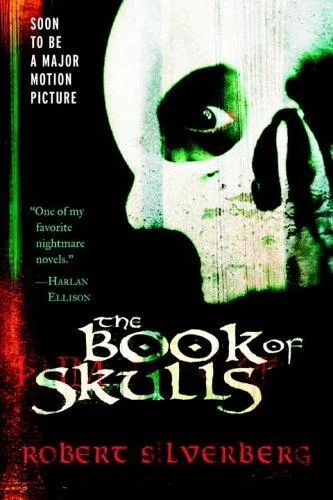
The Book of Skulls
 72
72

The Book of Skulls
Silverberg’s The Book of Skulls offers a chillingly plausible vision of eternal life, not as a divine gift, but as a meticulously engineered, deeply isolating transaction. The novel’s strength lies in its unflinching portrayal of the psychological toll on its protagonists, particularly the character of Thomas, whose internal conflict between desire for longevity and revulsion at the Nigh-Eternal's methods forms the narrative’s core. While the prose remains sharp and the premise compelling, the pacing in the latter half occasionally falters, becoming more expositional than experiential. The depiction of the brotherhood’s ritualistic practices, while unsettling, sometimes feels more like narrative necessity than organic development. Nevertheless, the book’s exploration of what it truly means to live, rather than merely exist indefinitely, remains its most potent achievement. The Book of Skulls is a stark examination of humanity's ultimate fear and desire.
📝 Description
72
<p>### What It Is</p><p></p><p>The Book of Skulls is a speculative fiction novel by Robert Silverberg, first published in 1984. It presents a narrative that interweaves elements of science fiction, philosophical inquiry, and existential dread. The story follows a group of individuals who are invited to join an exclusive, secretive brotherhood known as the Nigh-Eternal. This organization offers its members a form of immortality, but at a profound and unsettling cost.</p><p></p><p>### Who It's For</p><p></p><p>This work is intended for readers who appreciate literary science fiction that grapples with complex ethical and philosophical questions. Those interested in narratives exploring the human condition, the nature of consciousness, and the potential consequences of advanced technology or esoteric knowledge will find it engaging. It is particularly suited for those who do not shy away from darker themes and challenging resolutions.</p><p></p><p>### Historical Context</p><p></p><p>Published in 1984, The Book of Skulls emerged during a period of significant evolution in science fiction literature. Authors were increasingly pushing the boundaries of the genre, moving beyond space opera to explore more introspective and societal themes. Silverberg, already an established author, contributed to this shift with a novel that reflects anxieties about mortality, technological advancement, and the search for meaning in an increasingly complex world. The novel’s exploration of immortality and secret societies was a recurring motif in speculative fiction of the era.</p><p></p><p>### Key Concepts</p><p></p><p>The central concepts revolve around the pursuit of immortality, the nature of sacrifice, and the psychological impact of extreme existential choices. The Nigh-Eternal brotherhood represents an extreme attempt to transcend human limitations, raising questions about what constitutes a meaningful existence. The narrative examines whether a prolonged, altered existence is truly desirable when it necessitates the abandonment of core human experiences and relationships.</p>
⭐ Reader Reviews
Honest opinions from readers who have explored this book.
❓ Frequently Asked Questions
When was Robert Silverberg's The Book of Skulls first published?
The Book of Skulls by Robert Silverberg was first published in 1984, positioning it within the evolving landscape of speculative fiction in the late 20th century.
What is the central premise of The Book of Skulls?
The novel follows individuals invited to join the Nigh-Eternal, a secretive group offering a form of immortality, but requiring significant sacrifices and altering their existence fundamentally.
Does The Book of Skulls offer a hopeful vision of immortality?
No, the book presents a rather bleak and unsettling perspective on immortality, focusing on the psychological and existential costs rather than utopian benefits.
What kind of reader would appreciate The Book of Skulls?
Readers who enjoy philosophical science fiction, explorations of mortality, existential dread, and narratives that do not shy away from dark or ambiguous conclusions.
Are there any specific philosophical ideas explored in the book?
Yes, the book explores themes of consciousness, the nature of self, the value of human experience, and the ethics of life extension.
Who are the main characters or groups in The Book of Skulls?
The primary focus is on a group of prospective members of the Nigh-Eternal brotherhood, including key figures like Thomas, who grapple with the group's offer.
🔮 Key Themes & Symbolism
The Price of Eternity
The narrative fixates on the immense psychological and ethical toll exacted by the pursuit of immortality. The Nigh-Eternal brotherhood offers a path beyond death, but this promise is contingent upon profound personal sacrifice and a fundamental alteration of the self. The work scrutinizes whether transcending mortality is worth the forfeiture of essential human experiences, relationships, and even one's original identity. It questions the very definition of life when stripped of its finite nature and inherent struggles.
Consciousness and Identity
Central to the plot is the manipulation and preservation of consciousness. The Nigh-Eternal's methods raise questions about what constitutes the continuity of self. As characters undergo transformations to achieve longevity, the novel probes whether the resulting entity is truly the same individual. This exploration delves into the philosophical debate surrounding personal identity, memory, and the subjective experience of being, particularly under extreme duress.
Esoteric Knowledge as Power
The brotherhood operates on arcane knowledge and secretive practices, positioning esoteric understanding as a tool for ultimate power: control over life and death. The book implies that such forbidden or hidden wisdom, when wielded by a select few, can grant extraordinary capabilities. This theme touches upon the allure and danger of occult traditions that promise transcendence or dominion over natural laws.
The Human Condition
Beneath the science fiction elements, The Book of Skulls is a stark commentary on the human condition itself. It confronts the universal fear of death and the deep-seated desire for more time, while simultaneously highlighting the potential emptiness and horror that prolonged, unnatural existence might entail. The novel examines the value we place on life's impermanence and the meaning derived from its eventual end.
💬 Memorable Quotes
“The Nigh-Eternal offered a chance to escape the finality of death, a prospect that tantalized and terrified.”
— This encapsulates the core dilemma presented to the characters. It highlights the dual nature of immortality: a sought-after salvation that simultaneously invokes profound fear due to its unknown and potentially monstrous implications.
“To live forever, one might have to cease truly living.”
— This interpretation speaks to the central thematic tension of the novel. It suggests that the very act of achieving eternal life might necessitate the abandonment of the experiences, emotions, and connections that give human life meaning.
“The brotherhood's secrets were not merely knowledge, but a means to rewrite existence itself.”
— This emphasizes the transformative and potentially dangerous power attributed to the esoteric knowledge held by the Nigh-Eternal. It frames their lore not as academic study, but as a practical, reality-altering force.
“Thomas wrestled with the desire for endless days and the horror of what that entailed.”
— This captures the internal conflict of a key character, illustrating the profound psychological struggle between the instinct for self-preservation and the revulsion at the methods required to achieve it.
“Immortality was not a gift, but a carefully constructed cage.”
— This is a metaphorical interpretation of the outcome of joining the Nigh-Eternal. It suggests that the promised freedom from death leads instead to a form of confinement, limiting the individual in ways more profound than mortality itself.
🌙 Esoteric Significance
Tradition
While not strictly adhering to a single esoteric lineage, The Book of Skulls draws heavily on themes common in Western esotericism, particularly those concerning immortality, hidden knowledge, and secret societies. It echoes Gnostic ideas of escaping the material world and its limitations, and Hermetic notions of achieving mastery over natural laws. The Nigh-Eternal brotherhood functions as a clandestine order, reminiscent of fictionalized accounts of ancient mystery cults or alchemical guilds, seeking to unlock profound secrets of existence beyond the reach of ordinary humanity.
Symbolism
The most prominent symbol is the skull itself, representing not just death, but the ultimate prize of overcoming it. In the context of the Nigh-Eternal, the skull signifies a transformed existence, a purified or preserved consciousness detached from the frailties of the flesh. The number 'seven,' often associated with esoteric perfection and completion, also plays a role in the brotherhood's structure and rituals, suggesting an ordered, albeit unnatural, path to their desired state.
Modern Relevance
Contemporary interest in transhumanism, biohacking, and the philosophical implications of life extension technologies finds resonance in Silverberg's 1984 novel. Thinkers and practitioners exploring the ethical boundaries of artificial intelligence, consciousness uploading, and radical life extension can find a cautionary narrative in The Book of Skulls. The work remains relevant for discussions within philosophical circles and speculative fiction communities grappling with humanity's quest to transcend its biological destiny and the potential costs involved.
👥 Who Should Read This Book
['• Readers interested in philosophical science fiction: Those who enjoy narratives that pose deep questions about life, death, consciousness, and identity, moving beyond plot to explore complex ideas.', '• Students of existential themes: Individuals drawn to literature that confronts mortality, the search for meaning, and the psychological impact of extreme choices, particularly regarding longevity.', '• Fans of speculative fiction exploring secret societies: Readers who appreciate stories featuring clandestine organizations, ancient knowledge, and the pursuit of forbidden power, offering a unique take on such tropes.']
📜 Historical Context
Published in 1984, Robert Silverberg's The Book of Skulls emerged during a vibrant period for speculative fiction, marked by authors like Ursula K. Le Guin and Philip K. Dick exploring deeper philosophical and psychological themes. The novel arrived in an era where anxieties about technological advancement, the nature of consciousness, and human longevity were becoming more prominent in public discourse and literary exploration. While not directly engaging with a specific contemporary school of thought in the way some genre works did, it shared thematic ground with emerging cyberpunk narratives that also questioned human identity in the face of technological change. The work's reception was generally positive, appreciated for its intellectual rigor and unsettling premise, fitting into a trend of science fiction that prioritized conceptual depth over straightforward adventure. It reflected a broader societal unease about the potential consequences of scientific progress and humanity's persistent desire to overcome its biological limitations.
📔 Journal Prompts
The Nigh-Eternal's offer of immortality: Analyze your personal reaction to the core proposition presented in the book.
Thomas's internal conflict: Explore the tension between survival and integrity as depicted in the narrative.
The symbolism of the skull in the context of eternal life: Reflect on its dual meaning within the book's framework.
Sacrifice for longevity: Consider what aspects of human experience you deem essential and non-negotiable.
The nature of consciousness: Discuss how the book challenges traditional notions of self and identity.
🗂️ Glossary
Nigh-Eternal
The secretive brotherhood central to the novel, dedicated to achieving a form of immortality for its select members through mysterious and demanding processes.
Transcendence
In the context of the book, refers to the act of overcoming human limitations, particularly mortality, through esoteric knowledge and ritualistic transformation.
Existential Dread
A profound sense of unease or anxiety stemming from the contemplation of fundamental questions of existence, meaning, freedom, and mortality.
Consciousness Upload
The speculative process of transferring a mind or consciousness from a biological brain to a non-biological substrate, a concept alluded to by the brotherhood's methods.
Esoteric Knowledge
Secret or specialized knowledge, often related to spiritual, mystical, or occult practices, typically accessible only to a select few initiates.
Psychological Cost
The mental and emotional toll that extreme experiences, difficult choices, or prolonged stress can have on an individual's well-being.
Personal Identity
The philosophical concept concerning the persistence of self over time, particularly relevant when considering radical changes to the body or mind.