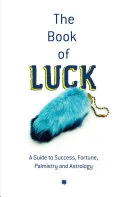
The Book of Luck
 82
82

The Book of Luck
The Book of Luck presents a curious snapshot of turn-of-the-century divination. Its strength lies in its breadth, covering a remarkable array of fortune-telling methods from palmistry to dream interpretation within a single, accessible volume. The original publication date of 1900 is palpable in its quaint, earnest tone. However, this very historical distance also presents a limitation; the explanations, while clear for their time, often lack the depth or critical engagement found in modern esoteric scholarship. A particularly interesting section details the use of a standard deck of cards for prognostication, a method often overshadowed by specialized tarot decks today. The work offers a straightforward, if sometimes superficial, introduction to a diverse set of practices.
Ultimately, The Book of Luck serves as a charming artifact of historical occultism, less a definitive guide and more an inviting primer.
📝 Description
82
Published in 1900, The Book of Luck compiles popular occult divination methods from the late 19th and early 20th centuries.
This volume collects a variety of fortune-telling techniques popular in the late 19th and early 20th centuries. It aims to provide practical guidance for individuals interested in understanding their future and the significance of daily events through symbolic systems. The book covers numerous methods for foretelling outcomes and interpreting personal destiny.
It is a useful resource for those drawn to historical divination practices, students of esoteric thought, and anyone curious about the psychological and symbolic aspects of fortune-telling. Readers interested in the history of occultism or seeking different viewpoints on fate and chance will find it valuable. The work appeals to those who appreciate older approaches to gaining personal understanding and engaging in spiritual inquiry.
This book emerged during a period of heightened interest in spiritualism and the occult, reflecting a wider cultural fascination with non-rational ways of knowing. The late Victorian and Edwardian eras witnessed a notable rise in popularity for practices such as palmistry, astrology, and dream analysis, often featured in popular magazines and discussed within private groups. The Book of Luck fits into this cultural milieu, offering straightforward explanations of various divinatory arts for a general readership.
💡 Why Read This Book?
• You will learn specific techniques for reading a standard deck of cards for future events, a practice detailed in the cartomancy chapter, offering a unique historical perspective on popular divination. • You will gain insight into the early 20th-century fascination with graphology, understanding how handwriting analysis was then employed as a tool for character assessment and prediction. • You will explore the symbolic language of common omens and dreams as presented in the 1900s, providing a comparative lens for understanding folk beliefs and esoteric interpretations of everyday occurrences.
⭐ Reader Reviews
Honest opinions from readers who have explored this book.
❓ Frequently Asked Questions
What divination methods are covered in The Book of Luck?
The Book of Luck covers a wide range of divination practices, including palmistry, graphology (handwriting analysis), astrology, cartomancy (using playing cards), dream interpretation, and the study of lucky and unlucky omens.
When was The Book of Luck originally published?
The book was first published in 1900, reflecting the popular interest in occult and divinatory arts during the late Victorian and Edwardian eras.
Is The Book of Luck suitable for beginners in esotericism?
Yes, its original blurb suggests it offers 'tips' and covers diverse methods, making it accessible for those new to the study of esoteric practices and historical divination.
What is graphology as discussed in the book?
Graphology, as presented in The Book of Luck, is the art and science of analyzing handwriting to understand a person's character, personality traits, and potential future.
Does the book provide practical advice for using these techniques?
Yes, the volume is described as offering 'tips' and guidance on how to use methods like palmistry, card reading, and dream interpretation for forecasting the future.
What historical period does The Book of Luck represent?
The book represents the turn of the 20th century, a period marked by significant interest in spiritualism, psychic phenomena, and various forms of occult knowledge.
🔮 Key Themes & Symbolism
Cartomancy and Card Reading
This theme centers on the practice of using a standard deck of playing cards for divination, a method detailed within The Book of Luck. It explores how specific card combinations and positions are interpreted to reveal future events, character traits, and present circumstances. The book likely presents a system that predates or runs parallel to modern Tarot, offering a glimpse into a more common, accessible form of card prognostication prevalent around 1900. It highlights the symbolic language embedded within suits and ranks.
Palmistry and Physiognomy
The book delves into palmistry, the ancient art of reading the lines, mounts, and shape of the hand to understand personality and predict future occurrences. This theme also touches upon related physiognomic interpretations, where physical features are seen as indicators of character. By examining the hand, readers are guided to interpret perceived destiny and inherent potentials, reflecting a holistic approach to self-understanding prevalent in early 20th-century esoteric thought.
Omens and Dream Interpretation
A significant theme is the interpretation of omens, both natural and seemingly coincidental, as signs from the universe. The book likely catalogues common superstitions and their purported meanings, offering a framework for understanding 'lucky' and 'unlucky' events. Complementing this is the exploration of dream interpretation, treating dreams as symbolic messages or premonitions that can offer guidance or warnings. This section connects the subconscious mind to the broader patterns of fate.
Graphology and Handwriting Analysis
The Book of Luck includes graphology, the study of handwriting as a means to discern personality traits, emotional states, and even future inclinations. This theme focuses on the idea that the unique way an individual forms letters and words contains a coded message about their inner world. The book likely provides basic principles for analyzing script, linking the physical act of writing to the psychological profile of the author.
💬 Memorable Quotes
“The future may be foretold through the arrangement of cards.”
— This paraphrased concept highlights the book's exploration of cartomancy, emphasizing the belief that a standard deck of playing cards holds predictive power when interpreted correctly.
“The lines on one's palm reveal character and destiny.”
— This captures the essence of the palmistry section, suggesting that the physical features of the hand are not random but symbolic maps of an individual's life path and inherent nature.
“Handwriting offers a window into the soul.”
— This interpretation reflects the book's coverage of graphology, positing that the nuances of penmanship provide direct insight into a person's psychological makeup and personality.
“Dreams can be interpreted as prophetic messages.”
— This paraphrased idea points to the section on dream analysis, framing nocturnal visions not merely as random subconscious activity but as potential premonitions or symbolic guidance.
“Omens, whether good or ill, signify coming events.”
— This encapsulates the theme of omen interpretation, suggesting that everyday occurrences and perceived signs carry inherent meaning related to future circumstances, both positive and negative.
🌙 Esoteric Significance
Tradition
This work aligns broadly with the Western Esoteric Tradition, particularly its popular, folk-magic expressions. It draws from practices that have roots in Hermeticism and Neoplatonism, which emphasize correspondence between the microcosm (human) and macrocosm (universe). While not explicitly tied to a single lineage like Kabbalah or Gnosticism, it participates in the Hermetic principle of 'As Above, So Below' by seeking cosmic patterns in earthly signs like hands, stars, and dreams. It represents a more accessible, divinatory branch rather than the ritualistic or philosophical depths of high ceremonial magic.
Symbolism
The book engages with symbolic systems inherent in everyday objects and natural phenomena. The lines and mounts of the palm are interpreted as symbolic representations of life, intellect, emotion, and fortune. Playing cards, beyond their game function, are imbued with symbolic meanings according to their suit, number, and position in a spread, acting as a symbolic language for fate. Similarly, dreams are treated as symbolic narratives, where figures and events represent deeper psychological or spiritual truths waiting to be deciphered.
Modern Relevance
Contemporary interest in self-help, mindfulness, and personal development often revisits historical divinatory practices. While the specific interpretations may differ, the underlying desire to find meaning, predict trends, and understand oneself through symbolic systems persists. Modern practitioners of Tarot, astrology, and even journaling often engage with the foundational concepts presented in works like this. The book's accessible approach to divination continues to inspire individuals seeking intuitive guidance and alternative frameworks for understanding life's complexities.
👥 Who Should Read This Book
• Individuals interested in the history of popular occultism and divination from the early 20th century will find this book a valuable primary source for understanding prevalent practices. • Beginners curious about various fortune-telling methods, such as palmistry, cartomancy, and dream analysis, can use this volume as an introductory guide to foundational techniques. • Folklorists and cultural historians studying societal beliefs about fate, luck, and the supernatural around the turn of the century will appreciate its insights into common esoteric interests.
📜 Historical Context
The Book of Luck emerged in 1900, a period saturated with spiritualism and occult investigation following the Victorian era's fascination with the unseen. This was a time when figures like Helena Blavatsky and the Theosophical Society were gaining prominence, popularizing Eastern mysticism and esoteric philosophies in the West. Simultaneously, movements like the Hermetic Order of the Golden Dawn were actively practicing and codifying Western magical traditions, including ceremonial magic, astrology, and Qabalah. While this book focuses on more popular, accessible forms of divination like palmistry and cartomancy, it reflects the broader cultural appetite for understanding life through symbolic and non-rational means. It addressed a public eager for personal guidance amidst rapid industrialization and social change, offering simple tools for navigating uncertainty, distinct from the more complex, initiatory systems pursued by dedicated occult orders. Arthur Conan Doyle, a contemporary, famously explored spiritualism, demonstrating the era's widespread engagement with these ideas.
📔 Journal Prompts
Reflect on the symbolism of a recurring dream and its potential connection to waking life omens.
Consider how the lines on your palm, as described in palmistry, might map onto your life experiences.
Analyze a recent 'lucky' or 'unlucky' event using the framework of omen interpretation.
Examine your own handwriting for traits discussed in graphology and compare them to your self-perception.
Evaluate the predictive accuracy of a simple card spread using the cartomancy techniques outlined.
🗂️ Glossary
Palmistry
The practice of interpreting the lines, mounts, and shape of the hand to understand a person's character, abilities, and future prospects.
Graphology
The analysis of handwriting to infer personality traits, psychological states, and sometimes predict future behavior or events.
Cartomancy
Divination using a deck of playing cards, where the selection, arrangement, and interpretation of cards reveal insights into the past, present, and future.
Omens
Events or signs perceived as premonitions or indications of future occurrences, often categorized as 'lucky' or 'unlucky'.
Dream Interpretation
The practice of analyzing the content and symbolism of dreams to gain understanding of subconscious thoughts, emotions, or potential future events.
Astrology
The study of the movements and relative positions of celestial bodies interpreted as having an influence on human affairs and the natural world.
Mounts (in Palmistry)
The fleshy, raised areas on the palm, associated with different planets and corresponding character traits or life aspects.