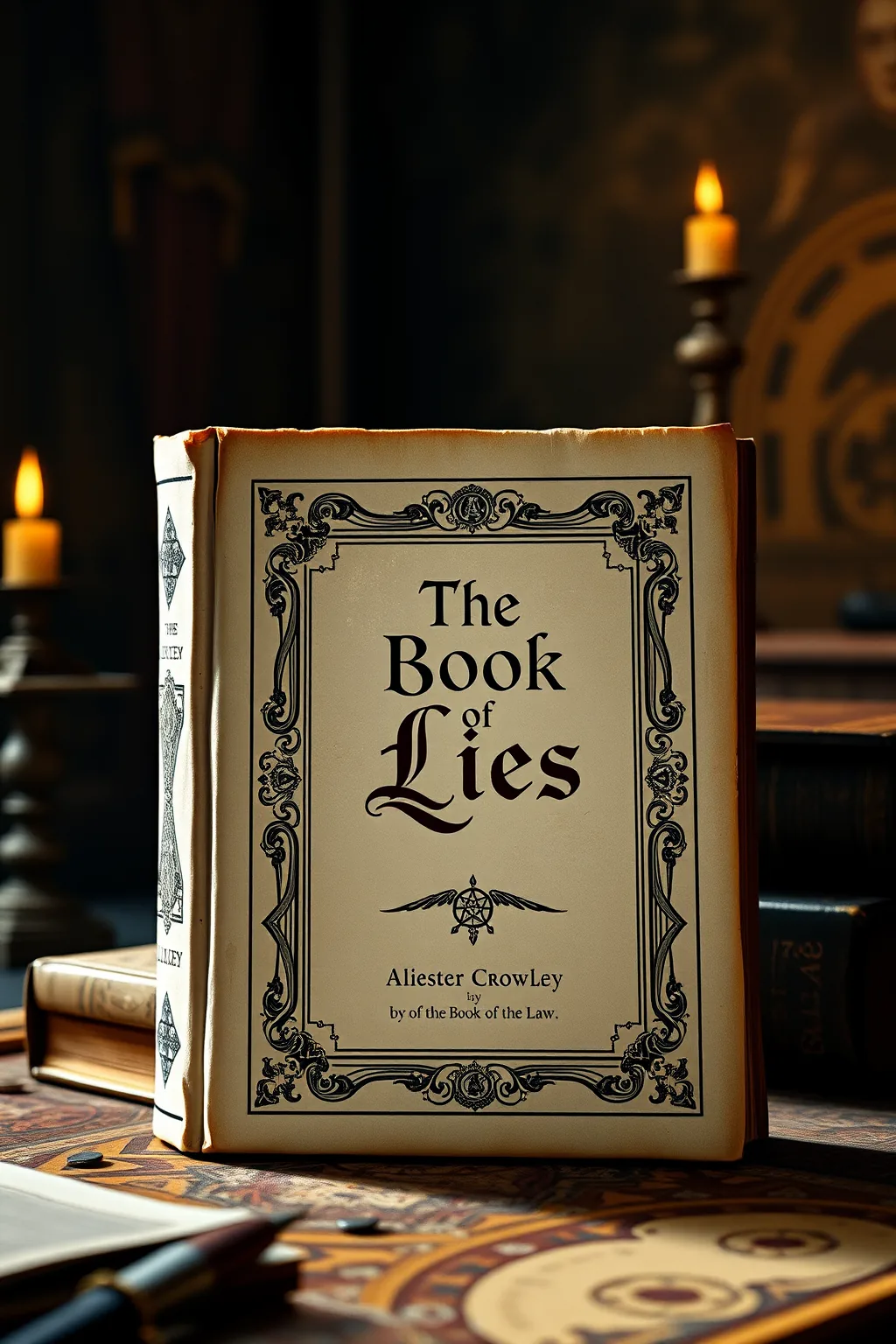
The Book of Lies by Aliester Crowley
 79
79

The Book of Lies by Aliester Crowley


Isolde Whitaker, Sacred Texts Editor: Aleister Crowley's 'The Book of Lies' remains a seminal, albeit challenging, work in modern occultism. Its aphoristic structure, famously comprising 77 distinct statements, serves as a potent catalyst for gnosis, demanding active engagement from the reader. Crowley masterfully employs Qabalistic, alchemical, and tantric symbolism to deconstruct spiritual illusions and illuminate the path toward self-realization. While its controversial author may deter some, its intrinsic esoteric value is undeniable. This text is best suited for those with a foundational understanding of occult principles or a dedicated desire to grapple with profound metaphysical concepts. Its strength lies in its ability to provoke introspection and challenge preconceived notions of reality, offering a unique, albeit demanding, gateway to deeper spiritual understanding.
📝 Description
79
Aleister Crowley published 'The Book of Lies' in 1913.
Published in 1913, Aliester Crowley's 'The Book of Lies' is a collection of 99 short, aphoristic chapters. Each chapter presents a cryptic statement or concept related to occult philosophy. Crowley, a significant figure in 20th-century occultism, structured the book to challenge conventional understanding. The text is not a linear narrative but a series of pronouncements intended to provoke thought and introspection.
The aphorisms within 'The Book of Lies' are designed to be contemplated rather than simply read. They touch upon themes of self-knowledge, the nature of reality, and spiritual discipline. Crowley's writing style here is deliberately concise, often employing paradox and symbolic language. This approach requires a reader willing to engage deeply with the text, seeking personal meaning and insight.
The book's structure, with its 99 short pieces, suggests a deliberate arrangement meant to be worked with over time. It avoids direct instruction, instead offering seeds for contemplation. The intent is to guide the reader toward internal realization through the examination of these dense, symbolic statements.
Aliester Crowley's 'The Book of Lies' belongs to the Western esoteric tradition, particularly the stream influenced by ceremonial magic and the Hermetic Order of the Golden Dawn. It draws upon Kabbalistic concepts and Gnostic ideas, presenting them through Crowley's unique lens. The book's aphoristic nature aligns with traditions that use concise, symbolic statements as tools for spiritual instruction and awakening, similar to Zen koans or Sufi gnomic poetry, but grounded in a specific magical worldview.
✍️ Author
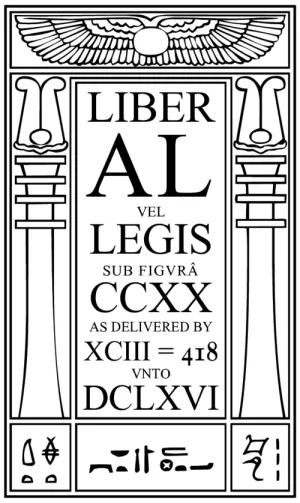
of the Book of the Law
Liber AL vel Legis (Classical Latin: [ˈlɪbɛr aː. ɛɫ wɛl‿ˈleːgɪs]), commonly known as The Book of the Law, is the central sacred text of Thelema.
💡 Why Read This Book?
Unravel the foundational tenets of Thelema, explore potent occult symbolism, and challenge your perception of truth. 'The Book of Lies' is essential for spiritual seekers, occult scholars, and practitioners of esoteric arts aiming to deepen their understanding of consciousness, the universe, and the self. It offers a direct, albeit cryptic, path to gnosis.
⭐ Reader Reviews
Honest opinions from readers who have explored this book.
❓ Frequently Asked Questions
What is the primary purpose of 'The Book of Lies'?
Its primary purpose is to serve as a cryptic guide to spiritual liberation and self-realization, utilizing paradox and symbolism to awaken the reader's inner gnosis and challenge conventional understanding of truth.
Who was Aleister Crowley?
Aleister Crowley was a highly influential, yet controversial, occultist, ceremonial magician, poet, and mountaineer, considered a pivotal figure in 20th-century Western esotericism and the founder of the religious philosophy of Thelema.
Is 'The Book of Lies' difficult to understand?
Yes, the book is intentionally esoteric and aphoristic, requiring deep contemplation, prior knowledge of occult symbolism, and a willingness to interpret its veiled meanings. It is not a linear narrative.
What is Thelema?
Thelema is a religious and philosophical system developed by Aleister Crowley, centered around the belief that each individual has a True Will, and the ultimate spiritual goal is to discover and enact this Will.
Can beginners read 'The Book of Lies'?
While challenging for absolute beginners, those with a strong curiosity and a willingness to study alongside other foundational occult texts may find it rewarding. It is best approached with a spirit of open inquiry.
🔮 Key Themes & Symbolism
The Nature of Truth and Illusion
Crowley radically deconstructs the conventional understanding of 'truth,' positing that perceived reality is often a veil of illusion, a 'lie' that obscures deeper, fundamental truths. The book encourages readers to question all assumptions and to recognize the subjective nature of experience. It suggests that true liberation comes from seeing through these illusions, embracing paradox, and understanding that opposites are often two sides of the same coin. This theme challenges dogma and invites a radical re-evaluation of personal beliefs and societal constructs.
The Path of the Adept and Self-Initiation
This work serves as a roadmap for the aspirant on the path of spiritual development, or the 'Great Work.' Crowley outlines principles and insights essential for self-initiation and advancement within esoteric traditions. The aphorisms within 'The Book of Lies' act as keys, unlocking stages of consciousness and revealing the internal processes of transformation. It emphasizes personal responsibility, rigorous self-discipline, and the cultivation of willpower as crucial elements in the journey toward becoming an adept, one who has attained mastery over themselves and their environment.
The Qabalistic and Hermetic Underpinnings
Deeply rooted in Qabalistic and Hermetic philosophies, the book is replete with symbolism derived from these ancient systems. References to the Tree of Life, the Tarot, and alchemical processes are woven throughout, providing a dense layer of meaning for those familiar with these traditions. Crowley uses these frameworks to illuminate universal principles of creation, consciousness, and the divine. Understanding these underlying currents is vital to grasping the full esoteric import of the text, as they serve as a universal language of the cosmos.
💬 Memorable Quotes
Direct passages from the work, attributed to the author.
“The Book of Lies is a cipher.”
— This statement highlights the book's nature as a coded message, requiring decryption and interpretation beyond its literal words to reveal deeper, hidden meanings.
“Every man and every woman is a star.”
— This aphorism emphasizes the inherent divine spark and unique potential within every individual, suggesting a cosmic interconnectedness and individual sovereignty.
“There is no god but Man.”
— A radical assertion of human potential and self-deification, implying that divinity is not external but resides within the individual, to be realized and enacted.
“The Method of Science, the Aim of Religion.”
— This expresses Crowley's approach to esotericism: using rigorous, systematic inquiry (science) to achieve spiritual enlightenment and understanding (religion).
“Silence is the essential attribute of God.”
— This points to the ineffable, transcendent nature of the divine, suggesting that ultimate reality exists beyond form and expression, in a state of pure being.
🌙 Esoteric Significance
Tradition
This work is deeply embedded in the Western Esoteric Tradition, drawing heavily from Qabalistic mysticism, Hermeticism, alchemy, and tantric philosophy. It acts as a bridge, synthesizing these ancient streams of knowledge into a modern occult framework, particularly relevant to the philosophy of Thelema.
Symbolism
The book is a dense collection of esoteric symbols, including Qabalistic diagrams, alchemical metaphors, astrological references, and archetypal imagery. These symbols are not merely decorative but serve as keys to unlock profound metaphysical concepts related to creation, consciousness, and spiritual evolution, demanding interpretation.
Modern Relevance
In an age often characterized by superficiality and spiritual disconnection, 'The Book of Lies' offers a potent antidote. Its emphasis on self-discovery, personal gnosis, and the embrace of paradox resonates deeply with contemporary seekers looking for authentic spiritual paths and a deeper understanding of reality beyond material constraints.
👥 Who Should Read This Book
This text is a profound, yet demanding, companion for the dedicated spiritual seeker, the seasoned occult practitioner, and the serious scholar of comparative religion and mysticism. Beginners with a strong curiosity and a willingness to engage with complex symbolism and aphoristic prose might find it a challenging but ultimately rewarding introduction to Crowley's thought. Those interested in Thelema, Qabalistic studies, or the history of Western esotericism will find it an indispensable primary source.
📜 Historical Context
Published in 1913, 'The Book of Lies' emerged during a period of intense intellectual and spiritual ferment in Europe. The late Victorian and Edwardian eras saw a resurgence of interest in occultism, mysticism, and Eastern philosophies, fueled by societal changes, the decline of traditional religious authority, and the burgeoning field of psychology. Crowley, already a prominent figure in occult circles, was a product of this environment, drawing inspiration from diverse sources including the Hermetic Order of the Golden Dawn, Qabalistic studies, and his own extensive magical practices. The book's audacious style and challenging ideas reflected a broader cultural yearning for alternative spiritual paths and a deeper understanding of consciousness, positioning Crowley as a provocative voice challenging the status quo and influencing future esoteric movements.
📔 Journal Prompts
Reflect on a personal 'lie' you have believed, and how understanding it as such has impacted your perception.
Meditate on the concept of 'every man and every woman is a star.' What does this mean for your own sense of self and connection to the cosmos?
Choose one aphorism from the book that resonates most strongly with you and explore its potential meanings in your life.
Consider the interplay between science and religion/spirituality in your own quest for understanding.
How can you cultivate more 'silence' or inner stillness in your daily life, and what insights might it reveal?
🗂️ Glossary
Adept
An individual who has achieved a high level of spiritual or magical attainment, possessing mastery over their inner and outer worlds through rigorous practice and initiation.
Gnosis
Direct spiritual knowledge or insight, often intuitive and experiential, that transcends intellectual understanding and leads to enlightenment or liberation.
Qabalah
A complex system of Jewish mysticism and esoteric philosophy that explores the divine, creation, and the relationship between God and humanity, often represented by the Tree of Life.
Thelema
A religious and philosophical system founded by Aleister Crowley, based on the belief in the individual's True Will and the importance of enacting it, often summarized by the motto 'Do what thou wilt shall be the whole of the Law.'
Sigil
A magical symbol, often created by condensing a desire or intention into a unique graphic form, believed to influence the subconscious mind and manifest desired outcomes.
This book appears in 4 collections
🔮 Readers Also Liked
Browse all →









From the “Occultism” Collection
View all →




More Free Occult Philosophy Books
View all →