The book of Chuang Tzu

 74
74

The book of Chuang Tzu
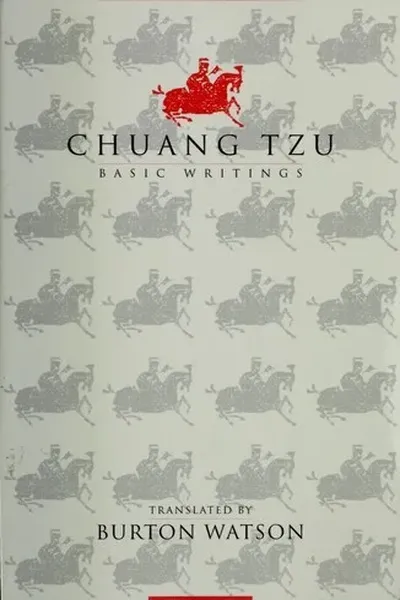
Zhuangzi’s collection of essays and parables, as presented in this 1996 edition, remains a singular voice in philosophical literature. The prose, even in translation, possesses a peculiar, almost mischievous clarity. It’s not a book for those seeking step-by-step instructions or comforting affirmations; rather, it’s an invitation to disorient oneself from the usual modes of thinking. The parable of the 'rotting skull' encountered on a journey, which speaks to Zhuangzi without fear of death, powerfully illustrates the work’s radical acceptance of impermanence, a concept that continues to challenge modern anxieties. Its primary limitation, however, lies in its very nature: the profound ambiguity and paradoxical style, while intentional, can sometimes feel frustratingly elusive for readers accustomed to more direct philosophical argumentation. Yet, it’s precisely this elusiveness that compels repeated engagement. The Book of Chuang Tzu offers a potent, albeit sometimes disquieting, vision of freedom found in yielding to the natural flow of existence.
📝 Description
74
### What It Is
The Book of Chuang Tzu presents a foundational text within Daoist philosophy, attributed to the sage Zhuang Zhou (often transliterated as Chuang Tzu) who lived during the Warring States period of China. It is not a systematic treatise but a collection of parables, anecdotes, and dialogues that employ wit, paradox, and vivid imagery to convey its core tenets. The work champions a life lived in accordance with the Dao, the natural, unforced way of the universe, emphasizing spontaneity, humility, and a detachment from worldly ambitions and rigid social conventions. Its influence extends far beyond Chinese philosophy, impacting East Asian thought and finding resonance with spiritual seekers globally.
### Who It's For
This text is for the contemplative reader seeking an alternative to prescriptive spiritual paths. It appeals to those disillusioned with the striving and artificiality of modern life, offering a perspective that values naturalness and acceptance. Scholars of comparative philosophy and religion will find its unique approach to ethics and metaphysics compelling. Individuals interested in the history of Eastern thought, particularly the development of Daoism, will discover a primary source of unparalleled importance. It is also for anyone who appreciates literature that challenges conventional thinking through humor and imaginative storytelling.
### Historical Context
Emerging around the 4th century BCE during China's tumultuous Warring States period, The Book of Chuang Tzu is a product of an era characterized by intellectual ferment and constant warfare. It arose alongside Confucianism and Mohism, offering a distinct philosophical counterpoint. While Confucianism emphasized social order and ethical duty, and Mohism advocated universal love and utilitarianism, Zhuangzi's work proposed a radical naturalism and individual freedom. The text’s original form and compilation are debated, but its influence solidified during the Han Dynasty and it became a central pillar of Daoist scripture, often studied alongside the Dao De Jing. Its reception was initially within educated circles, later permeating broader cultural and spiritual practices.
### Key Concepts
The book is a profound exploration of the Daoist worldview. Central is the concept of the 'Dao' itself – the ineffable, underlying principle and flow of all existence. Zhuangzi illustrates this through the idea of 'wu wei' (non-action or effortless action), advocating for acting in harmony with natural rhythms rather than forcing outcomes. The text frequently uses the metaphor of the 'butterfly dream' to question the nature of reality and the self, suggesting that distinctions between waking and dreaming, or life and death, are illusory. Another significant theme is 'qi' (vital energy), understood as the fundamental substance of the universe, and the importance of cultivating it through inner stillness and alignment with the Dao. The work also critiques conventional knowledge and language, highlighting their limitations in grasping ultimate truth.
💡 Why Read This Book?
• Grasp the concept of 'wu wei' (effortless action) as exemplified in the parables of skilled craftsmen and sages, offering a distinct approach to productivity and problem-solving beyond conventional effort. • Explore the 'butterfly dream' paradox, a central philosophical inquiry from the 4th century BCE that questions the nature of reality and self-awareness, providing a unique lens for introspection. • Understand the Daoist perspective on 'qi' (vital energy) and its cultivation, as described in sections like the 'Inner Chapters', offering ancient wisdom for personal vitality and alignment with natural forces.
⭐ Reader Reviews
Honest opinions from readers who have explored this book.
❓ Frequently Asked Questions
When was The Book of Chuang Tzu written?
The Book of Chuang Tzu is attributed to the sage Zhuang Zhou, who lived during China's Warring States period, roughly between 369 and 286 BCE. Its compilation and final form likely evolved over time.
What is the central philosophy of The Book of Chuang Tzu?
Its central philosophy is Daoism, emphasizing living in harmony with the Dao (the natural way of the universe), embracing spontaneity, simplicity, and a detachment from worldly desires and artificial distinctions.
Who was Zhuangzi?
Zhuangzi, or Chuang Tzu, was a pivotal Daoist philosopher from the 4th century BCE. He is credited with authoring the foundational text bearing his name, known for its allegorical style and profound insights into nature and existence.
What is 'wu wei' as discussed in the book?
'Wu wei' translates to 'non-action' or 'effortless action.' It signifies acting in accordance with the natural flow of the Dao, without force or striving, as illustrated through various parables in the text.
How does The Book of Chuang Tzu compare to the Dao De Jing?
While both are foundational Daoist texts, the Dao De Jing is more aphoristic and prescriptive, while The Book of Chuang Tzu is more narrative, employing extensive parables, humor, and paradox to explore Daoist themes.
What is the significance of the butterfly dream?
The 'butterfly dream' is a famous parable illustrating Zhuangzi's questioning of the nature of reality and identity, asking whether one is dreaming they are a butterfly or a butterfly dreaming it is Zhuangzi.
🔮 Key Themes & Symbolism
The Relativity of Perspectives
Zhuangzi consistently challenges the reader to question their fixed viewpoints. Through dialogues and parables, he demonstrates how what appears significant from one angle becomes trivial from another, or how rigid distinctions—like life and death, or self and other—are ultimately fluid. The famous 'butterfly dream' is a prime example, blurring the lines between observer and observed, reality and illusion. This theme encourages a liberation from dogmatic thinking and an embrace of a more adaptable, non-judgmental stance towards the world and one's own experiences.
Embracing Spontaneity and Naturalness
A core tenet is the principle of 'Dao,' the natural, unforced way of the universe. Zhuangzi advocates for 'wu wei'—effortless action—which is not laziness but acting in perfect harmony with natural rhythms. This involves shedding artificial societal constructs, desires, and intellectual entanglements that obstruct one's innate connection to the Dao. The text extols the virtues of simplicity, contentment, and living authentically, free from the burdens of ambition and conformity. This theme offers a path to inner peace through alignment with the cosmic flow.
Critique of Conventional Knowledge and Language
Zhuangzi's work is deeply skeptical of the ability of language and conventional knowledge to capture ultimate truth. He uses paradox and wordplay to expose the limitations of logic and definitions, suggesting that true understanding comes from direct experience and intuitive apprehension of the Dao. The text highlights how rigid labels and concepts create artificial barriers and misunderstandings. This theme invites readers to look beyond words and fixed ideas, seeking a deeper, more direct apprehension of reality that transcends the constraints of ordinary discourse.
The Transience of Life and the Acceptance of Death
The book confronts the fear of death not by denying it, but by reframing it as a natural transformation, an integral part of the Dao's cycle. Zhuangzi often uses examples of natural processes—birth, decay, change—to illustrate the impermanence of all things, including human life. By accepting this transience, one can achieve a profound peace and freedom from anxiety. The encounters with decaying matter or the acceptance of one's own eventual dissolution serve to diminish the ego's attachment to its transient form, promoting a more liberated existence.
💬 Memorable Quotes
“Once upon a time, I, Zhuangzi, dreamt I was a butterfly fluttering hither and thither, to all intents and purposes a butterfly. [I] was conscious only of my happiness as a butterfly, feeling all at once that I was Zhuangzi. [I] did not know that I was Zhuangzi dreaming I was a butterfly, nor that I was a butterfly dreaming I was Zhuangzi.”
— This iconic parable questions the fundamental nature of reality and self-identity. It challenges the certainty of our perceived existence, suggesting that the boundaries between waking and dreaming, or between different identities, are far more fluid and uncertain than we typically assume.
“The man of perfect virtue is a complete man, but he does not appear such. The greatest know nothing. ... True words are not fine words; fine words are not true words.”
— This highlights Zhuangzi's critique of superficiality and conventional wisdom. He suggests that genuine virtue and profound understanding are often unpretentious and may not conform to societal expectations of eloquence or outward appearance.
“A perfect man, in ancient times, first of all knew no ambition. Secondly, he had no need for achievements. Thirdly, he had no purpose. ... He was tranquil and clear. ... He was like a child who has not yet begun to smile.”
— This passage describes an ideal state of being, characterized by a lack of ego-driven desires and a return to a state of natural innocence and peace. It emphasizes contentment and freedom from the striving that often defines human endeavor.
“The universe is the great harmony; and I am a small part of it. Death is just another change.”
— This reflects Zhuangzi's perspective on impermanence and acceptance. By viewing oneself as an integral, temporary element within the vast, ongoing cosmic process, the fear and resistance towards death can be dissolved into a natural acknowledgment of transformation.
“To know that you do not know is the highest knowledge. To pretend to know when you do not know is a disease.”
— This aphorism underscores Zhuangzi's emphasis on humility and the limitations of human knowledge. True wisdom lies in recognizing the vastness of what remains unknown, rather than in falsely claiming certainty.
🌙 Esoteric Significance
Tradition
The Book of Chuang Tzu is a foundational text of philosophical Daoism, which has significant overlaps with its more religious and esoteric branches. While not strictly adhering to later formalized Daoist traditions like Quanzhen or Zhengyi, its emphasis on the Dao, 'qi' cultivation, and inner transformation lays the groundwork for esoteric practices. It offers a non-dualistic worldview that informs mystical approaches to understanding the universe and the self, influencing later Chinese alchemy, meditation techniques, and Neidan (internal alchemy) practices.
Symbolism
Key symbols include the 'butterfly,' representing the illusory nature of reality and the fluidity of identity; the 'Great Tree' (like the useless Hu tree), symbolizing the value of non-conformity and finding purpose beyond conventional utility; and the 'whirlpool' or 'churning,' signifying the constant flux and dynamic movement of the Dao, encouraging acceptance of change. These symbols are not mere literary devices but pointers towards a deeper, intuitive understanding of cosmic processes.
Modern Relevance
Contemporary thinkers and practitioners in fields ranging from psychology (particularly existential and transpersonal) to mindfulness and somatic practices draw upon Zhuangzi's insights. His ideas on non-striving, acceptance of impermanence, and questioning rigid belief systems resonate with modern wellness movements, contemplative traditions, and those seeking alternatives to hyper-rational or materialistic worldviews. Ecopsychology also finds echoes in his profound connection to nature.
👥 Who Should Read This Book
• Aspiring practitioners of Eastern philosophies seeking a non-dogmatic, intuitive path to understanding existence and achieving inner peace. • Students of comparative religion and history interested in the origins and development of Daoism and its unique philosophical contributions. • Skeptics and independent thinkers looking for texts that challenge conventional assumptions about reality, knowledge, and the self through wit and paradox.
📜 Historical Context
The Book of Chuang Tzu emerged during China's 4th century BCE Warring States period, a time of intense philosophical debate and political upheaval. Zhuangzi’s thought offered a radical alternative to the social and ethical frameworks proposed by Confucians like Mencius, who focused on hierarchical order and ritual propriety. While Confucianism sought to regulate society, Zhuangzi advocated for individual freedom and alignment with the natural Dao, often using humor and paradox to critique societal conventions. His work also engaged with Mohist ideas of universal love and utilitarianism by questioning the very foundations of such reasoned ethical systems. The text’s philosophical influence grew significantly during the Han Dynasty (206 BCE – 220 CE), becoming a cornerstone of Daoism, and its ideas were later disseminated and interpreted by scholars and mystics across East Asia, shaping religious and artistic traditions.
📔 Journal Prompts
The paradox of the butterfly dream: explore your own shifting perceptions of reality.
The concept of 'wu wei': identify one area where you are currently over-striving.
Zhuangzi's critique of language: how do words limit your understanding of others?
The useless Hu tree: reflect on your own perceived 'usefulness' in society.
Acceptance of change: consider a recent transformation as a natural process.
🗂️ Glossary
Dao (Tao)
The fundamental, ineffable principle and underlying reality of the universe in Daoism. It represents the natural order, the way things are, and the source from which all existence flows.
Wu Wei
Literally 'non-action' or 'effortless action.' It signifies acting in harmony with the Dao, without force, striving, or artificiality. It is spontaneous, natural action that arises from alignment with the universal flow.
Qi (Ch'i)
Vital energy or life force that permeates all things in the universe. Cultivating and harmonizing 'qi' is central to Daoist practices for health, longevity, and spiritual development.
The Butterfly Dream
A famous parable where Zhuangzi dreams he is a butterfly and questions whether he is Zhuangzi dreaming of being a butterfly, or a butterfly dreaming of being Zhuangzi, illustrating the uncertainty of reality and identity.
Sage
An enlightened individual in Daoism who lives in accordance with the Dao, embodying wisdom, simplicity, and naturalness. They are detached from worldly concerns and possess deep understanding.
Warring States period
A period in ancient Chinese history (c. 475–221 BCE) characterized by intense conflict between various states, during which many philosophical schools, including Daoism and Confucianism, emerged and developed.
Relativity
The philosophical concept, central to Zhuangzi, that perspectives, values, and distinctions are not absolute but depend on the observer and context. What is considered right or wrong, or even real, can shift.