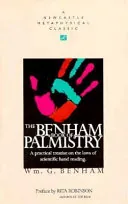
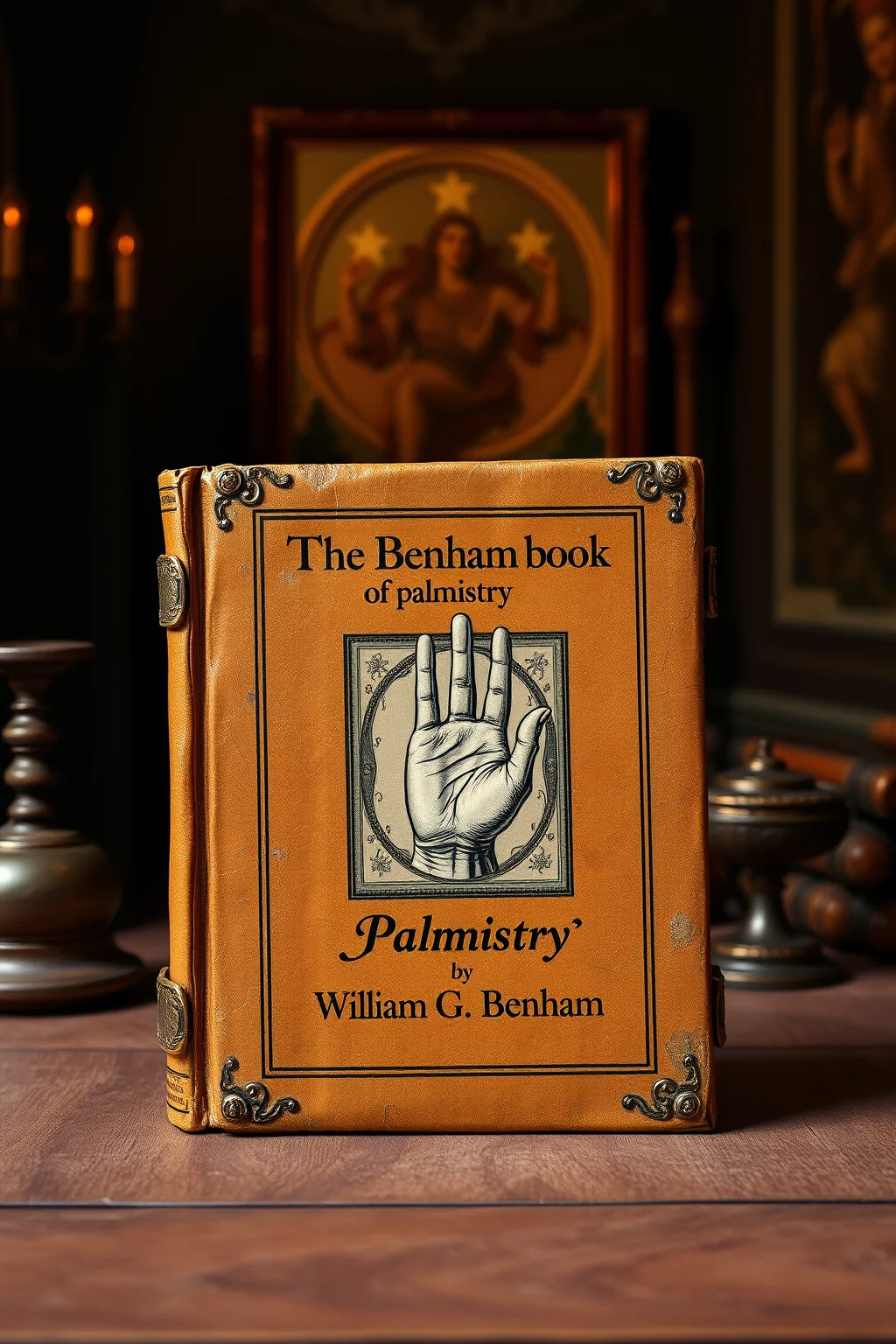
The Benham book of palmistry
 75
75

The Benham book of palmistry
William G. Benham’s approach to palmistry, as presented in his 1988 book, is notably thorough, offering a clear breakdown of a practice often shrouded in vagueness. Unlike more mystical interpretations, Benham grounds his explanations in observable hand features, detailing the mounts and lines with a cartographer’s precision. The strength lies in its systematic organization and the inclusion of numerous illustrative diagrams, which are crucial for understanding the complex topography of the palm. A limitation, however, is the book's tendency to present interpretations as definitive pronouncements rather than possibilities; the discussion of the Fate Line, for instance, can feel deterministic. Benham’s work offers a solid, if somewhat conventional, foundation for understanding palmistry’s traditional framework.
📝 Description
75
### What It Is
The Benham Book of Palmistry, first published in 1988, offers a comprehensive guide to the ancient art of chiromancy. It systematically breaks down the practice, detailing the significance of the palm's various mounts, lines, and markings. The text moves beyond simple interpretations, exploring how these physical features are believed to reflect an individual's character, potential, and life path. It provides detailed illustrations and diagrams to aid understanding, making complex cartography of the hand accessible to the novice.
### Who It's For
This work is suited for those curious about traditional divination methods and the study of physiognomy. Readers interested in exploring the connections between physical form and inner disposition will find value here. It is particularly useful for individuals seeking a structured introduction to palmistry, who appreciate a methodical approach to learning esoteric subjects. Aspiring practitioners or those simply wanting to understand the historical and symbolic language of the hand will benefit from its detailed explanations.
### Historical Context
William G. Benham's compilation emerged during a period of renewed interest in occult and esoteric studies, following the spiritual explorations of the late 20th century. While palmistry has roots stretching back to ancient Greece and India, Benham's book contributes to a modern revival of such practices. It situates itself within a lineage of European palmistry texts that gained traction from the 19th century onwards, alongside figures like Cheiro (Count Louis Hamon), who popularized palmistry in the English-speaking world through his prolific writings.
### Key Concepts
The book details the interpretation of the major palm lines: the Life Line, Head Line, Heart Line, and Fate Line, explaining their variations and what they indicate about health, intellect, emotional nature, and destiny. It also covers the significance of the mounts (Venus, Jupiter, Saturn, Apollo, Mercury, Mars, Luna) and minor markings such as stars, crosses, and triangles. Benham emphasizes that the hand is not static, suggesting that lines can change, reflecting evolving life circumstances and personal growth. The work explores the concept of the hand as a map of potential, rather than a fixed destiny.
💡 Why Read This Book?
• Learn to interpret the primary palm lines like the Life Line and Heart Line, understanding their specific indications for health and emotional patterns, as detailed in Benham's systematic approach. • Gain a practical understanding of the hand's mounts, such as the Mount of Venus and Jupiter, and how their development is theorized to correspond with personal characteristics and life experiences. • Explore the concept of changing palm lines, a key idea Benham presents, allowing for a dynamic view of personal development and how the hand may reflect evolving circumstances.
⭐ Reader Reviews
Honest opinions from readers who have explored this book.
❓ Frequently Asked Questions
When was The Benham Book of Palmistry first published?
The Benham Book of Palmistry was first published in 1988, marking its entry into the late 20th-century resurgence of interest in esoteric and divination practices.
What are the main palm lines discussed in the book?
The book extensively covers the interpretation of the Life Line, Head Line, Heart Line, and Fate Line, detailing their significance for health, intellect, emotions, and destiny.
Does the book explain the different mounts on the palm?
Yes, The Benham Book of Palmistry provides detailed explanations for each of the palm's mounts, including those named after celestial bodies and mythological figures like Venus and Jupiter.
Can palm lines change according to Benham's book?
Indeed, Benham suggests that palm lines are not static and can evolve over time, reflecting an individual's changing life circumstances and personal growth.
Is this book suitable for complete beginners in palmistry?
The book is well-suited for beginners due to its structured approach and numerous diagrams, making the complex subject of palm reading more accessible.
What is the historical context of palmistry discussed in the book?
The book touches upon the ancient origins of palmistry, placing its modern practice within the lineage of European chiromancy that gained prominence from the 19th century onwards.
🔮 Key Themes & Symbolism
Palm Line Cartography
The Benham Book of Palmistry meticulously maps the primary lines of the hand—Life, Head, Heart, and Fate—presenting them as integral components of a personal cartography. Each line's variations, breaks, and depths are analyzed for their potential significance regarding health, mental faculties, emotional landscape, and life trajectory. This approach treats the hand not as a static object but as a dynamic chart where the reader can trace pathways of experience and potential.
The Significance of Mounts
Beyond the lines, the book dedicates considerable attention to the mounts of the palm, the fleshy pads at the base of the fingers and palm edges. Benham details the characteristics associated with the Mount of Venus, Jupiter, Saturn, Apollo, Mercury, Mars, and Luna. These are interpreted as indicators of specific personality traits, inherent strengths, and areas of influence in an individual's life, contributing to a holistic reading of the hand.
Dynamic Hand Analysis
A crucial concept explored is the fluidity of the palm. Benham posits that the lines and markings on the hand are not immutable destiny markers but can shift and alter over time. This perspective suggests that personal choices, experiences, and internal development can manifest physically on the hand, offering a more nuanced and interactive understanding of chiromancy as a tool for self-awareness and growth.
Minor Markings and Their Meanings
The text also delves into the interpretation of less prominent features: the minor lines and symbols like stars, crosses, squares, and triangles found on the palm. These finer details are presented as modifiers or specific indicators that can add layers of complexity and precision to a palm reading. Their presence or absence is analyzed to provide further insights into specific events, challenges, or potentials.
💬 Memorable Quotes
“The lines of the hand are not fixed destiny, but rather indicate tendencies and possibilities.”
— This interpretation highlights Benham's view that the palm offers a map of potential rather than a predetermined script. It suggests agency and the capacity for change, framing palmistry as a guide to possibilities rather than an immutable sentence.
“The Mount of Venus, full and well-developed, often signifies a loving and passionate disposition.”
— This statement illustrates the direct correlation Benham draws between the physical structure of the palm (the Mount of Venus) and specific personality traits (loving, passionate). It's a core principle of his descriptive approach to palmistry.
“A clear and unbroken Heart Line typically suggests emotional stability.”
— This exemplifies the book's method of linking the appearance of a major line (the Heart Line) to a specific psychological attribute (emotional stability). The emphasis is on the clarity and continuity of the line.
“The Head Line, when sloping, may indicate a creative or imaginative intellect.”
— This interpretation focuses on the orientation of a key line, suggesting that its angle provides insight into the nature of one's mental faculties, specifically pointing towards creativity and imagination.
“Minor markings like stars or crosses can signify significant events or specific challenges.”
— This points to Benham's attention to detail, where even small symbols on the palm are given interpretative weight, often relating to pivotal moments or particular difficulties in a person's life.
🌙 Esoteric Significance
Tradition
The Benham Book of Palmistry fits within the Western esoteric tradition of chiromancy, a practice with roots in ancient Greece and India that became codified in Europe from the Renaissance onwards. It draws upon a lineage that sought to understand the human microcosm as a reflection of the macrocosm. While not explicitly Kabbalistic or Hermetic in its presentation, it operates within the broader framework of sympathetic magic and correspondences, viewing the physical body, specifically the hand, as a readable text of cosmic influence and individual destiny.
Symbolism
Key symbols in Benham's work include the major palm lines (Life, Head, Heart, Fate), each representing fundamental aspects of human existence: vitality and physical energy; intellect and communication; emotion and relationships; and destiny or life path. The mounts—named after classical deities like Venus (love, beauty) and Jupiter (ambition, leadership)—function as symbolic zones, indicating areas of strength or potential influence based on their prominence and development.
Modern Relevance
Benham's systematic approach continues to inform contemporary palmistry practitioners and enthusiasts who seek a structured methodology. His detailed cataloging of lines and mounts provides a foundational vocabulary and interpretive framework that is often referenced in modern books and online resources. While some contemporary esotericists integrate palmistry with other systems like astrology or tarot, Benham’s work remains a touchstone for those interested in a direct, line-and-mount focused analysis of the hand.
👥 Who Should Read This Book
• Aspiring palmists seeking a structured, foundational text to learn the basics of hand reading, including line and mount interpretation. • Individuals interested in physiognomy and the esoteric study of human character through physical form, looking for a methodical guide. • Researchers of Western esoteric traditions who wish to understand a key 20th-century compilation of chiromantic knowledge and its practical application.
📜 Historical Context
William G. Benham's The Benham Book of Palmistry (1988) arrived during a period of significant resurgence for esoteric studies, following the counter-cultural movements of the 1960s and 70s. While palmistry's roots are ancient, its modern iteration owes much to 19th-century European revivalists. Benham’s work can be seen in dialogue with figures like Cheiro (Count Louis Hamon), who greatly popularized palmistry in the English-speaking world through his numerous books starting in the late 19th century. Unlike more esoteric or mystical interpretations prevalent in some circles, Benham’s approach tended towards a systematic, almost scientific cataloging of features and their supposed correlations. This period also saw a growing interest in comparative religion and psychology, which sometimes intersected with occult studies, though Benham’s focus remained primarily on the mechanics of chiromancy itself.
📔 Journal Prompts
The Mount of Saturn: Record observations about areas of your life that feel governed by responsibility or limitation.
Variations in the Head Line: Document instances where your thinking style has significantly shifted, noting the line's current appearance.
The Fate Line's connection to career: Reflect on how external events or choices have impacted your perceived life path.
The Mount of Apollo: Identify creative pursuits or moments of recognition that align with this mount's interpretation.
The influence of the Life Line: Journal about periods of significant vitality or fatigue and any perceived correlation with your Life Line.
🗂️ Glossary
Chiromancy
The practice of divination and character analysis through the study of the palm, including its lines, mounts, and markings. It is the formal term for palmistry.
Mounts
The fleshy, raised pads on the palm located at the base of the fingers and along the sides of the palm. Each mount is associated with a specific planet and related human qualities.
Life Line
The curved line originating near the thumb and encircling the Mount of Venus. It is traditionally interpreted as relating to physical vitality, health, and major life events.
Head Line
The line that typically starts between the thumb and index finger and runs horizontally across the palm. It is associated with intellect, communication, and cognitive processes.
Heart Line
The uppermost horizontal line on the palm, running from the edge below the little finger towards the Mount of Jupiter or Saturn. It relates to emotional nature, romantic relationships, and heart health.
Fate Line
A vertical line running up the center of the palm, often starting near the wrist. It is interpreted as indicating one's sense of purpose, career, and major life influences.
Minor Lines
Lines on the palm other than the four major ones, such as the Apollo Line, Mercury Line, or Rascettes (wrist lines). They are believed to offer supplementary details to the reading.