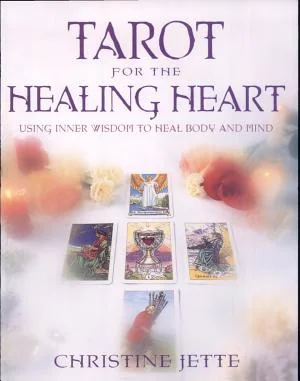
Tarot for the Healing Heart
 79
79

Tarot for the Healing Heart
Christine Jette’s *Tarot for the Healing Heart* avoids the common pitfalls of esoteric self-help by grounding its approach firmly in the psychological utility of the tarot. Jette’s strength lies in demystifying the cards, presenting them not as mystical pronouncements but as potent symbolic maps of the psyche. The original blurb correctly identifies the book’s core audience: anyone with a genuine desire for self-exploration, regardless of prior tarot expertise. However, the book occasionally leans into generalized affirmations, which, while well-intentioned, could benefit from more specific examples of how particular card combinations might address complex emotional states. For instance, the exploration of the "healing atmosphere" is conceptually sound but could be enriched with more detailed case studies or practical exercises. Despite this, the work offers a valuable framework for using the tarot as a companion in emotional recovery. It is a practical guide for those seeking inner peace through symbolic introspection.
📝 Description
79
### What It Is Tarot for the Healing Heart by Christine Jette offers a unique approach to the tarot, focusing not on divination or prediction, but on its utility as a tool for personal emotional and spiritual healing. First published in 2001, the book presents tarot cards as archetypal imagery that can illuminate internal landscapes and facilitate self-understanding. It frames the practice of tarot reading within a context of self-care and psychological integration.
### Who It's For This work is accessible to a broad audience, including those new to tarot or without formal healing training. Jette emphasizes that a "desire to heal, an open mind, and a courageous heart" are the primary prerequisites. It is suitable for individuals seeking to use symbolic language for introspection, explore emotional patterns, and foster a more compassionate relationship with themselves.
### Historical Context Published in the early 2000s, Tarot for the Healing Heart emerged during a period of increasing popular interest in spirituality and self-help, often drawing from Jungian psychology and archetypal symbolism. While figures like Carl Jung had long explored the psychological significance of archetypes, Jette's work specifically applies this lens to the common practice of tarot, making it more palatable for a non-academic audience. This period saw many works attempting to bridge esoteric traditions with modern psychological understanding.
### Key Concepts The book centers on the concept of the tarot as a mirror for the soul, with each card representing a facet of human experience. It advocates for creating a "healing atmosphere" through the deliberate use of tarot imagery, suggesting that engaging with the cards can help process difficult emotions and promote inner balance. The emphasis is on the symbolic dialogue between the reader and the cards.
💡 Why Read This Book?
• You will learn how to use tarot imagery as a therapeutic tool, moving beyond fortune-telling to self-understanding, as demonstrated by Jette’s focus on creating a "healing atmosphere" with the cards. • Gain practical methods for emotional processing by understanding how specific archetypes, such as those found in the Major Arcana, can reflect and help resolve inner conflicts. • Discover a path to self-compassion and resilience, framed by Jette’s emphasis on the "courageous heart" and the desire for healing, making the tarot a supportive partner in personal growth.
⭐ Reader Reviews
Honest opinions from readers who have explored this book.
❓ Frequently Asked Questions
Does Christine Jette's Tarot for the Healing Heart require prior knowledge of tarot card meanings?
No, the book is designed for beginners and those without prior tarot expertise. Jette focuses on the symbolic and psychological aspects, making the cards accessible through a desire to heal and an open mind, rather than memorized meanings.
What is the primary goal of using tarot according to Tarot for the Healing Heart?
The primary goal is emotional and spiritual healing. Jette frames the tarot not for divination, but as a tool to create a healing atmosphere, foster self-understanding, and promote inner balance.
What kind of reader is Christine Jette's book best suited for?
It is best suited for individuals seeking personal growth, emotional insight, and self-compassion. Those with a "courageous heart" and a desire to heal, regardless of their background in tarot or healing arts, will find value.
When was Tarot for the Healing Heart first published and by whom?
The book was first published in 2001. Christine Jette is the author.
How does this book differ from traditional tarot guides?
Unlike traditional guides focused on predictive meanings, this book emphasizes the tarot's archetypal imagery for introspection and emotional healing, positioning it as a supportive tool for self-discovery rather than a fortune-telling device.
Can Tarot for the Healing Heart be used for professional therapeutic practice?
While not explicitly designed as a clinical manual, its focus on psychological archetypes and self-healing can inform therapeutic approaches. However, it is primarily intended for personal use by individuals seeking self-guided healing.
🔮 Key Themes & Symbolism
Tarot as Inner Mirror
Jette reframes the tarot not as a tool for external prediction, but as a profound inner mirror. Each card's imagery is presented as an archetypal symbol reflecting aspects of the reader's own psyche, emotions, and life experiences. This perspective allows individuals to engage with the cards as a dialogue with their subconscious, facilitating self-awareness and insight into personal patterns. The book encourages looking inward, using the visual language of the cards to understand internal landscapes rather than seeking external answers.
Creating a Healing Atmosphere
A central concept is the deliberate cultivation of a "healing atmosphere" through the intentional use of tarot. This involves approaching the cards with reverence and a focus on emotional well-being. Jette suggests that the ritual of engaging with tarot imagery in a calm, supportive environment can itself be therapeutic, helping to create a safe space for introspection and emotional release. The book provides guidance on how to establish this nurturing space for personal exploration.
Archetypal Psychology and Tarot
The work draws significantly from the principles of archetypal psychology, particularly the ideas of Carl Jung, though it does not always explicitly name him. It posits that the tarot deck contains universal archetypes that resonate with the human collective unconscious. By understanding these archetypes, readers can gain perspective on their personal challenges, recognizing common human experiences within their own lives and fostering a sense of connection and shared humanity.
The Courageous Heart
Jette consistently emphasizes the importance of the "courageous heart" as a prerequisite for engaging with the tarot for healing. This signifies a willingness to confront difficult emotions, embrace vulnerability, and embark on the often challenging journey of self-discovery. The book suggests that true healing requires bravery and an open heart, encouraging readers to approach their inner work with honesty and resilience, viewing the tarot as a supportive companion on this path.
💬 Memorable Quotes
“One does not need to be a tarot expert or a healing practitioner to benefit from this book.”
— This statement underscores the book's accessibility. It aims to demystify the tarot, presenting it as a tool for personal growth and emotional well-being available to anyone with an earnest desire for self-exploration, irrespective of prior specialized knowledge.
“All that is needed is a desire to heal, an open mind, and a courageous heart.”
— Jette identifies the essential qualities for engaging with the tarot for healing. This highlights the book's focus on internal disposition—a willingness to confront oneself, embrace vulnerability, and commit to the process of personal transformation.
“Jette details how to create a healing atmosphere through tarot.”
— This encapsulates the book's core methodology. It's not just about reading cards, but about using their symbolic power to cultivate a specific, supportive environment conducive to emotional and psychological well-being.
“The tarot cards as archetypal imagery that can illuminate internal landscapes.”
— This interpretation positions the tarot as a psychological tool. The cards are seen as symbolic representations of universal human experiences that can shed light on an individual's inner world and subconscious processes.
“The emphasis is on the symbolic dialogue between the reader and the cards.”
— This suggests an interactive and interpretive approach to the tarot. The book advocates for a personal engagement with the card imagery, where meaning emerges through a thoughtful, reflective conversation between the individual and the symbols presented.
🌙 Esoteric Significance
Tradition
This work primarily engages with Western esotericism through its lens on archetypal psychology and the symbolic language of the tarot. While not strictly Hermetic or Kabbalistic in its explicit framework, it draws upon the Hermetic principle of "As Above, So Below" by positing a correspondence between the inner psychic world and the external symbolic system of the tarot. It represents a modern, psychologically-oriented evolution of tarot's esoteric application, moving towards therapeutic utility.
Symbolism
Key symbols include the archetypal figures of the Major Arcana, which Jette uses to represent universal human experiences and psychological states. The "healing atmosphere" itself acts as a symbolic concept, representing a sacred, intentional space for self-reflection. The "courageous heart" symbolizes the inner strength and willingness required to confront one's psyche and engage in the transformative process of healing.
Modern Relevance
Contemporary thinkers and practitioners in areas like archetypal psychology, Jungian-inspired therapy, and modern witchcraft often draw on works like Jette's. Its focus on the tarot as a tool for self-care, emotional regulation, and psychological insight aligns with current trends in holistic wellness and mindfulness practices, making it relevant to those seeking embodied and symbolic approaches to mental and emotional health.
👥 Who Should Read This Book
• Individuals new to tarot seeking a therapeutic and introspective approach, who want to understand card symbolism as a mirror to their inner world rather than a predictive tool. • Those engaged in personal development or self-help looking for practical methods to process emotions and foster self-compassion, appreciating the concept of a "healing atmosphere". • Students of Jungian psychology or archetypal studies interested in seeing how universal symbols from the tarot can be applied to understand the human psyche and facilitate emotional healing.
📜 Historical Context
Published in 2001, *Tarot for the Healing Heart* emerged during a period when interest in spiritual and self-help methodologies, often infused with psychological concepts, was burgeoning. The early 2000s saw a continued popularization of Jungian archetypes and their application beyond academic psychology. Christine Jette's work fits within this trend, offering a practical, accessible bridge between the esoteric tradition of the tarot and contemporary self-help and psychological exploration. While figures like Carl Jung had laid significant groundwork in understanding archetypes, Jette specifically applied this lens to the tarot for a broader audience. The book's reception likely aligned with a growing market for introspective tools that promised personal growth without requiring adherence to rigid dogma, differentiating itself from more divination-focused or strictly occult tarot literature of the time.
📔 Journal Prompts
Reflect on the "healing atmosphere" you can create using tarot imagery.
Consider the "courageous heart" required to face your inner landscapes.
How does the concept of the tarot as an "inner mirror" apply to your current life situation?
Identify an archetypal image from the Major Arcana that represents a challenge you are facing.
Explore the desire to heal as a primary motivator for your tarot practice.
🗂️ Glossary
Archetype
Universal, archaic patterns and images that derive from the collective unconscious and are the psychic conditions of the experience of the divine. In tarot, these are often represented by the figures in the Major Arcana.
Healing Atmosphere
A deliberately cultivated environment that fosters emotional safety, introspection, and psychological well-being, created through intention and the use of symbolic tools like the tarot.
Inner Mirror
The concept of using external tools, such as tarot cards, to reflect and illuminate one's internal psychological and emotional states, promoting self-awareness.
Courageous Heart
A state of emotional bravery and willingness to confront personal challenges, vulnerabilities, and the often difficult process of self-discovery and healing.
Symbolic Dialogue
An interactive process of interpretation and understanding that occurs between an individual and symbolic imagery, such as tarot cards, leading to insight.
Psychological Integration
The process of incorporating different aspects of one's personality, emotions, and experiences into a cohesive and balanced sense of self.
Inner Landscapes
The internal world of thoughts, feelings, memories, and subconscious processes that constitute an individual's psychological reality.