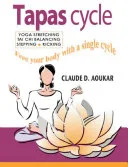
Tapas Cycle
 72
72

Tapas Cycle
Claude Aoukar's "Tapas Cycle" offers a pragmatic, if somewhat unadorned, approach to embodied practice. The book's strength lies in its directness: 90 minutes of illustrated, step-by-step instruction that consolidates yoga and Tai Chi elements for home use. Its clarity is commendable, particularly in the sequence of movements, which feels intuitively built. However, the "elementary" nature of the included postures and balances, while accessible, may leave seasoned practitioners wanting more depth. A passage detailing the sequence for the "Sun Salutation A" adaptation feels particularly well-executed in its visual breakdown. The inclusion of a Sanskrit glossary is a useful, though brief, addition, bridging the gap between physical action and cultural context. Ultimately, "Tapas Cycle" functions effectively as an introductory, no-frills guide for physical self-maintenance.
📝 Description
72
### What It Is Claude Aoukar's "Tapas Cycle" presents a 90-minute illustrated guide designed for accessible physical liberation, deployable in any location. This compact ebook synthesizes foundational yoga postures, elementary Tai Chi balancing movements, and basic stepping and kicking techniques into a cohesive, sequential practice. The visual, step-by-step format prioritizes clarity and ease of execution, making complex physical disciplines digestible for the uninitiated.
### Who It's For The "Tapas Cycle" is engineered for broad applicability, welcoming practitioners of all ages and fitness levels. Its primary audience includes individuals seeking a straightforward, home-based exercise regimen that requires minimal space and no specialized equipment. It caters to those who prefer guided, visual instruction and desire a tangible sense of physical well-being through simple, repeatable actions. It also serves as a practical reference for those new to yoga or Tai Chi who want an immediate, actionable resource.
### Historical Context Emerging in an era where access to physical instruction was often geographically or financially restricted, the "Tapas Cycle" aligns with a growing interest in self-directed wellness practices. The late 20th and early 21st centuries saw a surge in accessible wellness literature, influenced by figures like B.K.S. Iyengar who popularized precise, illustrated yoga instruction. This work participates in that lineage by demystifying embodied practices, making them available beyond traditional studio settings, similar to how early 20th-century Theosophical texts sought to disseminate esoteric knowledge widely.
### Key Concepts The core of the "Tapas Cycle" lies in its practical integration of diverse movement disciplines. It emphasizes the cyclical nature of energy flow and physical coherence, drawing implicitly from principles found in both Hatha Yoga and Taoist internal arts. The "cycle" itself is a pedagogical tool, designed to build momentum and reinforce learning through repetition. The inclusion of an English glossary for Sanskrit terms, particularly those tied to Indian culture, highlights a commitment to demystifying the esoteric underpinnings of the physical practices presented.
💡 Why Read This Book?
• You will learn a specific 90-minute sequence integrating yoga postures and Tai Chi balancing, as detailed in the "illustrated step by step cycle," enabling you to create a consistent home practice. • You will gain practical understanding of foundational movements that promote physical freedom and balance, directly applicable from the "stepping, kicking" components of the cycle. • You will benefit from a curated English glossary of common Sanskrit yoga terms, providing immediate cultural context for the practice, as presented in the book's addendum.
⭐ Reader Reviews
Honest opinions from readers who have explored this book.
❓ Frequently Asked Questions
What is the primary goal of the "Tapas Cycle"?
The primary goal of the "Tapas Cycle" is to provide an accessible, illustrated 90-minute routine for individuals to free their bodies and improve physical well-being, regardless of their location or prior experience.
What types of exercises are included in the "Tapas Cycle"?
The cycle integrates foundational yoga postures, elementary Tai Chi balancing movements, and basic stepping and kicking techniques into a sequential, easy-to-follow program.
Is the "Tapas Cycle" suitable for beginners?
Yes, the "Tapas Cycle" is explicitly designed to suit all ages and fitness levels, emphasizing simple, easy steps for home exercise.
What is the purpose of the English glossary in the book?
The glossary serves to demystify common Sanskrit yoga terms used within the practice, providing reference to Indian culture and enhancing the user's understanding.
How long does the "Tapas Cycle" routine take to complete?
The entire routine is designed to be completed within approximately 90 minutes, offering a structured yet flexible practice session.
Can "Tapas Cycle" be practiced without prior yoga or Tai Chi experience?
Yes, the book is structured as a step-by-step guide, making it suitable for individuals with no prior experience in yoga or Tai Chi.
🔮 Key Themes & Symbolism
Accessible Embodiment
The "Tapas Cycle" champions the idea that physical liberation and well-being are attainable through simple, guided practices. It rejects the notion that esoteric or physically demanding disciplines require extensive training or specialized environments. By offering an illustrated, step-by-step sequence, Aoukar makes embodied knowledge accessible to anyone, anywhere, fostering a sense of agency over one's physical state. This approach democratizes self-care, positioning the body as a site of immediate potential for freedom and ease.
Integration of Movement Arts
A central theme is the synthesis of distinct movement traditions—yoga and Tai Chi—into a singular, coherent practice. This integration is not merely additive but seeks a synergistic effect, where the balancing elements of Tai Chi complement the postures of yoga, and vice versa. The cycle aims to cultivate a holistic sense of physical awareness, drawing on the stability of Tai Chi and the flexibility of yoga. This cross-disciplinary approach reflects a broader esoteric interest in finding universal principles across different contemplative and physical systems.
Demystification of Terminology
The inclusion of an English glossary for Sanskrit terms addresses a common barrier to entry in many spiritual and physical disciplines. By defining words central to yoga and its cultural context, Aoukar facilitates a deeper, more informed engagement with the practice. This act of translation is crucial for making esoteric knowledge approachable, ensuring that practitioners can connect with the underlying philosophy and cultural roots without being alienated by unfamiliar language.
The Power of the Cycle
The concept of a 'cycle' is fundamental to the "Tapas Cycle," representing a structured, repeatable sequence designed for efficacy. This cyclical approach mirrors natural rhythms and energetic flows, suggesting that consistent, patterned movement can lead to profound shifts in physical and mental states. It emphasizes learning through repetition and progression, building confidence and skill over time. The 90-minute duration itself forms a contained, manageable cycle for daily or weekly practice.
💬 Memorable Quotes
“A 90 minutes illustrated step by step cycle to free your body wherever you are.”
— This statement encapsulates the book's core promise: a practical, portable, and self-guided method for physical release and well-being, accessible to anyone irrespective of their environment.
“It comprises yoga postures, elementary tai chi balancing, stepping, kicking.”
— This highlights the book's methodological foundation, blending distinct yet complementary physical disciplines into a unified sequence designed for comprehensive, accessible practice.
“It suits all ages.”
— This emphasizes the universal design and adaptability of the "Tapas Cycle," ensuring its applicability and benefit to a wide demographic range.
“It is a must have handy ebook to exercise at home and feel good with simple easy steps.”
— This positions the ebook as an essential, convenient resource for home-based physical activity, promising positive outcomes through straightforward, uncomplicated movements.
“Addendum of english glossary to the most used words in yoga SANSkrit with reference to the Indian Culture.”
— This points to the book's commitment to providing educational context, aiding comprehension by explaining key Sanskrit terms and their cultural significance within yoga.
🌙 Esoteric Significance
Tradition
The "Tapas Cycle" draws implicitly from the practical, embodied traditions of Hatha Yoga and Taoist internal arts, rather than a strictly defined esoteric lineage like Hermeticism or Kabbalism. Its esoteric dimension lies in its focus on direct physical experience as a pathway to internal states—freedom, balance, and well-being. It operates on the principle that consistent, mindful movement can unlock energetic potentials and harmonize the physical form, a concept found across many contemplative traditions that seek to integrate body, mind, and spirit.
Symbolism
The primary symbolism in the "Tapas Cycle" resides in the 'cycle' itself, representing the cyclical nature of energy (prana or chi) and the rhythm of life. The integration of yoga postures (asanas) and Tai Chi movements symbolizes the balance between stillness and flow, groundedness and adaptability. Stepping and kicking elements can symbolize proactive engagement with one's environment and the overcoming of inertia. The illustrated format itself symbolizes the demystification of practice, making the esoteric accessible through clear, visual representation.
Modern Relevance
In contemporary wellness culture, the "Tapas Cycle" remains relevant for its emphasis on accessible, self-directed physical practice. It speaks to the modern desire for holistic health solutions that can be integrated into busy lives. Thinkers and practitioners focused on somatic therapies, functional movement, and mindful exercise find value in its straightforward approach. Its blend of disciplines aligns with current trends that often fuse yoga, Tai Chi, and other somatic practices, offering a foundational resource for individuals seeking simple yet effective methods for physical maintenance and self-awareness.
👥 Who Should Read This Book
• Individuals new to yoga or Tai Chi seeking a gentle, illustrated introduction to fundamental movements and a structured home practice. • Busy professionals or students looking for a time-efficient (90-minute) routine to relieve physical tension and improve balance without specialized equipment. • Those interested in comparative physical disciplines who wish to explore the practical integration of basic yoga postures and Tai Chi balancing techniques.
📜 Historical Context
Claude Aoukar's "Tapas Cycle" emerged within a late 20th-century landscape increasingly receptive to accessible wellness and self-improvement techniques. The proliferation of illustrated guides for practices like yoga and martial arts, following pioneers such as B.K.S. Iyengar who published "Light on Yoga" in 1966, created a market for home-based instruction. This period also saw a growing interest in synthesizing Eastern practices for Western audiences, often detached from their original religious or philosophical moorings. The "Tapas Cycle" participates in this trend, offering a secularized, practical application of movement principles. While not engaging directly with the academic debates of its time, it echoes the broader cultural movement that sought to democratize physical and spiritual disciplines, making them available outside traditional monastic or studio settings. Its focus on simplicity and portability aligns with a desire for practical tools in an increasingly mobile and less ritualized society.
📔 Journal Prompts
The "illustrated step by step cycle" as a tool for self-discovery.
Reflecting on the balance between yoga postures and Tai Chi movements within the 90-minute practice.
How the "stepping, kicking" elements contribute to a feeling of physical freedom.
The role of the English glossary in understanding the cultural context of the practice.
Personal experience of feeling 'free' after completing the entire cycle.
🗂️ Glossary
Asana
A Sanskrit term referring to a posture or pose, particularly in yoga. In the "Tapas Cycle," asanas form the foundational static elements of the practice, emphasizing stability and alignment.
Pranayama
Literally 'life force extension,' this refers to breath control techniques in yoga. While not explicitly detailed, mindful breathing is often implied during asana practice for enhanced effect.
Tai Chi
A traditional Chinese martial art practiced for defense, health, and meditation. In this context, it refers to the elementary balancing and flowing movements integrated into the cycle.
Ch'i (Qi)
The vital life force or energy in traditional Chinese culture and medicine, often associated with Tai Chi. The balancing movements aim to cultivate and harmonize this energy.
Sanskrit
An ancient Indo-Aryan language, the classical language of Hinduism, Buddhism, and Jainism. It is the primary liturgical language of Hinduism and the source of many yoga terms.
Hatha Yoga
A branch of yoga that focuses on physical postures (asanas) and breath control (pranayama). The "Tapas Cycle" incorporates basic Hatha Yoga postures.
Cycle
In the context of the book, this refers to the structured, sequential 90-minute routine comprising various movements designed for consistent practice and physical benefit.