Tao Teh Ching
 71
71

Tao Teh Ching
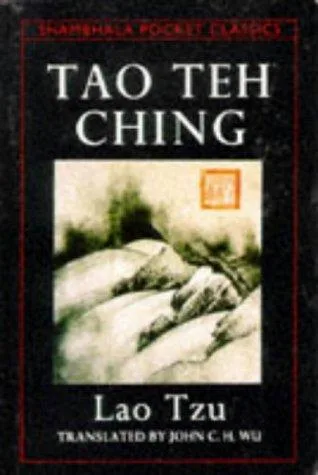
John C. H. Wu’s translation of the Tao Teh Ching offers a lucid, if at times interpretative, rendering of this ancient Chinese classic. Wu, a scholar who also translated the Four Books of Confucianism, brings a Western legal and philosophical sensibility to the text, which can be both a strength and a weakness. The strength lies in the clarity and accessibility he brings to complex concepts like *wu wei*. For instance, his rendering of Chapter 64, emphasizing the importance of gentle, persistent action, feels particularly resonant. However, the work occasionally feels filtered through a Western lens, perhaps smoothing over some of the text’s inherent paradoxes or its more radical departures from conventional thought. While the prose is fluid, one might miss the stark, enigmatic quality that some other translations preserve. Nonetheless, it serves as a commendable entry point for those unfamiliar with Taoist philosophy. It is a solid, if not revolutionary, rendition of a text that continues to inform spiritual and ethical discourse.
📝 Description
71
Published in 2017, John C. H. Wu's translation presents the Tao Teh Ching for a modern audience.
The Tao Teh Ching, attributed to Lao Tzu (老子), is a central text of Taoism. This edition, translated by John C. H. Wu, offers a contemporary rendering of its verses. It is not a narrative but a compilation of aphorisms and observations on existence, governance, and personal conduct.
Wu's translation aims to make these ancient teachings accessible to those interested in Eastern spirituality and governance. It will appeal to students of comparative religion, ethics, and classical philosophy seeking non-Western viewpoints. Readers looking for guidance on living in harmony with natural principles or exploring the concept of wu wei (non-action) will find this work valuable.
While the historical Lao Tzu is debated, he is placed in China's Spring and Autumn period (771-476 BCE). The text arose during the "Hundred Schools of Thought," offering a contrast to more rigid systems by emphasizing naturalness and spontaneity. Its ideas have influenced East Asian thought, art, medicine, and martial arts.
The Tao Teh Ching is a cornerstone of Taoist philosophy, a tradition that emphasizes living in accordance with the natural order of the universe, or the Tao. Unlike many other religious or philosophical systems that focus on deities or rigid ethical codes, Taoism seeks harmony through understanding and aligning with the fundamental, ineffable principle that underlies all existence. The text's focus on wu wei, or effortless action, encourages a path of non-interference and spontaneity, contrasting with the active striving common in other traditions. Its influence extends beyond religious doctrine, shaping a worldview that values simplicity, humility, and a deep connection to nature.
💡 Why Read This Book?
• You will learn to understand the concept of *wu wei* (effortless action) through Wu’s accessible prose, enabling a more harmonious approach to daily tasks. • You will gain insight into the Taoist perspective on governance and leadership, as presented in specific chapters like Chapter 64, offering alternative models to conventional power structures. • You will explore the philosophical underpinnings of Taoism, encountering core tenets like the ineffable nature of the Tao and the concept of De, as articulated in Wu’s 2017 translation.
⭐ Reader Reviews
Honest opinions from readers who have explored this book.
❓ Frequently Asked Questions
When was the Tao Teh Ching originally written?
The Tao Teh Ching is traditionally attributed to Lao Tzu (老子), believed to have lived around the 6th century BCE during China's Spring and Autumn period (771-476 BCE). Precise dating remains a subject of scholarly debate.
Who is John C. H. Wu?
John C. H. Wu (Wu Ching-hsi) was a Chinese legal scholar, diplomat, and poet who translated key Chinese classics, including the Tao Teh Ching and the Four Books of Confucianism, into English.
What is the central philosophy of the Tao Teh Ching?
The central philosophy revolves around the Tao, the ineffable, fundamental principle of the universe. It advocates for living in accordance with this natural order, emphasizing concepts like *wu wei* (effortless action) and *de* (virtue).
How does this translation differ from others?
John C. H. Wu's translation, first published in 2017, is noted for its clarity and the translator's background in Western law and philosophy, potentially offering a more accessible, though sometimes interpretative, reading.
Is the Tao Teh Ching a religious text or a philosophical one?
It is considered foundational to Taoism, a philosophy and religion. The text itself focuses heavily on philosophical principles of existence, governance, and ethics, which form the basis for religious practice.
What does 'Tao' mean?
Tao (or Dao) literally means 'Way' or 'Path.' In the Tao Teh Ching, it represents the fundamental, ineffable principle that underlies all reality, the source and governing force of the universe.
🔮 Key Themes & Symbolism
The Nature of the Tao
The text consistently emphasizes the ineffable and paradoxical nature of the Tao. It is described as formless, nameless, and eternal, yet it is the generative source of all existence. Wu’s translation highlights its presence in the quietude of nature and the subtle workings of the universe, suggesting it is beyond human comprehension but accessible through intuition and alignment. The concept is central to understanding the philosophy, positing a reality that transcends logic and language.
Wu Wei: Effortless Action
A core part of Taoist practice, *wu wei* is not passivity but a state of acting in accordance with the natural flow of the Tao. This translation elucidates *wu wei* through examples of natural processes – water flowing, plants growing – suggesting that true efficacy comes from non-contrivance. It advocates for a leadership and personal conduct that is responsive rather than forceful, achieving results through subtle influence and alignment with inherent patterns.
De: The Manifest Virtue
While the Tao is the ultimate principle, *de* represents its manifestation within individual things and beings. This translation explores *de* as an intrinsic power or virtue that arises from being aligned with the Tao. It suggests that true strength and effectiveness stem not from external force but from cultivating one's inner nature and acting from a place of natural integrity. This concept guides the individual toward authentic expression and harmonious existence.
Simplicity and Naturalness
The Tao Teh Ching advocates for a return to simplicity, rejecting excessive desires, artificial distinctions, and societal complexities. Wu’s rendition frequently points to the wisdom found in unadorned existence, comparing it to the purity of uncarved wood or the stillness of a clear pool. This theme encourages a lifestyle free from societal pressures and intellectual artifice, finding contentment and profound understanding in the natural state of things.
💬 Memorable Quotes
Direct passages from the work, attributed to the author.
“The Tao that can be told is not the eternal Tao.”
— This opening statement immediately establishes the ineffable nature of the ultimate reality. It suggests that any attempt to define or describe the Tao using language will inevitably fall short, pointing to a deeper, experiential understanding beyond words.
“To know the male, but keep the female, is to be the ravine of the world.”
— This highlights the Taoist principle of embracing complementary opposites. 'Female' here symbolizes receptivity, yielding, and nurturing, suggesting that maintaining this passive, receptive quality is essential for connecting with the world's fundamental energy.
“He who knows does not speak. He who speaks does not know.”
— This aphorism underscores the idea that profound wisdom is often silent and experiential. Those who truly understand may not feel the need to articulate it, while those who constantly speak may be merely repeating superficial knowledge.
“The sage acts without acting.”
— This is a concise expression of *wu wei*. It suggests that the highest form of action is one that arises spontaneously and effortlessly from a state of alignment with the Tao, achieving results without struggle or force.
“All things under heaven are born of being. Being is born of non-being.”
— This reflects the Taoist cosmology, where the manifest world ('being') arises from the unmanifest, formless source ('non-being'). It points to a cyclical and interdependent relationship between existence and its origin.
🌙 Esoteric Significance
Tradition
The Tao Teh Ching is the foundational scripture of Taoism, a tradition that, while often considered a religion, possesses deep philosophical and esoteric dimensions. It doesn't fit neatly into Western esoteric lineages like Hermeticism or Kabbalah but shares common ground in its pursuit of understanding ultimate reality and achieving harmony through esoteric practices. Its focus on the ineffable Tao, the cultivation of inner power (*de*), and the principle of *wu wei* aligns with many mystical paths that seek direct experience of the divine or the Absolute.
Symbolism
Key symbols include the 'uncarved block' (pu), representing original simplicity and the unadulterated state before societal conditioning, and 'water,' which symbolizes the Tao's yielding nature, its power to wear away stone through persistence, and its ability to find the lowest places. The 'valley' often represents receptivity and humility, the source of power through its emptiness. These symbols are not mere metaphors but point to fundamental energetic principles and states of being accessible through contemplation.
Modern Relevance
Contemporary thinkers and practitioners in fields ranging from mindfulness and meditation to leadership studies and ecological philosophy draw heavily on the Tao Teh Ching. Schools of thought focusing on non-duality, conscious living, and systems thinking often reference its principles. Practices like Tai Chi and Qigong are direct applications of Taoist principles of balancing energy and moving in accordance with natural rhythms, continuing its legacy in embodied wisdom.
👥 Who Should Read This Book
• Aspiring practitioners of Eastern philosophies: Individuals seeking to understand the core tenets of Taoism beyond superficial interpretations will find a clear exposition of concepts like the Tao and *wu wei*. • Students of comparative religion and ethics: Those exploring diverse worldviews will benefit from the Tao Teh Ching's unique perspective on existence, morality, and governance, contrasting with Western traditions. • Seekers of personal harmony and balance: Readers looking for guidance on reducing stress, cultivating inner peace, and living more naturally and effectively will find practical wisdom applicable to daily life.
📜 Historical Context
The Tao Teh Ching is intrinsically linked to the Spring and Autumn period of Chinese history (771-476 BCE), an era characterized by political fragmentation and intellectual flourishing known as the "Hundred Schools of Thought." While the sage Lao Tzu is traditionally credited, the text likely evolved over time. It emerged as a significant counterpoint to the more structured, hierarchical, and human-centered philosophy of Confucianism, which was also gaining prominence. Confucius himself, born in 551 BCE, represented a different approach to social order and ethics. The Tao Teh Ching's emphasis on naturalness, spontaneity, and the ineffable Tao offered a distinct vision. Early reception is difficult to trace precisely, but its profound influence on subsequent Chinese thought, including Chan (Zen) Buddhism, is undeniable. By the Han Dynasty (206 BCE – 220 CE), it was established as a core text for Taoism, though its philosophical insights have transcended religious boundaries.
📔 Journal Prompts
The paradox of the Tao that can be told: How does language limit our understanding of fundamental reality?
Reflect on an instance where *wu wei* (effortless action) could have yielded better results than forceful intervention.
Consider the 'uncarved block' (pu): In what areas of your life have you experienced the greatest loss of natural simplicity?
Analyze the symbolism of water: How can its yielding yet persistent nature inform your approach to challenges?
Explore the relationship between 'being' and 'non-being' as presented in the text. How does this concept challenge conventional views of creation?
🗂️ Glossary
Tao (Dao)
The fundamental, ineffable principle underlying all existence. It is the Way, the source, and the governing force of the universe, often described as nameless and formless.
De (Te)
Often translated as virtue, power, or integrity. It refers to the manifestation of the Tao within individual beings and things, representing their inherent nature and efficacy.
Wu Wei
Literally 'non-action' or 'effortless action.' It signifies acting in accordance with the natural flow of the Tao, without force or contrivance, achieving results through spontaneous alignment.
Pu
The 'uncarved block.' It symbolizes the natural, original state of simplicity and potentiality before being shaped by desires, knowledge, or societal conditioning.
Tzu Jan
Naturalness or spontaneity. It refers to acting in accordance with one's intrinsic nature and the natural order of the Tao, free from artificiality.
Spring and Autumn period
A period in Chinese history (771-476 BCE) known for political fragmentation and intellectual dynamism, during which many philosophical schools, including Taoism and Confucianism, emerged.
Lao Tzu (Laozi)
The semi-legendary sage traditionally credited with authoring the Tao Teh Ching, believed to have lived during the Spring and Autumn period.
🔮 Readers Also Liked
Browse all →







More Free Occult Philosophy Books
View all →