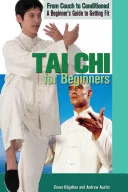
Tai Chi for Beginners
 75
75

Tai Chi for Beginners
Conor Kilgallon and Andrew Austin’s "Tai Chi for Beginners" provides a commendable entry point into a discipline often shrouded in mystique. Its strength lies in the systematic breakdown of the 24-form sequence, making complex postures digestible for the uninitiated. The authors avoid overly esoteric jargon, focusing instead on clear, actionable steps. A minor limitation is the inherent challenge of conveying the subtle internal sensations of Tai Chi purely through text and static imagery; the true nuance often emerges through live instruction. The section detailing the principle of 'yielding' offers a particularly lucid explanation of how to absorb and redirect force, a core concept in martial applications. For neophytes seeking a structured introduction, this book serves as a capable, if textually constrained, guide.
📝 Description
75
### What It Is Tai Chi for Beginners offers a structured approach to the ancient Chinese martial art and meditative practice. It outlines the foundational principles necessary for initiating a Tai Chi discipline. The book systematically presents a sequence of twenty-four distinct movements, designed for those new to its principles.
### Who It's For This guide is specifically tailored for individuals embarking on their first steps into Tai Chi. It serves practitioners seeking clear instruction on fundamental stances, breathwork, and the gradual progression through choreographed forms. Those interested in mind-body disciplines for balance and internal energy cultivation will find it particularly relevant.
### Historical Context While the precise historical lineage of Tai Chi Chuan stretches back centuries, this particular work, first published in August 2011, situates itself within the modern revival and accessibility of these practices. It bridges the gap between ancient Chinese martial arts philosophy and contemporary Western audiences seeking practical application.
### Key Concepts The book introduces core concepts such as the flow of Qi (vital energy), the importance of rootedness, and the principle of yielding. It emphasizes the continuous, circular nature of movements and the coordinated use of breath and intention. The twenty-four form sequences act as a practical vehicle for internalizing these principles.
💡 Why Read This Book?
• Learn the fundamental principles of Qi flow and rootedness as presented in the 24-form sequences, offering a practical method for cultivating internal energy. • Understand the concept of 'yielding' (a core principle discussed within the book), enabling you to apply Tai Chi's defensive strategies effectively. • Gain a clear, step-by-step introduction to initiating Tai Chi practice, directly referencing the 24 movement sequences detailed by authors Conor Kilgallon and Andrew Austin.
⭐ Reader Reviews
Honest opinions from readers who have explored this book.
❓ Frequently Asked Questions
What are the essential benefits of practicing Tai Chi as outlined in 'Tai Chi for Beginners'?
The book highlights benefits such as improved balance, enhanced coordination, stress reduction, and the cultivation of internal energy (Qi). It emphasizes that consistent practice of the 24 form sequences can lead to greater physical and mental well-being.
Is 'Tai Chi for Beginners' suitable for someone with no prior martial arts experience?
Yes, the book is explicitly designed for beginners. It provides a foundational understanding of Tai Chi principles and breaks down the 24-form sequence into manageable steps, assuming no prior knowledge.
What is the significance of the '24 form sequence' mentioned in the book?
The 24 form sequence, also known as the Simplified Tai Chi form, is a standardized set of movements derived from traditional Yang-style Tai Chi. It's presented in the book as a structured curriculum for learners to grasp fundamental techniques.
Does the book explain the philosophical underpinnings of Tai Chi?
While primarily a practical guide, the book touches upon underlying philosophical concepts such as the flow of Qi and the principle of yielding, providing context for the physical movements.
When was 'Tai Chi for Beginners' by Conor Kilgallon and Andrew Austin first published?
The book was first published on August 15, 2011, making it a relatively contemporary introduction to the ancient practice.
Can I learn Tai Chi solely from this book, or is a teacher recommended?
While the book offers detailed instruction for the 24 form sequences, learning Tai Chi often benefits from a qualified instructor to refine posture, energy flow, and application. This book serves as an excellent supplement or starting point.
🔮 Key Themes & Symbolism
Cultivating Qi
The work introduces the concept of Qi, or vital energy, as central to Tai Chi practice. It explains how the coordinated movements, breathwork, and focused intention described in the 24-form sequences are designed to facilitate the circulation and balancing of this internal energy. Practitioners are guided to perceive and direct Qi, fostering a sense of vitality and internal harmony. This aligns with broader esoteric traditions that emphasize the manipulation and refinement of subtle energies for health and spiritual development.
Mind-Body Integration
A core theme is the inseparable connection between the mind and body, central to many esoteric disciplines. The book details how each physical movement in the 24-form sequences requires conscious attention and intention, moving beyond mere physical exercise. This mindful engagement aims to harmonize mental states with physical actions, promoting presence and internal awareness. This focus on unified consciousness is a hallmark of practices seeking deeper self-understanding and control.
The Principle of Yielding
The text elaborates on the strategic principle of 'yielding,' a concept found in various martial arts and esoteric philosophies. It describes how to absorb and redirect an opponent's force rather than meeting it directly with brute strength. This practice encourages adaptability, sensitivity, and a non-confrontational approach, reflecting broader esoteric ideals of overcoming obstacles through wisdom and flow rather than direct conflict.
Structured Progression
The book's methodical presentation of the 24-form sequences offers a tangible pathway for beginners. This structured approach mirrors esoteric traditions that often utilize step-by-step initiatory processes or graded systems of learning. By breaking down complex practices into manageable components, it provides a clear roadmap for gradual mastery and internal development.
💬 Memorable Quotes
“The 24 form sequences are presented as a practical method for internalizing Tai Chi principles.”
— This highlights the book's pedagogical approach, framing the choreographed movements not just as physical exercises but as vehicles for cultivating deeper energetic and mental awareness central to Tai Chi.
“Understanding the flow of Qi is fundamental to effective Tai Chi practice.”
— This emphasizes the energetic dimension of Tai Chi, suggesting that practitioners should focus on the movement of internal energy (Qi) as much as the physical postures themselves for optimal results.
“Rootedness provides stability and a foundation for movement.”
— This concept underscores the importance of grounding in Tai Chi, suggesting that a strong connection to the earth is essential for balance, power, and the effective execution of techniques.
“The principle of yielding allows one to absorb and redirect force.”
— This points to a key strategic element in Tai Chi, advocating for a responsive and adaptable approach over brute strength, mirroring philosophical concepts of flexibility and non-resistance.
“Coordinating breath with movement enhances the practice.”
— This emphasizes the holistic nature of Tai Chi, where the synchronization of respiratory and physical actions is crucial for maximizing benefits and achieving a state of integrated practice.
🌙 Esoteric Significance
Tradition
While not explicitly aligning with a single named esoteric lineage like Hermeticism or Kabbalah, Tai Chi for Beginners engages with principles common across many esoteric traditions, particularly those rooted in Taoist philosophy and internal alchemy. It shares the focus on cultivating and balancing vital life force (Qi), harmonizing internal energies, and achieving a state of integrated mind-body awareness, which are central tenets in practices aimed at spiritual development and longevity.
Symbolism
The movements themselves are symbolic. The 'Cloud Hands' movement, for instance, evokes the ethereal and ever-changing nature of the mind and the cosmos, suggesting adaptability. The 'Snake Creeps Down' symbolizes navigating challenges by moving low and with fluidity, representing overcoming obstacles through persistence and subtle maneuvering. The continuous, circular patterns inherent in the 24-form sequences symbolize the cyclical nature of existence and the interconnectedness of all things.
Modern Relevance
Contemporary practitioners of somatic therapies, mindfulness-based stress reduction (MBSR), and Qigong often draw upon the foundational principles presented in works like this. Therapists and wellness coaches utilize Tai Chi's emphasis on slow, deliberate movement and breath control for rehabilitation and mental well-being. Its principles of energy cultivation and mindful movement are also echoed in various modern internal martial arts and meditation systems seeking practical applications for daily life.
👥 Who Should Read This Book
• Absolute beginners to Tai Chi seeking a structured, step-by-step guide to learning the fundamental 24-form sequences. • Individuals interested in exploring mind-body practices for stress reduction and improved physical balance, who appreciate clear, actionable instruction. • Practitioners of other contemplative or martial arts looking for an accessible introduction to the principles of Qi cultivation and yielding as taught in Tai Chi.
📜 Historical Context
Published in August 2011, "Tai Chi for Beginners" emerged during a period of significant global interest in mindfulness, alternative health practices, and Eastern philosophies. While Tai Chi Chuan's origins trace back centuries in China, often associated with Taoist principles and martial lineages like the Yang family, this work arrived as these practices became increasingly accessible to Western audiences. It navigated a landscape already populated by numerous Tai Chi manuals and schools, including those focusing on the more complex traditional Yang 108-move form. The book's contribution was its accessible distillation, catering specifically to novices. Contemporary authors and practitioners like Benjamin Lo were also popularizing Yang-style Tai Chi globally around this time, though Kilgallon and Austin's work focused on a simplified, introductory sequence.
📔 Journal Prompts
The principle of yielding as described in the 24-form sequences.
Cultivating Qi through coordinated breath and movement.
The concept of rootedness in foundational stances.
Personal experience integrating mind and body during practice.
Reflecting on the symbolic meaning of a specific movement.
🗂️ Glossary
Qi (Chi)
Vital life force or energy believed to flow through the body, central to Tai Chi and Traditional Chinese Medicine. Its balanced circulation is key to health and vitality.
24 Form Sequence
A standardized, simplified set of 24 Tai Chi movements derived from traditional Yang-style. It serves as an accessible introduction for beginners.
Rootedness
A state of being grounded and stable, achieved through proper posture and connection to the earth, essential for balance and power in Tai Chi.
Yielding
A principle in Tai Chi involving softness, adaptability, and redirecting an opponent's force rather than meeting it with direct resistance.
Stance
The specific posture and footwork used in Tai Chi, providing stability and forming the basis for movement execution.
Form
A pre-arranged sequence of Tai Chi movements, practiced continuously to develop skill, energy, and mind-body coordination.
Coordination
The harmonious integration of posture, breath, and intention in Tai Chi movements, leading to fluid and effective practice.