Séance
 84
84

Séance
Bendik’s "Séance" offers a potent, if brief, descent into dread, using the familiar trope of a spiritualist gathering to unearth a more visceral terror than simple ghost stories often achieve. The strength lies in its claustrophobic pacing and the palpable desperation of its protagonist, Silke. The narrative avoids easy answers, instead focusing on the psychological toll of her search for Tom. A particularly effective passage involves the subtle shifts in atmosphere during the séance, where the mundane setting of a room becomes charged with an unseen, malevolent presence. However, the novella's brevity, while contributing to its intensity, leaves some of the underlying motivations and the broader implications of the supernatural encounter feeling somewhat underdeveloped. Despite this, "Séance" delivers a sharp, unsettling experience that lingers.
Verdict: A tightly wound, atmospheric thriller that leverages the séance for genuine unease.
📝 Description
84
### What It Is
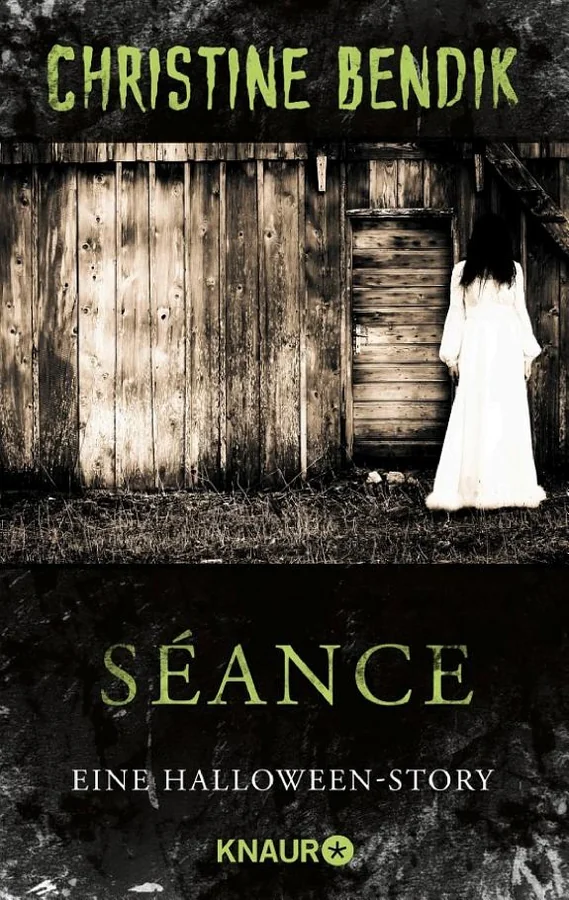
Christine Bendik's "Séance," first published in 2015, plunges readers into the unsettling atmosphere of a Halloween night. The narrative centers on Silke, whose boyfriend, Tom, has vanished a week prior. As police suspect foul play, Silke turns to a séance, hoping to bridge the gap between the living and the departed. This act propels her into a chilling encounter with the unknown, revealing dark truths that lie just beyond perception.
### Who It's For
This novella is crafted for enthusiasts of supernatural thrillers and Gothic horror who appreciate a psychological edge. Readers interested in explorations of grief, desperation, and the potential consequences of seeking answers from beyond the veil will find "Séance" particularly engaging. It appeals to those who enjoy stories that build tension through atmosphere and character rather than explicit gore.
### Historical Context
Published in 2015, "Séance" emerged during a period of renewed interest in supernatural narratives across various media. While not directly tied to a specific historical movement, it taps into enduring themes of spiritualism and the occult that have fascinated Western culture since the mid-19th century. The séance itself, a practice popularized by figures like the Fox sisters in the 1840s, serves as a central motif, reflecting ongoing cultural dialogues about life, death, and what lies beyond.
### Key Concepts
The work explores the concept of 'contact' across existential boundaries, particularly through the titular séance. It examines the human drive to find closure and truth when faced with inexplicable loss, even when such quests lead to terrifying revelations. The narrative also touches upon the liminal spaces between reality and the supernatural, suggesting that certain thresholds, once crossed, cannot be uncrossed.
💡 Why Read This Book?
• Understand the psychological cost of seeking answers beyond the veil, as depicted through Silke's desperate attempt to contact her missing boyfriend, Tom, in the titular séance. • Experience a narrative that builds dread through atmosphere and psychological tension, rather than overt horror, making the supernatural encounter feel more personal and chilling. • Explore the symbolic weight of the séance as a desperate threshold, a concept central to the book's chilling climax and its commentary on the dangers of forbidden knowledge.
⭐ Reader Reviews
Honest opinions from readers who have explored this book.
❓ Frequently Asked Questions
When was Christine Bendik's 'Séance' first published?
Christine Bendik's 'Séance' was first published on October 1, 2015. This date places it within the contemporary wave of supernatural and occult fiction.
What is the central premise of the book 'Séance'?
The book follows Silke, who, after her boyfriend Tom disappears, participates in a séance in a desperate attempt to make contact and uncover the truth behind his vanishing.
What genre does 'Séance' by Christine Bendik fall into?
'Séance' is best categorized as a supernatural thriller or Gothic horror novella, focusing on atmosphere, psychological tension, and a chilling encounter with the unknown.
Does the book 'Séance' involve actual spiritualist practices?
Yes, the central plot device is a séance, a ritual intended to communicate with spirits, which becomes the catalyst for the story's terrifying revelations.
Is 'Séance' a lengthy novel or a shorter work?
'Séance' is generally considered a novella, meaning it is shorter than a full-length novel, allowing for a concentrated and intense reading experience.
What kind of themes are explored in Christine Bendik's 'Séance'?
The novella explores themes of loss, desperation, the search for truth, the boundaries between life and death, and the potential dangers of seeking forbidden knowledge.
🔮 Key Themes & Symbolism
Desperation and the Unknown
The narrative hinges on Silke's profound desperation following her boyfriend Tom's unexplained disappearance. This emotional state drives her to participate in a séance, a ritualistic attempt to breach the veil between the living and the dead. The work interrogates the human impulse to seek answers, even when logic dictates caution, particularly when faced with the void left by loss. The séance becomes a focal point, representing a perilous threshold crossed in pursuit of truth, highlighting the often-unforeseen consequences of confronting the unknown.
The Séance as Threshold
The séance in the book functions as more than just a plot device; it is a symbolic threshold. It represents a deliberate act of crossing into liminal space, where the ordinary rules of reality are suspended. Bendik uses this setting to explore the fragility of existence and the potential for unseen forces to intrude upon the mundane. The act of summoning, or attempting to summon, entities from beyond carries inherent risks, and the narrative emphasizes that such crossings can have irreversible and terrifying repercussions for those involved.
Grief and its Manifestations
At its core, 'Séance' is an exploration of grief and how it can manifest in extreme behaviors. Silke's motivation stems from the pain of Tom's absence and the lack of answers from official channels. The story suggests that unchecked grief can lead individuals to seek solace or truth in unconventional, even dangerous, ways. The supernatural elements that emerge during the séance can be interpreted as externalizations of Silke's internal turmoil, blurring the lines between psychological distress and genuine paranormal phenomena.
Consequences of Forbidden Knowledge
The novella subtly warns against the pursuit of knowledge that lies beyond accepted human understanding. Silke's participation in the séance, an act of reaching for forbidden information, unleashes forces that prove to be horrifying. The narrative implies that some truths are perhaps best left undiscovered, and that delving into the occult, even with innocent intentions, can attract unwelcome attention from darker realms. This theme resonates with traditional cautionary tales found throughout esoteric literature.
💬 Memorable Quotes
“The Kripo suspects a crime, but Silke needs more than suspicion; she needs contact.”
— This line succinctly captures Silke's driving motivation. While the authorities are focused on legal and rational explanations for Tom's disappearance, Silke's emotional need transcends mere investigation, pushing her towards spiritualist means.
“The air in the room grew heavy, a tangible pressure that silenced all thought.”
— This quote illustrates the atmospheric tension that builds during the séance. It describes the palpable shift from the mundane to the supernatural, suggesting an unseen presence that affects the physical environment.
“She sought a voice from the beyond, but found only echoes of her own fear.”
— This reflects the psychological outcome of Silke's quest. Instead of clear answers, she confronts the manifestations of her own anxieties and the terrifying possibilities her grief has conjured.
“Some doors, once opened, refuse to be closed.”
— This aphorism underscores the central warning of the novella: that engaging with certain supernatural forces or forbidden knowledge can have permanent and perilous consequences.
“The silence that followed was not empty, but watchful.”
— This suggests a lingering, sentient presence after the main event of the séance. It implies that the contact made has left an enduring, perhaps malevolent, awareness observing the protagonist.
🌙 Esoteric Significance
Tradition
While not explicitly tied to a single esoteric lineage like Hermeticism or Kabbalah, "Séance" draws heavily from the broader tradition of Western spiritualism and folk magic. It engages with the archetypal concept of the medium and the séance as a means of accessing hidden knowledge or communicating with non-corporeal entities. The work reflects a modern interpretation of these older practices, focusing on the psychological and existential implications rather than the formalized rituals often found in established esoteric orders. It shares thematic ground with occult fiction that explores the boundaries between the material and immaterial worlds.
Symbolism
The primary symbol is the **séance** itself, representing a deliberate act of crossing the threshold between life and death, a dangerous venture into the unknown. The **unseen presence** that manifests during the ritual symbolizes the often-terrifying truths or entities that can be encountered when one seeks forbidden knowledge. The **silence** that follows the climax is not merely an absence of sound but a charged, watchful entity, symbolizing the lingering consequences and the persistent nature of the forces that have been contacted.
Modern Relevance
Contemporary practitioners and enthusiasts of modern witchcraft, neo-paganism, and even psychological horror often find resonance in "Séance." Its focus on the personal, visceral experience of contacting the 'other' aligns with modern interpretations of mediumship and spiritual exploration that prioritize individual experience over rigid doctrine. Thinkers exploring the intersection of psychology and the paranormal, or authors delving into the darker aspects of human consciousness and its potential interaction with external forces, might find Bendik's narrative a compelling case study in the anxieties surrounding death and the unknown.
👥 Who Should Read This Book
• Readers interested in psychological horror and supernatural thrillers who appreciate atmospheric tension over explicit gore. • Individuals drawn to narratives exploring themes of grief, loss, and the desperate search for answers beyond the conventional. • Enthusiasts of stories that use classic occult tropes, like the séance, to examine the darker aspects of human nature and the potential consequences of confronting the unknown.
📜 Historical Context
Christine Bendik’s "Séance" (2015) emerged in a contemporary literary landscape where supernatural thrillers and Gothic revivals continued to find a significant audience. While not directly a product of a specific historical esoteric movement, its premise taps into the enduring fascination with spiritualism that captivated Western society from the mid-19th century onwards, particularly following the phenomena associated with the Fox sisters in Hydesville, New York, starting in 1848. The practice of séances, popularized during that era, serves as the narrative's crucible. This period also saw the rise of influential figures like Helena Blavatsky and the Theosophical Society, though "Séance" operates on a more personal, psychological level rather than engaging with complex occult philosophies. The book’s reception, while not marked by major public controversy or widespread critical acclaim in the vein of earlier Gothic works, contributes to the ongoing dialogue in popular culture about death, loss, and the possibility of communication with the deceased, a theme explored by authors ranging from Arthur Conan Doyle to more recent horror writers.
📔 Journal Prompts
The weight of the air during the séance: how might unspoken grief manifest as a physical sensation?
Silke’s motivation for contact: what boundaries are you unwilling to cross in seeking resolution?
The watchful silence: what lingers after a profound, unsettling experience?
The séance as a threshold: consider moments in your life where you crossed a significant boundary.
Echoes of fear: how do internal anxieties shape perceptions of external threats?
🗂️ Glossary
Séance
A meeting or gathering at which people attempt to make contact with the spirit world, typically through a medium.
Kripo
Short for 'Kriminalpolizei,' the German criminal investigation police force.
Medium
A person believed to be able to communicate with the spirits of the dead or to act as a link to supernatural forces.
Liminal Space
A place or state of transition, being on the threshold between two states or places, often associated with ambiguity and uncertainty.
Supernatural
Attributed to some force beyond scientific understanding or the laws of nature.
Atmosphere
The character and mood of a place or event, as perceived by a person.
Threshold
A point of beginning or entering; a boundary or limit.