Superstitions
 77
77

Superstitions
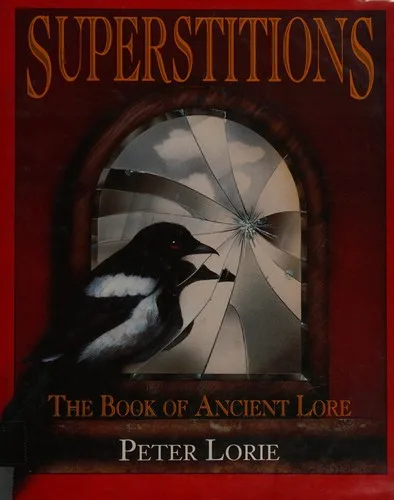
Peter Lorie’s *Superstitions* is a commendable effort to categorize and analyze the pervasive, often illogical, beliefs that cling to human culture. The author’s strength lies in his systematic approach, dissecting how these beliefs take hold and propagate. A particularly incisive section examines the role of accidental correlation in fostering the belief that knocking on wood wards off misfortune. However, the work occasionally feels more like an encyclopedic compilation than a deeply interpretive study. While it meticulously details *what* people believe and *how* they came to believe it, it sometimes stops short of fully exploring the profound psychological implications, a missed opportunity given the subject matter. Nevertheless, Lorie provides a solid foundation for understanding this enduring aspect of the human condition.
📝 Description
77
Peter Lorie's 1992 book, Superstitions, examines why irrational beliefs persist across cultures.
Published in 1992, Peter Lorie's Superstitions moves beyond simply listing common beliefs. The book aims to uncover the psychological and social reasons behind the endurance of superstitions, even when they lack empirical support. Lorie traces the origins of these beliefs through folklore, religious practices, and historical events, showing how they have shaped human thought and behavior for centuries.
This work is for readers interested in cultural history, anthropology, and the sociology of belief. It speaks to those curious about how irrational ideas continue to influence societies and appear in daily life. Academics in folklore, psychology, and comparative religion will find it a useful resource for understanding the lasting impact of non-rational explanations.
Lorie's research touches on concepts like the placebo effect, confirmation bias, and our inclination to see patterns in random data. He discusses how ancient fears and hopes are formalized into rituals and shared understandings. The book follows the transformation of superstitions from ancient omens to modern anxieties, noting their function in offering comfort, control, or a sense of order.
While not strictly an occult text, Lorie's work engages with belief systems that often exist outside mainstream rational frameworks. It emerged in the 1990s, a time when academic and popular interest in cultural studies and non-mainstream belief systems was growing. The book's focus on the psychological underpinnings of superstition resonates with traditions that explore the human mind's interaction with the unseen or unproven, finding common ground with inquiries into folk magic, divination, and the nature of belief itself.
💡 Why Read This Book?
• Gain insight into the psychological mechanisms, such as confirmation bias, that perpetuate superstitions, offering a framework for understanding your own belief patterns. • Understand the historical trajectory of specific superstitions, tracing their origins from ancient omens to modern folk practices, providing concrete examples from the book’s 1992 publication. • Discover how seemingly irrational beliefs fulfill fundamental human needs for control and meaning, as explored through the book’s examination of societal influences.
⭐ Reader Reviews
Honest opinions from readers who have explored this book.
❓ Frequently Asked Questions
When was Peter Lorie's Superstitions first published?
Peter Lorie's *Superstitions* was first published in 1992, contributing to late 20th-century discourse on cultural beliefs and practices.
What kind of superstitions does the book cover?
The book covers a wide array of superstitions, examining their origins and persistence across different cultures and historical periods, from ancient omens to modern folk beliefs.
Does the book offer psychological explanations for superstitions?
Yes, the work explores psychological underpinnings such as confirmation bias and the human tendency to find patterns, providing an analytical framework for understanding why superstitions endure.
Is Superstitions suitable for academic study?
Yes, it is suitable for students of cultural history, anthropology, and the sociology of belief, offering a structured overview of the subject matter.
What is the primary focus of the book?
The primary focus is on understanding the origins, persistence, and societal role of superstitions, rather than simply listing them. It seeks to explain the 'why' behind these widespread beliefs.
Does the book discuss superstitions from specific regions?
While not exclusively regional, the book examines superstitions through a lens that acknowledges their presence and evolution across various cultures and historical contexts.
🔮 Key Themes & Symbolism
Psychology of Belief
This theme explores the cognitive biases and psychological needs that drive the creation and maintenance of superstitions. Lorie examines how humans seek patterns, avoid uncertainty, and find comfort in ritualistic behaviors, even when lacking empirical backing. Concepts like confirmation bias and the desire for control are central, explaining why individuals might adhere to practices like knocking on wood or avoiding black cats, despite rational knowledge to the contrary.
Cultural Evolution of Folklore
The book traces the historical development and transmission of superstitions as a form of folklore. It investigates how ancient omens, religious taboos, and historical events become embedded in collective consciousness and passed down through generations. Lorie illustrates this by analyzing how certain fears and hopes associated with specific phenomena, like luck or ill fortune, evolve into codified societal beliefs.
Societal Function of Superstition
Here, the focus is on the role superstitions play within societies. They can serve to reinforce social norms, provide a sense of order in chaotic times, or act as a shared cultural language. The work discusses how these beliefs, despite their irrational basis, can offer psychological security and a framework for navigating life's uncertainties, contributing to social cohesion and shared identity.
Rationality vs. Irrationality
This theme addresses the persistent tension between rational thought and the enduring influence of irrational beliefs. Lorie examines how superstitions coexist with scientific understanding and logical reasoning in everyday life. The book questions the boundaries of rationality and explores how deeply ingrained beliefs can shape perception and behavior, often overriding empirical evidence.
💬 Memorable Quotes
Direct passages from the work, attributed to the author.
“The human mind's tendency to seek patterns in random events.”
— This highlights a core psychological driver for superstition: seeing connections and causal links where none objectively exist, a fundamental aspect of how superstitions take root.
“Superstitions often serve to alleviate anxiety about the unknown.”
— This interpretation points to the emotional function of superstitions, providing a perceived sense of control and predictability in situations that are inherently uncertain or frightening.
“The transmission of beliefs through cultural osmosis.”
— This describes how superstitions spread organically within communities, becoming accepted norms through observation and social reinforcement rather than explicit instruction or logical proof.
“Ancient fears and hopes codified into ritualistic behavior.”
— This captures the process by which primal human emotions and desires become formalized into specific actions or taboos that are believed to influence outcomes.
“The persistence of belief despite a lack of empirical evidence.”
— This observation addresses the often-counterintuitive resilience of superstitions, underscoring their deep psychological or social roots that can outweigh rational assessment.
🌙 Esoteric Significance
Tradition
While not explicitly tied to a single esoteric lineage, *Superstitions* engages with themes relevant to Hermeticism and Western esotericism by exploring the underlying principles of sympathetic magic and the power of belief. It touches upon the idea that focused thought and ritual can influence reality, a concept present in many magical traditions. The work provides a secular, analytical framework for understanding phenomena that esoteric practitioners often engage with directly.
Symbolism
The book implicitly deals with symbolic motifs common in esoteric thought, such as the association of specific animals (e.g., black cats) with fortune or misfortune, and the symbolic power attributed to numbers (e.g., 13). These are examined not for their inherent magical efficacy but for their cultural embedding and psychological resonance, reflecting how symbols carry meaning beyond their literal form.
Modern Relevance
Contemporary thinkers in psychology and sociology of religion continue to explore the themes Lorie addressed. Fields like cognitive science of religion draw on similar analyses of belief formation. Furthermore, practitioners of modern magical and occult traditions might find Lorie's work useful for understanding the cultural context and psychological impact of the symbolic systems and rituals they employ.
👥 Who Should Read This Book
• Cultural anthropologists and sociologists seeking a structured overview of belief systems and their societal functions. • Psychology students interested in cognitive biases, the formation of belief, and the impact of irrational thought on behavior. • General readers curious about the origins and persistence of common superstitions and their place in human history and daily life.
📜 Historical Context
Published in 1992, Peter Lorie's *Superstitions* emerged at a time when cultural studies and the anthropology of belief were gaining significant academic traction. The late 20th century saw a move away from purely rationalist critiques of non-mainstream phenomena, with scholars like Mary Douglas (whose work *Purity and Danger* explored symbolic systems) influencing how cultural beliefs were understood. Lorie's book contributed to this intellectual climate by providing a systematic examination of how seemingly irrational beliefs function within societies. It arrived in a period where popular interest in esotericism and alternative explanations for phenomena was also high, making it relevant to both academic and general audiences curious about the enduring power of folklore and tradition. The work implicitly engaged with anthropological theories of ritual and belief, offering a structured overview of a topic often relegated to anecdote.
📔 Journal Prompts
The societal function of superstitions as a means of control.
Origins of the belief that knocking on wood wards off misfortune.
Confirmation bias and its role in perpetuating folk beliefs.
The connection between ancient fears and modern superstitious practices.
How superstitions provide psychological security in uncertain times.
🗂️ Glossary
Confirmation Bias
The psychological tendency to search for, interpret, favor, and recall information in a way that confirms one's pre-existing beliefs or hypotheses, often leading to the reinforcement of superstitions.
Sympathetic Magic
A type of magic that operates on the principle of 'like produces like' or that 'an effect resembles its cause.' It involves using symbols or objects that resemble the desired outcome to influence events.
Cultural Osmosis
The process by which beliefs, customs, and practices are absorbed and transmitted within a society, often unconsciously, through social interaction and observation.
Cognitive Dissonance
The mental discomfort experienced by a person who holds two or more contradictory beliefs, ideas, or values, or is confronted by new information that conflicts with existing beliefs.
Folklore
The traditions, customs, beliefs, stories, and sayings of a community, often passed down orally from generation to generation.
Taboo
A social or religious custom prohibiting or restricting a particular practice or forbidding association with a particular person, place, or thing, often rooted in superstition.
Empirical Evidence
Information acquired through observation and experimentation, forming the basis of scientific knowledge and often contrasted with belief based on faith or tradition.
🔮 Readers Also Liked
Browse all →








More by Peter Lorie
All books →

More Free Occult Philosophy Books
View all →