Stimmen Im Fluss
 77
77

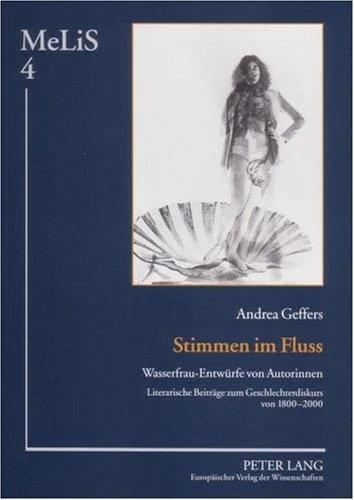
Stimmen Im Fluss
Andrea Geffers' Stimmen Im Fluss offers a rare, unvarnished look at the subjective experience of esoteric awareness. Rather than presenting a systematized doctrine, Geffers offers fragmented reflections that feel less like a teaching and more like overheard whispers from the edge of perception. The strength lies in its raw honesty; the book doesn't shy away from the disorienting, often ineffable nature of profound spiritual encounters. A particular passage, describing the sensation of "dissolving boundaries" during deep meditation, effectively captures this quality, conveying a sense of both liberation and profound vulnerability. However, the book’s very nature as a collection of subjective impressions can also be its limitation. Readers seeking a clear narrative arc or explicit guidance might find its elusive quality frustrating. The lack of a defined glossary or explicit contextualization for some of the more personal symbolic language requires significant reader effort. Ultimately, Stimmen Im Fluss is a challenging but rewarding text for those willing to meet its introspective demands.
📝 Description
77
Andrea Geffers' Stimmen Im Fluss, published in 2007, examines esoteric concepts beyond historical surveys or practical guides.
Stimmen Im Fluss is a philosophical work engaging with esoteric ideas. It does not aim to be a historical account or a manual for practice. Instead, the book focuses on inner states and spiritual currents. Geffers invites readers to consider the subtle energies and the interconnectedness that are part of existence. The perspective offered differs from mainstream philosophical or religious viewpoints. The approach is personal, encouraging internal reflection over external pronouncements.
This text suits individuals already familiar with or seeking to deepen their knowledge of esoteric thought. It appeals to those who value philosophical depth and can engage with abstract or symbolic language. Readers interested in consciousness, reality's nature, and unseen forces will find much to contemplate. The book is appropriate for dedicated seekers, contemplative practitioners, and students of comparative mysticism.
Published in 2007, Stimmen Im Fluss appeared during a time of growing interest in esoteric studies and alternative spiritualities. The early 21st century fostered many online communities for mystical traditions. This environment made works like Geffers' accessible to a wider, though still specialized, audience. The book followed the psychological frameworks laid out by 20th-century figures like Carl Jung, whose work on the collective unconscious and archetypes influenced later esoteric writers.
💡 Why Read This Book?
• Gain a direct appreciation for the subjective, non-linear experience of esoteric consciousness, as explored through Geffers’ personal reflections, offering a contrast to more structured spiritual systems. • Understand the concept of "energetic flow" as depicted in the book, learning how internal states are presented as directly influencing external reality, a core tenet of many mystical traditions. • Explore the personal symbolism Geffers employs, providing a unique case study for how individual spiritual journeys manifest through language and metaphor, particularly relevant for comparative mysticism.
⭐ Reader Reviews
Honest opinions from readers who have explored this book.
❓ Frequently Asked Questions
What is the primary focus of Andrea Geffers' Stimmen Im Fluss?
The book primarily focuses on the subjective experience of esoteric awareness and the interconnectedness of existence. It explores inner landscapes and spiritual currents through personal reflection rather than a systematic doctrine.
When was Stimmen Im Fluss first published, and what was the general context?
Stimmen Im Fluss was first published in 2007. This period saw a resurgence of interest in esoteric studies, facilitated by growing online communities and resources, making such works accessible to a wider audience.
Does the book offer practical exercises or step-by-step guidance?
No, Stimmen Im Fluss does not offer practical exercises or step-by-step guidance. Its approach is more contemplative and reflective, focusing on the exploration of inner states and abstract concepts.
Who would benefit most from reading Stimmen Im Fluss?
Individuals already familiar with esoteric thought, those seeking to deepen their understanding of consciousness and subtle energies, and readers who appreciate philosophical depth and symbolic language would benefit most.
What are some of the key themes explored in the book?
Key themes include energetic flow, the interconnectedness of all things, the subjective nature of spiritual reality, and the dynamic, evolving view of existence, often conveyed through metaphor and analogy.
Is Stimmen Im Fluss a historical or academic text?
It is not primarily a historical or academic text. While it exists within the broader context of esoteric studies, its focus is on personal exploration and subjective experience, rather than objective historical analysis.
🔮 Key Themes & Symbolism
Subjective Spiritual Experience
The book emphasizes the deeply personal and often ineffable nature of spiritual realization. Geffers' writing suggests that true understanding transcends intellectualization, arising instead from direct, felt experience. This contrasts with dogmatic approaches, prioritizing internal states and intuitive perception. The text explores how individual consciousness shapes reality, moving away from objective truths towards a more fluid, phenomenological understanding of existence. It's about the internal landscape as the primary arena for spiritual work.
Energetic Interconnectedness
A central theme is the concept of "energetic flow" and the profound interconnectedness of all phenomena. Geffers posits that existence is not a collection of discrete entities but a dynamic, interwoven web of energy. This perspective encourages readers to perceive subtle relationships and influences that are often overlooked in mundane awareness. The work suggests that understanding these flows is key to navigating life and consciousness, viewing the universe as a living, responsive system.
The Fluidity of Being
Stimmen Im Fluss challenges rigid definitions of self and reality, advocating for a more fluid and adaptable understanding of being. It explores states where boundaries dissolve, allowing for a sense of unity with the greater whole. This perspective encourages a dynamic engagement with life, where transformation and change are seen as natural processes rather than disruptions. The book invites readers to embrace impermanence and the ever-shifting nature of consciousness and existence.
Symbolic Representation
Given the often ineffable nature of esoteric experiences, the book relies heavily on metaphor and symbolism to convey its ideas. Geffers uses evocative imagery to describe states of consciousness and energetic phenomena that resist literal explanation. These symbols are not presented as fixed allegories but as fluid representations that can evoke deeper understanding through contemplation. The text highlights the power of indirect language in pointing towards spiritual truths that lie beyond ordinary discourse.
💬 Memorable Quotes
Direct passages from the work, attributed to the author.
“Understanding flows not from knowing, but from being.”
— This highlights the book's emphasis on experiential wisdom over intellectual accumulation. It suggests that true insight into esoteric principles arises from embodying them, from direct participation in the states of consciousness described.
“Each thought is a ripple in the universal stream.”
— This illustrates the concept of energetic interconnectedness and the lasting impact of even subtle mental activities. It frames consciousness not as isolated but as part of a larger, dynamic flow, where individual thoughts contribute to the collective energetic field.
“Perception bends the light of reality.”
— This speaks to the subjective nature of experience and how our individual consciousness acts as a filter or lens. It implies that reality is not a fixed entity but is actively shaped by the perceiver's state and awareness.
“The silence between notes holds the truest melody.”
— This metaphorical statement points to the significance of the unmanifest or the subtle. It suggests that profound truths and deeper meaning are often found not in the overt expression, but in the spaces, pauses, and implicit potential that surrounds it.
💡 Key Ideas
Editorial paraphrase of the work's core concepts — not direct quotes.
The boundary between self and world dissolves like mist.
This quote captures the core theme of interconnectedness and the dissolution of egoic separation. It points to mystical experiences where the perceived distinction between the individual and the external environment ceases, leading to a sense of unity.
🌙 Esoteric Significance
Tradition
Stimmen Im Fluss engages with a broad, unaligned esoteric sensibility rather than adhering strictly to a specific tradition like Hermeticism or Kabbalah. It draws from the general currents of consciousness studies and mystical experience prevalent in late 20th and early 21st-century spirituality. Its emphasis on subjective experience and energetic flow aligns with non-dual philosophies and certain interpretations of Gnostic ideas regarding inner knowing, but it does not explicitly claim lineage. The work's departure lies in its highly personal, almost fragmented presentation, which eschews systematic doctrine for intuitive exploration.
Symbolism
The "river" (Fluss) itself is a potent symbol, representing the constant flow of consciousness, energy, and life, a departure from static or rigid conceptualizations. "Voices" (Stimmen) suggest subtle perceptions, intuitions, or communications from beyond the ordinary rational mind, perhaps inner guides or elements of universal consciousness. The interplay between these implies that the individual consciousness is immersed in and influenced by a dynamic, energetic field, and that awareness of these "voices" within the "flow" is key to spiritual insight.
Modern Relevance
Contemporary practitioners of mindfulness, somatic experiencing, and trauma-informed spirituality can find resonance in Geffers' descriptions of energetic flow and altered states of consciousness. Thinkers exploring the phenomenology of religious experience or the philosophical implications of quantum physics for consciousness may also find points of connection. The book's emphasis on subjective truth and personal interpretation aligns with a broader cultural shift away from authoritarian structures towards individual empowerment in spiritual and self-development practices.
👥 Who Should Read This Book
• Introspective individuals seeking to understand the subjective nature of spiritual experience, moving beyond dogma to personal gnosis. • Students of consciousness studies interested in phenomenological accounts of altered states and energetic phenomena. • Seekers who appreciate literature that uses metaphor and symbolism to explore the subtle dimensions of reality, rather than offering direct instruction.
📜 Historical Context
Andrea Geffers' Stimmen Im Fluss, published in 2007, arrived during a period of significant growth in esoteric and New Age publishing, fueled by the internet's ability to connect like-minded individuals. This era was heavily influenced by the psychological theories of Carl Jung, whose work on archetypes and the collective unconscious provided a framework for understanding the depths of the psyche that many esoteric writers explored. While Geffers' work is distinctly personal and introspective, it appeals to the broader intellectual currents that sought to integrate modern psychology with ancient mystical traditions. The book’s publication occurred in the shadow of 20th-century figures like Helena Blavatsky and Rudolf Steiner, whose foundational texts had already established major esoteric schools, but Geffers’ approach feels more akin to a contemporary, individualistic exploration rather than adherence to a specific lineage. The reception was likely within niche online forums and specialized bookstores, reflecting the decentralized nature of esoteric discourse at the time.
📔 Journal Prompts
The concept of "energetic flow" as described in the text.
The sensation of "dissolving boundaries" during moments of heightened awareness.
Reflections on personal "voices" or intuitions experienced within moments of stillness.
How the "river" metaphor shapes your perception of personal change and growth.
Interpreting the "silence between notes" in your own daily experiences.
🗂️ Glossary
Energetic Flow
A central concept in the book, referring to the continuous movement and interconnectedness of subtle energies that constitute existence. It suggests that reality is dynamic and responsive, not static.
Subjective Experience
Emphasis on individual, internal perception and feeling as the primary means of understanding spiritual truths, as opposed to objective, external validation or dogma.
Dissolving Boundaries
A state of consciousness where the perceived separation between the self and the external world diminishes, leading to a feeling of unity or interconnectedness.
Inner Voices
Refers to subtle intuitions, inner guidance, or perceptions that arise from the subconscious or a deeper level of awareness, often distinct from rational thought.
Fluidity of Being
The philosophical stance that existence, identity, and reality are not fixed but are in a constant state of flux and transformation.
Symbolic Language
The use of metaphors, analogies, and imagery to convey concepts that are difficult or impossible to express through literal or direct language.
Phenomenological Approach
An approach that focuses on the study of conscious experience as experienced from the first-person point of view, prioritizing the subjective description of phenomena.
🔮 Readers Also Liked
Browse all →









More Free Occult Philosophy Books
View all →