sri kandha puranam (english)
 82
82

sri kandha puranam (english)
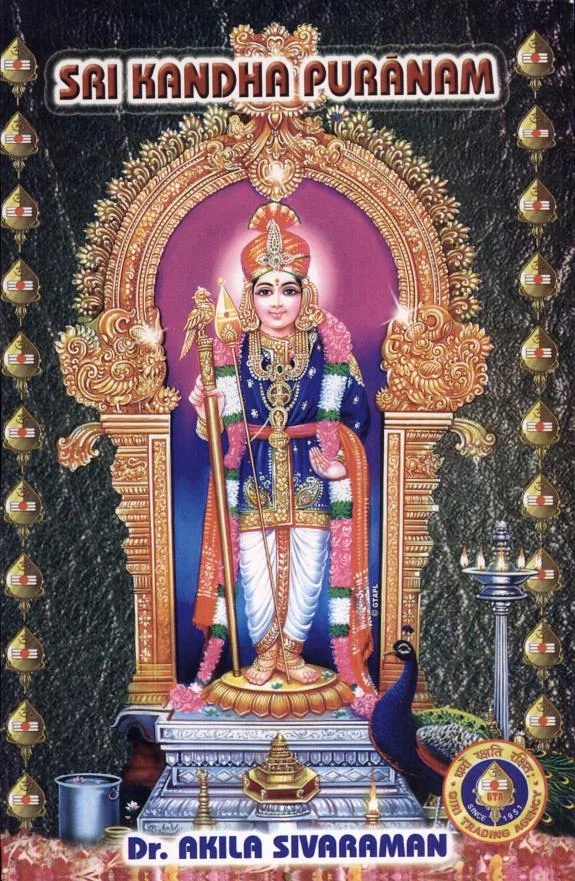
Dr. Akila Sivaraman’s 2006 English translation of the Sri Kandha Puranam offers a lucid entry point into a pivotal Hindu epic. The work successfully captures the devotional fervor surrounding Lord Murugan, presenting his martial exploits and divine nature with clarity. A notable strength lies in its accessibility; Sivaraman’s prose renders complex mythological narratives comprehensible without sacrificing their spiritual weight. However, the text occasionally feels more like a straightforward recounting than a deeply interpretive work, which might leave scholars seeking nuanced philosophical exegesis wanting more. The section detailing Murugan’s battle with Surapadman, while descriptive, could benefit from deeper exploration of the symbolic resonance of this cosmic struggle. Ultimately, this rendition serves as a valuable, if somewhat conservative, introduction to a significant South Indian religious text.
📝 Description
82
Dr. Akila Sivaraman's 2006 English translation brings the Sri Kandha Puranam to a new audience.
This book recounts the Sri Kandha Puranam, a major work in Hindu devotion. It centers on Murugan, the Tamil god of war and son of Shiva and Parvati, detailing his divine life and struggles. The verses celebrate his birth, his divine actions, and his battles against evil forces. Through this narrative, readers can connect with the deity on a spiritual level. Dr. Sivaraman's English version, published in 2006, makes this epic accessible to those unfamiliar with the original Tamil or Sanskrit texts. It is a valuable resource for understanding the worship of Murugan and its cultural impact in South India.
The Sri Kandha Puranam itself has ancient roots, with its earliest versions attributed to the 14th century or earlier by the poet Kaviraja Pandithar. It is a South Indian elaboration on the Sanskrit Skanda Purana. The epic played a significant role in spreading Murugan worship throughout Tamil Nadu and is a cornerstone of devotional literature in the region. Its verses have been a part of religious practice and cultural identity for centuries.
The Sri Kandha Puranam is a significant text within the Shaivite tradition of Hinduism, focusing on the deity Murugan. Murugan, often depicted as a divine child, embodies spiritual strength and the victory of righteousness. His conflict with the demon Surapadman serves as a metaphor for the individual's internal struggle against ego and delusion, representing a path toward spiritual liberation. This narrative offers insights into the philosophical concepts of power, good versus evil, and the soul's progress within a polytheistic framework.
💡 Why Read This Book?
• Gain an understanding of the devotional narrative surrounding Murugan, the Tamil god of war, as presented in the Sri Kandha Puranam, allowing for a deeper appreciation of South Indian Hindu traditions. • Explore the symbolic significance of Murugan's battles, such as his defeat of Surapadman, offering insight into the Hindu concepts of overcoming ego and ignorance, as detailed in the epic. • Access a key South Indian religious text in English translation, first published in 2006 by Dr. Akila Sivaraman, facilitating comparative study with other Puranic literature or mythological traditions.
⭐ Reader Reviews
Honest opinions from readers who have explored this book.
❓ Frequently Asked Questions
What is the primary deity celebrated in Sri Kandha Puranam?
The Sri Kandha Puranam primarily celebrates Lord Murugan, also known as Kartikeya or Skanda. He is a prominent deity in Hinduism, particularly revered in South India, and is depicted as the god of war and the son of Shiva and Parvati.
Who is the author of this English rendition?
This English translation and retelling of the Sri Kandha Puranam is by Dr. Akila Sivaraman. It was first published in 2006, making the ancient Tamil epic more accessible to an English-speaking readership.
What is the historical origin of the Sri Kandha Puranam?
The Sri Kandha Puranam is an ancient Tamil epic, believed to have originated in the 14th century or earlier, attributed to the poet Kaviraja Pandithar. It is a significant regional adaptation of the Sanskrit Skanda Purana.
What are the main themes covered in the book?
The book covers themes of divine heroism, the triumph of good over evil, Murugan's divine birth and exploits, and the spiritual journey of overcoming obstacles, all presented within a devotional Hindu framework.
Is this book suitable for beginners in Hindu studies?
Yes, Dr. Sivaraman's 2006 English version is suitable for beginners. It provides a clear and accessible narrative of a major Hindu epic, explaining the story and devotional aspects of Lord Murugan without assuming prior deep knowledge.
What is the symbolic meaning of Murugan's victory over Surapadman?
Murugan's victory over the demon Surapadman symbolizes the soul's spiritual struggle against ego, illusion, and ignorance. It represents the triumph of divine consciousness and righteousness over demonic forces within the individual and the cosmos.
🔮 Key Themes & Symbolism
Divine Heroism of Murugan
The narrative centers on Lord Murugan as a divine warrior and protector. His birth, education, and subsequent battles are depicted as acts of cosmic significance, demonstrating divine power and the establishment of righteousness. The text highlights his martial prowess and his role in defeating malevolent forces that threaten the celestial order, offering devotees an archetype of courage and spiritual authority. His exploits serve as inspiration for overcoming personal challenges through divine grace and inner strength.
Triumph Over Ignorance
A central theme is the battle against demonic entities, most notably Surapadman. This conflict is often interpreted esoterically as the struggle between spiritual enlightenment and ignorance or ego. Murugan's victory represents the soul's capacity to overcome inner obstacles, shedding illusion and achieving liberation. The epic illustrates that divine intervention and spiritual discipline are key to conquering the darker aspects of existence and attaining a higher state of consciousness.
Devotional Practice and Grace
The Sri Kandha Puranam is fundamentally a devotional text, intended to foster *bhakti* (devotion) towards Murugan. It emphasizes the importance of prayer, recitation of his glories, and faith in receiving his blessings. The narrative showcases how devotion can lead to divine favor, protection, and eventual spiritual realization. The retelling serves as a guide for practitioners seeking to deepen their connection with the deity and understand the path of surrender.
Hindu Cosmology and Dharma
The epic is set against the backdrop of Hindu cosmology, describing the roles of various deities and the cosmic order. It implicitly reinforces the concept of *dharma* – righteous duty and cosmic law. Murugan's actions uphold this order against chaos. The narrative reflects cyclical views of time and the perpetual struggle between divine forces and those that seek to disrupt cosmic balance, providing a framework for understanding life within a larger spiritual universe.
💬 Memorable Quotes
Direct passages from the work, attributed to the author.
“Murugan’s birth was a divine necessity to vanquish the demon Surapadman.”
— This highlights the core narrative driver: Murugan's divine purpose is to restore cosmic balance by defeating evil, a recurring motif in Hindu mythology that underscores the divine intervention in mortal affairs.
“The Vel, Murugan’s divine spear, represents ultimate power and decisive action.”
— The Vel is not merely a weapon but a potent symbol of spiritual authority and the piercing of illusion. It signifies the power to cut through ignorance and achieve clarity, reflecting the focused energy required for spiritual progress.
“Through devotion, even ordinary mortals can receive Murugan's grace.”
— This emphasizes the accessibility of the divine. It suggests that sincere faith and devotion (*bhakti*) are the primary means by which individuals can connect with Murugan and benefit from his divine protection and guidance.
“The cosmic dance of creation and destruction is overseen by divine beings like Murugan.”
— This interpretation speaks to the grand scale of Hindu cosmology, where deities are active participants in the cycles of existence. Murugan's role reflects the dynamic nature of the universe and the divine forces that govern it.
“Surapadman’s arrogance led to his downfall, a warning against ego.”
— This points to the moral dimension of the epic. The demon's defeat serves as an allegory for the destructive consequences of unchecked ego and pride, reinforcing the spiritual value of humility.
🌙 Esoteric Significance
Tradition
This work is deeply rooted in the Shaivite tradition of Hinduism, specifically the devotional practices centered on Murugan. It aligns with the broader Puranic literature but focuses intensely on a particular deity's mythology and spiritual significance, common in Bhakti movements. Its esoteric dimension lies in interpreting the deity's actions and attributes as metaphors for spiritual states and the path to liberation, rather than purely historical or mythological accounts.
Symbolism
Key symbols include Murugan himself, representing divine energy, spiritual wisdom, and the conquering of ego. His mount, the peacock, symbolizes beauty, power, and the transcendence of vanity. The divine spear, the Vel, is a potent symbol of focused spiritual knowledge that pierces ignorance and delusion, akin to a divine intellect or insight that cuts through falsehood. These symbols are not merely decorative but integral to understanding the spiritual lessons embedded within the narrative.
Modern Relevance
Contemporary practitioners of Hinduism, especially in South India and diaspora communities, continue to draw upon the Sri Kandha Puranam for devotional inspiration and ritual guidance. Its themes of overcoming obstacles and divine grace resonate with modern spiritual seekers. Furthermore, scholars of religion and mythology analyze its narrative structure and symbolic language to understand the evolution of Hindu deities and devotional practices, connecting ancient narratives to present-day spiritual life.
👥 Who Should Read This Book
• Devotees of Lord Murugan seeking a comprehensive retelling of his divine exploits and a source for devotional practice. • Students of comparative mythology and religion interested in the specific narratives and deities within Hinduism, particularly South Indian traditions. • Readers exploring the concept of divine heroism and the symbolic representation of spiritual battles against inner and outer obstacles.
📜 Historical Context
The Sri Kandha Puranam, as a Tamil epic, emerged in a region with a deeply established tradition of devotional literature, particularly focused on deities like Murugan. While the Sanskrit Skanda Purana is ancient, the Tamil version, attributed to Kaviraja Pandithar and later poets, solidified in the medieval period, likely flourishing around the 14th century. Its composition and widespread recitation served to bolster the specific cult of Murugan in South India, differentiating it from the more pan-Indian Sanskrit traditions. This period saw a vibrant exchange of religious ideas, but also the consolidation of regional deities and narratives. The epic's popularity countered, to some extent, the influence of pan-Indian Sanskrit epics and philosophical schools, fostering a distinct Tamil religious identity. The work's reception was overwhelmingly positive within its devotional context, becoming a central to temple rituals and popular religious practice, unlike philosophical treatises which might face more critical scholarly engagement.
📔 Journal Prompts
The divine spear, the Vel, as a symbol of piercing ignorance.
Murugan's victory over Surapadman and the ego.
Reflecting on the role of divine necessity in the narrative.
The significance of Murugan's peacock mount.
Interpreting the concept of *bhakti* through Murugan's stories.
🗂️ Glossary
Murugan
Also known as Kartikeya or Skanda, the Hindu god of war, son of Shiva and Parvati, and a prominent deity in South India.
Sri Kandha Puranam
An ancient Tamil epic that narrates the life and deeds of Lord Murugan, serving as a key devotional text in Hinduism.
Surapadman
A powerful demon in Hindu mythology, whose defeat by Lord Murugan is a central event in the Kandha Puranam, symbolizing the triumph of good over evil.
Vel
The divine spear wielded by Lord Murugan, representing spiritual power, knowledge, and the ability to overcome obstacles.
Bhakti
A Sanskrit term referring to devotion, love, and surrender to a deity, a central tenet in many Hindu traditions.
Shiva
One of the principal deities of Hinduism, known as the Destroyer or Transformer, and the father of Lord Murugan.
Parvati
The Hindu goddess of fertility, love, beauty, and devotion; wife of Shiva and mother of Lord Murugan.
This book appears in 1 collection
🔮 Readers Also Liked
Browse all →









From the “Hinduism” Collection
View all →





More Free Occult Philosophy Books
View all →