Sirach
 76
76

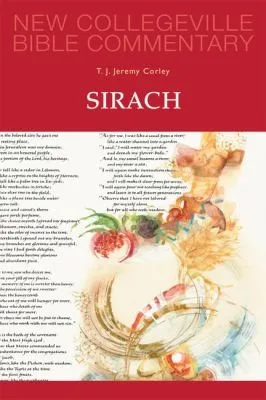
Sirach
Jeremy Corley's Sirach offers a dense, often challenging, but ultimately rewarding engagement with esoteric thought. Its strength lies in its rigorous intellectual approach, avoiding the pitfalls of superficial spiritualism that plague much contemporary writing. Corley’s examination of the symbolic language within ancient texts, particularly his interpretation of certain Gnostic motifs, is particularly illuminating. A limitation, however, is the demanding prose, which can occasionally obscure the very insights it seeks to convey. The section exploring the concept of the 'Aeonic Veil' feels particularly potent, suggesting a profound, if abstract, cosmology. Sirach is a work for the dedicated scholar, not the casual seeker.
📝 Description
76
### What It Is Sirach, a significant work of esoteric literature, presents a unique exploration of spiritual and philosophical concepts. Originally published in 2016, this text offers a distinctive perspective on mystical thought, diverging from more commonly encountered traditions. It functions as a complex treatise, demanding careful study from its readers.
### Who It's For This book is intended for serious students of esoteric philosophy and comparative religion. It will appeal to those who have already engaged with foundational texts in occultism and mysticism and are seeking novel interpretations or less-trodden paths. Readers interested in the intersection of ancient wisdom and modern esoteric thought will find particular value here.
### Historical Context Published in 2016, Sirach emerged during a period of renewed interest in esoteric studies, influenced by figures like Manly P. Hall and the broader revival of Hermeticism. The early 21st century saw a proliferation of independent scholarly and occult publishers, creating a fertile ground for works like Corley's that might have faced greater scrutiny or difficulty in earlier eras. Its reception was part of a wider academic and practitioner engagement with non-canonical religious and philosophical texts.
### Key Concepts The work engages with concepts such as the nature of divine immanence, the role of esoteric knowledge in personal liberation, and the critique of materialist philosophies. It examines the symbolic language found in various spiritual traditions, seeking underlying universal principles. The text also addresses the challenges of maintaining esoteric integrity in a world often perceived as increasingly secularized and disconnected from spiritual realities.
💡 Why Read This Book?
• Gain a fresh perspective on the interpretation of esoteric symbolism, specifically the symbolic language Corley analyzes, which offers an alternative to established hermeneutic traditions. • Understand the philosophical underpinnings of esoteric thought as presented in the 2016 publication, learning how it critiques materialist viewpoints prevalent in early 21st-century discourse. • Explore the concept of 'divine immanence' as framed by Corley, encountering an approach to spiritual presence that differs from more conventional theological or mystical frameworks.
⭐ Reader Reviews
Honest opinions from readers who have explored this book.
❓ Frequently Asked Questions
What is the primary focus of Jeremy Corley's Sirach?
Sirach primarily focuses on esoteric philosophy and mystical concepts, offering a unique interpretation of spiritual and symbolic traditions. Published in 2016, it explores themes of divine immanence and esoteric knowledge.
Who is Jeremy Corley and what is his background?
Jeremy Corley is the author of Sirach. While specific biographical details are scarce, his work suggests a deep engagement with esoteric literature and philosophy, evident in the text's scholarly and original approach.
What kind of esoteric traditions does Sirach engage with?
The book engages with a broad range of esoteric thought, examining symbolic language found across various spiritual traditions. It offers a unique perspective that can be seen as a departure from more conventional mystical lineages.
Is Sirach a religious text?
Sirach is best understood as a work of esoteric philosophy and mysticism, rather than a religious text in the traditional sense. It analyzes spiritual concepts and symbolism from an intellectual and interpretive standpoint.
When was Sirach first published?
Sirach was first published in 2016, placing it within the contemporary landscape of esoteric literature and scholarship.
What makes Sirach different from other esoteric books?
Its originality lies in its specific interpretations and the unique philosophical framework it constructs, offering a perspective that diverges from more commonly discussed esoteric paths and traditions.
🔮 Key Themes & Symbolism
Symbolic Language Analysis
Sirach dedicates significant attention to dissecting the symbolic language embedded within various spiritual and philosophical traditions. The work moves beyond superficial interpretations, seeking deeper, often hidden, meanings. Corley's approach emphasizes how symbols function not merely as representations but as active conduits of esoteric knowledge. This theme is crucial for understanding the book's method, demonstrating how to approach texts and symbols with a critical, yet open, esoteric lens, revealing layers of meaning often overlooked in standard exegesis.
Divine Immanence
A central concept explored is divine immanence – the idea that the divine is present within the material world and humanity. Sirach posits that this immanence is not a passive quality but an active, accessible force. The book challenges notions of a distant, transcendent deity, instead advocating for a direct experience of the sacred within existence. This perspective is vital for readers seeking to bridge the gap between the spiritual and the mundane, offering a framework for recognizing the divine in everyday life and consciousness.
Critique of Materialism
The work offers a pointed critique of purely materialist worldviews, arguing that they inherently limit human potential and understanding. Sirach contends that reducing reality solely to its physical components ignores the vital energetic and spiritual dimensions of existence. This critique serves as a call to re-evaluate the dominant scientific paradigm, urging readers to consider the limitations of empirical observation when it comes to the subtle realms of consciousness and spirit. It champions a holistic view that integrates the material and the immaterial.
Esoteric Knowledge and Liberation
Sirach frames esoteric knowledge not as mere intellectual pursuit but as a pathway to personal liberation and spiritual awakening. The text suggests that understanding the hidden principles of the cosmos and the self is essential for transcending limitations imposed by ignorance and societal conditioning. This theme highlights the practical application of esoteric study, positioning it as a transformative discipline aimed at achieving a higher state of being and consciousness, moving beyond the confines of ordinary perception.
💬 Memorable Quotes
“The symbols speak not to the mind, but to the soul.”
— This interpretation highlights the book's emphasis on intuitive understanding over purely rational analysis. It suggests that the true power of esoteric symbols lies in their ability to bypass intellectual filters and directly impact one's inner consciousness and spiritual awareness.
“To seek God outside is to miss the temple within.”
— This concept underscores the theme of divine immanence. It argues against external religious practices that seek a distant deity, promoting instead the idea that the sacred is accessible through inner exploration and self-awareness.
“Materialism is the shadow of a forgotten light.”
— This powerful metaphor frames the critique of materialism. It suggests that a focus solely on the physical world arises from a disconnection from a deeper, spiritual reality, implying that materialism is a consequence of spiritual amnesia.
“Liberation is not found, but realized through understanding.”
— This paraphrased concept emphasizes the active role of the individual in achieving spiritual freedom. It suggests that true liberation comes not from external discovery but from internal comprehension and integration of esoteric principles.
“The veil is woven from disbelief, not from substance.”
— This statement posits that the perceived separation between the mundane and the spiritual is a construct of the mind, rooted in doubt and skepticism, rather than an inherent feature of reality itself.
🌙 Esoteric Significance
Tradition
Sirach engages with the broad Hermetic and Gnostic traditions, though it departs significantly by presenting a novel synthesis. It eschews strict adherence to historical formulations, instead focusing on extracting universal principles. The work can be seen as a modern attempt to articulate a non-dualistic spiritual philosophy, emphasizing the immanence of the divine and the transformative power of self-knowledge, aligning with perennialist philosophies while offering a distinct interpretive lens.
Symbolism
Key symbols explored include the 'Aeonic Veil,' representing the perceived separation between the mundane and divine realms, often interpreted as a construct of human consciousness. The 'Inner Temple' motif signifies the sacred space within the individual, where direct experience of the divine is possible, countering external religious structures. The concept of 'Light' is also central, representing ultimate reality and consciousness, which the work suggests is obscured by materialist thinking.
Modern Relevance
Contemporary esoteric practitioners and thinkers interested in non-dualistic philosophies and critiques of materialism often draw upon works like Sirach. It resonates with modern Gnostic studies and post-theosophical movements seeking to reconcile ancient wisdom with contemporary psychological and philosophical insights. Its emphasis on immanence and inner experience finds echoes in mindfulness practices and certain branches of New Age thought, albeit with a more rigorous philosophical grounding.
👥 Who Should Read This Book
• Advanced students of Western Esotericism seeking novel interpretations of Gnostic and Hermetic concepts beyond standard exegeses. • Comparative religion scholars interested in contemporary philosophical syntheses of mystical traditions and critiques of materialism. • Philosophically inclined individuals exploring the concept of divine immanence and its implications for personal spirituality and worldview.
📜 Historical Context
Sirach, published in 2016, emerged during a period of significant online proliferation of esoteric content and a parallel resurgence of interest in philosophical inquiry outside mainstream academia. The early 21st century saw a diverse landscape of occultism, with movements like Chaos Magick coexisting alongside more traditional Hermetic and Gnostic revivals. Jeremy Corley's work arrived in this environment, contributing to a stream of contemporary esoteric scholarship that often engaged with, or reacted against, the established figures of the early 20th century like Aleister Crowley or Dion Fortune. While not facing overt censorship, such works often navigated a niche market, relying on independent publishers and online communities for distribution and reception. The intellectual currents of the time included a growing skepticism towards purely secular, materialist explanations for consciousness and reality, creating an audience receptive to alternative metaphysical frameworks.
📔 Journal Prompts
The 'Aeonic Veil' as a construct of disbelief: What personal beliefs create perceived separations in your experience?
Reflect on the concept of 'divine immanence' and how it might alter your perception of the everyday world.
Analyze a personal symbol: How might its meaning transcend a purely rational explanation?
Consider the 'Inner Temple': What practices could help you access this internal sacred space more consistently?
Critique of Materialism: Identify one aspect of your worldview that leans materialist and explore potential spiritual counterpoints.
🗂️ Glossary
Aeonic Veil
A concept representing the perceived barrier or separation between the mundane world and higher spiritual realities, often understood as a mental or psychological construct rather than a physical one.
Divine Immanence
The philosophical or theological doctrine that the divine is present within the material universe and humanity, as opposed to being transcendent and entirely separate from creation.
Esoteric Knowledge
Knowledge that is intended only for a select group of people possessing special training or understanding, often relating to spiritual or mystical subjects.
Inner Temple
A metaphor for the internal spiritual sanctuary within an individual, where direct communion with the divine or ultimate reality is possible.
Materialism
A philosophical viewpoint that matter is the fundamental substance in nature, and that all phenomena, including consciousness and mental states, are results of material interactions.
Symbolic Language
The use of symbols to represent ideas or qualities, particularly in spiritual or mystical contexts, where symbols are seen to convey deeper meanings beyond their literal representation.
Liberation
In an esoteric context, spiritual freedom or release from the limitations of ignorance, suffering, or the material world, achieved through self-knowledge and spiritual insight.