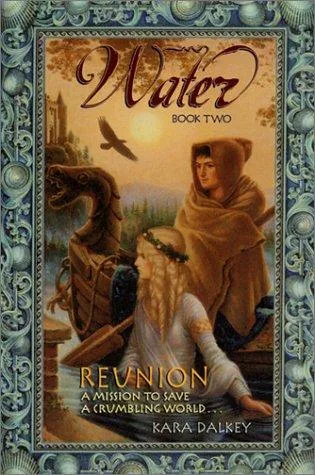
Reunion
 80
80

Reunion
Kara Dalkey’s *Reunion* offers a stark, almost unsettling, exploration of how the past refuses to remain buried. The novel excels in its depiction of the pervasive weight of unresolved trauma, particularly through its portrayal of characters haunted by unspoken events. A notable strength lies in the subtle yet potent atmosphere Dalkey cultivates; it feels as though the very air is thick with unspoken histories. However, the narrative's deliberate ambiguity, while effective in creating mood, can at times verge on opacity, leaving the reader yearning for clearer anchors within the psychological currents. A passage detailing the protagonist’s return to a childhood home, where the house itself seems to echo past anxieties, particularly highlights the book's evocative power. *Reunion* is a challenging but rewarding study of lingering emotional imprints.
📝 Description
80
### What It Is Kara Dalkey's *Reunion*, first published in 2002, is a work that engages with themes of memory, identity, and the lingering presence of the past. It presents a narrative where personal histories intertwine with broader, often unspoken, forces. The book does not offer simple answers but rather explores the intricate ways individuals grapple with their own narratives and the external circumstances that shape them.
### Who It's For This volume is suited for readers interested in psychological depth and the subtle undercurrents of human experience. It will appeal to those who appreciate literary fiction that touches upon philosophical questions without being overtly didactic. Readers seeking straightforward plot resolution may find its introspective nature less accessible, but those who enjoy unraveling layered meanings will find ample material.
### Historical Context Published in 2002, *Reunion* emerged during a period when literary fiction was increasingly exploring fragmented narratives and the subjective nature of reality. While not directly aligned with a specific esoteric movement, its focus on the persistence of memory and the subconscious echoes themes present in post-Jungian psychology and certain strains of contemporary continental philosophy that were gaining traction. The early 2000s saw a continued interest in the intersection of literature and psychoanalysis, making Dalkey's exploration of internal landscapes particularly relevant.
### Key Concepts The work navigates the concept of psychic residue, the idea that significant emotional events can leave an imprint on places or objects, influencing those who later encounter them. It also delves into the fluidity of selfhood, questioning the stability of identity when confronted with suppressed memories or external pressures. The narrative often employs symbolism to represent internal states, encouraging readers to interpret the interplay between the characters' external actions and their inner lives.
💡 Why Read This Book?
• Understand the concept of 'psychic residue' as explored through the narrative's setting and character interactions, offering a literary lens on energetic imprints. • Examine the theme of fluid identity by observing how characters' self-perceptions shift in response to unearthed memories and external influences. • Appreciate the novel's nuanced portrayal of unresolved trauma, providing a unique perspective on how past events continue to shape present realities.
⭐ Reader Reviews
Honest opinions from readers who have explored this book.
❓ Frequently Asked Questions
What is the primary focus of Kara Dalkey's *Reunion*?
The primary focus of *Reunion* is the exploration of memory, identity, and the lasting impact of past events on individuals and their environment. The book delves into how unresolved histories can shape present experiences and relationships.
When was *Reunion* by Kara Dalkey first published?
*Reunion* by Kara Dalkey was first published in 2002. This places its publication within the early 2000s literary landscape, a period marked by diverse thematic explorations in fiction.
Does *Reunion* incorporate supernatural elements?
While not explicitly supernatural, *Reunion* explores themes of psychic residue and the persistent influence of past events, which can be interpreted as having a subtle, almost preternatural quality. The focus remains on psychological and emotional landscapes.
What kind of reader would appreciate *Reunion*?
Readers who enjoy introspective literary fiction, psychological dramas, and narratives that delve into the complexities of memory and identity will likely appreciate *Reunion*. It is suited for those who prefer thematic depth over straightforward plotlines.
Is *Reunion* part of a series by Kara Dalkey?
Based on available information, *Reunion* does not appear to be part of a series. It is generally considered a standalone novel that explores its themes independently.
What is the general tone of *Reunion*?
The general tone of *Reunion* is introspective, atmospheric, and at times unsettling. Dalkey cultivates a sense of lingering unease and psychological tension, reflecting the characters' internal struggles and the weight of their pasts.
🔮 Key Themes & Symbolism
The Persistence of Memory
The narrative is deeply concerned with how memories, especially traumatic or unresolved ones, do not simply fade but can actively influence the present. Dalkey illustrates this through characters who find themselves inexplicably drawn to or affected by past events. The book suggests that memory is not a passive archive but a living force, capable of shaping perception and behavior, often in ways that are not immediately apparent to the characters themselves.
Fluidity of Identity
*Reunion* questions the notion of a fixed self, proposing instead that identity is a constantly negotiated construct influenced by internal states and external circumstances. Characters grapple with who they are in light of forgotten traumas or altered perceptions of their past. The work implies that identity can be fragmented or reassembled, particularly when confronted with the echoes of prior experiences, leading to a more complex understanding of selfhood.
Psychic Residue and Place
A central concept explored is that of psychic residue, where significant emotional events or presences seem to leave an imprint on physical locations. Dalkey uses settings, particularly those tied to a character's past, as active participants in the narrative, embodying lingering emotions or memories. This theme invites contemplation on how environments can hold and transmit energetic signatures, influencing those who inhabit them, even unknowingly.
Unspoken Narratives
The novel frequently operates on the unspoken, highlighting the power of what is omitted or suppressed. Characters' interactions and internal states are often shaped by histories they cannot articulate or have deliberately buried. This focus on subtext and implication creates a rich atmosphere of mystery and psychological tension, suggesting that the most significant elements of a story are often those that lie beneath the surface of direct communication.
💬 Memorable Quotes
“The house held its breath, waiting.”
— This line captures the atmospheric tension of a place imbued with past significance. It personifies the setting, suggesting it is not merely a backdrop but an active participant, resonating with the emotional weight of prior events and anticipating further developments.
“Some memories cling like burrs.”
— This metaphor vividly illustrates the persistent and often unwelcome nature of certain recollections. It speaks to how specific memories can attach themselves to one's consciousness, causing discomfort and influencing present thoughts and feelings.
“She felt the past not as a memory, but as a presence.”
— This highlights the book's exploration of psychic residue and the tangible impact of history. It suggests that for some, the past is not a distant recollection but an immediate, palpable force shaping their current reality.
“The silence between them was a conversation of its own.”
— This phrase emphasizes the importance of unspoken communication and subtext within the narrative. It points to how significant emotional exchanges can occur through pauses and omissions, revealing deeper truths than direct dialogue.
“He recognized the echo of a feeling he couldn't name.”
— This captures the disorienting experience of encountering a powerful emotion or intuition without a clear source or context. It reflects the book's theme of fragmented memory and the subconscious influence of past experiences on present sensations.
🌙 Esoteric Significance
Tradition
While *Reunion* doesn't overtly align with a single esoteric tradition, its exploration of psychic residue and the lingering influence of past emotional events can be seen as touching upon concepts found in psychometry and certain interpretations of place-memory within Western esotericism. It departs from traditional narrative structures by focusing on the subtle energetic and psychological imprints left by human experience, encouraging a view of reality where the past is not entirely separate from the present.
Symbolism
The novel frequently employs settings, particularly homes and familiar landscapes, as potent symbols of internalized history and memory. These locations are not passive backdrops but active repositories of emotional energy. Objects can also serve as symbolic anchors, triggering dormant feelings or memories. The interplay between light and shadow, and the use of atmospheric descriptions, further symbolize the characters' internal states of clarity and obscurity regarding their pasts.
Modern Relevance
Contemporary practices in mindfulness, ecopsychology, and trauma-informed therapy often engage with the concept of place-memory and the lasting impact of emotional imprints. *Reunion*'s literary exploration of these themes offers a relatable narrative framework for understanding how environments can affect our psychological well-being and how unresolved past experiences can manifest in the present, resonating with individuals seeking to understand personal and collective histories.
👥 Who Should Read This Book
• Readers interested in literary fiction that explores psychological depth and the nature of memory, particularly those drawn to atmospheric and introspective storytelling. • Individuals exploring concepts of psychic residue and the influence of place on personal experience, seeking a narrative perspective on these subtle energetic phenomena. • Those who appreciate novels that prioritize thematic exploration and character interiority over fast-paced plot resolution, engaging with nuanced portrayals of identity and the past.
📜 Historical Context
Kara Dalkey's *Reunion*, published in 2002, emerged in a literary climate that continued to embrace introspective and psychologically complex narratives. The early 2000s saw a sustained interest in exploring the fragmented self and the subjective nature of experience, partly influenced by post-structuralist thought and a resurgent engagement with psychoanalytic concepts in literary criticism. While not directly aligned with a specific esoteric school, its thematic concerns with memory, place, and the lingering impact of emotional events echo ideas found in certain hermetic traditions and psychological theories. Contemporary authors like Alice Munro, known for her nuanced explorations of ordinary lives and hidden emotional depths, were also prominent, suggesting a broader literary appetite for works that examined the interior lives of individuals. *Reunion*'s focus on the 'psychic residue' of places and events aligns with a growing interest in the phenomenology of experience, moving beyond purely empirical descriptions towards the subjective and the felt.
📔 Journal Prompts
The house’s atmosphere as a repository of past emotions.
The feeling of a memory as a 'presence' rather than a recollection.
Moments of unspoken communication between characters.
The recognition of an unnamed, lingering feeling.
The ways familiar places hold echoes of prior events.
🗂️ Glossary
Psychic Residue
The concept that significant emotional events or strong energies can leave an imprint or lingering impression on a place, object, or person, influencing subsequent experiences.
Memory as Presence
An interpretation of memory not as a passive recall of past events, but as an active, palpable force that influences the present moment and the individual's state of being.
Fluid Identity
The notion that personal identity is not fixed or static, but is subject to change and redefinition based on experiences, memories, and external influences.
Atmospheric Tension
The use of setting, mood, and descriptive language to create a palpable sense of unease, anticipation, or emotional weight within a narrative.
Subtext
The underlying or implicit meaning in a text or conversation, often conveyed through dialogue, character actions, or narrative description rather than explicit statement.
Unspoken Histories
Significant personal or collective past events that are not explicitly communicated or acknowledged within a narrative, but which exert a powerful influence on characters and plot.
Place-Memory
The idea that locations can retain or evoke memories and emotional imprints from past events or inhabitants, influencing the perceptions of those who encounter them.