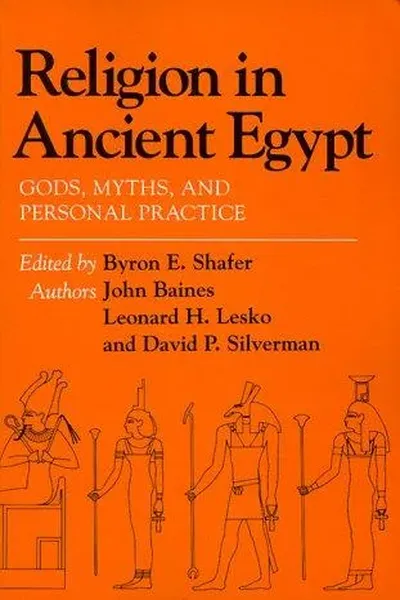
Religion in ancient Egypt

 78
78

Religion in ancient Egypt
The examination of Egyptian religious life in Baines, Lesko, and Silverman's "Religion in Ancient Egypt" offers a sober, academic counterpoint to more romanticized portrayals. Its strength lies in its systematic approach, meticulously detailing the evolution of cults and beliefs from the Predynastic period through to the Late Kingdom. The section discussing the administrative aspects of temple economies, for instance, provides a grounded perspective often overlooked. However, the sheer density of information can make the text feel somewhat arid for a general audience, occasionally lacking narrative flow. The treatment of magic, while present, feels less developed than other religious facets. It remains an indispensable reference for scholars, though its accessibility could be improved. This work serves as a vital, if unadorned, repository of scholarly consensus on ancient Egyptian faith.
📝 Description
78
### What It Is This volume offers a scholarly examination of religious beliefs and practices in ancient Egypt, tracing their evolution across millennia. It moves beyond simple mythography to explore the functional aspects of religion in Egyptian society, from royal ideology to funerary rites. The work draws on archaeological evidence and textual analysis to reconstruct a complex spiritual landscape, emphasizing the interconnectedness of divine realms, earthly power, and individual destinies. It functions as a foundational text for understanding the Egyptian worldview.
### Who It's For This book is intended for serious students of Egyptology, comparative religion, and ancient history. It appeals to those who seek detailed, evidence-based accounts of religious systems rather than speculative interpretations. Readers interested in the practical application of religious concepts in daily life, political structures, and mortuary cults will find substantial material. It is also valuable for scholars of ancient Near Eastern cultures seeking to contextualize Egyptian religious phenomena.
### Historical Context Published in 1991, "Religion in Ancient Egypt" emerged during a period of robust scholarly debate regarding the interpretation of Egyptian religious texts and iconography. It built upon decades of foundational work by Egyptologists like James Henry Breasted and Hermann Ranke, but also engaged with newer archaeological findings and theoretical approaches to religion. The publication occurred prior to the widespread digital accessibility of primary sources, making comprehensive analyses like this particularly crucial for researchers. It addressed a need for synthesized scholarship that moved beyond earlier, more descriptive accounts.
### Key Concepts The book explores the concept of *Ma'at*, the fundamental principle of order, truth, and justice that permeated Egyptian thought and cosmogony. It details the complex pantheon, not merely as a collection of deities but as active forces within the cosmic and social order. The significance of the pharaoh as a divine intermediary is examined, alongside the pervasive influence of funerary beliefs and practices, such as the journey through the Duat and the judgment of the soul, which shaped Egyptian life and provided a framework for understanding existence beyond death.
💡 Why Read This Book?
• Gain a structured understanding of *Ma'at* and its role in Egyptian cosmology, learning how this foundational concept influenced law, ethics, and the divine order, as presented in the text's detailed analysis. • Explore the practical administration of religious institutions, including temple economies and priestly duties, to grasp the tangible societal functions of religion beyond mere ritual, a focus highlighted in the historical context sections. • Understand the Egyptian perspective on the afterlife, including the journey of the deceased through the Duat and the judgment before Osiris, providing a concrete framework for their mortuary beliefs as detailed in the book's exploration of funerary practices.
⭐ Reader Reviews
Honest opinions from readers who have explored this book.
❓ Frequently Asked Questions
What is the significance of Ma'at in ancient Egyptian religion according to Baines, Lesko, and Silverman?
The work defines Ma'at as the fundamental principle of cosmic order, truth, and justice, essential for maintaining the balance of the universe. It permeated Egyptian law, ethics, and the divine realm, ensuring the stability of creation.
How did the role of the pharaoh differ in ancient Egyptian religion?
The book explains the pharaoh was viewed as a divine intermediary, responsible for upholding Ma'at on Earth. This role involved performing religious rituals and acting as the chief priest, linking the human and divine spheres.
What were the primary concerns of ancient Egyptian funerary beliefs?
The text highlights that Egyptians were deeply concerned with ensuring a successful transition to the afterlife. Key elements included the preservation of the body, the correct performance of burial rites, and navigating the perilous journey through the Duat.
When was 'Religion in ancient Egypt' first published, and what is its academic context?
First published in 1991, the book emerged during a period of significant scholarly development in Egyptology, offering a synthesized view of religious practices that built upon earlier foundational studies.
Does the book discuss the daily religious practices of common Egyptians?
While the focus is often on state religion and elite practices, the work does touch upon popular piety and personal devotion, illustrating how religious beliefs were integrated into the lives of various social strata.
What is the Duat as described in 'Religion in ancient Egypt'?
The Duat is presented as the Egyptian underworld or realm of the dead, a dangerous place through which the sun god Ra and the deceased journeyed nightly. It was populated by deities and demons.
🔮 Key Themes & Symbolism
The Cosmic Order of Ma'at
The work consistently emphasizes Ma'at as the supreme principle, defining truth, justice, and cosmic balance. It's not merely an abstract concept but a force that permeates all existence, from the movements of stars to the actions of rulers and individuals. Maintaining Ma'at was the pharaoh's primary duty, and its disruption invited chaos. This concept provides a critical lens for understanding Egyptian ethics, law, and the very structure of their reality, underpinning their worldview and religious practices.
Divine Power and Royal Authority
Central to Egyptian religion was the pharaoh's role as a divine intermediary. The book details how kings were deified, acting as the primary link between humanity and the gods. This divine kingship was not just symbolic; it was functional, with the pharaoh responsible for maintaining Ma'at and ensuring the prosperity of the land through rituals and governance. The text explores the evolution of this concept, from early divine ruler cults to the more complex theological justifications of later dynasties.
The Journey of the Soul
Funerary beliefs occupied a significant portion of Egyptian religious thought, and this volume meticulously examines them. The concept of the afterlife was not a passive waiting but an active, often perilous, journey through the Duat. The book explains the importance of funerary texts, spells, and rituals designed to guide and protect the deceased, ensuring their successful passage and eventual rebirth. The judgment of the soul before Osiris is presented as a pivotal moment, reflecting the earthly adherence to Ma'at.
The Egyptian Pantheon in Practice
Beyond myth, the book illuminates the practical function of the Egyptian pantheon. Deities like Ra, Osiris, Isis, and Amun were not just abstract figures but were actively worshipped in elaborate temple complexes. The authors explore the roles of priests, the administration of temple resources, and the ways in which local cults interacted with the state religion. This provides a grounded view of how divine worship was integrated into the fabric of Egyptian society and economy.
💬 Memorable Quotes
“Ma'at represented cosmic order, truth, and justice.”
— This paraphrased concept highlights the foundational principle of Egyptian belief. It wasn't just a moral code but the very structure of reality, essential for the functioning of the universe and society.
“The pharaoh acted as the chief intermediary between the gods and the people.”
— This captures the divine kingship doctrine, emphasizing the ruler's crucial role in maintaining cosmic balance (Ma'at) and ensuring the land's prosperity through religious and political authority.
“Funerary rituals were essential for navigating the afterlife.”
— This interpretation underscores the practical importance Egyptians placed on mortuary practices. They believed these rites were vital for the deceased's successful journey through the Duat and eventual rebirth.
“Temples served as administrative and economic centers as well as places of worship.”
— This points to the functional role of religious institutions in ancient Egypt. Temples were not just sacred sites but were deeply integrated into the nation's economic and social infrastructure.
“The judgment of the soul was a critical event in the afterlife.”
— This conveys the significance of the weighing of the heart ceremony. It represented a final assessment of one's earthly life against the principles of Ma'at, determining their fate in the beyond.
🌙 Esoteric Significance
Tradition
While not strictly a text of a specific esoteric lineage like Hermeticism or Gnosticism, this work provides the foundational historical and cultural context from which many esoteric interpretations of ancient Egypt draw. It serves as a critical scholarly bedrock, allowing practitioners and theorists within modern esoteric traditions to ground their symbolic understandings in historical reality, rather than purely speculative myth-making.
Symbolism
The book's detailed exploration of deities like Osiris, Isis, and Ra, and concepts such as the Duat, offers rich symbolic material. Osiris, the resurrected god, represents cycles of death and rebirth fundamental to many occult philosophies. Isis, the divine mother and sorceress, embodies hidden knowledge and protective magic. The Duat itself symbolizes the perilous inner journey of transformation, a common theme in initiatory traditions.
Modern Relevance
Contemporary occultists, New Age practitioners, and comparative religious scholars frequently reference the historical and religious landscape described in this book. Modern Egyptian-inspired magical systems, ceremonial magic, and psychological approaches to mythology often rely on the accurate portrayal of ancient Egyptian beliefs and practices found here to inform their own symbolic frameworks and rituals.
👥 Who Should Read This Book
• Students of comparative religion and ancient history seeking a scholarly, evidence-based overview of Egyptian spiritual beliefs and practices. • Esoteric practitioners and occultists wishing to anchor their symbolic interpretations of ancient Egypt in historical context, understanding the original frameworks before modern esoteric adaptations. • Archaeologists and cultural historians interested in the functional role of religion in state formation, social order, and daily life in the ancient Near East.
📜 Historical Context
Published in 1991, "Religion in Ancient Egypt" arrived at a pivotal moment in Egyptology. It was a response to, and consolidation of, decades of scholarly work that had moved beyond earlier, often romanticized, interpretations. The authors engaged with established frameworks while incorporating new archaeological data and refined textual analysis. This period saw ongoing debates about the nature of Egyptian religion, particularly concerning the influence of foreign cults and the interpretation of religious texts. While not facing overt censorship, the academic reception was shaped by existing scholarly dialogues, building on the legacy of figures like Jan Assmann, who was actively publishing on Egyptian religion around the same time, and offering a comprehensive counterpoint to more speculative theories emerging in popular culture.
📔 Journal Prompts
The principle of Ma'at and its cosmic implications.
The pharaoh's role as divine intermediary and its earthly duties.
The symbolic journey through the Duat and its challenges.
The administrative and societal functions of ancient Egyptian temples.
The theological significance of Osiris's resurrection and its connection to Egyptian views of the afterlife.
🗂️ Glossary
Ma'at
The ancient Egyptian concept of truth, balance, order, harmony, law, morality, and justice. It was considered the fundamental principle of the universe, maintained by the pharaoh.
Duat
The realm of the dead, the underworld through which the sun god Ra and the souls of the deceased journeyed during the night. It was a place of trials and transformations.
Pharaoh
The title given to the rulers of ancient Egypt, considered divine or semi-divine intermediaries between the gods and the people, responsible for maintaining Ma'at.
Osiris
An Egyptian god of the afterlife, the underworld, and the dead. He was also a god of fertility, vegetation, and rebirth, central to funerary cults.
Ra
The ancient Egyptian sun god, a principal deity often depicted as a falcon topped with a sun disk. He was believed to travel across the sky during the day and through the Duat at night.
Temple Economy
The system by which ancient Egyptian temples functioned not only as religious centers but also as economic entities, owning land, employing workers, and managing resources.
Weighing of the Heart
A central ritual in the judgment of the dead, where the deceased's heart was weighed against the feather of Ma'at to determine their worthiness for the afterlife.