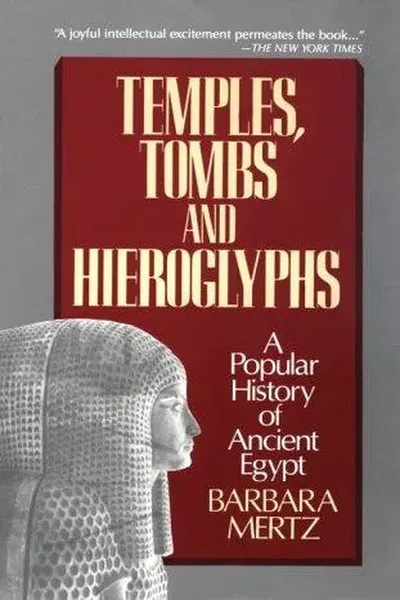
Red Land, Black Land

 73
73

Red Land, Black Land
Barbara Mertz’s "Red Land, Black Land" offers a compellingly grounded look at ancient Egypt, eschewing sensationalism for a deep dive into the quotidian. What distinguishes this work is Mertz’s ability, as both a scholar and a storyteller, to make the mundane aspects of Egyptian life feel as significant as the grand monuments. Her description of domestic architecture and household goods, for instance, provides a tangible link to the past that more abstract religious analyses often miss. The book’s primary limitation, however, lies in its broad scope; while comprehensive, it sometimes sacrifices in-depth analysis of specific esoteric concepts for the sake of covering a vast historical period and diverse cultural elements. Nevertheless, Mertz successfully illustrates how the very fabric of Egyptian existence, from the Nile’s flood to the desert’s expanse, was imbued with spiritual meaning. It’s a solid, if not revolutionary, reappraisal of a civilization’s soul.
📝 Description
73
### What It Is
Barbara Mertz, writing under the pseudonym Barbara Michaels, penned "Red Land, Black Land: A True History of Ancient Egypt." First published in 1990, this work is not a novel but a meticulously researched exploration of ancient Egyptian life, culture, and beliefs. It delves into the daily realities of its inhabitants, from pharaohs to farmers, offering a vivid portrayal of a civilization that continues to fascinate.
### Who It's For
This book is for anyone seeking an accessible yet authoritative introduction to ancient Egypt beyond the pyramids and mummies. It appeals to readers interested in social history, religious practices, and the everyday experiences of people in the ancient world. Those curious about the origins of certain mystical concepts or the material culture that informed early spiritual thought will find significant value here.
### Historical Context
The 1990 publication date places "Red Land, Black Land" within a period of burgeoning popular interest in Egyptology, fueled by ongoing archaeological discoveries and media portrayals. Mertz, an Egyptologist herself, brought academic rigor to a narrative accessible to a broad audience. The book emerged at a time when scholarly works on ancient Egypt were becoming more specialized, making Mertz's synthesis a valuable bridge for general readers.
### Key Concepts
"Red Land, Black Land" unpacks the fundamental dichotomy of ancient Egyptian geography and cosmology: the fertile Nile valley (Kemet, the "Black Land") and the surrounding arid desert (Deshret, the "Red Land"). This duality informed everything from agriculture and settlement patterns to religious beliefs and the concept of cosmic order (Ma'at) versus chaos. The work also explores the intricate pantheon of gods, the rituals surrounding death and the afterlife, and the social structures that defined Egyptian society for millennia.
💡 Why Read This Book?
• Gain an understanding of the Kemet/Deshret duality, the "Black Land" versus the "Red Land," which profoundly shaped Egyptian worldview and cosmology. • Explore the practical realities of ancient Egyptian religion, moving beyond temple rituals to understand how faith permeated daily life and domestic practices. • Appreciate the societal structure and daily routines of ancient Egyptians, as detailed through Mertz’s scholarly yet engaging prose, offering a grounded perspective on this civilization.
⭐ Reader Reviews
Honest opinions from readers who have explored this book.
❓ Frequently Asked Questions
What is the significance of the title "Red Land, Black Land"?
The title refers to the ancient Egyptian geographical and cosmological division: "Kemet" (Black Land) for the fertile Nile valley and "Deshret" (Red Land) for the surrounding desert, symbolizing order versus chaos and life versus death.
Is "Red Land, Black Land" a historical novel or non-fiction?
It is non-fiction. Written by Egyptologist Barbara Mertz, it presents a factual account of ancient Egyptian life, culture, religion, and society, based on archaeological evidence and historical research.
What period of ancient Egyptian history does the book primarily cover?
The book covers a broad sweep of ancient Egyptian history, from the Predynastic period through the New Kingdom and into later periods, focusing on the enduring aspects of their civilization.
What distinguishes Barbara Mertz's approach in this book?
Mertz, an accomplished Egyptologist, brings both academic rigor and a narrative flair, focusing on the daily lives, beliefs, and social structures of ordinary Egyptians, not just pharaohs and monumental achievements.
Does the book discuss ancient Egyptian magic or occult practices?
While not solely focused on magic, the book explores the pervasive role of religion and belief systems, including protective rituals and beliefs about the afterlife, which were integral to the Egyptian understanding of the world.
Who was Barbara Mertz and why did she write under a pseudonym?
Barbara Mertz was a respected Egyptologist who also wrote fiction as Barbara Michaels and Elizabeth Peters. She used pseudonyms to distinguish her scholarly works from her popular fiction, though "Red Land, Black Land" bridges that gap.
🔮 Key Themes & Symbolism
Cosmic Duality: Kemet and Deshret
The fundamental division of Egypt into the fertile Black Land (Kemet) of the Nile and the barren Red Land (Deshret) of the desert is central. This geographical reality permeated Egyptian thought, representing a constant interplay between life-sustaining order and chaotic, destructive forces. Mertz illustrates how this duality informed their worldview, religious practices, and even their conception of the afterlife, where the journey often involved traversing symbolic deserts to reach a fertile paradise.
Religion in Daily Life
This work emphasizes that ancient Egyptian religion was not confined to grand temples or royal ceremonies. Mertz details how the pantheon of gods, protective amulets, household shrines, and beliefs about the afterlife were woven into the fabric of everyday existence. Understanding the rituals surrounding birth, death, and the agricultural cycle reveals a society deeply connected to its spiritual landscape, where the divine was an active participant in mundane affairs.
The Social Fabric
Beyond pharaohs and priests, "Red Land, Black Land" reconstructs the lives of common Egyptians. It examines family structures, housing, diet, occupations, and legal systems. By focusing on these aspects, Mertz offers a grounded perspective on how a complex civilization functioned. This detailed social history provides context for understanding the values and beliefs that underpinned their spiritual and political systems, revealing a sophisticated societal organization.
Afterlife Beliefs and Practices
The Egyptian preoccupation with death and the afterlife is explored in depth. Mertz discusses funerary rituals, tomb construction, and the evolution of beliefs about the soul's journey. The concept of Ma'at (cosmic order and truth) is presented as crucial for achieving a successful passage into the next world, highlighting the ethical and spiritual dimensions of their eschatology.
💬 Memorable Quotes
“The ancient Egyptians lived in a land of contrasts: the fertile black earth of the Nile valley and the vast, barren red desert.”
— This statement encapsulates the core geographical and symbolic duality of ancient Egypt, framing the entire civilization's worldview around the tension between life-giving fertility and arid emptiness.
“Religion was not a separate compartment of life, but an integral part of existence for all Egyptians.”
— This interpretation highlights Mertz's focus on the pervasive nature of spirituality in ancient Egypt, underscoring that faith influenced daily activities, social structures, and personal beliefs rather than being confined to ritualistic observance.
“To understand the Egyptians, one must understand their relationship with the Nile and the desert.”
— This emphasizes the environmental determinism at play in Egyptian culture, suggesting that their unique geography was the primary architect of their civilization's characteristics, from agriculture to their fundamental philosophical outlook.
“The afterlife was a serious concern, and elaborate preparations were made to ensure a successful journey.”
— This points to the significant cultural emphasis placed on funerary practices and the belief in a continuation of existence beyond death, reflecting a core aspect of ancient Egyptian religious thought and societal investment.
“Even the humblest farmer participated in the religious life of the community.”
— This interpretation underscores the democratic nature of religious participation in ancient Egypt, suggesting that spiritual practices and beliefs were accessible and relevant to all social strata, not just the elite.
🌙 Esoteric Significance
Tradition
While "Red Land, Black Land" is primarily a historical and cultural study, it engages with concepts foundational to many esoteric traditions, particularly those influenced by ancient Egypt. It provides a factual grounding for understanding the worldview that underpins Hermeticism, Rosicrucianism, and certain Masonic traditions which often draw upon Egyptian symbolism and cosmology as primordial sources of wisdom. Mertz's work offers a scholarly counterpoint to purely mystical interpretations, grounding esoteric concepts in historical reality.
Symbolism
The core symbolism revolves around the duality of the Red Land (Deshret) and the Black Land (Kemet). Deshret represents chaos, the barren desert, and potential destruction, while Kemet symbolizes fertility, order, and life. This dichotomy is fundamental to understanding Egyptian cosmology and their efforts to maintain Ma'at (cosmic balance). Other potent symbols explored include the Nile itself as a life-giver, the sun god Ra representing divine power and cyclical renewal, and the pervasive imagery associated with death and rebirth in the afterlife.
Modern Relevance
Contemporary practitioners of Western Esotericism, particularly those involved in Egyptian-themed magical systems or initiatory orders, frequently reference the historical and cultural context provided by works like Mertz’s. Egyptology remains a vital source for understanding the archetypal imagery and philosophical underpinnings that continue to inspire modern spiritual seekers. Scholars and practitioners interested in comparative religion also find value in Mertz's empirical approach to understanding ancient belief systems as precursors to later esoteric developments.
👥 Who Should Read This Book
• Students of comparative religion and ancient cultures seeking a factual overview of Egyptian society and belief systems. • Aspiring practitioners of Western Esotericism interested in the historical roots of Egyptian symbolism and cosmology. • General readers curious about ancient civilizations who prefer well-researched narratives over fictionalized accounts.
📜 Historical Context
Published in 1990, "Red Land, Black Land" arrived during a period of renewed public fascination with ancient Egypt, often fueled by blockbuster museum exhibitions and popular media. Barbara Mertz, an Egyptologist with a PhD from the University of Chicago, distinguished herself by bringing academic rigor to a narrative accessible to a general audience. This contrasted with more specialized scholarly monographs and the often sensationalized accounts found in less reputable publications. While works like those by Erik Hornung were exploring Egyptian cosmology, Mertz provided a more holistic social history. Her approach was grounded in decades of archaeological and textual study, offering a corrective to purely speculative interpretations. The book’s reception was generally positive, appreciated for its clarity and comprehensive scope, solidifying Mertz's reputation as a bridge between academic Egyptology and the curious public.
📔 Journal Prompts
The Kemet/Deshret duality as a metaphor for internal psychological landscapes.
How did the concept of Ma'at influence the daily ethical choices of an ancient Egyptian?
Reflect on the Egyptian approach to death and the afterlife compared to modern perspectives.
Analyze the role of the Nile's inundation in shaping religious beliefs.
Consider the practical applications of protective amulets in ancient Egyptian society.
🗂️ Glossary
Kemet
The ancient Egyptian name for their country, meaning "Black Land," referring to the fertile soil of the Nile valley, contrasted with the surrounding desert.
Deshret
The ancient Egyptian name for the desert regions bordering the Nile valley, meaning "Red Land." It symbolized chaos and barrenness.
Ma'at
The ancient Egyptian concept of truth, balance, order, harmony, law, morality, and justice. It was personified as a goddess and essential for cosmic and social stability.
Pharaoh
The title given to the rulers of ancient Egypt, considered divine or semi-divine intermediaries between the gods and the people.
Pantheon
The collective gods and goddesses worshipped by a particular people or religion. Ancient Egypt had a complex pantheon including deities like Ra, Osiris, Isis, and Horus.
Afterlife
The ancient Egyptian belief in continued existence after death, which required preservation of the body (mummification) and successful passage through the underworld.
Amulet
An object believed to possess magical properties to protect its wearer from harm or evil influences.