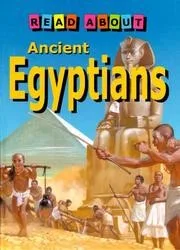
Read About Ancient Egyptians
 84
84

Read About Ancient Egyptians
David Jay’s *Read About Ancient Egyptians* functions less as a critical academic text and more as a primer for the uninitiated. Its strength lies in its straightforward presentation of complex topics, such as the multifaceted nature of Ma'at, the cosmic principle of truth and order. The author avoids dense theoretical debates, making the material digestible. However, this very accessibility can sometimes feel like a limitation; the exploration of Egyptian funerary rituals, for example, while clear, lacks the nuanced interpretation found in more specialized works. A notable passage is the explanation of the Duat, the underworld, which, while simplified, effectively conveys the spiritual challenges envisioned for the deceased. The work ultimately serves as a competent, if unadventurous, introduction to its subject matter.
📝 Description
84
### What It Is Read About Ancient Egyptians by David Jay, first published in 2000, offers an accessible entry point into the foundational elements of ancient Egyptian civilization. It moves beyond superficial portrayals to examine the core beliefs, societal structures, and spiritual practices that defined this enduring culture. The work aims to provide a foundational understanding for those curious about the ancient world's intellectual and religious landscape.
### Who It's For This book is ideal for the novice Egyptology enthusiast, students seeking a clear overview of ancient Egyptian cosmology, or individuals interested in the historical roots of esoteric thought. It serves as a stepping stone for those who wish to explore further, providing essential context without overwhelming the reader with academic jargon. It is particularly suited for readers who appreciate directness and clarity in exposition.
### Historical Context Published at the turn of the millennium, Jay's work entered a field already rich with scholarship. While major figures like Sir Flinders Petrie had long established archaeological foundations and figures like Margaret Murray had explored ancient Egyptian religion, Read About Ancient Egyptians sought to synthesize this knowledge for a broader audience. It emerged during a period of renewed popular interest in ancient cultures, fueled by museum exhibitions and documentaries, positioning itself as a guide to the essential aspects of Egyptian life and belief.
### Key Concepts The book systematically introduces concepts such as the Egyptian pantheon, the significance of the Nile River, the principles of Ma'at, and the Egyptian understanding of the afterlife. It explains the roles of key deities like Ra, Osiris, and Isis, and touches upon the importance of hieroglyphic writing and monumental architecture like the pyramids. The narrative connects these elements, illustrating how they formed an integrated worldview that influenced daily life and funerary practices.
💡 Why Read This Book?
• Gain a foundational understanding of the ancient Egyptian concept of Ma'at, the principle of cosmic order and justice, crucial for comprehending their societal and religious structures, as detailed in the book’s early chapters. • Learn about the significance of the Nile River to Egyptian civilization, recognizing its role beyond mere geography to encompass creation myths and daily sustenance, a point elaborated upon in the section on environmental influences. • Discover the Egyptian perspective on the afterlife, including key figures like Osiris and the journey through the Duat, offering a glimpse into their eschatological beliefs as presented in the chapter on death and rebirth.
⭐ Reader Reviews
Honest opinions from readers who have explored this book.
❓ Frequently Asked Questions
When was Read About Ancient Egyptians first published?
Read About Ancient Egyptians by David Jay was first published in the year 2000, making it a relatively contemporary introduction to the subject matter.
What are the main subjects covered in Read About Ancient Egyptians?
The book primarily covers the core aspects of ancient Egyptian civilization, including their gods, societal structure, beliefs about the afterlife, and the importance of the Nile.
Is Read About Ancient Egyptians suitable for academic study?
While it provides a good overview, it is best suited for introductory readers. For rigorous academic study, more specialized texts might be necessary.
Who is the author, David Jay?
David Jay is the author of Read About Ancient Egyptians, a work aimed at providing a clear and accessible introduction to ancient Egyptian culture and beliefs.
What is the concept of Ma'at discussed in the book?
The book explains Ma'at as the ancient Egyptian concept of truth, balance, order, law, morality, and justice, personified as a goddess and a fundamental principle of the universe.
Does the book discuss Egyptian mythology?
Yes, Read About Ancient Egyptians explores key figures and stories within Egyptian mythology, detailing the roles of major deities like Ra, Osiris, and Isis.
🔮 Key Themes & Symbolism
The Egyptian Pantheon and Divine Roles
The work introduces the extensive pantheon of ancient Egyptian gods and goddesses, explaining their dominion and interrelationships. It focuses on principal deities such as Ra, the sun god and king of the gods; Osiris, ruler of the underworld; and Isis, goddess of magic and motherhood. The book details how these divine figures were not just abstract entities but were believed to actively influence natural phenomena, human destiny, and the cosmic order, Ma'at. Their worship was integral to the functioning of the state and the daily lives of the people, with temples serving as focal points for ritual and offerings aimed at maintaining divine favor and cosmic balance.
Ma'at: Cosmic Order and Justice
A central theme is Ma'at, a concept personified as a goddess, representing truth, balance, order, law, morality, and justice. The book clarifies that Ma'at was not merely an abstract ideal but the fundamental principle governing the universe, society, and individual conduct. Pharaohs were responsible for upholding Ma'at, and the deceased were judged in the afterlife based on their adherence to its principles, famously depicted in the Weighing of the Heart ceremony against the feather of Ma'at. This concept permeated every aspect of Egyptian life, from governance to personal ethics.
The Journey Through the Duat
The book elucidates the ancient Egyptian conception of the afterlife, particularly the perilous journey through the Duat, the underworld. It describes the various trials, demons, and gatekeepers the soul was believed to encounter after death. Understanding this passage was vital for ensuring a successful transition to the Field of Reeds, the Egyptian paradise. The text highlights the importance of funerary texts, such as the Book of the Dead, which provided spells and guidance for the deceased to navigate these challenges and achieve eternal life.
The Nile's Centrality
The indispensable role of the Nile River is presented as more than just a geographical feature; it was the lifeblood of ancient Egypt. The book explains how the annual inundation dictated the agricultural calendar, supporting a thriving civilization in an otherwise arid landscape. Beyond sustenance, the Nile was woven into their creation myths and cosmology, symbolizing renewal and the cyclical nature of life and death. Its predictable rhythm influenced their understanding of time and order, reinforcing the concept of Ma'at.
💬 Memorable Quotes
“Ma'at was the principle of order and justice that governed the cosmos.”
— This statement encapsulates the core of Egyptian belief, highlighting Ma'at as the fundamental law of existence. It suggests that the Egyptians viewed their world as inherently ordered and just, a state that needed constant maintenance through ritual and ethical behavior.
“The journey through the Duat was fraught with peril and required knowledge of sacred spells.”
— This highlights the Egyptian view of the afterlife as a challenging passage rather than a simple destination. It underscores the practical necessity of their religious texts and rituals in ensuring safe passage and eternal life.
“Osiris presided over the underworld and the judgment of the dead.”
— This identifies Osiris not just as a god of death, but as a figure of justice and authority in the afterlife. His role in the judgment ceremony was central to the Egyptian concept of accountability beyond earthly life.
“The annual flood of the Nile was seen as a divine blessing, renewing the land.”
— This emphasizes the sacred perception of the Nile's inundation. It wasn't just an agricultural event but was interpreted as a regular act of divine providence, reinforcing the Egyptians' gratitude and reliance on the river.
“Hieroglyphs served both practical communication and sacred ritualistic purposes.”
— This points to the dual nature of Egyptian writing. Beyond simple record-keeping, hieroglyphs were imbued with power, believed to manifest the realities they depicted, making them essential in religious and magical contexts.
🌙 Esoteric Significance
Tradition
While the book primarily focuses on historical and cultural aspects, it touches upon elements that resonate with esoteric traditions. The Egyptian religion, with its emphasis on cycles of death and rebirth, divine judgment, and complex cosmology, has been a foundational influence on various Western esoteric lineages, including Hermeticism and Theosophy. Jay's work, by presenting these concepts clearly, serves as a gateway for those interested in exploring these deeper connections, offering the raw material that later esoteric thinkers reinterpreted.
Symbolism
Key symbols discussed include the Ankh, representing life, and the Eye of Horus (Wedjat), symbolizing protection, royal power, and good health. The book explains their prevalence in Egyptian art and funerary contexts. The scarab beetle, associated with the sun god Ra and rebirth, is also presented as a potent symbol of transformation and regeneration, integral to the Egyptian understanding of the afterlife and cosmic cycles.
Modern Relevance
Contemporary practitioners of New Age spirituality and some modern occultists continue to draw inspiration from ancient Egyptian symbolism and mythology. Concepts like Ma'at, the journey of the soul, and the archetypal figures of Egyptian deities are often reinterpreted in modern spiritual practices. Jay's book, by providing a clear exposition of these original concepts, aids modern seekers in understanding the source material from which these later interpretations have evolved.
👥 Who Should Read This Book
• Individuals new to ancient Egyptian history and religion seeking a clear, uncomplicated introduction to foundational concepts like the pantheon and Ma'at. • Students of comparative religion or cultural studies who require a basic overview of Egyptian beliefs to contextualize broader studies. • Enthusiasts of ancient cultures interested in understanding the worldview that shaped Egyptian society, art, and funerary practices.
📜 Historical Context
When *Read About Ancient Egyptians* was published in 2000, the study of ancient Egypt was well-established, building on decades of archaeological discovery and scholarly analysis. Figures like Erik Hornung had significantly advanced the understanding of Egyptian religion and the afterlife. However, the popular imagination was still heavily influenced by earlier, sometimes sensationalized, interpretations. Jay's work emerged in a climate where accessible syntheses were valued, bridging the gap between academic research and public curiosity. While not engaging directly with the more esoteric interpretations that emerged in the early 20th century, such as those by occultists influenced by Helena Blavatsky's Theosophy, Jay's book provided a grounded overview. Its reception was likely as a straightforward educational resource rather than a contribution to esoteric discourse, contrasting with the more speculative writings prevalent in earlier eras.
📔 Journal Prompts
The principle of Ma'at as described in the text, and its personal application.
Reflect on the significance of the Nile River's cyclical nature to Egyptian worldview.
Consider the Egyptian concept of the Duat and its challenges.
Analyze the roles of Ra and Osiris within the Egyptian pantheon.
Examine the symbolism of the Ankh and its representation of life.
🗂️ Glossary
Ma'at
The ancient Egyptian concept of truth, balance, order, law, morality, and justice, personified as a goddess. It was considered the fundamental principle of the universe.
Duat
The ancient Egyptian underworld or realm of the dead. It was depicted as a place of trials and transformation that the soul had to navigate after death.
Ankh
A hieroglyphic symbol representing 'life'. It is often depicted as a cross with a loop at the top and is frequently carried by deities or pharaohs.
Osiris
An ancient Egyptian deity, god of the afterlife, the underworld, and the dead. He was also associated with resurrection and fertility.
Ra
The ancient Egyptian sun god, often considered the king of the gods and the creator deity. He was depicted as a man with the head of a falcon, crowned with a sun disk.
Wedjat
The Eye of Horus, a powerful symbol of protection, royal power, and good health in ancient Egypt. It represented healing and wholeness.
Pharaoh
The supreme ruler of ancient Egypt, considered a divine or semi-divine being responsible for maintaining Ma'at and the well-being of the kingdom.