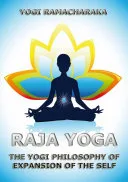
Raja Yoga
 80
80

Raja Yoga
Ramacharaka’s *Raja Yoga* offers a starkly practical, almost clinical, examination of mental control. The author bypasses the common spiritual platitudes, instead presenting a methodical framework for self-governance. One strength lies in its unflinching focus on the Will as the central lever for personal transformation, a concept often diluted in modern self-help literature. The text's directness is impressive, though at times it can feel austere, lacking the lyrical quality found in other yogic texts. A particularly telling passage discusses the "automatic mind" and the necessity of conscious intervention. This work is best suited for the disciplined student, not the casual dabbler, delivering a potent, if unadorned, guide to inner mastery.
📝 Description
80
### What It Is This work presents a systematic approach to developing mental discipline and inner control, framed within the principles of Raja Yoga. It moves beyond mere physical postures, focusing instead on the command of thought, the will, and the conscious direction of one's mental faculties. The text aims to equip the reader with methods for understanding and mastering the "lower self" – the realm of instinct, emotion, and unexamined impulse – to facilitate spiritual growth and the "unfoldment" of the soul.
### Who It's For Raja Yoga is intended for individuals drawn to the potent capabilities of the trained mind, a concept often explored in Western "Mental Science" and related disciplines. It appeals to those seeking a structured path to self-mastery, particularly Western audiences interested in the practical application of yogic philosophy for personal development and spiritual evolution. It is for the earnest seeker ready to engage in rigorous mental discipline.
### Historical Context Emerging in an era of burgeoning interest in Eastern philosophies within the West, this book is a product of the early 20th century's intellectual currents. It reflects the period's fascination with comparative religion and esoteric traditions, influenced by movements like Theosophy. At the time, figures like Helena Blavatsky were popularizing Eastern spiritual concepts, and this work offers a specific lens on the yogic path, distinct from earlier, purely religious interpretations. It sought to bridge Eastern wisdom with Western psychological understanding.
### Key Concepts The core teachings revolve around the power of trained attention, the role of the Will as the supreme faculty, and the process of differentiating between the conscious mind and deeper levels of awareness. It outlines techniques for mental concentration, meditation, and the ethical conduct that supports inner development. The "unfoldment" of the soul is presented as the ultimate goal, achievable through disciplined mental and spiritual practices rooted in Raja Yoga.
💡 Why Read This Book?
• Learn the foundational principles of Raja Yoga, focusing on mental control and the cultivation of Will, as presented in the early 20th century's engagement with Eastern thought. • Understand the concept of mastering the "lower self" through disciplined attention and ethical conduct, a key tenet for achieving "soul unfoldment" as detailed in the text. • Grasp the historical bridging of Eastern yogic philosophy with Western "Mental Science" concepts, recognizing Yogi Ramacharaka's contribution to this intellectual exchange.
⭐ Reader Reviews
Honest opinions from readers who have explored this book.
❓ Frequently Asked Questions
What is the primary goal of Raja Yoga as described by Yogi Ramacharaka?
The primary goal is the development of latent mental powers and gaining control of one's mental faculties through the Will, leading to mastery of the "lower self" and the "soul's unfoldment."
How does Raja Yoga differ from Western "Mental Science"?
While sharing common ground in the power of the trained mind, Raja Yoga emphasizes a deeper spiritual "unfoldment" and mastery of the self, often with a more systematic, philosophical underpinning than some "Mental Science" approaches.
Who is William Walker Atkinson and what is his role in this book?
William Walker Atkinson, writing under various pseudonyms including Yogi Ramacharaka, was a prolific author on New Thought, the occult, and Eastern philosophies. He authored 'Raja Yoga' as part of his extensive work to popularize these ideas in the West.
What does the "lower self" refer to in the context of this book?
The "lower self" refers to the instinctual, emotional, and unexamined aspects of an individual's nature that are driven by impulse and unmastered desires. Raja Yoga aims to bring these under the control of the Will.
Is this book suitable for beginners in yoga?
It is suitable for beginners willing to engage in rigorous mental discipline. It focuses more on mental and spiritual control than the physical postures often associated with Hatha Yoga.
When was "Raja Yoga" by Yogi Ramacharaka originally published or compiled?
While the first listed publication date is March 11, 2014, the work by Yogi Ramacharaka (William Walker Atkinson) was originally published in the early 20th century, reflecting a period of significant interest in Eastern thought in the West.
🔮 Key Themes & Symbolism
The Power of Will
The work posits the Will as the supreme faculty of the mind, the ultimate instrument for achieving self-mastery. It details how a trained Will can direct attention, control impulses, and overcome the limitations imposed by the "lower self." This is not merely about desire, but about the focused, conscious direction of one's inner life, essential for the "soul's unfoldment."
Mental Discipline and Control
Central to Raja Yoga is the systematic cultivation of mental faculties. This involves developing concentration, mastering distracting thoughts, and achieving a state of inner stillness. The text outlines practical methods for training the mind, distinguishing between passive reception of impressions and active, conscious thought, which is crucial for spiritual progress.
Mastery of the "Lower Self"
The "lower self" is depicted as the seat of unexamined desires, emotions, and habits that hinder spiritual growth. Raja Yoga provides techniques to observe, understand, and ultimately control these aspects of personality. This mastery is not about suppression but about integration and redirection, allowing the higher consciousness to guide one's actions.
Soul Unfoldment
The ultimate aim presented is the gradual "unfoldment" of the soul, suggesting an inherent spiritual potential within each individual that needs to be realized. This process is facilitated by the preceding stages of mental control and self-mastery. It implies a journey of increasing awareness and connection to a higher spiritual reality.
💬 Memorable Quotes
“The Will is the master of the mental realm.”
— This aphorism highlights the central role of conscious intention and directed energy in achieving mental discipline. It suggests that the Will, when properly cultivated, has the power to overcome mental inertia and external distractions.
“To control the mind is to control one's destiny.”
— This paraphrased concept emphasizes the profound impact of mental governance on life outcomes. It suggests that by mastering internal thought processes, an individual gains agency over their external circumstances and future path.
“The "lower self" must be understood before it can be mastered.”
— This interpretation stresses the importance of self-awareness and introspection. Before one can exert control, a thorough understanding of one's habitual reactions, desires, and emotional patterns is necessary.
“Mental science finds its highest expression in Raja Yoga.”
— This statement positions Raja Yoga as a more complete or advanced system than what might be understood as "Mental Science." It suggests that yogic principles offer a deeper framework for achieving the mind's potential.
“The soul's unfoldment is the ultimate aim of all true spiritual practice.”
— This paraphrased concept defines the ultimate purpose of the yogic path. It frames the entire process of discipline and self-mastery as a means to realize one's inherent spiritual nature.
🌙 Esoteric Significance
Tradition
This work fits within the broad Hermetic and Theosophical currents of the late 19th and early 20th centuries, which sought to systematize and popularize Eastern spiritual traditions for a Western audience. It draws heavily on the classical Raja Yoga path, focusing on mental control and meditation, but frames it within a psychological and self-help context that was gaining traction.
Symbolism
While not overtly symbolic in its language, the concept of the "lower self" functions symbolically, representing the unrefined, instinctual aspects of consciousness that must be transmuted. The "unfoldment" of the soul symbolizes the emergent spiritual nature, like a seed growing into a plant, requiring cultivation and right conditions.
Modern Relevance
The emphasis on mental discipline, attention training, and self-mastery remains highly relevant. Contemporary mindfulness practices, cognitive behavioral therapy (CBT) principles, and secularized meditation techniques echo the core methods outlined by Ramacharaka, demonstrating the enduring appeal of these yogic principles.
👥 Who Should Read This Book
• Aspiring practitioners of mental discipline seeking a structured approach to self-control and inner development. • Students of comparative spirituality interested in early 20th-century Western interpretations of Eastern yogic philosophy. • Individuals exploring "Mental Science" or New Thought who wish to understand the yogic underpinnings of mind-power principles.
📜 Historical Context
William Walker Atkinson, writing as Yogi Ramacharaka, was a key figure in popularizing Eastern philosophies and New Thought in the United States during the early 20th century. This work, *Raja Yoga*, emerged during a period of intense Western fascination with India, fueled by figures like Helena Blavatsky and the Theosophical Society. It appeared alongside a surge of interest in "Mental Science" and "New Thought" movements, which often focused on the mind's power for healing and manifestation. Atkinson's contribution was to synthesize these Western psychological interests with classical yogic principles, presenting them in an accessible format. While figures like Swami Vivekananda had introduced Vedanta to America in the late 19th century, Ramacharaka's approach offered a more direct, systematic method for mental and spiritual development, resonating with a Western audience seeking practical application.
📔 Journal Prompts
The directed Will as the master faculty.
Identifying and observing the "lower self's" impulses.
Methods for cultivating sustained mental attention.
The process of "soul unfoldment" through discipline.
Distinguishing between automatic thought and conscious direction.
🗂️ Glossary
Raja Yoga
A major branch of Yoga, often translated as "Royal Yoga," which focuses on meditation, mental control, and the discipline of the mind to achieve spiritual realization.
Will
In this context, the faculty of conscious intention, decision-making, and directed mental energy; the supreme tool for self-mastery.
Lower Self
The instinctive, emotional, and unrefined aspect of the personality, driven by desires and habits, which needs to be understood and brought under control.
Soul Unfoldment
The process of spiritual growth and realization, wherein the inherent spiritual nature of the individual gradually emerges and becomes manifest.
Mental Faculties
The various capacities of the mind, including perception, attention, memory, reasoning, and imagination, which can be trained and developed.
Mental Science
A broad term referring to various Western philosophies and practices emphasizing the power of the mind to influence reality, health, and personal circumstances.
Attention
The focused direction of consciousness towards a particular object or thought, a key element in mental discipline and meditation.