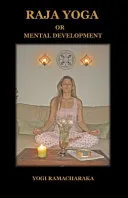
Raja Yoga Or Mental Development
 81
81

Raja Yoga Or Mental Development
Yogi Ramacharaka’s "Raja Yoga Or Mental Development" presents a methodical distillation of yogic principles for a Western audience, predating many modern interpretations of Eastern thought. Its strength lies in its clear, systematic breakdown of Raja Yoga, moving from basic mental exercises to more advanced states of concentration and meditation. The author’s ability to translate complex Indian philosophical concepts into understandable terms is commendable, particularly in his discussion of thought control and the nature of the "I AM." However, the work's dated language and the occasional generalization about the "Western mind" can feel somewhat patronizing to a contemporary reader. A particularly insightful passage details the stages of concentration, illustrating how sustained focus can lead to profound self-awareness. While some concepts might seem rudimentary to advanced practitioners, for those new to yogic philosophy, it offers a solid, albeit historical, framework for mental discipline.
📝 Description
81
### What It Is Raja Yoga Or Mental Development is a foundational text exploring the principles and practices of Raja Yoga, the "royal path" of yoga concerned with mental control and spiritual realization. Written under the pseudonym Yogi Ramacharaka, this work aims to present yogic philosophy in a manner accessible to Western minds. It systematically outlines techniques for cultivating concentration, meditation, and ultimately, self-mastery. The book posits that these ancient Indian disciplines offer profound solutions to modern psychological and spiritual dilemmas.
### Who It's For This volume is intended for individuals seeking a structured approach to mental discipline and spiritual growth, particularly those interested in the philosophical underpinnings of yoga beyond physical postures. It appeals to students of esoteric traditions, psychology, and comparative religion who are curious about the historical development of mind-training techniques. Readers looking for practical methods to enhance focus, develop intuition, and understand the nature of consciousness will find its guidance applicable.
### Historical Context Published initially in 1903 (though the provided metadata suggests a later first publication of 2007-08 for a specific edition), this book emerged during a period of intense Western fascination with Eastern philosophies. The Theosophical Society, founded in 1875 by Helena Blavatsky, played a significant role in popularizing Indian spiritual concepts in the West. Yogi Ramacharaka's work contributed to this wave, offering interpretations of yogic thought that aligned with contemporary Western intellectual currents while retaining its distinct Eastern origins. It engaged with nascent fields like psychology by proposing ancient frameworks for understanding the mind.
### Key Concepts The book elaborates on concepts such as the Four Paths of Yoga (Karma, Bhakti, Jnana, Raja), focusing on Raja Yoga's systematic method for mental development. It introduces the idea of the "Yogi" as one who has achieved mastery over their mind and desires through disciplined practice. Central tenets include the nature of thought, the importance of concentration, the development of willpower, and the understanding of subtle planes of existence. The work emphasizes that these mental faculties are universal and can be cultivated by anyone willing to apply the principles.
💡 Why Read This Book?
• Gain a foundational understanding of Raja Yoga's mental discipline, distinct from physical asanas, as explained in the chapter on the Four Paths of Yoga. • Learn practical techniques for concentration and meditation directly from the author's 1903-era presentation, offering a historical perspective on mind training. • Explore the concept of the "Yogi" as a master of their mind, a core idea discussed throughout the book, providing a goal for personal development.
⭐ Reader Reviews
Honest opinions from readers who have explored this book.
❓ Frequently Asked Questions
What is the primary focus of Yogi Ramacharaka's Raja Yoga Or Mental Development?
The book's primary focus is on Raja Yoga, the "royal path" of yoga, emphasizing mental development, concentration, meditation, and self-mastery through systematic practice, as presented to a Western audience.
When was Raja Yoga Or Mental Development first published?
The original publication date for this work by Yogi Ramacharaka was 1903, though specific editions may have later publication dates.
Is this book suitable for beginners interested in yoga philosophy?
Yes, the book is designed to be accessible to beginners, systematically introducing concepts of yogic philosophy and mental discipline without requiring prior knowledge of Sanskrit or advanced yogic practices.
What distinguishes Raja Yoga from other branches of yoga discussed in the book?
The book distinguishes Raja Yoga as the path focused on mental control and spiritual realization through concentration and meditation, contrasting it with Karma (action), Bhakti (devotion), and Jnana (knowledge) yoga.
Does the book offer practical exercises for mental development?
Yes, it provides practical guidance and exercises aimed at cultivating concentration, willpower, and understanding the nature of thought, forming the core of its mental development approach.
Who is Yogi Ramacharaka?
Yogi Ramacharaka is the pseudonym used by William Walker Atkinson, an influential author on New Thought and esoteric subjects, who presented yogic philosophy in a way accessible to Western readers in the early 20th century.
🔮 Key Themes & Symbolism
The Nature of Thought
The work delves into the mechanics of thought, presenting it not merely as a passive process but as a force that shapes reality and consciousness. Ramacharaka explains how thoughts are energies that can be directed and controlled through specific mental disciplines. This understanding is crucial for achieving the self-mastery central to Raja Yoga, enabling practitioners to overcome limitations imposed by uncontrolled mental patterns and cultivate higher states of awareness.
Concentration and Meditation
Central to Raja Yoga is the systematic development of concentration, leading to deeper states of meditation. The book outlines progressive techniques designed to train the mind, sharpen focus, and quiet mental chatter. This disciplined attention is presented as the key to unlocking the latent powers of the mind and achieving inner stillness, allowing one to perceive subtler truths about existence.
The Yogi Ideal
The book defines the Yogi not merely as one who practices physical postures, but as an individual who has achieved mastery over their own mind, body, and desires. This ideal represents the culmination of Raja Yoga practices, where through diligent effort, one transcends ordinary limitations and attains a state of balanced awareness and inner peace, embodying true self-realization.
Universal Laws of Mind
Ramacharaka posits that the principles governing the mind and consciousness are universal, applicable across cultures and time. The book aims to bridge the gap between ancient Eastern wisdom and Western understanding, suggesting that the yogic path offers profound insights into psychological and spiritual laws that govern human experience, accessible to all who seek them.
💬 Memorable Quotes
“The mind is like a mirror, it is clouded by the dust of the senses.”
— This analogy highlights the yogic view that external sensory input and attachment obscure our true, pure consciousness. Just as dust obscures a mirror's reflection, sensory distractions prevent us from seeing our inner reality clearly.
“The Yogi is the master of his own mental states.”
— This succinctly captures the essence of Raja Yoga: achieving sovereignty over one's thoughts, emotions, and reactions. It implies a disciplined internal state, free from the tyranny of fleeting impulses and external influences.
“Concentration is the key that unlocks the doors of the mind.”
— This emphasizes the pivotal role of focused attention in yogic practice. It suggests that by honing our ability to concentrate, we gain access to deeper levels of consciousness and understanding previously inaccessible.
“Thought is a force, and like all forces, it can be directed.”
— This presents a dynamic view of thought, positioning it as an active energy rather than a passive occurrence. The implication is that through conscious effort, one can harness this force for personal growth and transformation.
“The kingdom of heaven is within you.”
— This quote, often attributed to Jesus but used here to resonate with Western readers, signifies that spiritual realization and inner peace are not external pursuits but discoveries found within one's own consciousness.
🌙 Esoteric Significance
Tradition
This work fits within the broader Hindu yogic tradition, specifically focusing on Raja Yoga as outlined in classical texts like Patanjali's Yoga Sutras. However, its presentation is distinctly tailored for a Western audience, bridging Eastern philosophy with early 20th-century Western esoteric thought, particularly the New Thought movement with which author William Walker Atkinson was associated. It interprets yogic principles through a lens that emphasizes mental power and practical application, making it a key text in the transmission of yogic ideas into Western esoteric discourse.
Symbolism
While less reliant on overt symbolism than some esoteric texts, the book implicitly uses the 'mirror' as a symbol for the mind, which can become clouded by sensory 'dust,' obscuring clarity. The 'royal path' itself symbolizes the supreme, direct route to self-realization, distinct from the more common or indirect paths. The concept of 'thought as a force' can be seen as a symbolic representation of prana or subtle energies governing mental activity.
Modern Relevance
Contemporary mindfulness practices, cognitive behavioral therapy (CBT), and secular meditation movements draw implicitly on the principles of concentration and thought control detailed in this book. Thinkers and practitioners in modern yoga, transpersonal psychology, and self-help literature continue to reference or echo Ramacharaka's accessible explanations of yogic philosophy and mental discipline, adapting them for current spiritual and psychological exploration.
👥 Who Should Read This Book
• Aspiring practitioners of meditation and concentration techniques seeking a structured, historical introduction to yogic mental discipline. • Students of comparative religion and philosophy interested in the early 20th-century Western interpretation of Indian spiritual traditions. • Individuals exploring self-improvement and mental fortitude who wish to understand the foundational principles of yogic mind training as presented by Yogi Ramacharaka.
📜 Historical Context
Published in 1903, Yogi Ramacharaka’s "Raja Yoga Or Mental Development" emerged during a vibrant period of Orientalism and spiritual inquiry in the West. The Theosophical Society, active since 1875, had already significantly popularized Indian philosophies, including yoga and Vedanta. Ramacharaka (a pseudonym for William Walker Atkinson) contributed to this milieu by offering a structured, accessible presentation of Raja Yoga, focusing on mental discipline. His work engaged with the nascent field of Western psychology, proposing ancient yogic frameworks for understanding the mind’s potential. While figures like Swami Vivekananda had earlier introduced Vedantic concepts to America, Ramacharaka’s approach was particularly geared towards practical mental training, resonating with the era’s interest in self-improvement and occult sciences. The book's reception was generally positive within esoteric circles, aligning with a broader intellectual current that sought spiritual answers beyond traditional Western religious doctrines.
📔 Journal Prompts
The mind as a mirror, clouded by sensory dust.
Directing thought as a conscious force.
The Yogi's mastery over mental states.
Cultivating concentration through dedicated practice.
Identifying personal obstacles to mental stillness.
🗂️ Glossary
Raja Yoga
The "royal path" of yoga, focusing on mental discipline, meditation, and control of the mind to achieve spiritual enlightenment and self-realization.
Concentration
The act of focusing the mind on a single point or object, a key practice in Raja Yoga for developing mental control and awareness.
Meditation
A state of focused attention and deep contemplation, often following sustained concentration, leading to deeper understanding and inner peace.
The Yogi
An individual who has attained mastery over their mind, body, and desires through the practice of yoga, embodying self-control and spiritual realization.
Thought Force
The concept that thoughts are energies that can be directed and utilized, influencing one's reality and consciousness.
The I AM
Refers to the true, underlying Self or divine consciousness, distinct from the personality and ego, which Raja Yoga aims to realize.
Mental Development
The systematic cultivation and enhancement of mental faculties, including concentration, willpower, and clarity, through yogic practices.