Qi-gong der vier Jahreszeiten
 84
84

Qi-gong der vier Jahreszeiten
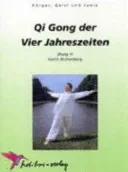
Zheng Yi’s "Qi-gong der vier Jahreszeiten" presents a compelling argument for a seasonally attuned practice, moving beyond the often-static routines found in many contemporary Qi-gong manuals. The book’s strength lies in its clear articulation of how to synchronize internal energetic work with the external shifts of the year, particularly the emphasis on corresponding organ health with each season. For instance, the section detailing autumn’s connection to the Lungs and Large Intestine offers practical, actionable advice. However, the text could benefit from more detailed illustrations or video references, as some movement descriptions, while conceptually sound, may prove challenging for absolute beginners to visualize accurately without supplementary visual aids. Despite this minor limitation, the work provides a valuable framework for deepening one's energetic cultivation. It is a focused exploration for those seeking cyclical harmony in their practice.
📝 Description
84
### What It Is Qi-gong der vier Jahreszeiten, or "Qi-gong of the Four Seasons," is a text by Zheng Yi, first published in 2001. It serves as a guide to the practice of Qi-gong, specifically aligning these exercises with the cyclical energies of spring, summer, autumn, and winter. The book details specific movements, breathing techniques, and meditative practices intended to harmonize the practitioner's internal energy (Qi) with the external environmental shifts throughout the year.
### Who It's For This work is directed towards individuals seeking a deeper, seasonal integration of their Qi-gong practice. It will appeal to those who already have some familiarity with Qi-gong or related energy cultivation methods and wish to move beyond generic routines. It is particularly suited for practitioners interested in the nuanced relationship between human physiology, seasonal changes, and energetic well-being, offering a framework for year-round health maintenance and spiritual development.
### Historical Context Published in 2001, Zheng Yi's "Qi-gong der vier Jahreszeiten" emerged during a period of growing global interest in traditional Chinese medicine and practices like Qi-gong and Tai Chi. While these disciplines have ancient roots, the late 20th and early 21st centuries saw a surge in their academic study and popular adoption in the West. This book contributes to that wave by offering a structured, seasonal approach, distinguishing itself from more generalized texts on Qi-gong that might not emphasize the temporal or astrological correlations to the same degree.
### Key Concepts The central tenets of "Qi-gong der vier Jahreszeiten" revolve around the principle of 'Tian Ren He Yi' (天人合一), the unity of Heaven and Humanity. This philosophical concept underpins the entire seasonal approach, positing that human health and vitality are intrinsically linked to the natural rhythms of the cosmos. The book elaborates on how specific organ systems, emotions, and energetic pathways (meridians) are associated with each of the four seasons, providing practical exercises to support these correspondences. It emphasizes proactive cultivation rather than reactive treatment.
💡 Why Read This Book?
• Gain a structured method for aligning your Qi-gong practice with the natural world, as detailed in the seasonal breakdowns for spring, summer, autumn, and winter. • Understand the specific correspondences between organ systems, emotions, and the changing seasons, drawing directly from the principles of Traditional Chinese Medicine. • Learn targeted breathing and movement exercises designed to support your body's energetic needs throughout the year, as outlined in Zheng Yi's specific seasonal routines.
⭐ Reader Reviews
Honest opinions from readers who have explored this book.
❓ Frequently Asked Questions
What is the primary focus of "Qi-gong der vier Jahreszeiten"?
The book focuses on practicing Qi-gong in alignment with the four seasons. It details specific exercises, breathing techniques, and meditations to harmonize one's internal energy (Qi) with the external environmental cycles from spring through winter.
When was "Qi-gong der vier Jahreszeiten" first published?
The book was first published in 2001, contributing to the growing international interest in traditional Chinese practices during that era.
Who is the author of "Qi-gong der vier Jahreszeiten"?
The author is Zheng Yi. His work offers a structured approach to seasonal Qi-gong practice.
What is the concept of 'Tian Ren He Yi' mentioned in the book?
'Tian Ren He Yi' (天人合一) signifies the unity of Heaven and Humanity. This core philosophical concept explains how human health is intrinsically linked to natural cosmic rhythms, forming the basis for the book's seasonal approach.
Is this book suitable for complete beginners to Qi-gong?
While it introduces concepts, the book is best suited for those with some prior familiarity with Qi-gong or energy cultivation methods who wish to deepen their practice seasonally.
How does this book differ from other Qi-gong texts?
It distinguishes itself by offering a comprehensive, year-round framework that explicitly links specific Qi-gong exercises and energetic principles to the distinct energies and health needs of each of the four seasons.
🔮 Key Themes & Symbolism
Seasonal Energetic Alignment
The core theme is the intricate relationship between human Qi and the natural cycles of the year. The book posits that aligning one's internal energy cultivation with the distinct energetic qualities of spring, summer, autumn, and winter is crucial for optimal health and spiritual development. Each season is presented with specific energetic patterns, influencing particular organ systems and emotional states, necessitating tailored Qi-gong practices to maintain balance.
The Unity of Heaven and Humanity
Underpinning the seasonal approach is the ancient Chinese philosophical concept of 'Tian Ren He Yi' (天人合一). This principle emphasizes that human beings are not separate from the cosmos but are integral parts of its continuous flow. The book uses this concept to justify the need for practitioners to harmonize their internal world with external environmental changes, viewing the seasons as microcosmic reflections of macrocosmic cosmic forces.
Organ System Correspondences
A significant aspect of the book involves mapping specific organ systems and their associated meridians to each of the four seasons. For example, spring is linked to the Liver and Gallbladder, summer to the Heart and Small Intestine, autumn to the Lungs and Large Intestine, and winter to the Kidneys and Bladder. The text provides exercises designed to tonify or sedate these organs according to seasonal needs.
Proactive Well-being Through Qi Cultivation
Rather than focusing solely on treating illness, "Qi-gong der vier Jahreszeiten" advocates for proactive cultivation of vital energy (Qi) as a means of maintaining robust health year-round. By consistently practicing Qi-gong in accordance with seasonal shifts, practitioners can strengthen their constitution, enhance resilience against environmental stressors, and foster emotional equilibrium throughout the changing phases of the year.
💬 Memorable Quotes
“The body's Qi flows in accordance with the heavens' decree.”
— This statement encapsulates the book's central premise: human health is intrinsically tied to cosmic and environmental rhythms. It suggests that understanding and aligning with these external cycles is fundamental to cultivating internal balance and vitality.
“Autumn calls for strengthening the Lungs to prepare for winter's chill.”
— This highlights the practical application of seasonal theory. It indicates that specific seasons are associated with particular organ systems, and the book offers targeted Qi-gong exercises to support these vulnerabilities proactively.
“Spring's burgeoning energy requires gentle expansion of movement.”
— This interpretation emphasizes the qualitative difference in recommended practice across seasons. Spring, associated with growth and new beginnings, calls for movements that are fluid and expansive, contrasting with the more grounded practices of other seasons.
“Balance is found not in stillness, but in flowing with the year's transformations.”
— This suggests that true harmony isn't about static equilibrium but dynamic adaptation. The book encourages practitioners to embrace the cyclical nature of life and energy, adjusting their practice accordingly.
“The Kidney Qi anchors the body through the deep rest of winter.”
— This points to the specific energetic function associated with winter. It underscores the importance of conserving and strengthening the Kidney energy during the dormant period for overall vitality.
🌙 Esoteric Significance
Tradition
This work is deeply rooted in Taoist cosmology and Traditional Chinese Medicine (TCM), which form the bedrock of many East Asian esoteric traditions. It aligns with the Taoist emphasis on living in accordance with the Tao (the Way), particularly as manifested through the cycles of nature and the complementary forces of Yin and Yang. While not strictly a 'Western Esoteric' text, its focus on vital energy (Qi) and energetic pathways (meridians) resonates with concepts found in Hermeticism and Alchemy concerning the manipulation of subtle energies for health and spiritual development.
Symbolism
The primary symbolism revolves around the four seasons themselves, each representing distinct energetic phases: Spring (growth, expansion, Liver/Gallbladder), Summer (peak energy, heat, Heart/Small Intestine), Autumn (contraction, harvesting, Lungs/Large Intestine), and Winter (dormancy, storage, Kidneys/Bladder). The flow of Qi through these seasonal phases is symbolic of the cyclical nature of life, death, and rebirth. Specific movements and postures within the Qi-gong practice are symbolic representations of these natural forces, designed to harmonize the practitioner with these universal energies.
Modern Relevance
In contemporary practice, Zheng Yi's approach to seasonal Qi-gong remains highly relevant for holistic health practitioners, acupuncturists, and yoga instructors seeking to integrate cyclical natural energies into their teachings. It offers a practical framework for modern individuals often disconnected from natural rhythms. Thinkers and schools focusing on embodied cognition and the psychosomatic links between environment and well-being find this seasonal attunement particularly valuable for developing resilience and mindfulness in a fast-paced world.
👥 Who Should Read This Book
• Practitioners of Qi-gong or Tai Chi seeking to deepen their understanding and practice by incorporating seasonal variations and energetic correspondences. • Individuals interested in Traditional Chinese Medicine (TCM) principles who want to explore a practical, embodied application of seasonal health and organ system links. • Students of Taoist philosophy and natural cosmology looking for a text that demonstrates the 'Tian Ren He Yi' concept through tangible exercises and year-round energetic cultivation.
📜 Historical Context
Published in 2001, Zheng Yi's "Qi-gong der vier Jahreszeiten" arrived during a global surge of interest in Eastern practices, amplified by figures like Dr. Stephen Chang popularizing concepts of Chinese medicine and philosophy in the West. While Qi-gong itself has millennia of history, the early 2000s saw its increased dissemination outside China, often presented in simplified forms. Zheng Yi's work distinguished itself by offering a structured, seasonal approach, moving beyond generalized routines. This period also saw a growing academic interest in comparative religion and traditional healing systems, with scholars examining the philosophical underpinnings of practices like Qi-gong. While not directly engaging with Western contemporaries in the text, its publication implicitly responded to a growing demand for holistic health modalities that acknowledged natural rhythms, a counterpoint to the more mechanistic and isolated approaches prevalent in Western medicine at the time.
📔 Journal Prompts
The Liver's energy in Spring: how does its associated movement feel?
Winter's Kidney focus: reflecting on stored vitality.
Summer's peak heat and Heart Qi: what are your current energetic needs?
Autumn's Lung cleansing: practices for release and clarity.
Connecting Tian Ren He Yi to your daily life.
🗂️ Glossary
Qi (氣)
Vital life force or energy that flows through all living things. In Qi-gong, the practice aims to cultivate, balance, and circulate Qi for health and well-being.
Tian Ren He Yi (天人合一)
A fundamental concept in Chinese philosophy, particularly Taoism, meaning 'The unity of Heaven and Humanity.' It posits that humans are an integral part of the cosmos and should live in harmony with natural laws and cycles.
Meridians (經絡)
Channels or pathways through which Qi flows in the body, connecting different organs and tissues. Traditional Chinese Medicine maps these pathways to understand and treat illness.
Organ Correspondences
The system within Traditional Chinese Medicine that links specific internal organs (e.g., Liver, Heart, Lungs, Kidneys) to particular seasons, emotions, elements, and energetic functions.
Yin and Yang
The complementary, interdependent forces that represent dualities in nature (e.g., passive/active, dark/light, cold/hot). Seasonal changes reflect shifts in the balance of Yin and Yang.
Jing (精)
Essence. In TCM, Jing is considered a fundamental substance that forms the basis of life and governs growth, development, and reproduction. It is often associated with the Kidneys.
Shen (神)
Spirit or Mind. Shen is considered the manifestation of Qi and Blood, residing primarily in the Heart. It governs consciousness, mental activity, and emotional well-being.






![The Short Fiction of Edgar Allan Poe [69 stories]](/img/thumb/the-short-fiction-of-edgar-allan-poe-69-stories-edgar-allan-poe-610325.webp)