Qabalah
 71
71

Qabalah
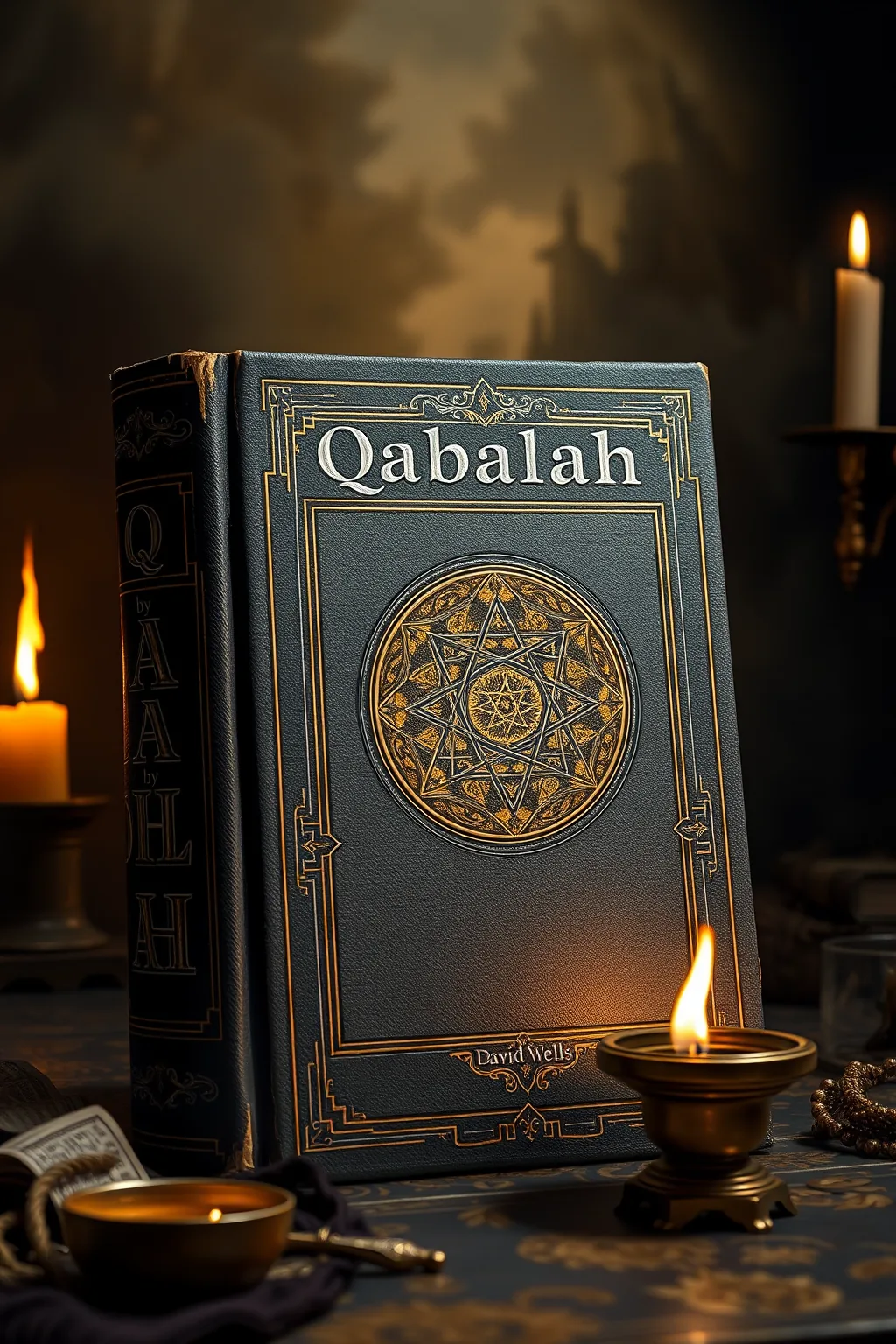
David Wells' "Qabalah" attempts to distill a notoriously dense tradition into a workable guide for the modern seeker. The book's primary strength lies in its methodical approach to the Tree of Life, breaking down each of the ten Sephiroth with accompanying exercises. This structure is genuinely beneficial for those finding the sheer scale of Qabalistic literature daunting. However, the explanations, while clear, occasionally feel more like a competent primer than a profound exposition. For instance, the discussion on the symbolism of each Sephira, while present, could benefit from deeper engagement with the historical and philosophical nuances that inform these archetypes. The practical meditation exercises for each Sephira are a commendable inclusion, offering a tangible way to interact with the material. While Wells successfully demystifies the core components, the work stops short of plumbing the deepest esoteric implications. It serves as an excellent starting point, but seasoned practitioners may find it lacks the intricate detail they seek. Overall, Wells provides a solid, accessible introduction to Qabalistic principles for the uninitiated.
📝 Description
71
### What It Is
David Wells' "Qabalah" (2017) presents a foundational understanding of a Western esoteric tradition rooted in mystical interpretation of Hebrew scripture, though it is explicitly non-religious in its current practice. This work focuses on Qabalah as a system for personal spiritual development and higher consciousness exploration. It outlines the core tenets and symbolic language used to map the divine and human psyche, offering practical applications for the seeker. The book serves as an accessible entry point into a complex subject, demystifying its structure for those unfamiliar with its intricacies.
### Who It's For
This text is tailored for individuals curious about Western mysticism and esoteric philosophy, particularly those seeking practical methods for self-discovery and spiritual growth. It is suitable for beginners who have no prior knowledge of Qabalistic concepts but are drawn to subjects like meditation, symbolism, and the exploration of inner states. Those interested in comparative religion or philosophy who wish to understand a significant Western mystical system will also find value here. It aims to equip readers with the tools to engage with Qabalistic principles on a personal level.
### Historical Context
The Qabalah, with roots tracing back to medieval Jewish mysticism, evolved significantly in the late 19th and early 20th centuries within Western esoteric circles. Influential figures like Eliphas Lévi and later Aleister Crowley integrated and reinterpreted its complex symbolism, particularly the Tree of Life, into broader occult frameworks. Wells' 2017 publication emerges in an era where esoteric knowledge is widely disseminated online, yet often lacks rigorous explanation. This book aims to provide a structured, historically informed, yet personally applicable guide, contrasting with more academic or purely historical treatments of the subject. It offers a contemporary lens on an ancient tradition.
### Key Concepts
The central organizational framework is the Tree of Life, a diagram comprising ten interconnected spheres known as Sephiroth, each representing distinct divine emanations or stages of consciousness. Wells explains the meaning of each Sephira, such as Kether (The Crown), Chokmah (Wisdom), and Binah (Understanding), detailing their associated archetypes, energies, and correspondences. The book also explores the paths connecting these Sephiroth, emphasizing their role in spiritual progression. Readers are introduced to the practical application of these concepts through exercises and meditations designed to foster an understanding of the symbolic language and its potential for personal transformation.
💡 Why Read This Book?
• Gain a structured understanding of the Qabalah's central Tree of Life, learning the specific function and meaning of each of the ten Sephiroth, which Wells elucidates with detailed explanations and practical exercises for each. • Engage with practical Qabalistic techniques through dedicated meditation and exercise sections for every Sephira, allowing for direct experiential learning of these esoteric energies and concepts. • Understand the symbolic language of Qabalah, including deities, goddesses, and crystals associated with each Sephira, as detailed in Wells' work, to deepen your personal mystical practice.
⭐ Reader Reviews
Honest opinions from readers who have explored this book.
❓ Frequently Asked Questions
What is the primary focus of David Wells' book "Qabalah"?
David Wells' "Qabalah" focuses on presenting the Qabalah as a non-religious Western mystic tradition and a system for personal spiritual development, emphasizing practical application and understanding of its core concepts like the Tree of Life.
What is the Tree of Life in the context of this book?
In Wells' "Qabalah," the Tree of Life is the central organizational system, a diagram composed of ten interconnected spheres (Sephiroth) that represent divine emanations and stages of consciousness, used for spiritual mapping and personal growth.
Does the book "Qabalah" by David Wells require prior knowledge of mysticism?
No, the book is designed for beginners and those curious about esoteric traditions. It aims to demystify Qabalistic concepts and provide accessible explanations and practical exercises for individuals with no prior knowledge.
What kind of exercises are included in "Qabalah"?
The book includes specific exercises and meditations for each Sephira on the Tree of Life, designed to help readers understand and work with the symbolism and energies associated with these spheres.
When was David Wells' "Qabalah" first published?
David Wells' "Qabalah" was first published on April 4, 2017, making it a contemporary introduction to this ancient esoteric tradition.
Is this book about the religious practice of Kabbalah?
No, Wells' "Qabalah" explicitly presents the subject as a Western non-religious mystic tradition. While it draws from historical Qabalistic roots, its focus is on personal esoteric exploration rather than religious observance.
🔮 Key Themes & Symbolism
The Tree of Life
The central pillar of Wells' exposition is the Tree of Life, presented not merely as a symbolic diagram but as a functional map of consciousness and the cosmos. The work meticulously details each of its ten Sephiroth, explaining their individual attributes and interconnections. This systematic approach allows readers to grasp the intricate architecture of Qabalistic thought, viewing it as a coherent system for understanding existence and achieving higher awareness. The emphasis is on its role as an organizational framework for spiritual exploration.
Sephira Symbolism and Practice
Wells dedicates significant attention to the meaning and practical application of each Sephira. Beyond theoretical descriptions, the book provides concrete exercises and meditations for engaging with the energies of spheres like Chesed (Mercy) and Geburah (Severity). This approach bridges abstract concepts with personal experience, illustrating how the symbolism, encompassing deities, goddesses, and even crystals, can be integrated into a personal practice for self-transformation and enhanced energetic awareness.
Embracing Higher Self
The overarching goal presented in "Qabalah" is the reader's journey towards embracing their higher self. The Qabalistic system, as interpreted by Wells, serves as a toolset for this very purpose. By understanding and working with the Tree of Life and its constituent parts, individuals are guided to connect with deeper aspects of their consciousness, leading to personal growth and a more integrated sense of self. The book positions Qabalah as a pathway to expanded perception.
Western Esoteric Tradition
Wells situates "Qabalah" firmly within the Western esoteric tradition, distinguishing it from its Jewish religious origins. The work explores how Qabalistic principles have been adapted and utilized in non-religious mystical contexts, particularly concerning magical knowledge and practices aimed at spiritual attainment. This framing highlights Qabalah as a distinct philosophical and practical system available to anyone seeking esoteric wisdom outside of formal religious structures.
💬 Memorable Quotes
“The role of the Tree of Life – the central organizational system of Qabalah”
— This highlights the fundamental importance of the Tree of Life within Qabalistic study, positioning it as the primary structure through which all other concepts and practices are understood and organized.
“The meaning of each Sephira, or sphere, on the Tree”
— This points to the detailed exploration of the ten primary spheres within the Qabalistic system, emphasizing that each sphere holds specific symbolic and energetic significance that the book aims to elucidate.
“An exercise and meditation for each Sephira”
— This indicates the book's practical orientation, suggesting that readers will be provided with actionable techniques to directly engage with and internalize the principles associated with each Sephira.
“How to work with and understand the symbolism of each Sephira, from Gods and Goddesses to Crystals”
— This reveals the breadth of symbolic correspondences explored, showing that the book connects the abstract Sephiroth to a diverse range of archetypal figures and natural elements for deeper comprehension.
“How to increase the energy for your meditation”
— This suggests a practical benefit readers can expect, focusing on the enhancement of meditative states through the application of Qabalistic principles and techniques presented in the text.
🌙 Esoteric Significance
Tradition
This work fits within the Western Esoteric Tradition, specifically drawing from Qabalistic lineages that have been adapted for non-religious mystical and magical practice. It engages with the Hermetic Qabalah, which synthesizes Jewish Qabalistic concepts with elements of Hermeticism, Neoplatonism, and Western magic. Wells' approach departs from purely religious interpretations by emphasizing personal spiritual development and the exploration of consciousness, aligning with the aims of modern esotericists seeking practical applications of ancient wisdom.
Symbolism
The Tree of Life is the paramount symbol, serving as the organizational matrix for understanding the divine emanations (Sephiroth) and their interconnected paths. Each Sephira, such as Malkuth (Kingdom) or Tiphareth (Beauty), carries rich symbolic meaning, often linked to archetypal figures (Gods, Goddesses), planetary or astrological correspondences, and specific colors or crystals. Wells' work aims to elucidate these associations, presenting them as keys to unlocking deeper layers of meaning and facilitating the practitioner's inner work.
Modern Relevance
Contemporary Western esoteric practitioners, including students of Hermeticism, ceremonial magic, and modern witchcraft, continue to draw heavily on Qabalistic principles. Thinkers and groups influenced by the Golden Dawn tradition, or those exploring consciousness studies through an esoteric lens, find value in structured systems like the Tree of Life. Wells' accessible presentation makes these complex ideas relevant for current generations seeking personal transformation and a framework for understanding the spiritual dimensions of existence in a post-religious or interfaith context.
👥 Who Should Read This Book
• Aspiring practitioners of Western Esotericism seeking a structured introduction to Qabalistic principles and their practical application in meditation and self-discovery. • Students of comparative religion and philosophy interested in understanding the historical and symbolic development of Qabalah as a distinct mystical tradition separate from its religious origins. • Individuals exploring personal growth and consciousness expansion who are drawn to symbolic systems and contemplative practices for understanding the self and the universe.
📜 Historical Context
David Wells' "Qabalah" (2017) enters a landscape shaped by centuries of esoteric development. While its roots lie in medieval Jewish mysticism, Qabalah underwent significant transformations in the West from the 19th century onwards. Figures like Eliphas Lévi and later S.L. MacGregor Mathers, through organizations like the Hermetic Order of the Golden Dawn, integrated Qabalistic concepts, particularly the Tree of Life, into broader magical systems. This era saw a surge in interest, often divorced from its original religious context, focusing on its potential for personal power and spiritual attainment. Wells' work emerges in a contemporary period where such esoteric knowledge is widely accessible, often via digital means, but can lack structured guidance. It follows in the lineage of popularizers like Dion Fortune and Aleister Crowley, who made Qabalistic ideas more palatable to a Western audience. The book’s relevance lies in providing a clear, non-dogmatic entry point, contrasting with the more academic or historically focused studies and the often fragmented, unsystematic online discourse.
📔 Journal Prompts
The concept of the Sephira Binah (Understanding) in relation to personal limitations.
Reflecting on the symbolic representation of Kether (The Crown) and its connection to the higher self.
How the path between two specific Sephiroth might manifest in your daily life.
The role of divine names or archetypes associated with a particular Sephira in your spiritual journey.
Consider the practical application of an exercise for the Sephira Yesod (Foundation) in managing your emotional landscape.
🗂️ Glossary
Sephira
A Hebrew term meaning 'enumeration' or 'sphere.' In Qabalah, the ten Sephiroth are divine emanations or archetypal forces arranged on the Tree of Life, representing stages of creation and consciousness.
Tree of Life
The central diagram in Qabalah, consisting of ten interconnected spheres (Sephiroth) and twenty-two paths. It serves as a map of the universe, creation, the human psyche, and the path of spiritual ascent.
Kether
The first Sephira on the Tree of Life, often translated as 'The Crown.' It represents the ultimate source, pure potentiality, and the highest divine aspect, beyond human comprehension.
Chokmah
The second Sephira, meaning 'Wisdom.' It represents the dynamic, masculine principle of divine energy, the spark of creation, and intuitive understanding.
Binah
The third Sephira, meaning 'Understanding.' It represents the receptive, feminine principle, form, and the conscious structuring of divine energy; it is often associated with Saturn.
Sephirah
Singular form of Sephira. Refers to one of the ten spheres or emanations on the Qabalistic Tree of Life.
Malkuth
The tenth and final Sephira, meaning 'Kingdom.' It represents the material world, the physical plane, and the manifestation of all divine energies in the created universe.