Pyramid
 81
81

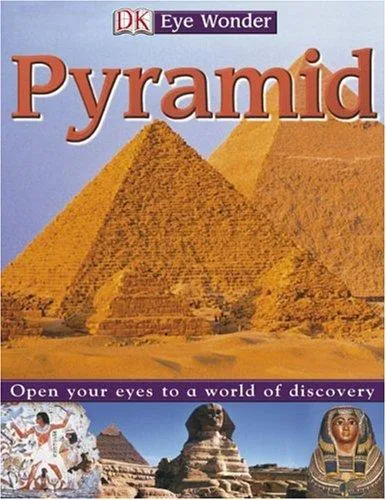
Pyramid
Caroline Bingham's 'Pyramid' presents a clear, accessible overview of these ancient wonders, largely succeeding in its aim to inform. The strength of the book lies in its detailed illustrations and diagrams, which effectively break down complex construction processes and architectural features. I found the section on astronomical alignments particularly well-explained, connecting celestial observations to earthly structures with compelling clarity. However, the work occasionally feels constrained by its encyclopedic format, sometimes sacrificing deeper interpretive analysis for breadth. For instance, while the text describes the logistics of moving obelisks, it could have explored the symbolic weight of these actions more thoroughly. Despite this, 'Pyramid' remains a valuable introduction for those seeking a factual foundation in understanding these monumental achievements.
📝 Description
81
### What It Is
The 'Pyramid' volume from DK Publishing, authored by Caroline Bingham, offers a structured exploration of the iconic Egyptian structures. It moves beyond mere architectural description to examine their multifaceted roles in ancient Egyptian civilization. The book details the construction techniques, the societal organization required for such colossal undertakings, and the astronomical alignments that informed their placement and design. It serves as a comprehensive visual and textual guide to understanding these enduring monuments.
### Who It's For
This book is an ideal resource for students of archaeology, ancient history, and comparative religion. It will also appeal to amateur Egyptologists, puzzle enthusiasts drawn to the engineering marvels of antiquity, and anyone curious about the intersection of architecture, spirituality, and power in one of history's most influential cultures. Readers seeking factual accounts of pyramid construction and purpose will find it particularly valuable.
### Historical Context
Published in 2010, 'Pyramid' emerged during a period of renewed public interest in ancient Egypt, fueled by ongoing archaeological discoveries and popular media representations. The work situates itself within a broader academic discourse that has been actively debating pyramid construction methods and the precise religious and astronomical significance of these structures since the late 19th century. It acknowledges the long history of Egyptology, which began in earnest with Napoleon's expedition in 1798, and the subsequent scholarly efforts to decode hieroglyphs and understand dynastic Egypt.
### Key Concepts
The book delves into core concepts such as the 'pharaoh's journey to the afterlife,' illustrating how pyramids functioned as elaborate tombs designed to facilitate the ruler's transition and deification. It explains the 'cosmic order' or 'Ma'at,' demonstrating how the alignment and orientation of pyramids reflected ancient Egyptian beliefs about the universe's structure and balance. The practicalities of quarrying, transporting massive stone blocks, and the logistical challenges of labor management are also central themes, demystifying the 'engineering genius' attributed to the ancient builders.
💡 Why Read This Book?
• Gain a concrete understanding of the engineering and labor required to build the pyramids, referencing specific techniques discussed in the chapter on construction. • Grasp the connection between Egyptian cosmology and pyramid design, learning how concepts like Ma'at influenced architectural choices presented in the text. • Appreciate the multifaceted purpose of pyramids, moving beyond their role as tombs to understand their function in pharaonic ideology as detailed in the 'Pharaoh's Journey' section.
⭐ Reader Reviews
Honest opinions from readers who have explored this book.
❓ Frequently Asked Questions
When were the Great Pyramids of Giza constructed?
The Great Pyramids of Giza were primarily constructed during the Fourth Dynasty of the Old Kingdom, with the Great Pyramid of Giza likely completed around 2560 BCE.
What was the primary purpose of Egyptian pyramids?
The primary purpose of Egyptian pyramids was to serve as monumental tombs for pharaohs and their consorts, ensuring their passage and eternal life in the afterlife.
How were the massive stones for the pyramids transported?
The exact methods are still debated, but evidence suggests the use of sledges on wet sand or specially prepared surfaces, possibly aided by ramps and large workforces.
What is the significance of the Sphinx's alignment?
The Great Sphinx is often believed to face due east, aligning with the rising sun on the equinoxes, suggesting a connection to solar worship and cosmic cycles.
Does the book discuss the Step Pyramid of Djoser?
Yes, the book likely discusses the Step Pyramid of Djoser at Saqqara, acknowledging it as an earlier, experimental phase in pyramid construction predating the smooth-sided pyramids.
What role did astronomy play in pyramid building?
Astronomy was crucial, influencing the precise orientation of pyramids to cardinal directions and aligning them with celestial bodies, reflecting the Egyptians' understanding of the cosmos.
🔮 Key Themes & Symbolism
Architectural Marvels and Engineering
The book meticulously details the physical construction of the pyramids, focusing on the ingenuity and organization required. It covers quarrying techniques for limestone and granite, the transportation of colossal stone blocks, and the sophisticated methods of precise placement. Bingham explores the evolution of pyramid design, from the stepped structures of earlier dynasties to the smooth-sided pyramids of Giza, highlighting the progression of architectural knowledge and the immense human effort involved. The sheer scale of these projects underscores the advanced logistical capabilities of ancient Egyptian society.
Pharaonic Power and Afterlife Beliefs
Central to the book's narrative is the pyramid's role as a symbol and functional element of pharaonic authority and belief in the afterlife. These structures were not merely tombs but elaborate machines for ensuring the king's eternal reign and divine ascension. The book explains how the pyramid was designed to protect the royal mummy and facilitate the king's journey to join the gods, particularly the sun god Ra. This connection between the earthly ruler, the cosmos, and divine immortality is a recurring theme, illustrating the profound spiritual dimensions of ancient Egyptian kingship.
Cosmic Alignment and Sacred Geometry
Bingham illuminates the precise astronomical alignments and geometric principles incorporated into pyramid construction. The orientation to the cardinal directions and the specific placement of pyramids often correlate with celestial events and beliefs about the cosmic order, or Ma'at. This section delves into how ancient Egyptians perceived the universe and sought to integrate their monumental architecture with these cosmic forces. The sacred geometry employed reflects a deep understanding of mathematics and its application in religious and ritualistic contexts, aiming to harmonize the earthly realm with the divine.
Societal Organization and Labor
Understanding the pyramids necessitates understanding the society that built them. The book addresses the vast labor forces, the organization of workers, and the logistical support systems required for such gargantuan projects. It moves beyond the myth of slave labor to explore evidence suggesting skilled craftsmen, conscripted laborers, and a complex administrative structure managed the construction. This theme highlights the pyramid as a reflection of the state's power to mobilize resources and manpower on an unprecedented scale, integrating religious imperative with practical execution.
💬 Memorable Quotes
“Pyramids were designed as eternal homes for kings, ensuring their transition to the divine realm.”
— This concept underscores the dual nature of pyramids: as physical structures and as spiritual vehicles. It highlights the ancient Egyptian belief system where death was not an end but a transformation, and the pharaoh played a crucial role in the cosmic order.
“The precise alignment of pyramids to cardinal points reflects a sophisticated understanding of astronomy and the cosmos.”
— This points to the deep integration of scientific observation with religious belief. The orientation wasn't arbitrary but a deliberate act to connect the earthly monument with celestial patterns and divine forces.
“Construction involved vast, organized labor, moving millions of tons of stone with remarkable precision.”
— This emphasizes the immense logistical and organizational capabilities of ancient Egyptian society, challenging simplistic notions of construction solely reliant on brute force or forced labor.
“The pyramid's shape itself may symbolize the primeval mound or the sun's rays descending to earth.”
— This explores the symbolic resonance of the pyramid's form, suggesting multiple layers of meaning tied to creation myths and solar theology, adding depth to its architectural design.
“Beyond tombs, pyramids served as centers for the pharaoh's mortuary cult and state rituals.”
— This broadens the functional understanding of pyramids, positioning them not just as burial sites but as active components of religious practice and state administration, vital for maintaining cosmic and social order.
🌙 Esoteric Significance
Tradition
While 'Pyramid' is primarily an archaeological and historical text, its subject matter deeply intersects with esoteric traditions that view ancient Egypt as a source of primordial wisdom. It aligns with Hermetic and Rosicrucian interpretations that see Egyptian monuments as repositories of occult knowledge, containing encoded messages about universal laws, consciousness, and spiritual evolution. The book's factual presentation serves as a foundation for those within these traditions to draw parallels and symbolic meanings, viewing the pyramids as physical manifestations of spiritual principles.
Symbolism
The pyramid form itself is a potent symbol, often interpreted esoterically as representing the ascent of consciousness towards the divine, or the unification of the material and spiritual worlds. The capstone, or pyramidion, frequently symbolizes divine illumination or the connection to the ultimate source. Additionally, the precise alignment with cardinal directions and celestial bodies can be seen as an embodiment of cosmic order and sacred geometry, reflecting an understanding of universal energies and their terrestrial manifestation.
Modern Relevance
Contemporary esoteric practitioners and thinkers continue to draw inspiration from the pyramids. Modern occult orders and spiritual movements often reference Egyptian symbolism and architectural principles in their teachings and rituals. The concept of the pyramid as an energy amplifier or a site of spiritual power, though not explicitly detailed in Bingham's factual account, is a concept explored in New Age and metaphysical circles today, linking ancient structures to modern ideas of consciousness and energetic fields.
👥 Who Should Read This Book
['• Students of ancient history and archaeology seeking a factual overview of pyramid construction and purpose.', '• Enthusiasts of ancient civilizations interested in the societal organization and beliefs that underpinned these monumental projects.', '• Individuals exploring the intersection of architecture, religion, and power in the ancient world, looking for detailed explanations of design and symbolism.']
📜 Historical Context
Published in 2010, Caroline Bingham's 'Pyramid' entered a landscape of Egyptology shaped by over two centuries of research since Napoleon's expedition ignited modern interest in 1798. The early 21st century saw continued debate, particularly concerning construction methodologies and the precise astronomical alignments, a field significantly advanced by researchers like Kate Spence. Bingham's work benefits from this legacy, synthesizing established knowledge with ongoing scholarly discussions. It addresses the evolution from Imhotep's Step Pyramid for Djoser around 2670 BCE to the smooth-sided marvels of Giza. While not engaging directly with fringe theories, it implicitly situates itself against a backdrop where mainstream Egyptology, exemplified by figures like Zahi Hawass, often contends with popular, less evidence-based interpretations.
📔 Journal Prompts
The engineering challenges of moving stones weighing several tons.
The symbolic meaning of a pyramid's orientation to the cardinal points.
The pharaoh's perceived role in the cosmic order.
Evidence of societal organization required for pyramid construction.
The evolution of pyramid design from Djoser's Step Pyramid to later structures.
🗂️ Glossary
Pharaoh
The supreme ruler of ancient Egypt, considered a divine intermediary between the gods and humanity, responsible for maintaining Ma'at (cosmic order).
Ma'at
The ancient Egyptian concept of truth, balance, order, law, morality, and justice. It was personified as a goddess and represented the fundamental order of the universe.
Afterlife
The ancient Egyptian belief in continued existence after death, for which elaborate funerary practices and tomb provisions were essential.
Old Kingdom
The period of ancient Egyptian history (c. 2686–2181 BCE) during which the great pyramids of Giza and Dahshur were constructed.
Fourth Dynasty
A ruling dynasty within the Old Kingdom, renowned for building the most famous pyramids, including those at Giza, under rulers like Khufu, Khafre, and Menkaure.
Pyramidion
The uppermost piece or capstone of an Egyptian pyramid, often made of granite or other hard stone, sometimes gilded.
Mortuary Cult
Religious practices and rituals associated with the deceased, particularly royalty, aimed at ensuring their well-being and continued existence in the afterlife.