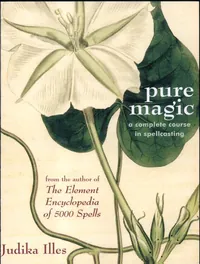
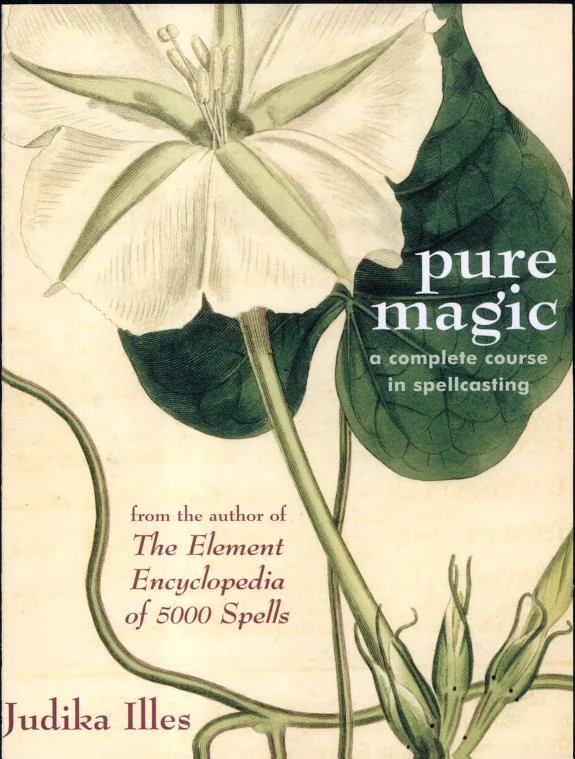
Pure Magic
 77
77

Pure Magic
Judika Illes's *Pure Magic* is an ambitious undertaking, aiming to map the sprawling terrain of esoteric practices with an academic rigor that often eludes popular occult literature. What distinguishes this work is its sheer scope and the author’s evident dedication to cataloging magical traditions. Illes possesses a keen eye for detail, meticulously organizing diverse practices under logical headings. However, this systematic approach, while a strength for reference, can sometimes lead to a drier reading experience. The book excels in presenting factual information about historical practices, such as the detailed examination of various protective charms and their origins, which is invaluable for researchers. Yet, for those seeking a more intuitive or personal connection to magic, the encyclopedic format might feel overwhelming or detached. A particular strength lies in the chapter detailing the use of sigils, which breaks down complex symbolic creation with clarity. The primary limitation is the work’s tendency towards exhaustive listing, which occasionally overshadows deeper exploration of the subjective experience of magic. It serves as an exceptional index and primer, but the alchemical transformation of knowledge into wisdom feels like a reader’s task, not solely the author's. For those needing a comprehensive, fact-based grounding in magical theory and history, *Pure Magic* is a solid, if dense, resource.
📝 Description
77
### What It Is
Pure Magic is a comprehensive exploration of magical practices and beliefs, presented through a lens that seeks to demystify and organize the vast landscape of esoteric traditions. Judika Illes, known for her extensive research in folklore and occult studies, compiles a work that functions as both a reference and a guide. It covers a broad spectrum of magical concepts, from foundational principles to specific spellcraft and ritualistic elements. The book aims to provide readers with a structured understanding of magic as a discipline, emphasizing its historical roots and diverse manifestations across cultures. Its approach is systematic, cataloging various practices and their associated lore.
### Who It's For
This volume is designed for serious students of the occult and esoteric arts, particularly those who appreciate a well-organized, encyclopedic approach. It will appeal to practitioners seeking to deepen their theoretical knowledge beyond mere spell-casting, offering context and historical background. Researchers of folklore, comparative religion, and cultural anthropology will also find value in its meticulous compilation of magical traditions and beliefs. Those who prefer a systematic, academic style over purely experiential accounts of magic are likely to engage most with Illes’s presentation. It is not intended for casual readers seeking quick fixes or superficial charms.
### Historical Context
Published in 2022, Pure Magic emerges in an era where interest in esoteric subjects has seen a significant resurgence, often fueled by online communities and renewed engagement with historical occult texts. Illes’s work arrives at a time when many are looking to understand the underpinnings of various spiritual paths, including witchcraft, ceremonial magic, and folk magic. The book can be seen as a response to the fragmentation of esoteric knowledge, attempting to create a coherent framework. It follows in the tradition of earlier comprehensive works like Eliphas Lévi’s *Dogme et Rituel de la Haute Magie* (1854) and the more modern compilations of authors like Scott Cunningham, though Illes offers a more detailed, research-driven approach. Its publication provides a contemporary anchor for understanding these enduring practices.
### Key Concepts
The book delves into numerous core magical concepts. It examines the nature of energy manipulation, exploring how practitioners conceptualize and direct forces for specific outcomes. Illes discusses the role of intention and will, positing them as fundamental drivers of magical workings. The significance of correspondences—the interconnectedness of elements, planets, colors, and symbols—is a recurring theme, illustrating how practitioners build magical systems. Furthermore, the work investigates various forms of divination, ritual structure, and the ethical considerations inherent in magical practice. The concept of the magician’s relationship with the spiritual or energetic realms is also a focal point, touching upon the idea of communion and influence.
💡 Why Read This Book?
• Gain a structured understanding of magical principles, moving beyond anecdotal accounts to explore concepts like energy manipulation and the efficacy of intention, as detailed in Illes's systematic organization. • Discover historical context for diverse magical practices, learning about specific traditions and their evolution, drawing from the book’s extensive research into folklore and occult history. • Develop a nuanced appreciation for magical symbolism and correspondences, understanding how elements, planets, and sigils are used to construct ritual, as illuminated by the book's detailed explanations.
⭐ Reader Reviews
Honest opinions from readers who have explored this book.
❓ Frequently Asked Questions
What is the primary focus of Judika Illes's Pure Magic?
Pure Magic primarily focuses on a systematic and comprehensive cataloging of magical practices, beliefs, and historical traditions from various esoteric paths, aiming to provide a structured understanding of magic as a discipline.
Is Pure Magic suitable for beginners in magic?
While it offers foundational information, Pure Magic is best suited for serious students or practitioners who appreciate a detailed, research-driven approach. Beginners seeking a more experiential or introductory guide might find its encyclopedic nature dense.
What kind of esoteric traditions does Pure Magic cover?
The book covers a wide array of traditions, including but not limited to folk magic, witchcraft, ceremonial magic, and various historical occult systems, presenting their concepts and practices with detailed explanations.
When was Pure Magic first published?
Pure Magic was first published in 2022, placing it within contemporary discourse on esoteric subjects and spiritual practices.
Does the book provide practical spell instructions?
Yes, while emphasizing the theoretical and historical underpinnings, Pure Magic does include discussions and examples of spellcraft and ritualistic elements, offering practical applications derived from its extensive research.
How does Pure Magic differ from other books on magic?
Its key differentiator is its encyclopedic scope combined with a structured, almost academic presentation. It aims to organize and contextualize magical knowledge comprehensively, rather than focusing on a single tradition or personal narrative.
🔮 Key Themes & Symbolism
Systematic Cataloging of Magic
The work meticulously organizes a vast array of magical concepts, practices, and historical traditions. Illes endeavors to create a structured framework for understanding magic, cataloging elements from folk magic to ceremonial practices. This approach allows readers to see connections and distinctions between various esoteric systems, offering a comprehensive overview that treats magic as a field of study with its own principles and history. The book's organization facilitates research and comparative study of different magical methodologies.
Energy and Intent
A core theme is the exploration of how magic functions, focusing on the manipulation of energy and the power of focused intention. Illes discusses the conceptualization of unseen forces and how practitioners learn to direct them through will and visualization. This theme addresses the fundamental mechanics believed to underpin magical workings, providing theoretical background for why rituals and spells are thought to be effective. It delves into the magician's role as an active agent in shaping energetic currents.
Symbolism and Correspondences
Pure Magic heavily emphasizes the intricate web of symbolism and correspondences that form the basis of many magical systems. It details how elements, planets, colors, herbs, and other objects are assigned specific magical properties and how these connections are utilized in ritual and spellcraft. Understanding these relationships is presented as crucial for constructing effective magical operations, illustrating the deep symbolic language at play in esoteric traditions. The book provides numerous examples of these symbolic links.
Historical Roots of Practice
Illes grounds magical practices in their historical and cultural contexts, tracing the evolution of beliefs and rituals. The book examines how magic has manifested across different eras and societies, highlighting its enduring presence in human culture. This historical perspective provides depth and legitimacy to the study of magic, moving beyond contemporary interpretations to explore its ancient origins and development. It situates modern practices within a long lineage of esoteric thought.
💬 Memorable Quotes
“The structure of magic is the structure of the mind made manifest.”
— This paraphrased concept suggests that magical workings are fundamentally an extension of the practitioner's inner world. It implies that the order and intent brought to a magical act directly shape its outcome, mirroring the internal architecture of belief and focus.
“Every symbol is a doorway to a universe of meaning.”
— This highlights the profound significance of symbols in esoteric traditions. It suggests that symbols are not mere representations but potent keys that unlock deeper layers of understanding, connection, and power within magical practice.
“Energy follows intent, and intent is honed through ritual.”
— This paraphrased concept emphasizes the active role of the practitioner. It posits that magical results are achieved by directing energy, with ritual serving as the disciplined method for focusing and strengthening the practitioner's intention.
“Understanding the roots of a practice lends power to its application.”
— This emphasizes the importance of historical and theoretical knowledge in magic. It suggests that a practitioner who comprehends the origins and evolution of a spell or ritual will wield it with greater efficacy and understanding.
“Magic is the art of conscious participation with the unseen.”
— This interpretation defines magic as an active engagement with subtle forces. It frames the practitioner not as a passive recipient, but as a conscious collaborator with the energetic or spiritual dimensions of existence.
🌙 Esoteric Significance
Tradition
This work fits broadly within the Western Esoteric Tradition, drawing heavily on elements found in Hermeticism, Kabbalah, ceremonial magic, and folk magic. Illes’s approach emphasizes a structured, almost academic compilation, aligning with the encyclopedic tendencies seen in earlier occult scholars who sought to codify magical knowledge. It departs from purely experiential or shamanic traditions by focusing on the classification and historical context of Western magical systems, providing a bridge between ancient lore and contemporary practice.
Symbolism
Key symbols explored include the sigil, presented as a potent tool for imprinting intention onto the energetic field, and the concept of correspondences, illustrating the interconnectedness of the macrocosm and microcosm through planetary, elemental, and symbolic associations. The book delves into how these symbols function not just as representations but as active conduits for magical power and understanding within various ritualistic frameworks.
Modern Relevance
Contemporary practitioners of witchcraft, chaos magic, and modern ceremonial magic often draw upon the type of foundational knowledge compiled in *Pure Magic*. Thinkers and authors exploring the intersection of psychology and spirituality, or those seeking to revive or understand historical magical practices, find value in its detailed research. The work’s systematic approach resonates with a modern desire for clarity and order within the often-complex and varied landscape of esoteric pursuits.
👥 Who Should Read This Book
• Students of comparative religion and folklore seeking an organized compendium of magical beliefs and practices across cultures and historical periods. • Aspiring and practicing occultists who desire a deep, research-based understanding of magical theory, symbolism, and historical context beyond simple spell instruction. • Academics and researchers studying esoteric traditions, who require a comprehensive reference work that meticulously catalogs diverse magical systems and their components.
📜 Historical Context
Published in 2022, *Pure Magic* arrives during a period of significant global interest in esoteric subjects, a resurgence partly fueled by digital connectivity and a widespread questioning of established norms. Illes’s work engages with a long tradition of occult scholarship that gained momentum in the 19th century with figures like Eliphas Lévi and Madame Blavatsky. While the early 20th century saw movements like Theosophy and the Hermetic Order of the Golden Dawn popularizing structured magical systems, the latter half of the century witnessed a more diffuse spread through New Age literature and the rise of modern witchcraft. *Pure Magic* can be seen as a contemporary attempt to synthesize and organize this vast, sometimes disparate, body of knowledge. It navigates a landscape populated by diverse schools of thought, from traditional Hermeticism to modern Wicca, offering a comprehensive reference point that acknowledges this rich intellectual heritage. Its detailed approach contrasts with more experiential or beginner-focused modern occult books, positioning itself as a serious scholarly resource for dedicated practitioners and researchers.
📔 Journal Prompts
The concept of energy manipulation as presented in the book: how might it apply to your daily life?
Reflect on the historical roots of a specific magical practice discussed in the text.
Analyze the role of intention in a ritual described within Pure Magic.
Consider the interconnectedness of symbols and their assigned correspondences.
How does the book's definition of magic as 'conscious participation' challenge or affirm your existing views?
🗂️ Glossary
Sigil
A magical symbol created to represent a specific intention or desire, often formed by abstracting letters from a statement of intent. Sigils are charged with energy and then 'forgotten' to allow the subconscious to work towards manifestation.
Correspondence
The system of perceived relationships between different elements, such as planets, colors, herbs, stones, and deities. These are used in magical workings to imbue rituals and spells with specific energies and intentions.
Energy Manipulation
The practice of sensing, directing, and shaping subtle or unseen energies for specific magical or spiritual purposes. This can involve personal energy, environmental energy, or spiritual forces.
Ritual
A set of actions performed in a prescribed order, often symbolic and ceremonial, designed to achieve a specific magical, spiritual, or religious outcome. Rituals create sacred space and focus intent.
Folk Magic
Traditional magical practices passed down through generations within specific communities or families, often intertwined with local folklore, superstitions, and practical concerns.
Ceremonial Magic
A formalized system of magic often involving elaborate rituals, specific tools, invocations, and a structured hierarchy, aiming to achieve spiritual enlightenment or effect significant change.
Will
In a magical context, the focused mental power and determination of the practitioner. It is considered a primary force in directing energy and achieving desired outcomes in magical workings.