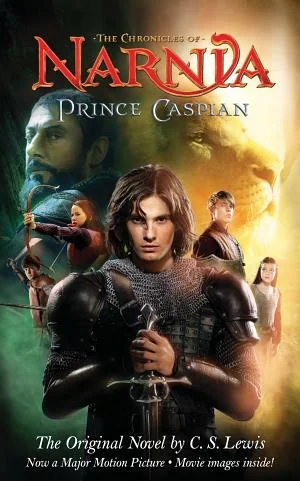
Prince Caspian
 83
83

Prince Caspian
Prince Caspian’s strength lies in its ambitious expansion of the Narnian mythos, pushing the narrative beyond simple good versus evil into a more nuanced exploration of lost faith and historical cycles. Lewis adeptly portrays the melancholy of a Narnia long past its prime, where legends of Aslan have faded into mere fairy tales for many. The introduction of Caspian as a protagonist, torn between his heritage and the oppressive present, provides a compelling focal point. However, the pacing can feel uneven; the initial chapters, while necessary for establishing the bleak Narnian landscape and Caspian’s plight, occasionally drag before the Pevensies’ return injects familiar energy. A particularly resonant passage is the Narnians’ hesitant reawakening of their ancient songs and dances, symbolizing a desperate clinging to identity and hope. The portrayal of the Telmarines, while serving the narrative, sometimes borders on archetypal villainy without deeper exploration. Still, the book offers a profound commentary on reclaiming forgotten truths and the enduring power of belief.
Verdict: A compelling, if occasionally slow, continuation that deepens the Narnian lore with themes of historical amnesia and spiritual revival.
📝 Description
83
### What It Is Prince Caspian, the fourth published and second chronologically in The Chronicles of Narnia, returns readers to the magical land first introduced in *The Lion, the Witch and the Wardrobe*. Published in 2008, this installment revisits Narnia over 1,300 years after its Golden Age, finding it under the oppressive rule of the Telmarines. The narrative follows a young prince, Caspian X, who is fleeing his usurping uncle, Miraz. His escape leads him to the Narnians who remember the old stories and are desperate for the return of Aslan and the Pevensie children.
### Who It's For This work is particularly suited for readers who appreciate allegorical storytelling and explorations of faith, courage, and the nature of leadership. It will appeal to those interested in fantasy literature that engages with deeper philosophical and spiritual themes, beyond simple adventure. Fans of C.S. Lewis's previous Narnian tales, or those seeking narratives that echo mythological archetypes and redemption arcs, will find substantial material here. It's also for individuals curious about the intersection of Christian theology and fantasy world-building.
### Historical Context Originally published in 1951, Prince Caspian emerged during a period when children's literature was increasingly exploring fantastical realms, yet Lewis imbued his work with a distinct theological undercurrent. Coming after the success of *The Lion, the Witch and the Wardrobe*, this book solidified the Narnia series as a significant voice in post-war British literature. It was part of a broader trend of authors like J.R.R. Tolkien (whose *The Fellowship of the Ring* was published in 1954) creating elaborate secondary worlds with complex mythologies and moral frameworks. Lewis’s direct engagement with Christian apologetics, subtly woven into the narrative, set his work apart from more secular fantasy emerging at the time.
### Key Concepts The narrative explores themes of faith in the face of apparent abandonment, the cyclical nature of history and myth, and the struggle between oppression and liberation. It examines the concept of 'true Narnians' and the rediscovery of a lost spiritual heritage. The return of Aslan signifies divine intervention and the triumph of good over tyranny, a recurring motif in Lewis's writings. The conflict between the technologically advanced Telmarines and the magical Narnians highlights a tension between materialism and spiritual reality. The story also touches upon the idea of forgotten truths and the importance of memory and tradition.
💡 Why Read This Book?
• Learn how C.S. Lewis uses the concept of 'lost faith' within the narrative of Prince Caspian to explore spiritual decline and the potential for rediscovery. • Understand the symbolic significance of the Telmarines' technological advancement versus the Narnians' reliance on ancient magic, as presented in the conflict of 1951. • Experience the emotional impact of the Pevensies' return to a Narnia that has aged over 1,300 years, illustrating themes of memory and the persistence of hope.
⭐ Reader Reviews
Honest opinions from readers who have explored this book.
❓ Frequently Asked Questions
What is the chronological order of Prince Caspian within The Chronicles of Narnia?
While Prince Caspian was the fourth book published (1951), it is the second chronologically in the Narnian saga, following *The Lion, the Witch and the Wardrobe*.
Who is the main antagonist in Prince Caspian?
The primary antagonist is Miraz, Prince Caspian's uncle, who has usurped the throne and rules Narnia with an iron fist, suppressing the old ways and the magical creatures.
What historical period influenced C.S. Lewis when writing Prince Caspian?
Written in 1951, Lewis was influenced by post-war anxieties and a general interest in mythological and theological themes prevalent in mid-20th century British literature, particularly the revival of epic fantasy.
How does Aslan's role differ in Prince Caspian compared to earlier books?
In Prince Caspian, Aslan is initially absent, perceived by many as a myth. His eventual reappearance represents a return of faith and a catalyst for Narnian hope, rather than being the central figure from the outset.
What is the significance of the Telmarines in Prince Caspian?
The Telmarines represent a human civilization that conquered Narnia, suppressing its magic and natural inhabitants. Their rule symbolizes the imposition of a materialistic, non-magical order over a spiritual and enchanted world.
What themes does Prince Caspian explore regarding leadership?
The book explores themes of rightful versus usurped leadership, the burden of responsibility on Prince Caspian, and the Pevensies' return to leadership roles in a time of crisis, highlighting courage and faith.
🔮 Key Themes & Symbolism
Rediscovery of Faith
The narrative powerfully depicts a Narnia where belief in Aslan has waned over centuries of Telmarine rule. The resurgence of faith among the Old Narnians mirrors an individual’s journey to reconnect with spiritual truths. This theme is central to Prince Caspian's quest and the Pevensies' return, emphasizing that faith is not static but requires active remembrance and renewal, even when faced with overwhelming doubt and the prevalence of secular power structures.
Cycles of History and Myth
Lewis presents Narnia not as a static paradise but as a land subject to historical change, conquest, and the gradual fading of its foundational myths. The 1,300 years since the Golden Age have seen the suppression of magic and the rise of a human empire. Caspian's struggle to reclaim his throne and restore Narnia reflects a recurring pattern of decline and potential rebirth, echoing cyclical views of history found in various mythologies and philosophies.
Oppression vs. Liberation
The reign of Miraz and the Telmarines serves as a stark representation of tyranny and the suppression of natural order and freedom. The Old Narnians live in hiding, their existence and magical heritage denied or forgotten. Prince Caspian’s rebellion and the eventual return of Aslan symbolize the liberation of a people and a land from oppressive forces, highlighting the courage required to fight for what is right and to restore a lost heritage.
The Nature of True Kingship
The book contrasts Miraz's brutal, self-serving rule with the potential for just kingship embodied by Caspian. True kingship is linked not just to lineage but to righteousness, courage, and a connection to the deeper spiritual realities of Narnia. The Pevensies, as former rulers, also grapple with their roles and responsibilities, underscoring that effective leadership requires wisdom, sacrifice, and a willingness to serve a higher purpose.
💬 Memorable Quotes
“It would seem that Narnia is very old indeed.”
— This observation, made by Lucy upon returning to Narnia, encapsulates the central premise of *Prince Caspian*. It highlights the passage of vast time, the decay of a once-golden age, and the poignant sense of loss that pervades the land.
“The difference between the Old Narnians and the New Narnians was not that one was magic and the other was not. The difference was that the Old Narnians were not afraid of magic.”
— This statement by Reepicheep points to a crucial thematic element: fear and the suppression of the spiritual or magical in the face of the mundane and technologically advanced. It suggests that true freedom lies in embracing, not fearing, the transcendent.
“He’s not a tame lion.”
— Said by Mr. Beaver in *The Lion, the Witch and the Wardrobe* and echoed in spirit by the Narnians' understanding of Aslan, this phrase is foundational. It emphasizes Aslan's divine and untamable nature, distinct from mere animalistic power or human control.
“But the question was what you were to do with the Narnia that was left.”
— This reflects the Pevensies' challenge upon returning to a Narnia vastly changed and oppressed. It speaks to the practical and moral difficulties of restoring a fallen world and reclaiming what has been lost, moving beyond mere nostalgia.
“The dawn began to break.”
— This recurring image signifies hope, the end of darkness (Telmarine rule), and the return of Aslan's influence. It serves as a powerful symbol of renewal and the dawning of a new era after a long period of oppression and despair.
🌙 Esoteric Significance
Tradition
While not explicitly aligned with a single esoteric school, *Prince Caspian* draws heavily from Western Hermeticism and Neoplatonism, particularly in its depiction of a spiritual hierarchy and the concept of a divine Logos (Aslan) whose influence permeates creation. The cyclical view of history and the struggle between material (Telmarine) and spiritual (Narnian) realms also echo Gnostic themes of a fallen world needing redemption. Lewis's Christian framework acts as a lens through which these broader esoteric concepts are filtered and presented.
Symbolism
Aslan, the great Lion, symbolizes the divine principle, Christ, and the ultimate creative and redemptive power, embodying the 'Logos' or divine Word. The Old Narnians, representing creatures of magic and nature, symbolize a more primal, untainted connection to the spiritual world, now suppressed by the materialistic Telmarines. The Telmarines themselves can be seen as representing the fallen human state, divorced from spiritual awareness and relying on brute force and technology.
Modern Relevance
Contemporary readers and thinkers continue to engage with Lewis's work for its allegorical depth. Modern fantasy authors, particularly those exploring moral philosophy and spiritual themes within their worlds, owe a debt to Lewis's foundational work. Philosophers and theologians also examine the Narnia series for its accessible articulation of Christian doctrine and its exploration of themes like faith, providence, and the nature of good and evil.
👥 Who Should Read This Book
• Students of Comparative Mythology: Readers interested in how ancient myths of creation, fall, and redemption are reinterpreted through a Christian lens, particularly within the context of post-war fantasy literature. • Aspiring Fantasy World-Builders: Those developing their own fictional worlds will find valuable lessons in Lewis's creation of Narnia, its history, inhabitants, and the integration of spiritual laws. • Readers Exploring Faith and Doubt: Individuals grappling with questions of faith, the perceived absence of the divine, and the struggle to maintain belief in challenging circumstances will find resonance in the narrative arc of *Prince Caspian*.
📜 Historical Context
Published in 1951, *Prince Caspian* emerged during a post-World War II era in Britain marked by austerity, recovering from conflict, and a burgeoning interest in escapist literature. C.S. Lewis, already established as a scholar of medieval literature and a Christian apologist, was crafting the Narnia series as allegorical narratives for children. This period saw other significant fantasy works like J.R.R. Tolkien's *The Fellowship of the Ring* (1954), indicating a broader cultural movement towards constructing elaborate secondary worlds imbued with myth and moral weight. Lewis’s specific theological focus, however, distinguished his work. While fantastical elements were present in children's literature, Lewis’s explicit Christian symbolism and apologetic intent were more pronounced than in many contemporary works. The book's reception was generally positive, building on the success of its predecessor, though some critics noted its more complex, darker tone compared to *The Lion, the Witch and the Wardrobe*.
📔 Journal Prompts
The rediscovery of faith among the Old Narnians after 1,300 years of Telmarine rule.
Prince Caspian's internal conflict between his Telmarine upbringing and his Narnian heritage.
Reepicheep's unwavering courage and belief in Aslan, despite the bleak circumstances.
The symbolic meaning of the Telmarines' technological advancements suppressing Narnian magic.
The Pevensies' return to Narnia and their role in restoring its lost glory.
🗂️ Glossary
Telmarines
The human conquerors who have ruled Narnia for centuries, suppressing its magic and original inhabitants. They represent a more materialistic and less spiritual worldview.
Old Narnians
The magical creatures and talking beasts who are the original inhabitants of Narnia, driven into hiding by the Telmarines. They represent the suppressed spiritual and natural order.
Usurper
A term for someone who illegally seizes and holds the throne. In *Prince Caspian*, Miraz is the usurper king, having overthrown his brother.
Aslan
The great Lion, creator and true King of Narnia. He represents divine power, goodness, and ultimate authority, embodying a Christ-like figure.
Miraz
Prince Caspian's uncle and the tyrannical king of Narnia. He is the primary antagonist who seeks to maintain his illegitimate rule through force and deception.
The Dawn Treader
While the ship is central to the next book, the concept of 'dawn' breaking is a recurring motif of hope and the return of light and goodness in *Prince Caspian*.
Narnian Law
The underlying principles and order of Narnia, often associated with Aslan's will and the natural magical order, which the Telmarines have largely ignored or suppressed.