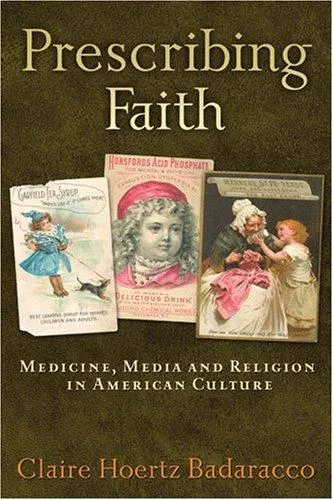
Prescribing Faith
 78
78

Prescribing Faith
Badaracco’s *Prescribing Faith* offers a vital corrective to understanding early modern spiritual and medical landscapes. The book skillfully demonstrates how faith wasn't just a passive belief but an active, prescribed modality for well-being. A particular strength lies in its meticulous unpacking of how early Christian practices, like those discussed in relation to Antony the Great, framed spiritual regimens as therapeutic. However, the dense academic prose, while precise, occasionally obscures the broader implications for a reader less steeped in the specific theological debates of the era. The exploration of how "faith" itself became a category of intervention, rather than just a belief, is particularly compelling. It’s a rigorous study that reframes our view of historical healing practices.
📝 Description
78
### What It Is Claire Hoertz Badaracco's *Prescribing Faith* examines the intricate relationship between religious belief and medical practice, particularly in the early modern period. It investigates how faith was not merely a matter of personal conviction but was actively employed, sometimes therapeutically, within societal structures.
### Who It's For This work is aimed at scholars and advanced students of religious studies, history of medicine, and cultural history. It will also appeal to anyone interested in the historical intersections of belief systems and health, offering a nuanced perspective beyond simplistic categorizations of the spiritual and the material.
### Historical Context Published in 2008, *Prescribing Faith* emerged at a time when scholarship was increasingly scrutinizing the historical construction of both religious and medical authority. It engages with debates surrounding the secularization thesis and the ways in which pre-modern societies understood healing and salvation, often through intertwined frameworks.
### Key Concepts The book explores the concept of "therapeia" in its ancient and Christian senses, examining how spiritual disciplines were seen as having tangible effects on well-being. It also delves into the rhetoric and practices that positioned faith as a potent, almost medicinal, force in the lives of individuals and communities.
💡 Why Read This Book?
• Gain insight into the historical concept of "therapeia," understanding how spiritual discipline was historically viewed as a form of healing, a perspective often lost in contemporary discourse, as detailed in Badaracco's analysis. • Explore the complex interplay between religious belief and physical health in the early modern period, moving beyond modern dichotomies, as illuminated by the book's examination of faith as an active, prescribed element. • Understand the scholarly discourse surrounding faith and medicine as it existed before the 21st century, appreciating Badaracco's engagement with the intellectual currents of her time when first published in 2008.
⭐ Reader Reviews
Honest opinions from readers who have explored this book.
❓ Frequently Asked Questions
What is the central argument of Claire Hoertz Badaracco's Prescribing Faith?
The central argument is that faith in early modern contexts was not solely a personal belief but was actively prescribed and practiced as a form of therapy, influencing both spiritual and physical well-being.
What historical period does Prescribing Faith primarily focus on?
The book primarily focuses on the early modern period, investigating how concepts of faith and healing were understood and applied during that era.
What does the term 'therapeia' mean in the context of Prescribing Faith?
In the book's context, 'therapeia' refers to the ancient and Christian understanding of spiritual discipline and religious practice as a means of healing and well-being.
How does Prescribing Faith relate to modern understandings of medicine and religion?
It challenges modern separations by showing how faith and healing were historically intertwined, offering a historical perspective on the complex relationship between spiritual and physical health.
When was Prescribing Faith first published?
Prescribing Faith was first published in 2008, situating it within contemporary scholarship on the history of religion and medicine.
Who would benefit most from reading Prescribing Faith?
Scholars and students of religious studies, history of medicine, and cultural history, as well as those interested in the historical intersection of belief and health, would find this book beneficial.
🔮 Key Themes & Symbolism
Faith as Active Modality
Badaracco's work moves beyond viewing faith as passive belief, instead presenting it as an active, prescribed modality for well-being. The book scrutinizes historical instances where spiritual practices and adherence to religious doctrine were deliberately employed to address ailments, both physical and psychological. This perspective challenges anachronistic understandings by demonstrating how communities and individuals historically conceptualized faith as a tangible force capable of intervention, akin to a medicinal prescription.
The Ambiguity of 'Therapeia'
The concept of 'therapeia,' encompassing both healing and service, is central to understanding the historical integration of religious and medical concerns. The book explores how early Christian thinkers and practitioners utilized this term to describe spiritual disciplines as therapeutic regimens. This approach highlights a historical framework where the sacred and the somatic were not distinct but intrinsically linked in the pursuit of wholeness and salvation.
Rhetoric of Spiritual Health
Prescribing Faith analyzes the rhetorical strategies employed to legitimize faith as a therapeutic agent. It examines how sermons, theological treatises, and personal accounts constructed narratives that emphasized the efficacy of spiritual devotion for health outcomes. This theme underscores the power of discourse in shaping perceptions of well-being and the role of religious institutions in providing what we might now consider health services.
Intersections of Religion and Medicine
The book fundamentally interrogates the historical boundaries between religious and medical spheres. By tracing the ways faith was 'prescribed,' it reveals a past where these domains were often fused or in constant dialogue, rather than being separate entities. This exploration offers a crucial lens for understanding the evolution of both religious practice and medical science, and the enduring human quest for healing.
💬 Memorable Quotes
“Faith was not simply believed; it was enacted and prescribed.”
— This paraphrased concept highlights the book's core argument: faith historically functioned as an active agent, intentionally applied and recommended, rather than a passive state of personal conviction.
“The ancient concept of 'therapeia' bridged spiritual discipline and physical healing.”
— This interpretation points to a key conceptual tool in Badaracco's analysis, illustrating how ancient and early Christian thought saw spiritual practices as directly contributing to physical well-being.
“Early Christian literature often framed spiritual regimens as therapeutic.”
— This captures the essence of the book's exploration into historical texts, emphasizing how religious practices were explicitly discussed and understood in terms of their healing efficacy.
“The separation of religion and medicine is a modern construct.”
— This paraphrased idea underscores the historical perspective offered by the book, suggesting that the distinct categories we use today did not apply uniformly in earlier periods.
“Understanding faith as a form of intervention requires examining its social and institutional roles.”
— This interpretation reflects the book's focus on the practical and social dimensions of faith, moving beyond purely individualistic or theological considerations to its application within historical communities.
🌙 Esoteric Significance
Tradition
While not strictly belonging to a singular esoteric lineage like Hermeticism or Kabbalah, *Prescribing Faith* engages with themes resonant within Western Esotericism and early Christian mysticism. It explores the concept of "therapeia," a practice deeply embedded in early Christian monasticism and ascetic traditions, which sought spiritual perfection through disciplined living, often with perceived physical benefits. This tradition shares with esotericism a focus on inner transformation and the application of specific practices for achieving altered states of consciousness or spiritual efficacy.
Symbolism
The book implicitly engages with the symbolism of the body as a microcosm reflecting the spiritual state, a common motif in many esoteric traditions. It also touches upon the symbolic power of scripture and ritual, not merely as texts or actions, but as potent forces capable of enacting healing. The concept of "faith" itself becomes a symbolic locus, representing trust in divine providence and the efficacy of spiritual intervention, a powerful symbol within both religious and esoteric thought.
Modern Relevance
Contemporary interest in mind-body medicine, psychosomatic wellness, and the spiritual dimensions of health can find historical grounding in Badaracco's work. Thinkers and practitioners exploring the therapeutic potential of meditation, prayer, and contemplative practices often draw upon historical precedents for these approaches. The book’s examination of how faith was historically 'prescribed' offers a valuable counterpoint to purely biomedical models, informing current discussions on holistic health and the integration of spiritual care in modern therapeutic settings.
👥 Who Should Read This Book
• Academic researchers in the history of religion and medicine seeking to understand the pre-modern integration of spiritual and somatic well-being. • Students of early Christianity and monastic traditions interested in the practical applications and perceived efficacy of spiritual disciplines. • General readers curious about the historical construction of health, illness, and the role of belief systems beyond contemporary secular frameworks.
📜 Historical Context
When Claire Hoertz Badaracco's *Prescribing Faith* was published in 2008, the study of religion and medicine was gaining significant momentum. Scholarship was increasingly challenging teleological narratives of secularization, revealing the persistent influence of religious frameworks on various aspects of life, including health. The book emerged within intellectual currents that re-examined early modern understandings of the body, soul, and cosmos, moving away from anachronistic modern dichotomies. Badaracco engages with a rich historiography, building upon and complicating earlier works that explored devotional literature and healing cults. While not directly engaging with a specific contemporary critic in the text, the work implicitly converses with scholars like David E. Stannard or Laurence D. Cohen, who were also investigating the historical construction of illness and well-being. The period saw intense debate about the nature of religious experience and its tangible effects, making Badaracco's focus on faith as an active, prescribed element particularly relevant.
📔 Journal Prompts
Reflect on the historical concept of 'therapeia' as presented in Badaracco's work.
Consider how faith was actively 'prescribed' in the early modern period.
Analyze the rhetorical strategies used to present spiritual regimens as therapeutic.
Explore the historical connection between spiritual disciplines and physical health.
Examine the implications of viewing faith as an intervention, not just a belief.
🗂️ Glossary
Therapeia
An ancient Greek term encompassing healing, service, and religious devotion. In the context of the book, it refers to spiritual disciplines and practices understood as having therapeutic effects on well-being.
Spiritual Regimen
A structured set of practices, such as prayer, fasting, or meditation, undertaken for spiritual development or well-being, often viewed historically as having tangible health benefits.
Prescribed Faith
The central concept of the book, referring to instances where faith and religious practices were actively recommended, administered, or expected as a form of therapy or intervention for health.
Early Modern Period
The historical era generally spanning from the late 15th to the late 18th century, characterized by significant changes in religion, science, politics, and exploration.
Somatic
Relating to the body, especially as distinct from the mind or spirit.
Monasticism
A religious way of life in which one renounces worldly pursuits and devotes oneself to spiritual work, typically living in a community of monks or nuns.
Asceticism
Severe self-discipline and avoidance of indulgence, typically for religious reasons, often involving practices aimed at spiritual purification and control over the body.