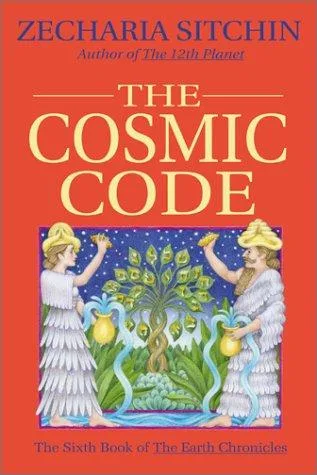
Poteri Łannai Ła kniga E nki
 84
84

Poteri Łannai Ła kniga E nki
Zecharia Sitchin’s Poteri Łannai Ła kniga E nki continues his lifelong project of reinterpreting Sumerian lore through the lens of extraterrestrial contact. The strength of this 2002 publication lies in Sitchin’s meticulous, albeit unconventional, collation of ancient Mesopotamian texts and artifacts. He presents a coherent, albeit speculative, narrative of the Anunnaki’s influence on human development, particularly in the chapter detailing their supposed genetic manipulation of early hominids. However, a significant limitation is the persistent reliance on a highly selective interpretation of evidence, often ignoring or downplaying contradictory scholarly consensus. The book’s exploration of the Sumerian King List as a literal record of extraterrestrial rulers is a prime example of this approach. While engaging for proponents of ancient astronaut theory, it offers little to those seeking conventional historical or scientific validation. Sitchin’s work remains a curiosity, a singular vision rather than established fact.
📝 Description
84
### What It Is Poteri Łannai Ła kniga E nki, by Zecharia Sitchin, first published in 2002, presents a unique interpretation of ancient texts, primarily focusing on the Sumerian Anunnaki. Sitchin posits that these beings, described in cuneiform tablets, were extraterrestrial visitors who influenced early human civilization. The book examines their purported activities, their impact on human development, and their connection to various mythological narratives across cultures. It’s an exploration into the origins of humanity as seen through Sitchin’s lens of ancient astronaut theory.
### Who It's For This volume is intended for readers interested in alternative historical narratives and ancient astronaut theories. It will appeal to those who question conventional archaeological and anthropological explanations for human origins and ancient achievements. Individuals fascinated by mythology, ancient civilizations like Sumer, and the possibility of extraterrestrial intervention in human history will find Sitchin’s work particularly engaging. It is for the curious mind seeking to connect disparate ancient accounts into a singular, grand narrative.
### Historical Context Published in 2002, Poteri Łannai Ła kniga E nki emerged during a period of renewed public interest in ancient astronaut theories, fueled by popular media and earlier works by authors like Erich von Däniken. Sitchin’s own prolific writing career began decades prior, establishing him as a prominent voice in this field. His work often drew comparisons to, and sometimes criticism from, mainstream archaeology and Assyriology, which generally viewed his interpretations as pseudoscientific. The intellectual climate at the turn of the millennium allowed for such speculative histories to find a receptive audience, even as academic circles largely dismissed them.
### Key Concepts The central tenet of the book revolves around the Anunnaki, depicted as advanced beings from the planet Nibiru. Sitchin elaborates on their supposed role in genetic engineering, creating Homo sapiens to serve as laborers for their mining operations on Earth. He connects their activities to the biblical stories of the Nephilim and the creation of humankind. The concept of Nibiru, a hypothetical planet with a long orbit, is crucial to his cosmology, explaining their periodic visits and interventions. The book also delves into the Sumerian King List and other Mesopotamian artifacts as evidence.
💡 Why Read This Book?
• Learn about Zecharia Sitchin's specific theory of the Anunnaki, the extraterrestrial beings he believed influenced early human civilization, detailed in his unique interpretation of Sumerian texts. • Understand the purported role of Nibiru, the hypothetical planet Sitchin proposed as the Anunnaki's home, and its significance in his cosmology of periodic Earth visits. • Explore Sitchin's connection between Mesopotamian myths, such as the Sumerian King List, and his ancient astronaut hypothesis, offering a distinct perspective on human origins.
⭐ Reader Reviews
Honest opinions from readers who have explored this book.
❓ Frequently Asked Questions
What is the core argument of Poteri Łannai Ła kniga E nki regarding human origins?
The book's central argument, first published in 2002, is that humanity was created through genetic engineering by extraterrestrial beings known as the Anunnaki, who originated from a planet called Nibiru.
Which ancient civilization's texts does Zecharia Sitchin primarily interpret in this book?
Zecharia Sitchin primarily interprets ancient Sumerian cuneiform texts, including the Sumerian King List and creation myths, to support his theories about the Anunnaki.
What is Nibiru according to Sitchin's theories presented in Poteri Łannai Ła kniga E nki?
Nibiru is presented as a hypothetical planet with a long orbital period that passes through our solar system periodically, serving as the home world of the Anunnaki.
How does Sitchin connect the Anunnaki to biblical narratives?
Sitchin suggests that the Anunnaki are the 'gods' mentioned in ancient texts and connects them to figures like the Nephilim in the Bible, interpreting biblical accounts as records of their activities.
What is the general academic reception of Zecharia Sitchin's work?
Mainstream archaeology, history, and linguistics generally regard Sitchin's theories as pseudoscience, finding his interpretations of ancient texts to be speculative and lacking empirical evidence.
When was Poteri Łannai Ła kniga E nki first published?
Poteri Łannai Ła kniga E nki was first published in 2002, as part of Zecharia Sitchin's extensive body of work on ancient astronaut theories.
🔮 Key Themes & Symbolism
The Anunnaki Presence
The core theme is the assertion that the Anunnaki, an advanced extraterrestrial race from Nibiru, visited Earth in antiquity. Sitchin posits they were responsible for key developments in human civilization, including agriculture, metallurgy, and the establishment of cities. He draws extensively on Sumerian cuneiform tablets, interpreting them not as mythology but as historical records of these beings' interactions with early humans, their societal structures, and their motivations, often related to resource extraction and genetic manipulation.
Nibiru and the Celestial Mechanics
Central to Sitchin's narrative is the planet Nibiru, described as a large celestial body with a highly elliptical orbit that brings it into our solar system every approximately 3,600 years. This periodic passage, according to Sitchin, allowed the Anunnaki to travel to Earth. The book details his interpretation of astronomical references in ancient texts that he believes support Nibiru's existence and its role in the Anunnaki's recurring visits and interventions throughout human history.
Humanity's Extraterrestrial Genesis
Sitchin proposes a radical origin story for Homo sapiens: creation through genetic engineering by the Anunnaki. The book explores the idea that the Anunnaki genetically modified existing hominids to create a subservient workforce, thus fathering humanity. This concept is linked to biblical narratives of the Nephilim and the 'sons of God' taking human wives, which Sitchin interprets as literal accounts of interbreeding between Anunnaki and early humans.
Ancient Civilizations as Alien Outposts
The book reframes ancient Mesopotamian civilizations, particularly Sumer, as established settlements or operational bases for the Anunnaki. Sitchin interprets artifacts, city-states, and the complex societal structures described in ancient records as evidence of alien administration and technological influence. He views figures like Gilgamesh and the ancient kings listed on the Sumerian King List as rulers or intermediaries in an Anunnaki-controlled system.
💬 Memorable Quotes
“The Anunnaki came to Earth, seeking gold.”
— This encapsulates Sitchin's primary hypothesis that the Anunnaki's motivation for visiting Earth was driven by the need for precious metals, specifically gold, to maintain their planet Nibiru's atmosphere.
“When the gods created man, they took seed from a primitive man and mixed it with their own.”
— This paraphrased concept reflects Sitchin's theory of human creation via genetic engineering, suggesting a deliberate hybridization by the Anunnaki to produce Homo sapiens for labor.
“Nibiru's orbit explains their periodic visits.”
— This highlights the crucial role of the hypothetical planet Nibiru in Sitchin's cosmology, serving as the Anunnaki's home world and the reason for their cyclical presence in Earth's solar system.
“The Sumerian King List is not mythology, but history.”
— This statement reflects Sitchin's conviction that ancient Mesopotamian records, like the Sumerian King List, should be read literally as accounts of Anunnaki rulers and their dominion over early Earth.
“They were the gods of old, the Anunnaki.”
— This interpretation frames Sitchin's view that ancient deities described in various mythologies were, in fact, the Anunnaki, advanced extraterrestrial beings who were perceived as divine by early humans.
🌙 Esoteric Significance
Tradition
Sitchin's work, while not directly adhering to a single esoteric tradition like Hermeticism or Kabbalah, draws heavily upon Gnostic themes of creation by 'lesser gods' or demiurges and echoes Theosophical ideas of ancient alien progenitors. It presents a materialist interpretation of what might otherwise be considered spiritual or mystical phenomena. His lineage is primarily within the modern ancient astronaut subculture, which itself draws inspiration from various mystical and occult traditions but reinterprets them through a speculative scientific or technological lens.
Symbolism
Key symbols in Sitchin's work include the Anunnaki themselves, representing advanced, almost divine, extraterrestrial beings. The winged disk, a common motif in Mesopotamian art, is interpreted not as a religious symbol but as a representation of Anunnaki spacecraft. The planet Nibiru, though unseen, functions as a potent symbol of a hidden cosmic order and the source of ancient power and intervention in human affairs.
Modern Relevance
Sitchin's theories continue to influence contemporary ancient astronaut theorists, fringe historians, and proponents of alternative origins for humanity. His work is frequently cited in online communities, documentaries, and books exploring extraterrestrial influence on ancient civilizations. While academic circles remain skeptical, Sitchin's interpretations have seeped into popular consciousness, contributing to a broader cultural fascination with UFOs and the possibility of alien contact in our past.
👥 Who Should Read This Book
• Enthusiasts of ancient astronaut theories seeking to understand Zecharia Sitchin's specific interpretations of Sumerian texts and the Anunnaki. • Students of comparative mythology interested in alternative explanations for creation myths and the origins of deities across ancient cultures. • Researchers of fringe history and alternative archaeology looking for foundational texts that propose non-conventional narratives for human development.
📜 Historical Context
Published in 2002, Poteri Łannai Ła kniga E nki arrived within a burgeoning wave of interest in ancient astronaut theories, a field Sitchin had actively cultivated since the late 1970s. His work stood in stark contrast to the prevailing academic consensus in fields like Assyriology and archaeology, which largely dismissed his interpretations of Sumerian cuneiform as pseudoscientific. While contemporaries like Erich von Däniken also explored similar themes, Sitchin distinguished himself with his detailed, albeit selective, engagement with Mesopotamian texts and artifacts. The intellectual climate of the early 2000s, marked by a growing openness to alternative narratives in popular culture, provided a receptive audience for Sitchin's ambitious synthesis. However, his theories were never seriously engaged with by mainstream scholars, who pointed to his disregard for linguistic and archaeological evidence and his tendency to cherry-pick data to fit his pre-existing framework.
📔 Journal Prompts
The Anunnaki's purported motivations for visiting Earth.
How the concept of Nibiru functions within Sitchin's cosmology.
The Anunnaki's role in humanity's creation according to Sitchin.
Sitchin's interpretation of the Sumerian King List as evidence.
Connecting the 'gods' of ancient texts to the Anunnaki.
🗂️ Glossary
Anunnaki
In Zecharia Sitchin's theories, a race of extraterrestrial beings from the planet Nibiru who allegedly visited Earth in antiquity and influenced human civilization, including genetic engineering.
Nibiru
A hypothetical planet proposed by Sitchin, believed to have a long, elliptical orbit through our solar system, serving as the home world of the Anunnaki.
Sumerian King List
An ancient Mesopotamian text listing kings of Sumer, their supposed reigns, and locations. Sitchin interprets this list as a record of Anunnaki rulers.
Nephilim
Biblical figures mentioned in Genesis, often translated as 'giants' or 'fallen ones.' Sitchin interprets them as the offspring of Anunnaki and human women.
Cuneiform
A system of writing developed in ancient Mesopotamia, primarily used by Sumerians and Akkadians. Sitchin relies heavily on interpretations of cuneiform tablets.
Genetic Engineering
The direct manipulation of an organism's genes. Sitchin claims the Anunnaki used this technology to create Homo sapiens.
Spacecraft
A vehicle designed for travel in outer space. Sitchin interprets ancient symbols, like the winged disk, as depictions of Anunnaki spacecraft.