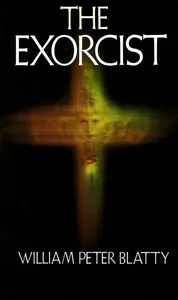
Novels (Exorcist / Legion)
 82
82

Novels (Exorcist / Legion)
William Peter Blatty's *Novels (Exorcist / Legion)* presents a formidable pairing for anyone interested in the darker currents of human experience. The sheer force of Blatty's narrative construction in *The Exorcist* remains undiminished, particularly his unflinching depiction of the battle for a young girl's soul. The novel’s strength lies in its meticulous grounding of the supernatural within a recognizable, albeit terrified, human context. *Legion*, while intellectually engaging with its exploration of dissociative identity and spiritual manipulation, doesn't quite achieve the same visceral impact as its predecessor. Its strength is its intellectual rigor, but this sometimes comes at the expense of emotional resonance. The passage detailing Father Dyer's internal struggle with his faith after the events of *The Exorcist* is a particularly poignant example of Blatty's ability to render theological conflict with raw honesty. Ultimately, these novels stand as potent explorations of spiritual warfare, with *The Exorcist* being the more universally impactful work. Blatty’s work here is less about simple horror and more about the profound theological questions at the heart of belief.
📝 Description
82
### An Unsettling Legacy William Peter Blatty's *Novels (Exorcist / Legion)* compiles two of his most significant contributions to the literature of the uncanny. Published together, these works offer a deep exploration of faith, doubt, and the nature of evil. The narratives presented are not mere ghost stories but rather complex theological and psychological dramas that have left an indelible mark on popular culture and discussions of the supernatural.
### For the Seeker of Deeper Questions This collection is for readers who appreciate narrative that challenges conventional understanding. It appeals to those interested in the intersection of religious belief, psychological distress, and the possibility of malevolent spiritual influence. Individuals drawn to theological debate, demonology, and the philosophical implications of faith will find substantial material for contemplation within these pages.
### The Context of a Phenomenon Blatty's *The Exorcist*, first published in 1971, arrived during a period of significant social and cultural upheaval in the United States. Its visceral portrayal of demonic possession tapped into anxieties about morality, faith, and the unknown, becoming a cultural touchstone. The subsequent novel, *Legion* (1983), continued to probe these themes with a different, yet equally unsettling, focus on the psyche and spiritual warfare, building upon the foundation laid by its predecessor.
### Core Concepts Explored The novels engage with fundamental questions regarding the existence of good and evil, the nature of the soul, and the boundaries between the physical and spiritual realms. They examine the concept of faith not as passive acceptance, but as an active, often agonizing, struggle against doubt and despair. The works also touch upon the medical and psychological understanding of perceived supernatural phenomena, juxtaposing clinical explanation with the possibility of genuine spiritual invasion.
💡 Why Read This Book?
• Gain insight into the theological underpinnings of spiritual warfare as depicted in *The Exorcist*, understanding how Blatty grounds demonic possession in specific Catholic doctrines. • Explore the psychological and spiritual interplay of faith and doubt through the character of Father Karras in *The Exorcist*, a dynamic rarely captured with such intensity. • Analyze the complex representation of good and evil in *Legion*, particularly how Blatty uses the concept of the 'demonic' to question the nature of identity and reality in 1983.
⭐ Reader Reviews
Honest opinions from readers who have explored this book.
❓ Frequently Asked Questions
Are 'The Exorcist' and 'Legion' the same story?
No, while both novels by William Peter Blatty deal with demonic possession and spiritual warfare, they are distinct narratives. *The Exorcist* (1971) focuses on the possession of Regan MacNeil, while *Legion* (1983) explores a different case involving a possessed artifact and psychological elements.
Is 'Novels (Exorcist / Legion)' a single novel or two separate books?
This volume collects two complete, separate novels by William Peter Blatty: *The Exorcist* and *Legion*. They are presented together in one publication but are independent stories.
What is the main difference between the film 'The Exorcist' and the book?
While the 1973 film adaptation closely follows the book, the novel *The Exorcist* (1971) provides more extensive theological background and deeper character introspection, particularly for Father Karras.
Does 'Legion' feature the same characters as 'The Exorcist'?
While *Legion* is a sequel to *The Exorcist*, its primary characters are different. Father Karras makes an appearance, but the central focus shifts to Lieutenant Kinderman and a new set of spiritual and psychological conflicts.
What esoteric themes are explored in these novels?
The novels delve into themes of spiritual warfare, the nature of evil, the efficacy of faith against malevolent forces, and the boundary between psychological illness and genuine demonic influence.
When was William Peter Blatty's 'Legion' originally published?
William Peter Blatty's novel *Legion* was originally published in 1983, serving as a sequel to his immensely successful *The Exorcist*.
🔮 Key Themes & Symbolism
The Nature of Evil
These novels confront the concept of evil not as an abstract philosophical idea, but as an active, invasive force. Blatty posits evil as a genuine spiritual entity capable of corrupting human souls and minds. This is explored through the possession of Regan MacNeil in *The Exorcist* and the insidious influence in *Legion*, forcing readers to consider the reality of malevolent spiritual agency beyond psychological explanation.
Faith and Doubt as Warfare
Faith is presented not as passive belief, but as a dynamic, often agonizing struggle. Father Karras's internal conflict in *The Exorcist* exemplifies this, showcasing how faith is tested and forged in the crucible of extreme doubt and despair. The works highlight the immense effort required to maintain spiritual integrity when confronted with overwhelming evidence of the diabolical.
The Intersection of Science and Spirit
Blatty masterfully juxtaposes clinical, scientific explanations for disturbed behavior with the undeniable reality of supernatural intervention. In *Legion*, the investigation into the boy's alleged crimes intersects with the possibility of demonic possession, questioning whether psychiatric diagnoses can fully account for all phenomena. This creates a tension between materialist views and the existence of spiritual realities.
Spiritual Purity and Corruption
The narratives are deeply concerned with the vulnerability of the human spirit to corruption. From the seemingly innocent Regan MacNeil to the complex psyche explored in *Legion*, the books examine how external malevolent forces can exploit internal weaknesses. The struggle to maintain spiritual purity in the face of such onslaught is a central, recurring motif.
💬 Memorable Quotes
“The only thing worse than being possessed is not being possessed.”
— This interpretation of a concept within the novels suggests that true spiritual engagement, even with its attendant dangers, is preferable to spiritual emptiness or indifference, highlighting the value placed on active faith.
“The devil's greatest trick is convincing us he doesn't exist.”
— This paraphrased concept underscores the novels' exploration of how disbelief or rationalization can leave individuals vulnerable to spiritual harm, positing that acknowledging the reality of evil is the first step in resisting it.
“Faith is not knowing that God can do it. Faith is believing God will do it.”
— This sentiment captures the active, often challenging nature of faith presented in the books, emphasizing belief in divine action even amidst suffering or uncertainty, moving beyond mere intellectual assent.
“Evil is a tangible force, a presence that can inhabit and corrupt.”
— This interpretation highlights the novels' portrayal of evil as an external, active entity rather than merely a psychological state or absence of good, a key element in their depiction of spiritual warfare.
“The struggle between good and evil is fought within the human heart.”
— This interpretation speaks to the internal dimension of the spiritual battles depicted, suggesting that external manifestations of evil are intrinsically linked to internal human choices and spiritual fortitude.
🌙 Esoteric Significance
Tradition
Blatty's work, particularly *The Exorcist*, operates within the framework of Catholic demonology, which, while a specific religious tradition, shares common ground with broader esoteric concerns about spiritual warfare and malevolent entities. It engages with the concept of spiritual invasion and the need for divine intervention, themes found in many Gnostic and Neoplatonic traditions that posit struggle against lower spiritual forces. The detailed rituals and theological underpinnings echo a structured, albeit heterodox from a purely occult perspective, approach to confronting spiritual adversaries.
Symbolism
The crucifix, wielded in *The Exorcist*, functions as a powerful symbol of divine authority and purity, acting as a weapon against demonic influence. The 'demon' Pazuzu, drawn from Mesopotamian mythology, represents an ancient, primal evil, linking the narrative to older, pre-Christian concepts of malevolent spirits. The artifact in *Legion*, an ancient statue, serves as a focal point for demonic energy, symbolizing how corrupted objects can become conduits for spiritual corruption.
Modern Relevance
Contemporary discussions on spiritual abuse, the psychology of belief, and the resurgence of interest in demonology and exorcism often reference Blatty's work. Thinkers and practitioners exploring the intersection of psychology and spirituality, or those investigating the tangible effects of perceived malevolent spiritual forces, find his narratives compelling case studies. The exploration of identity in *Legion* also resonates with modern discourse on dissociative disorders and the subjective experience of self.
👥 Who Should Read This Book
• Students of comparative religion and demonology seeking detailed fictional explorations of Catholic exorcism rites and theological arguments surrounding spiritual warfare. • Readers interested in the psychological impact of extreme belief and trauma, particularly those who appreciate narratives that blur the lines between psychological distress and supernatural phenomena. • Fans of theological thrillers and philosophical horror who enjoy narratives that pose fundamental questions about good, evil, faith, and the nature of reality.
📜 Historical Context
William Peter Blatty's *The Exorcist*, published in 1971, emerged during a period of profound societal and religious questioning in the United States, following the turbulent 1960s. The novel tapped into anxieties surrounding the perceived decline of traditional values and the rise of secularism, offering a visceral confrontation with the supernatural that resonated widely. Its success was immense, sparking widespread debate and becoming a cultural phenomenon. Critically, it arrived in the wake of the Second Vatican Council (1962-1965), a time when the Catholic Church itself was undergoing significant re-evaluation, making Blatty's direct engagement with demonology particularly provocative. While Blatty’s work focused on the Catholic understanding of possession, it coexisted with a broader interest in the occult and parapsychology, exemplified by figures like J. Allen Hynek investigating UFOs and paranormal claims. The film adaptation, released in 1973, was met with controversy and censorship attempts, further cementing the novel's impact. *Legion* (1983) appeared in a different cultural climate, one grappling with the AIDS epidemic and a resurgence of conservative religious sentiment, yet it continued Blatty's exploration of faith and the demonic with a more psychological and philosophical bent.
📔 Journal Prompts
Father Karras's crisis of faith following the exorcism in *The Exorcist*.
The nature of the 'demonic' as depicted through Pazuzu in *The Exorcist*.
Lieutenant Kinderman's rational approach versus the supernatural events in *Legion*.
The symbolic weight of the ancient statue in *Legion*.
The concept of spiritual warfare as presented across both novels.
🗂️ Glossary
Exorcism
A religious or paranormal ritual intended to compel a spirit, demon, or deity to depart from a person or place, often involving prayers, blessings, and rituals specific to a particular faith tradition.
Demonic Possession
The belief that an evil spirit or demon has taken control of a person's body and mind, influencing their behavior, speech, and actions, often against their will.
Pazuzu
An ancient Mesopotamian demon, king of the demons of the wind, often depicted as a monstrous figure with a grotesque face. In *The Exorcist*, it is the name of the demon possessing Regan MacNeil.
Spiritual Warfare
The concept of conflict between spiritual forces, often understood as good versus evil, involving prayers, faith, and divine intervention as means of defense and offense against malevolent entities.
Dissociative Identity Disorder (DID)
A mental disorder previously known as multiple personality disorder, characterized by the presence of two or more distinct personality states or an experience of possession.
Theology
The study of the nature of God and religious belief. The novels engage with Catholic theology regarding sin, salvation, and the existence of supernatural beings.
Faith
Complete trust or confidence in someone or something. In the context of the novels, it is often depicted as a struggle against doubt, particularly in the face of inexplicable or horrific events.