Nostradamus
 71
71

Nostradamus
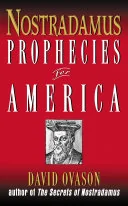
Ovason's analysis of Nostradamus is commendably direct, sidestepping the usual mystical haze to engage with the seer's verses as if they were coded historical documents. His assertion that a specific quatrain predicts the 9/11 attacks is bold, though the interpretive leap required might strain credulity for skeptics. The book's strength lies in its meticulous cross-referencing of quatrains to historical moments, providing a compelling case for a pattern, even if the exact mechanism of prediction remains elusive. A limitation is the inherent difficulty in definitively proving such correlations, as Nostradamus's language is notoriously ambiguous. The section detailing the astrological alignments potentially linked to the 2001 New York event is particularly noteworthy for its detailed research. Ovason presents a potent argument for Nostradamus's enduring relevance as a prophetic voice.
📝 Description
71
### What It Is David Ovason's "Nostradamus" offers a rigorous re-examination of the 16th-century prophet's quatrains, focusing on their predictive power concerning specific historical events. This edition, published in 2016, brings renewed attention to Michel de Nostredame's cryptic verses, particularly through the lens of modern global tragedies.
### Who It's For This work is for serious students of prophecy and historical analysis who seek to understand the potential predictive capabilities of ancient texts. It appeals to those interested in esoteric history, the impact of foreknowledge on global events, and the specific interpretations of Nostradamus's often-debated prophecies.
### Historical Context Michel de Nostredame produced his prophecies in the mid-16th century, a period marked by significant religious and political upheaval across Europe. His 'Prophecies' were first published in 1555, gaining immediate attention and controversy. Ovason's work situates these prophecies within a broader historical framework, investigating their resonance with events far beyond their original publication date.
### Key Concepts The book centers on the interpretation of Nostradamus's quatrains, particularly those Ovason believes foretell specific future occurrences. It explores the methods by which these predictions might be deciphered, the cyclical nature of history implied by such prophecies, and the psychological impact of believing in preordained events.
💡 Why Read This Book?
• Gain a concrete understanding of how David Ovason interprets specific quatrains, such as those believed to predict the 2001 New York City attacks, moving beyond vague pronouncements. • Explore the historical context of Michel de Nostredame's writings, first published in 1555, and how they have been applied to later global events. • Discover Ovason's method for deciphering prophetic verses, offering a structured approach to understanding predictive literature.
⭐ Reader Reviews
Honest opinions from readers who have explored this book.
❓ Frequently Asked Questions
What is the primary focus of David Ovason's book on Nostradamus?
The book primarily focuses on David Ovason's reinterpretation of Michel Nostradamus's quatrains, specifically highlighting verses he believes predict significant modern events, such as the 2001 terrorist attacks in New York City.
When was Nostradamus's work first published?
Michel de Nostredame's 'Prophecies' were first published in 1555, establishing his reputation as a seer centuries before the events Ovason analyzes.
Does the book claim Nostradamus predicted 9/11?
Yes, the book presents an interpretation that a specific quatrain from Nostradamus's writings accurately predicts the horrific terrorist attack on New York City in 2001.
Who is David Ovason?
David Ovason is presented as a foremost expert on the prophecies of Michel Nostradamus, dedicated to re-examining and interpreting the seer's writings.
What is a 'quatrain' in the context of Nostradamus's prophecies?
A quatrain is a stanza of four lines. Nostradamus famously wrote his prophecies in rhyming quatrains, which have been subject to extensive interpretation over centuries.
What historical period does Ovason connect Nostradamus's prophecies to?
While Nostradamus wrote in the 16th century, Ovason connects his prophecies to specific modern events, including the tragedy of September 11, 2001, in New York City.
🔮 Key Themes & Symbolism
Prophetic Interpretation Methods
Ovason details his approach to deciphering Nostradamus's cryptic verses, focusing on specific quatrains that he argues predict future events with striking accuracy. This involves examining word choices, astrological references, and historical parallels. The work grapples with how to apply 16th-century language to events that occurred centuries later, challenging readers to consider patterns in history and the nature of foresight. The book highlights the 'how' of prophetic interpretation, moving beyond mere pronouncements to analytical frameworks.
The 2001 New York Tragedy
A significant portion of the book is dedicated to identifying and interpreting a quatrain Ovason believes specifically foretold the horrific terrorist attack on New York City in 2001. This focus aims to demonstrate the tangible predictive power of Nostradamus's writings in the modern era, linking the seer's words to a specific, globally impactful event that claimed more lives than America's War of Independence.
Historical Cycles and Foreknowledge
The work implicitly explores the concept of historical cycles, suggesting that events may repeat or be foreshadowed across centuries. Ovason's analysis prompts reflection on whether human history follows discernible patterns and the implications of such patterns for our understanding of destiny and free will. The book questions the nature of foreknowledge and its potential role in shaping or understanding collective human experience.
The Seer's Legacy
This book contributes to the ongoing discourse surrounding Michel de Nostredame, examining his enduring legacy as a prophet. Ovason's detailed research aims to solidify Nostradamus's place not just as a historical curiosity but as a figure whose pronouncements continue to hold relevance and predictive power, particularly when analyzed through a contemporary lens and rigorous scholarship.
💬 Memorable Quotes
“A quatrain that specifically predicts the horrific terrorist attack on New York City”
— This statement encapsulates the book's central thesis: that Nostradamus's verses are not merely symbolic but contain precise, verifiable predictions of future events, exemplified by the 9/11 attacks.
“More people in one day than died in America's three-year War of Independence”
— This comparison serves to emphasize the scale and devastating impact of the 2001 New York tragedy, highlighting how Nostradamus's predicted event surpassed the casualty count of a major historical conflict.
“Reexamined the writings of the 16th Century French seer”
— This phrase indicates a critical, analytical approach to Nostradamus's work, suggesting Ovason is not simply accepting existing interpretations but is undertaking a fresh investigation of the source material.
“Startling discoveries in reinterpretation”
— This suggests that Ovason's analysis has yielded unexpected and significant findings that challenge previous understandings of Nostradamus's prophecies, particularly concerning their predictive accuracy.
“Foremost expert on the prophecies of Michel Nostradamus”
— This establishes David Ovason's authority and credibility within the field, positioning his interpretations as informed and authoritative.
🌙 Esoteric Significance
Tradition
Nostradamus's work falls within the Western esoteric tradition, blending astrological prognostication with prophetic vision. While not strictly Kabbalistic or Gnostic, his methods draw on Renaissance Hermeticism and an understanding of celestial influences common in occult circles. Ovason's analysis attempts to align these historical esoteric practices with verifiable predictive outcomes, bridging the gap between ancient symbolic language and empirical historical events.
Symbolism
Key symbols in Nostradamus's work often include celestial bodies (Sun, Moon, stars) representing cosmic timing and influence, animals (lions, eagles) symbolizing nations or rulers, and geographical locations often veiled in anagrams or allegories. Ovason likely explores how these symbols, when interpreted through specific astrological configurations or historical parallels, unlock predictive meanings for events like the 2001 New York tragedy.
Modern Relevance
Contemporary interest in Nostradamus, fueled by figures like Ovason, reflects a persistent human desire to anticipate future events and find meaning in chaos. His work is relevant to modern conspiracy theories, apocalyptic studies, and even fringe political discourse. Esoteric practitioners and historical researchers continue to debate and reinterpret his prophecies, seeking patterns and guidance in a world often perceived as unpredictable.
👥 Who Should Read This Book
• Students of esoteric history and prophecy seeking detailed analysis of Nostradamus's predictive claims. • Researchers interested in the intersection of astrology, history, and foreknowledge, particularly concerning major global events. • Skeptics and believers alike who wish to engage with a rigorous, though controversial, interpretation of a seminal prophetic text.
📜 Historical Context
Michel de Nostredame published his 'Prophecies' in Lyon in 1555, a period rife with religious persecution and political instability across Europe. His work emerged amidst a burgeoning interest in astrology and divination, yet also faced suspicion and condemnation. Contemporaries like Agrippa von Nettesheim explored occult sciences, though Nostradamus's cryptic quatrains, often interpreted through astrological charts, set him apart. While some scholars dismissed his writings as vague or coincidental, figures like Catherine de' Medici sought his counsel, illustrating the potent mix of fear and fascination his prophecies generated. The book's 2016 publication places Ovason's analysis in a modern context, engaging with historical scholarship while addressing contemporary global anxieties, contrasting with the direct, often fearful, reception in the 16th century.
📔 Journal Prompts
The specific quatrain Ovason identifies as predicting the 2001 New York tragedy.
Michel de Nostredame's methods of prophecy as described by Ovason.
The comparison of the 2001 New York attack's death toll to that of the War of Independence.
The concept of 'foremost expert' as applied to interpreters of ancient prophecies.
David Ovason's reexamination of 16th-century writings in a modern context.
🗂️ Glossary
Quatrain
A stanza consisting of four lines of verse, notably the form used by Nostradamus for his prophecies.
Michel de Nostredame
The 16th-century French astrologer and physician who published 'Les Propheties' (The Prophecies) under the Latinized name Nostradamus.
Prophecy
A prediction of future events, often attributed to divine inspiration or supernatural insight.
Esoteric
Intended for or likely to be understood by only a small number of people with a specialized knowledge or interest.
Divination
The practice of seeking knowledge of the future or the unknown by supernatural means.
Astrology
The study of the movements and relative positions of celestial bodies interpreted as having an influence on human affairs and the natural world.
War of Independence
Refers to the American Revolutionary War (1775–1783), a conflict mentioned in the blurb for scale comparison.