No Rules
 71
71

No Rules
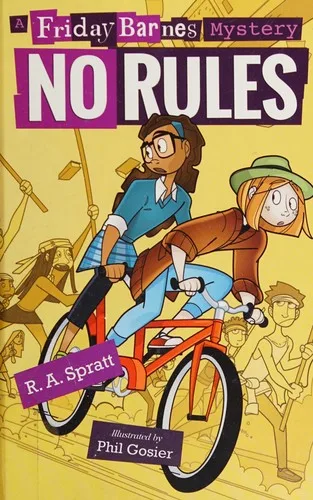
R. A. Spratt’s No Rules, released in 2016, operates as a deliberately unanchored text, offering a challenging counterpoint to the often prescriptive nature of esoteric guides. The author’s strength lies in their refusal to codify, pushing the reader to confront their own assumptions. A particular passage, exploring the illusion of control in ritual practice, highlights this effectively. However, the book’s deliberate lack of structure, while intentional, can at times feel more frustrating than liberating, making sustained engagement a challenge for those accustomed to clearer signposting. It’s a text that demands active participation, offering little in the way of passive consumption. Ultimately, No Rules succeeds as a philosophical exercise in deconstruction, though its practical application may require significant reader initiative.
📝 Description
71
### What It Is No Rules, authored by R. A. Spratt and first published in 2016, presents itself as a work within the esoteric category. It eschews a traditional blurb, inviting direct engagement with its content. The book offers a unique perspective that challenges conventional understandings, aiming to provoke thought rather than provide easy answers.
### Who It's For This text is suited for readers who approach mystical literature with a critical, analytical mindset. It appeals to those interested in exploring the boundaries of established esoteric thought and who are not deterred by unconventional approaches. Individuals seeking to question established paradigms and engage with challenging ideas will find material here.
### Historical Context Published in 2016, No Rules emerged during a period of increased accessibility to esoteric texts through digital platforms, alongside a continued academic interest in the history of Western esotericism. This era saw a diversification of spiritual seeking, with many individuals exploring non-traditional paths outside of established religious or occult orders. The work can be seen as a response to or commentary on the proliferation of spiritual guidance literature that often relies on well-trodden paths.
### Key Concepts The book's core concepts revolve around the deconstruction of rigid frameworks in spiritual and philosophical inquiry. It posits that adherence to predefined structures can hinder genuine exploration and self-discovery. The emphasis is on experiential understanding and the rejection of dogma, encouraging a more fluid and personal engagement with esoteric principles.
💡 Why Read This Book?
• Gain an understanding of how rigid frameworks can impede spiritual growth, as explored in the book's critique of dogmatic approaches, a concept absent in more traditional guides. • Experience a direct challenge to conventional esoteric thinking, a benefit derived from Spratt's unique 2016 publication that diverges from established schools of thought. • Develop a personal method of inquiry by engaging with the text's emphasis on self-directed exploration, a practical takeaway distinct from books offering step-by-step instructions.
⭐ Reader Reviews
Honest opinions from readers who have explored this book.
❓ Frequently Asked Questions
What is the primary focus of R. A. Spratt's 'No Rules'?
The primary focus of 'No Rules' is the deconstruction of conventional structures and dogmas within esoteric and philosophical thought, encouraging a more fluid, self-directed approach to understanding.
When was 'No Rules' first published?
'No Rules' was first published in 2016, placing it within a contemporary context of spiritual literature.
Who is the author of 'No Rules'?
The author of 'No Rules' is R. A. Spratt.
What category does 'No Rules' fall under?
'No Rules' is categorized under Esoteric literature.
Does the book offer practical exercises?
While not providing prescriptive exercises, the book's philosophy encourages readers to develop their own methods of inquiry and practice, challenging them to move beyond standard routines.
What is the main philosophical stance of the book?
The book adopts a stance that questions established norms and encourages a rejection of rigid doctrines in favor of personal exploration and experiential learning.
🔮 Key Themes & Symbolism
Rejection of Dogma
The work strongly argues against the reliance on fixed doctrines and rigid belief systems, particularly prevalent in many esoteric traditions. Spratt suggests that these established frameworks, while offering a sense of order, can paradoxically limit genuine insight and personal evolution. The 2016 publication date places this critique within a contemporary landscape where many seek alternative spiritual paths beyond traditional religious or occult structures.
The Nature of Authority
Central to the book is an examination of external versus internal authority. It questions the validity of relying solely on gurus, ancient texts, or established schools of thought for spiritual guidance. Instead, it champions the development of personal discernment and the validation of one's own lived experience as the ultimate arbiter of truth.
Fluidity in Practice
No Rules advocates for an adaptable and fluid approach to esoteric practice and philosophical exploration. It suggests that methods and beliefs should evolve with the practitioner, rather than remaining static. This encourages an organic development of understanding that is responsive to individual needs and changing circumstances.
Experiential Understanding
The text prioritizes direct experience over theoretical knowledge. It implies that true understanding of esoteric principles comes not from intellectual study alone, but from engaging with them in a practical, lived manner. This emphasis challenges the academic or purely intellectual pursuit of occult knowledge, pushing for embodied wisdom.
💬 Memorable Quotes
“The map is not the territory, and a dogma is merely a poorly drawn map.”
— This highlights the book's core argument against rigid systems. It suggests that established doctrines, like maps, are insufficient representations of reality and can mislead practitioners if mistaken for the actual experience.
“Seeking permission to think is the first step to intellectual imprisonment.”
— This statement underscores the book's emphasis on individual autonomy and the rejection of external validation for one's thoughts and beliefs, particularly in spiritual or philosophical matters.
“Structure can be a cage, even when gilded with ancient wisdom.”
— This interpretation points to the book's critique of established esoteric traditions, suggesting that even systems with long histories can become restrictive if followed blindly without personal discernment.
“The silence between thoughts is more instructive than the loudest sermon.”
— This emphasizes the value of introspection and contemplative practice over dogma or external instruction, advocating for a direct, internal form of knowing.
“When all rules are broken, one begins to see the underlying patterns.”
— This suggests that by dismantling conventional frameworks, a deeper, more fundamental understanding of reality or spiritual principles can be apprehended, moving beyond superficial adherence.
🌙 Esoteric Significance
Tradition
No Rules does not align neatly with a single established esoteric lineage like Hermeticism or Gnosticism. Instead, it functions as a meta-commentary on esoteric traditions themselves. It departs from them by questioning their foundational structures and authoritative claims, advocating for a more individualistic and experiential approach that transcends specific schools of thought.
Symbolism
The book's primary symbolic motif is the 'rule' itself, representing dogma, structure, and prescribed pathways. By advocating for the breaking of rules, it symbolically points towards freedom from constraint. The 'pattern' that emerges when rules are broken represents a more fundamental, perhaps archetypal, reality or understanding that lies beneath superficial doctrines.
Modern Relevance
Contemporary thinkers and practitioners in fields ranging from critical spirituality to certain strands of post-Jungian psychology find resonance in Spratt's critique of rigid systems. Its emphasis on deconstruction and personal authority aligns with modern desires for authenticity and self-determination in spiritual and philosophical exploration, influencing those who seek to forge unique paths.
👥 Who Should Read This Book
• Advanced students of comparative religion and esoteric philosophy seeking to deconstruct established paradigms and explore the nature of authority in spiritual traditions. • Individuals disillusioned with prescriptive spiritual or self-help literature who desire a text that challenges their assumptions and encourages independent inquiry. • Practitioners of any discipline, esoteric or otherwise, who are interested in examining the role of rules and structures in their practice and seeking to foster greater personal autonomy.
📜 Historical Context
Published in 2016, R. A. Spratt's No Rules emerged into a literary landscape marked by both a resurgence of interest in esoteric studies and a growing skepticism towards established authorities. The early 21st century saw a proliferation of self-help and spiritual guidance books, often relying on simplified, commodified versions of ancient wisdom. No Rules can be seen as a counter-current to this trend, challenging the very notion of prescribed paths. While contemporaries like Graham Harvey were exploring more academic and anthropological approaches to contemporary Paganism and esotericism, Spratt's work took a more philosophical, deconstructive stance. The book's reception, though not marked by specific public events like bans or major awards, resonated with readers seeking a more critical engagement with occult and spiritual traditions, pushing back against what some perceived as the homogenization of esoteric thought.
📔 Journal Prompts
The concept of the 'gilded cage' in relation to established doctrines.
Critiquing the reliance on external authority in your personal beliefs.
Identifying a personal 'rule' that may be hindering your growth.
Exploring the 'patterns' that emerge when conventional thinking is suspended.
The implications of the map-territory metaphor for spiritual practice.
🗂️ Glossary
Dogma
A principle or set of principles laid down by an authority as incontrovertibly true. In the context of 'No Rules', dogma represents rigid beliefs that can hinder independent thought and personal discovery.
Esoteric
Intended for or likely to be understood by only a small number of people with a specialized knowledge or interest. It often refers to mystical, occult, or inner spiritual teachings.
Paradigm
A typical example or pattern of something; a model. In a broader sense, it refers to a distinct set of concepts or thought patterns, including theories, research methods, postulates, and standards for what constitutes legitimate contributions to a field.
Deconstruction
A method of critical analysis that involves dismantling established ideas or texts to reveal their underlying assumptions, contradictions, and inherent instabilities. In 'No Rules', it's applied to spiritual and philosophical frameworks.
Experiential Understanding
Knowledge or insight gained through direct personal involvement and participation, rather than solely through theoretical study or instruction.
Internal Authority
The capacity for self-governance and self-validation; relying on one's own inner wisdom, conscience, and experience as the primary source of guidance and truth.
Fluidity
The quality of being easily changeable or adaptable. In the book, it refers to an approach to spiritual or philosophical practice that is flexible and responsive to individual needs.