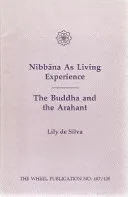
Nibbana As Living Experience
 71
71

Nibbana As Living Experience
Lily De Silva’s Nibbana As Living Experience attempts a vital reframing: making the ultimate Buddhist goal of liberation a present-tense possibility rather than a future reward. The book’s strength lies in its direct, unadorned prose, which eschews academic jargon for clarity. De Silva skillfully guides the reader toward understanding Nibbana not as an endpoint, but as a continuous process of unbinding from suffering. A particularly effective section discusses the practical implications of recognizing Anicca (impermanence) in everyday situations, demonstrating how this insight can dismantle attachment. However, the work occasionally feels constrained by its singular focus. While admirable, the relentless emphasis on immediate realization might overlook the profound preparatory stages and the long cultivation often described in traditional texts. The book’s brevity, while a virtue for accessibility, could leave some readers yearning for more detailed exploration of specific meditative techniques that directly facilitate this experiential shift. Ultimately, De Silva offers a valuable perspective for those seeking to integrate the deepest aspirations of Buddhist practice into their daily lives.
📝 Description
71
### What It Is
Nibbana As Living Experience, first published in 1996 by Lily De Silva, is not a theoretical treatise on Buddhist doctrine. Instead, it functions as a practical guide, translating the abstract concept of Nibbana (or Nirvana) into accessible, actionable steps for contemporary practitioners. The book emphasizes the experiential dimension of spiritual liberation, moving beyond mere intellectual understanding to foster direct realization. It proposes that the cessation of suffering, the ultimate goal in Buddhism, is not a distant, posthumous reward but a palpable state achievable within this life.
### Who It's For
This work is intended for individuals engaged in Buddhist meditation and philosophical study who seek to deepen their understanding of liberation. It will appeal to those who find traditional explanations of Nibbana too abstract or removed from daily life. Readers interested in the practical application of Buddhist teachings, particularly the path to ending suffering through direct experience, will find its approach beneficial. It is suitable for those familiar with basic Buddhist concepts but eager to explore the experiential depth of the ultimate goal.
### Historical Context
Emerging in the mid-1990s, Nibbana As Living Experience entered a landscape of Buddhist literature increasingly focused on translating ancient wisdom for Western audiences. While scholars like Walpola Rahula had already clarified core doctrines, De Silva's work focused on the *realizability* of Nibbana in the present. This period saw a growing interest in mindfulness and experiential Buddhism, influenced by figures like Thich Nhat Hanh, and a diversification of Buddhist thought beyond monastic traditions. The book aligns with a broader trend of making profound spiritual goals tangible and integrated into everyday existence, rather than solely the domain of ascetics.
### Key Concepts
The central tenet of the book is the redefinition of Nibbana from an eschatological event to an immediate, lived reality. De Silva explores the concept of 'unbinding' (the literal meaning of Nirvana) as a process of releasing mental fetters, craving, and ignorance. She breaks down the path to this state into stages that can be cultivated through diligent practice, particularly mindfulness and insight meditation. The book posits that understanding the impermanent, unsatisfactory, and selfless nature of phenomena (Anicca, Dukkha, Anatta) is not merely an intellectual exercise but a direct perception that leads to the dissolution of attachment and, consequently, suffering.
💡 Why Read This Book?
• You will learn how to approach Nibbana not as a future state but as an ongoing process of unbinding from suffering, a concept explored through De Silva's practical interpretations of Buddhist philosophy. • You will gain practical methods for recognizing Anicca (impermanence) in daily life, offering a concrete path to dismantling attachment, a core teaching discussed throughout the book. • You will discover how the principles of mindfulness and insight meditation, as presented by De Silva, can lead to the direct perception of reality and the cessation of craving, a direct outcome of the book's teachings.
⭐ Reader Reviews
Honest opinions from readers who have explored this book.
❓ Frequently Asked Questions
What is the core message of Nibbana As Living Experience by Lily De Silva?
The core message is that Nibbana, the cessation of suffering, is not a future event but a living, experiential reality achievable in the present through dedicated practice and insight.
When was Nibbana As Living Experience first published?
The book was first published in 1996, placing it within a wave of accessible Buddhist teachings for Western audiences.
Who is Lily De Silva and what is her background?
Lily De Silva was a Sri Lankan Buddhist scholar and author known for her clear explanations of Buddhist philosophy and practice, particularly for a lay audience.
Does the book explain complex Buddhist terms?
Yes, the book explains key terms like Nibbana, Anicca, Dukkha, and Anatta by focusing on their experiential relevance rather than purely academic definitions.
Is this book suitable for beginners in Buddhism?
It is suitable for beginners who are serious about meditation and seeking to understand the ultimate goal of Buddhism in a practical, experiential way.
What meditation practices are suggested in the book?
The book emphasizes mindfulness and insight meditation (Vipassanā) as primary tools for cultivating the direct perception necessary for experiencing Nibbana.
🔮 Key Themes & Symbolism
Nibbana as Present Reality
This theme challenges the common perception of Nibbana as a distant, posthumous state. De Silva argues for its immanence, defining it as the unbinding from craving, aversion, and delusion that can occur here and now. The book presents Nibbana not as an object to be attained, but as a quality of mind to be realized through consistent practice. This perspective shifts the focus from future hope to present engagement, making the ultimate goal of Buddhist practice an accessible, lived experience for practitioners today.
The Experiential Path
Central to De Silva's approach is the emphasis on direct experience over theoretical knowledge. The book guides readers to cultivate insight into the nature of reality – impermanence (Anicca), suffering (Dukkha), and non-self (Anatta) – not as abstract doctrines, but as immediate perceptions. This experiential understanding is presented as the solvent for attachment and the key to liberation. The work advocates for mindfulness and insight meditation as the primary vehicles for this direct realization, making the path to Nibbana a tangible practice.
Unbinding from Suffering
The book defines liberation (Nibbana) through its negative aspect: the cessation of suffering. De Silva systematically explores the roots of suffering in ignorance and clinging, and outlines how meditative insight can dismantle these roots. The process of 'unbinding' is depicted as a gradual release from mental and emotional chains, leading to a state of profound peace and freedom. This focus on the alleviation of suffering makes the spiritual path immediately relevant to the human condition.
Practical Application of Dhamma
Nibbana As Living Experience bridges the gap between profound Buddhist philosophy and everyday life. De Silva demonstrates how core teachings, such as the Four Noble Truths and the concept of non-self, can be applied practically to navigate challenges and cultivate wisdom. The book encourages readers to integrate spiritual practice into their daily routines, showing that the path to liberation is not separate from worldly existence but woven into its very fabric.
💬 Memorable Quotes
“Nibbana is not a place one goes to, but a state one attains.”
— This statement reframes Nibbana from a geographical or afterlife destination to an internal psychological and spiritual condition. It emphasizes that liberation is achieved through inner transformation, not external arrival.
“The cessation of craving is the cessation of suffering.”
— This directly links the core Buddhist concept of craving (tanha) to the experience of suffering (dukkha). It highlights that by eradicating attachment and desire, one directly extinguishes the cause of dissatisfaction.
“To see things as they truly are is to be free.”
— This paraphrase points to the liberating power of wisdom and direct perception (prajna/vipassanā). Understanding the true nature of reality, free from illusion and distortion, is presented as the pathway to freedom.
“The path is not a struggle against the world, but a realization within oneself.”
— This highlights the inward focus of Buddhist practice. Liberation is achieved not by changing external circumstances, but by transforming one's own mind and perspective.
“Impermanence, when truly understood, dissolves attachment.”
— This interpretation emphasizes the practical application of understanding Anicca. Direct experiential knowledge of impermanence is shown to be the antidote to clinging, thereby reducing suffering.
🌙 Esoteric Significance
Tradition
While rooted in Theravada Buddhism, De Silva's work touches upon esoteric principles by emphasizing the direct, transformative experience of liberation as achievable within this lifetime. This focus on inner gnosis and the dissolution of the ego-bound self aligns with esoteric traditions that seek immediate spiritual realization. It departs from purely scholastic interpretations, prioritizing the lived, subjective experience of enlightenment, a common thread in many mystical paths.
Symbolism
The primary symbolic concept is Nibbana itself, often represented by the cessation of fire – signifying the extinguishing of greed, hatred, and delusion. The 'unbinding' inherent in the term Nirvana symbolizes release from the chains of Samsara (the cycle of birth and death). The book implicitly uses the symbolism of the path, where progress is marked by increasing insight and detachment, leading towards the 'other shore' of liberation.
Modern Relevance
De Silva's emphasis on Nibbana as a living experience resonates with contemporary mindfulness movements and secularized Buddhist practices. Therapists and coaches often draw on these principles for stress reduction and emotional regulation. Thinkers exploring consciousness and non-dual states find her accessible explanations of Buddhist concepts valuable for bridging traditional teachings with modern psychological frameworks.
👥 Who Should Read This Book
['• Buddhist practitioners seeking to deepen their understanding beyond theoretical concepts, aiming for direct experiential insight into liberation.', '• Individuals interested in mindfulness and meditation who want to grasp the ultimate goal of these practices in a tangible way.', '• Scholars of comparative religion looking for accessible interpretations of core Buddhist soteriological goals.']
📜 Historical Context
Published in 1996, Lily De Silva's Nibbana As Living Experience emerged during a period of significant expansion for Buddhist thought in the West. Following the foundational work of scholars like D.T. Suzuki and the popularization efforts of figures like Alan Watts in the mid-20th century, the 1980s and 90s saw a surge in accessible Buddhist literature. De Silva’s work contributed to this trend by focusing on the experiential realization of Nibbana, aligning with contemporary movements emphasizing mindfulness and practical application, such as those championed by Thich Nhat Hanh. While academic discourse continued with figures like Richard Gombrich clarifying Pali Canon studies, De Silva’s approach spoke directly to lay practitioners. This era also witnessed a diversification of Buddhist schools available to Westerners, moving beyond initial Zen and Tibetan influences to include Theravada traditions more prominently, for which Nibbana is a central concept.
📔 Journal Prompts
The nature of unbinding as a present reality.
Recognizing Anicca in daily interactions.
Experiences of craving and their cessation.
The direct perception of Dukkha.
Cultivating insight into Anatta.
🗂️ Glossary
Nibbana
The ultimate goal of Buddhist practice; the cessation of suffering, craving, and the cycle of rebirth. Often translated as 'nirvana' or 'enlightenment'.
Anicca
The doctrine of impermanence; the understanding that all conditioned phenomena are in a constant state of flux and change.
Dukkha
Often translated as 'suffering' or 'unsatisfactoriness'; the inherent stress and dissatisfaction present in conditioned existence due to impermanence and clinging.
Anatta
The doctrine of non-self; the understanding that there is no permanent, unchanging, independent self or soul in any phenomenon.
Craving (Tanha)
The insatiable desire or thirst for existence, non-existence, or sensory pleasures, identified as a primary cause of suffering.
Insight Meditation (Vipassanā)
A meditation practice focused on developing direct experiential understanding of the true nature of reality, particularly the characteristics of impermanence, suffering, and non-self.
Unbinding
A translation of Nibbana/Nirvana, emphasizing the release from mental and emotional fetters, attachments, and the cycle of suffering.