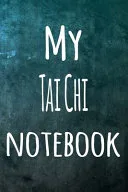
My Tai Chi Notebook
 79
79

My Tai Chi Notebook
This is not a book in the traditional sense, but a tool. Cnyto Hobby Media's 'My Tai Chi Notebook' presents a straightforward, unadorned journal. Its strength lies in its simplicity; the 119 lined pages are a clean slate for practitioners. A notable passage, if one were to imagine it filled, would be a description of the 'push hands' exercise, detailing the subtle shifts in weight and intention. However, its primary limitation is its lack of any inherent guidance. Unlike annotated journals or illustrated guides, this notebook offers no prompts or context, relying entirely on the user's existing knowledge and discipline. It’s a functional item, best suited for those who already know what they want to record. It serves its purpose adequately as a physical space for notes.
📝 Description
79
### What It Is
My Tai Chi Notebook, first published in September 2019, functions as a blank canvas for individuals engaged with the practice of Tai Chi. It offers 119 lined pages within a compact 6x9 inch format. This journal is designed not as a primer or instructional guide, but as a personal repository for reflections, observations, and practice notes related to Tai Chi movements and philosophy.
### Who It's For
This notebook is tailored for the dedicated Tai Chi hobbyist or student who seeks a structured yet flexible space to document their progress. It serves those who value journaling as a method for self-study and self-awareness within their martial arts or meditative practice. It is particularly suited for individuals who appreciate tangible tools to aid their learning and spiritual exploration.
### Historical Context
The publication of this notebook in 2019 places it within a contemporary landscape where interest in traditional Eastern practices like Tai Chi has seen a resurgence globally. While not a historical text itself, its existence acknowledges a long lineage of practitioners who have used personal journals to record insights, from ancient Daoist monks to modern martial arts masters. The rise of personal development and mindfulness practices in the late 20th and early 21st centuries further contextualizes the need for such dedicated tools.
### Key Concepts
The core utility of My Tai Chi Notebook revolves around the concept of personal practice documentation. It encourages engagement with principles such as 'Qi' (vital energy), 'Yin and Yang' balance, and the flow of movement as taught in various Tai Chi styles (e.g., Yang, Chen). The act of writing itself becomes a meditative practice, fostering deeper understanding and retention of the physical forms and underlying philosophical tenets inherent in Tai Chi.
💡 Why Read This Book?
• Gain deeper self-awareness through dedicated practice logging, specifically by noting the subtle shifts in body mechanics during forms like the 'Cloud Hands' sequence. • Cultivate a personal understanding of 'Qi' flow by recording sensations and energy perceptions experienced during Tai Chi sessions. • Enhance memorization and retention of Tai Chi movements by transcribing sequences and observations, referencing the publication year of 2019 as a contemporary anchor for your practice.
⭐ Reader Reviews
Honest opinions from readers who have explored this book.
❓ Frequently Asked Questions
What specific dimensions does the My Tai Chi Notebook have?
The notebook measures 6x9 inches, a standard size that is portable yet offers ample writing space for detailed notes on Tai Chi practice.
How many pages are included in the My Tai Chi Notebook?
It contains 119 lined pages, providing a generous amount of space for extensive journaling over time.
Is this notebook suitable for beginners in Tai Chi?
While it doesn't contain instructional content, beginners can use it to record their initial impressions and instructor feedback from classes starting in 2019 or later.
What is the primary purpose of this notebook?
Its primary purpose is to serve as a personal journal for Tai Chi practitioners to document their training, reflections, and insights related to the art.
Can this notebook be used for other martial arts?
Yes, the notebook's blank-lined format makes it versatile for documenting any physical practice, including other martial arts or meditative disciplines.
When was My Tai Chi Notebook first published?
My Tai Chi Notebook was first published on September 26, 2019.
🔮 Key Themes & Symbolism
Personal Practice Documentation
This notebook emphasizes the importance of a personal record for practitioners of Tai Chi. It acts as a blank ledger for logging daily movements, noting physical sensations, and capturing insights derived from practice sessions. The act of writing itself is framed as a meditative component, aiding in the integration of physical form and mental focus, essential for understanding concepts like 'internal energy' or 'stillness in motion'.
Mindfulness and Reflection
Beyond mere record-keeping, the journal encourages a mindful approach to Tai Chi. Each page invites reflection on the nuances of posture, breath, and intention. By documenting the subtle shifts and internal states experienced during practice, users can cultivate a deeper connection to their bodies and the philosophical underpinnings of Tai Chi, such as the balance of Yin and Yang.
Hobbyist Engagement
Designed for the enthusiast, this notebook supports a dedicated hobbyist's journey. It provides a tangible space to track progress, experiment with different approaches to forms, and consolidate learning from instructors or personal study. The 2019 publication date situates it within contemporary interest in traditional arts, serving as a personal artifact of one's engagement with this ancient practice.
Tool for Self-Study
The notebook serves as a practical tool for independent study of Tai Chi. It allows individuals to deconstruct movements, record observations on the flow of 'Qi', and note down interpretations of principles. This personal compilation becomes a unique resource, tailored to the user's specific learning path and evolving understanding of Tai Chi’s intricate system.
💬 Memorable Quotes
“119 lined pages for your Tai Chi journey.”
— This concise statement highlights the notebook's core function as a dedicated space for practitioners to record their experiences and progress in Tai Chi.
“Unique funny gift!”
— This phrase suggests the notebook can also serve as a lighthearted, practical present for someone passionate about Tai Chi, perhaps offering a moment of amusement alongside its utility.
“Ideal gift for the hobbiest.”
— This points to the target audience, framing the notebook as a thoughtful and practical item for individuals who pursue Tai Chi as a serious hobby or personal interest.
“6x9 journal.”
— This specifies the physical dimensions, indicating a portable yet functional size suitable for carrying to classes or practice sessions.
“Record your progress and insights.”
— This is an implied directive, encouraging users to actively engage with the journal to document not just physical movements but also the deeper understanding gained through practice.
🌙 Esoteric Significance
Tradition
While not explicitly tied to a single esoteric lineage, My Tai Chi Notebook aligns with the broader tradition of contemplative practices found within Daoism and, by extension, various Western Hermetic and Gnostic interpretations that seek internal harmony and energetic cultivation. It serves as a modern vessel for documenting practices aimed at aligning the individual with cosmic principles, akin to how alchemists or Rosicrucians used journals to record experiments and spiritual insights.
Symbolism
The notebook itself, as a blank slate, symbolizes potential and the unmanifest. The act of filling its pages with notes on movement, breath, and 'Qi' flow mirrors the process of manifestation within the practitioner. The 6x9 dimension can be seen as a practical container, while the lined pages represent the structured path of disciplined practice required to approach the unitive state often sought in esoteric traditions.
Modern Relevance
In contemporary esoteric circles, particularly those focused on embodied spirituality and energy work, practices like Tai Chi are increasingly integrated. Thinkers and practitioners in fields such as somatic psychology, energy healing, and modern Daoist studies find value in personal documentation. This notebook provides a contemporary tool for individuals exploring these paths, allowing them to track their energetic development and the subtle shifts characteristic of practices aiming for holistic well-being.
👥 Who Should Read This Book
• Dedicated Tai Chi students who wish to meticulously track their progress, note corrections from instructors, and record personal breakthroughs in form or energy awareness. • Practitioners of other internal martial arts or contemplative movement disciplines who seek a structured journal to document their practice and reflections on concepts like Qi and intention. • Individuals interested in the intersection of physical discipline and personal development who want a tangible tool to foster mindfulness and self-inquiry through journaling.
📜 Historical Context
Published in September 2019, My Tai Chi Notebook emerges within a contemporary global resurgence of interest in traditional mind-body practices. While Tai Chi itself boasts centuries of history, originating in Chinese martial arts and Daoist philosophy, this notebook reflects a modern approach to engaging with such disciplines. It acknowledges a lineage of practitioners who have historically kept records, from the scrolls of ancient martial artists to the personal diaries of 20th-century practitioners like Chen Man-ch'ing, who meticulously documented his teachings. In the era of digital information, the tangible nature of this notebook offers a counterpoint, appealing to those seeking a grounded, physical connection to their practice. It arrived at a time when Western engagement with Eastern philosophies was widespread, influenced by movements like the New Age and a growing academic interest in comparative religion and embodied cognition.
📔 Journal Prompts
Reflect on the flow of Qi during the 'Cloud Hands' sequence.
Note specific sensations experienced during the 'Push Hands' exercise.
Document your understanding of Yin and Yang balance in today's practice.
Record any insights gained about stillness within movement.
Describe the feeling of grounding after completing the form.
🗂️ Glossary
Tai Chi
An ancient Chinese martial art practiced for both its defense training and its health benefits. It involves slow, flowing movements, deep breathing, and mental focus.
Qi (Chi)
A fundamental concept in traditional Chinese culture, often translated as 'vital energy' or 'life force'. It is believed to flow through the body and influence health and well-being.
Yin and Yang
The Daoist concept of complementary, interconnected, and interdependent forces. In Tai Chi, these represent principles of softness and hardness, yielding and assertiveness, stillness and movement.
Form
The sequence of movements in Tai Chi, which varies by style (e.g., Yang, Chen, Wu). Practicing the form is central to developing skill, energy, and understanding.
Push Hands
A Tai Chi training exercise where two partners practice sensitivity, balance, and yielding by maintaining contact and responding to each other's movements.
Hobbiest
An amateur engaged in a particular activity, especially one pursued for pleasure and relaxation rather than financial gain.
6x9
Refers to the physical dimensions of the notebook, indicating a common and practical size for journals and books.