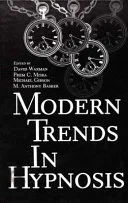
Modern Trends in Hypnosis
 80
80

Modern Trends in Hypnosis
Waxman's compilation, emerging from the 9th International Congress of Hypnosis and Psychosomatic Medicine, presents a dense, academic overview of a field that has long grappled for scientific legitimacy. Its strength lies in meticulously documenting the historical continuity of this struggle, referencing foundational figures and events like the 1889 Paris congress. A particular passage detailing the diverse approaches to understanding hypnotic states showcases the breadth of inquiry. However, the work's academic rigor can also be its limitation; the language and structure, derived directly from congress proceedings, may prove inaccessible to the casual reader. The focus remains squarely on scientific discourse, leaving little room for more speculative or esoteric interpretations of altered states. It serves as a valuable historical and scientific record but less so as an inviting exploration.
📝 Description
80
### What It Is
"Modern Trends in Hypnosis" offers a scholarly examination of the evolution and contemporary state of hypnosis research and application, originating from the proceedings of the 9th International Congress of Hypnosis and Psychosomatic Medicine. The work meticulously documents the ongoing scientific endeavor to understand hypnosis, tracing its lineage back to the foundational 1889 Paris congress. It highlights the persistent effort to establish hypnosis as a legitimate field of scientific inquiry and therapeutic practice, bringing together diverse perspectives.
### Who It's For
This volume is primarily intended for academics, researchers, psychologists, and medical professionals engaged with the study of hypnosis, psychosomatic medicine, and the history of psychology. It will also appeal to advanced students in these fields seeking a rigorous overview of the discipline's development and current discourse. Individuals interested in the intersection of consciousness studies, behavioral science, and historical scientific movements will find substantial material within its pages.
### Historical Context
The book's genesis lies in the continuity of international congresses dedicated to hypnosis, a tradition stretching back to 1889 in Paris. This long lineage signifies a sustained, albeit sometimes contentious, pursuit of scientific validation for hypnotic phenomena. The presence of luminaries like Freud, James, and Bernheim at early congresses underscores the profound intellectual engagement this field has historically commanded from leading minds in psychiatry and psychology, even as its status fluctuated.
### Key Concepts
Central to "Modern Trends in Hypnosis" is the concept of hypnosis as a subject of ongoing scientific investigation, distinct from mere parlor tricks or mystical trance states. It emphasizes the psychosomatic connection, exploring how mental states induced by hypnosis can influence physical well-being. The text also implicitly addresses the historical demarcation of hypnosis within scientific psychology, contrasting its experimental and therapeutic applications with other emerging psychological theories of the time.
💡 Why Read This Book?
• Gain understanding of hypnosis as a scientific pursuit, evidenced by the historical documentation tracing back to the 1889 Paris Congress, offering a perspective beyond popular misconceptions. • Explore the psychosomatic connections detailed in the work, providing concrete examples of how mental states influenced by hypnosis can impact physical health, as discussed within the context of the 9th International Congress. • Appreciate the rigorous scientific methodology applied to hypnosis, recognizing the intellectual lineage that includes figures like Freud and James, presented through the academic discourse of the congress.
⭐ Reader Reviews
Honest opinions from readers who have explored this book.
❓ Frequently Asked Questions
When was "Modern Trends in Hypnosis" first published?
"Modern Trends in Hypnosis" was first published on December 6, 2012. This date marks the compilation and release of research and discussions from the 9th International Congress of Hypnosis and Psychosomatic Medicine.
What is the historical significance of the 1889 Paris Congress mentioned in the book?
The 1889 Paris Congress for Experimental and Therapeutic Hypnotism is presented as a foundational event in the scientific study of hypnosis, attended by prominent figures like Bernheim and Freud, marking an early effort to establish the field's legitimacy.
Who were some of the notable attendees of early hypnosis congresses discussed in the book?
Early congresses, such as the one in Paris in 1889, were attended by influential psychiatrists and psychologists including Babinski, Bernheim, Binet, Delboeuf, Freud, James, Lombroso, and F. W. H. Myers, indicating significant early scientific interest.
What is the primary focus of the "Modern Trends in Hypnosis"?
The book focuses on the ongoing scientific investigation and efforts to achieve scientific status for hypnosis, documenting the continuity of research and discussion from historical congresses to contemporary ones.
Does the book discuss the therapeutic applications of hypnosis?
Yes, the book discusses the therapeutic applications of hypnosis within the broader context of scientific inquiry into the phenomenon, as evidenced by its roots in the "International Congress for Experimental and Therapeutic Hypnotism".
What is "psychosomatic medicine" as discussed in relation to hypnosis?
Psychosomatic medicine, as explored in the book, examines the interplay between psychological factors, such as those induced by hypnosis, and their influence on physical health and bodily functions.
🔮 Key Themes & Symbolism
Scientific Validation of Hypnosis
The central theme revolves around the persistent scientific endeavor to understand and legitimize hypnosis. This is traced from the late 19th century, marked by gatherings like the 1889 Paris congress attended by figures like Freud, through to the 9th International Congress documented in this volume. The work underscores the academic struggle to move hypnosis from popular perception to a recognized field of scientific study and therapeutic practice, highlighting the methodologies and debates that have shaped its trajectory.
Psychosomatic Medicine
A significant focus is placed on the connection between hypnosis and psychosomatic medicine. The book explores how hypnotic states can influence physiological processes, bridging the gap between mind and body. This perspective positions hypnosis not merely as a psychological tool but as a factor that can impact physical health, reflecting a deeper understanding of the mind-body continuum that has evolved within scientific discourse since the early days of hypnotic research.
Historical Continuity in Research
The text emphasizes the unbroken lineage of research and international collaboration concerning hypnosis. By referencing the sequence of International Congresses, starting from 1889, it illustrates a continuous, albeit evolving, dialogue among scientists and clinicians. This historical perspective reveals how concepts and approaches to hypnosis have been built upon, challenged, and refined over decades, involving influential thinkers who shaped early psychology and psychiatry.
Evolution of Hypnotic Theory
This work chronicles the development of theoretical frameworks surrounding hypnosis. It showcases how the understanding of hypnotic phenomena has transformed, moving from early experimental approaches by figures like Bernheim and Charcot to more nuanced perspectives explored in contemporary research. The congress proceedings reflect the ongoing debate and refinement of theories concerning consciousness, suggestion, and the therapeutic potential of altered states of awareness.
💬 Memorable Quotes
“Continuity in the effort to gain scientific knowledge of hypnosis and scientific status for it, ever since the 1st International Congress for Experimental and Therapeutic Hypnotism was held in Paris in 1889.”
— This statement encapsulates the core historical argument of the book: that the scientific pursuit of understanding hypnosis has been a long-standing, continuous project, marked by key conferences and intellectual contributions since the late 19th century.
“The 9th International Congress of Hypnosis and Psychosomatic Medicine expresses the continuity in the effort to gain scientific knowledge of hypnosis.”
— This highlights the contemporary relevance of the congress and the book, framing it as the latest chapter in a historical narrative of scientific inquiry into hypnosis, reinforcing the ongoing nature of the research.
“Attended by many of the best-remembered psychiatrists and psychologists of the day - men such as Babinski, Bernheim, Binet, Delboeuf, Freud, James, Lombroso, F. W. H. Myers, Ribot, and many others.”
— This citation emphasizes the caliber of early scientific engagement with hypnosis, demonstrating that the field attracted serious attention from leading intellectual figures at its inception, lending historical weight to its study.
“The contin”
— This appears to be an incomplete sentence from the original blurb, suggesting a continuation of the theme of ongoing effort and development within the field of hypnosis research and its scientific standing.
“The work explores the scientific status of hypnosis.”
— This interpretation focuses on the central objective of the book: to document and analyze the ongoing efforts to establish hypnosis as a scientifically credible discipline, examining its theoretical underpinnings and practical applications.
🌙 Esoteric Significance
Tradition
While "Modern Trends in Hypnosis" is primarily a scientific and academic text, its focus on altered states of consciousness and psychosomatic connections can be seen as touching upon themes historically explored in esoteric traditions. Esoteric philosophies often investigate the power of the mind to influence reality and the self, including states of deep trance or focused awareness that bear superficial resemblance to hypnosis. This work, however, grounds these explorations in empirical research rather than mystical revelation.
Symbolism
The text itself does not heavily rely on traditional esoteric symbolism. However, the concept of the "unconscious mind," a frequent topic in discussions surrounding hypnosis and psychosomatic medicine, can be viewed as a symbolic representation of hidden potentials and deeper levels of being. The "congress" itself functions symbolically as a nexus of collective scientific inquiry, a modern iteration of alchemical or philosophical gatherings where knowledge is exchanged and refined.
Modern Relevance
Contemporary thinkers and practitioners in fields like consciousness studies, transpersonal psychology, and even certain branches of modern occultism, which explore mind-body integration, may find value in the scientific grounding provided by this work. It offers a bridge between empirically observable phenomena and the often subjective experiences associated with altered states, informing practices that seek to harness mental focus for healing or personal development.
👥 Who Should Read This Book
['• Academic researchers in psychology and neuroscience seeking to understand the historical trajectory and current empirical landscape of hypnosis studies.', '• Medical and clinical psychologists interested in the evidence base and scientific discourse surrounding hypnotic techniques in psychosomatic medicine.', '• Students of the history of science and medicine looking for primary documentation on the evolving scientific status of hypnosis since the late 19th century.']
📜 Historical Context
Published in 2012, "Modern Trends in Hypnosis" emerges from a field with a rich, complex history dating back to the late 19th century. The foundational "1st International Congress for Experimental and Therapeutic Hypnotism" in Paris, 1889, convened luminaries like Freud, James, and Bernheim, signaling early attempts to imbue hypnosis with scientific rigor. This period was marked by intellectual ferment, with competing theories of the mind and consciousness emerging. While Freud himself would later develop psychoanalysis, his early engagement with hypnosis highlights its initial perceived importance. The work's genesis in the 9th International Congress signifies a continuation of this long-standing dialogue, occurring in an era where neuroscience and cognitive psychology offer new lenses through which to examine hypnotic phenomena, distinct from earlier, more speculative approaches or the burgeoning field of behaviorism.
📔 Journal Prompts
The continuity in the effort to gain scientific knowledge of hypnosis, as described from 1889 to the 9th Congress.
The relationship between hypnotic states and psychosomatic outcomes.
The influence of historical figures like Freud and James on the scientific study of hypnosis.
The establishment of scientific status for phenomena previously considered fringe.
The evolution of understanding concerning the mind's influence on the body.
🗂️ Glossary
Hypnosis
A state of consciousness characterized by focused attention, reduced peripheral awareness, and an enhanced capacity for response to suggestion, studied scientifically for its psychological and physiological effects.
Psychosomatic Medicine
A field of medicine that studies the relationship between mental processes and bodily functions, particularly how psychological stress or emotions can affect physical health.
International Congress of Hypnosis and Psychosomatic Medicine
A recurring global conference where researchers and clinicians present and discuss advancements in the scientific understanding and application of hypnosis and related fields.
Scientific Status
The recognition and acceptance of a field of study or practice within the established paradigms and methodologies of empirical science.
Experimental Hypnotism
The study of hypnotic phenomena through controlled experiments designed to isolate variables and test hypotheses about its mechanisms and effects.
Therapeutic Hypnotism
The application of hypnotic techniques for the purpose of treating psychological or physical conditions, often within a clinical or medical setting.
Altered State of Consciousness
Any mental state that deviates from normal waking consciousness, such as those induced by hypnosis, meditation, or psychoactive substances.