Max Ernst
 72
72

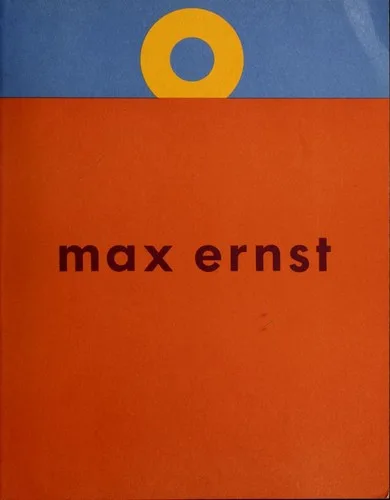
Max Ernst
Max Ernst’s self-authored explorations, as presented here by Spies and Hergott, reveal an artist deeply attuned to the symbolic and psychological dimensions of his work. The strength of this collection lies in its direct access to Ernst's own pronouncements, bypassing much of the later critical interpretation. His discussions on techniques like frottage, for instance, are not just technical descriptions but pathways into his conceptual framework. A notable limitation, however, is the inherent subjectivity; while valuable, it’s Ernst’s perspective, not a balanced critical survey. The passage detailing his fascination with the 'Loplop' character offers a glimpse into his personal mythology, but the book occasionally lacks the broader historical context a dedicated scholarly analysis might provide. Ultimately, this volume serves as an indispensable, albeit singular, voice in understanding Ernst's unique artistic universe.
📝 Description
72
### What It Is Max Ernst, the artist himself, offers a direct look into his creative process and visual philosophy. This collection, compiled by Werner Spies and Fabrice Hergott, presents a multifaceted exploration of Ernst's oeuvre, moving beyond simple biography to examine the underlying currents of his groundbreaking work. It is not a conventional monograph but a curated assembly of his thoughts, writings, and artistic manifestos, providing an intimate perspective on one of the 20th century's most influential surrealist figures.
### Who It's For This volume is essential for anyone seeking to understand the intellectual architecture behind Max Ernst's art. It speaks to artists, art historians, and students of Surrealism, Dada, and avant-garde movements. Furthermore, those interested in the intersection of art and psychology, particularly the exploration of the subconscious and dream imagery, will find fertile ground here. It is for the reader who prefers primary source material and direct artist engagement over secondary interpretations.
### Historical Context First published in 1956, this work emerges from a period of intense artistic and intellectual ferment following World War II. Max Ernst, already a veteran of Dada and Surrealism, was by this time an established figure. The book's genesis in the mid-1950s places it in dialogue with post-war art criticism and the burgeoning interest in psychoanalytic theory's influence on creativity. It offers a counterpoint to more formalist approaches gaining traction, emphasizing the psychological and alchemical underpinnings of artistic production, a stance that contrasted with the emerging Abstract Expressionist scene in America.
### Key Concepts The book illuminates Ernst's engagement with concepts such as automatism, frottage, and decalcomania – techniques he developed to bypass conscious control and tap into the unconscious. It explores his fascination with mythology, alchemy, and primal imagery, demonstrating how these elements were not mere decorative additions but foundational to his visual language. The reader encounters Ernst's deliberate use of juxtaposition and his creation of dreamlike landscapes populated by hybrid creatures and symbolic forms, all aimed at disrupting conventional perception and revealing hidden realities.
💡 Why Read This Book?
• Gain direct insight into Max Ernst's artistic philosophy, particularly his theories on automatism and the use of techniques like frottage, as discussed in the text, offering a unique perspective on subconscious creation. • Understand the symbolic language Ernst employed, such as his engagement with alchemical imagery and hybrid creatures, providing a deeper appreciation for the layers of meaning in his works like "The Elephant Celebes". • Connect with the post-war avant-garde by exploring Ernst's perspective on Surrealism and Dada, revealing how his ideas about disrupting perception positioned him within the artistic currents of the mid-20th century.
⭐ Reader Reviews
Honest opinions from readers who have explored this book.
❓ Frequently Asked Questions
When was Max Ernst's book first published?
The primary compilation of Max Ernst's writings and thoughts, as presented by Werner Spies and Fabrice Hergott, was first published in 1956. This edition offers a direct look into the artist's mind during a significant period of his career.
What is frottage and how did Max Ernst use it?
Frottage is a Surrealist technique where an artist rubs a pencil or crayon over paper placed on a textured surface to create an image. Max Ernst extensively utilized frottage to generate unexpected patterns and forms, bypassing conscious control to access subconscious imagery.
Who were Max Ernst's key contemporaries in the Surrealist movement?
Max Ernst was a central figure in Surrealism, working alongside artists and writers such as André Breton, Salvador Dalí, René Magritte, and Joan Miró. His work and theories were deeply intertwined with the core tenets of the Surrealist group.
What does 'automatism' mean in the context of Max Ernst's art?
Automatism, as explored by Max Ernst and other Surrealists, refers to the practice of creating art with minimal conscious control. It involves allowing the subconscious mind to guide the hand, leading to spontaneous and often surprising visual outcomes.
How does this book by Max Ernst differ from a typical art history analysis?
Unlike a standard art history analysis, this book primarily features Max Ernst's own writings, statements, and reflections. It offers a first-person account of his creative process, techniques, and philosophical underpinnings, rather than an external critical perspective.
What is the significance of the 'Loplop' character in Max Ernst's work?
Loplop, the Bird Superior, is a recurring alter ego and motif in Max Ernst's art, often appearing as a hybrid creature blending human and avian features. He serves as a symbol of the artist's subconscious, a guide through his dreamscapes, and a manifestation of his personal mythology.
🔮 Key Themes & Symbolism
The Unconscious in Art
This collection delves into Max Ernst's deliberate exploration of the subconscious as a primary source for artistic creation. Through techniques like automatism and frottage, he sought to bypass rational thought, allowing primal urges and dream imagery to surface. The work illustrates how Ernst believed the unconscious held a reservoir of potent symbols and narratives, which, when accessed, could disrupt conventional reality and reveal deeper truths. His art becomes a map of internal landscapes, populated by figures and forms born from the uninhibited depths of the psyche.
Alchemical and Mythological Symbolism
Ernst’s visual language is deeply infused with alchemical processes and mythological archetypes. He saw parallels between the transformations in alchemy – the transmutation of base metals into gold – and the artist’s ability to transform ordinary materials and ideas into profound works of art. The book touches upon his fascination with ancient myths, primal symbols, and hybrid creatures, viewing them not as mere decoration but as fundamental elements that connect the individual to universal, often hidden, currents of human experience and cosmic order.
Techniques of Visual Disruption
Central to Ernst's practice were innovative techniques designed to generate unexpected visual effects and break down the viewer's habitual modes of perception. The book highlights his pioneering use of frottage (rubbing pencil over textured surfaces) and decalcomania (transferring paint by pressing two surfaces together). These methods were not simply stylistic choices but philosophical tools aimed at liberating the imagination, creating fertile ground for the emergence of bizarre juxtapositions and dreamlike scenarios that challenge rational interpretation.
The Artist as Magician
Max Ernst often positioned himself as a kind of magician or alchemist, capable of conjuring worlds and revealing hidden realities through his art. This collection provides insight into that self-conception, showcasing his belief in the transformative power of the creative act. He viewed the studio as a laboratory where disparate elements could be combined to produce startling new forms, mirroring the magician’s ability to manipulate reality through ritual and symbolic action. His work invites the viewer to participate in this act of conjuring.
💬 Memorable Quotes
“The irrational is not the enemy of reason, but its necessary complement.”
— This statement encapsulates Ernst's core Surrealist belief that logic and order alone are insufficient to grasp the full spectrum of reality. He advocated for the integration of the irrational, the dreamlike, and the subconscious to achieve a more complete understanding and expression of human experience.
“Frottage is a means to intensify the excitability of the eyes and the mind.”
— Ernst viewed frottage not just as a technique for creating texture, but as a method for unlocking new visual perceptions. By placing paper over textured surfaces and rubbing, he aimed to generate forms that would spark the imagination and lead to unforeseen artistic discoveries.
“My paintings are an interface between the dream world and the waking world.”
— This conceptualization highlights Ernst's intent to bridge the gap between the internal, subconscious realm of dreams and the external, tangible reality. His artworks serve as portals, inviting viewers to experience the uncanny and the surreal, blurring the boundaries between what is perceived as real and what is imagined.
“Loplop is the spirit of the painting, an intermediary.”
— Through the recurring character of Loplop, the Bird Superior, Ernst personified an artistic spirit or guide. This concept suggests a belief in an animating force within the creative process, an entity that helps the artist navigate the complex terrain between inspiration and execution.
“The collision of two distant realities is what sparks poetry.”
— This principle, central to Surrealism, explains Ernst's use of unexpected juxtapositions. By bringing together unrelated objects or concepts, he aimed to create a shock of recognition or a new, startling association, thereby generating a poetic effect that transcends ordinary logic.
🌙 Esoteric Significance
Tradition
Ernst's work draws significantly from Hermetic and alchemical traditions, viewing the artist as a modern-day alchemist transforming base elements into gold – metaphorically, transforming mundane reality into profound art. His engagement with symbols and processes mirrors ancient mystical practices aimed at uncovering hidden truths and achieving transformation. He departs from strict adherence by reinterpreting these traditions through the lens of 20th-century psychology and the avant-garde, creating a unique synthesis that speaks to a modern esoteric sensibility.
Symbolism
Key symbols in Ernst's oeuvre, often explored in this collection, include hybrid creatures and bird motifs. The hybrid figures represent the merging of disparate realities and the exploration of the subconscious, while birds, particularly his alter ego Loplop, symbolize a guide or spirit intermediary. These symbols are not merely decorative but function as alchemical signs, pointing towards processes of transformation, integration, and the revelation of hidden potentials within the psyche and the cosmos.
Modern Relevance
Contemporary artists and thinkers interested in the intersection of art, psychology, and spirituality find fertile ground in Ernst's work. His techniques, such as frottage and decalcomania, are still explored by artists seeking to access the subconscious. Furthermore, contemporary practitioners of Jungian psychology and those exploring archetypal symbolism often reference Ernst's visual language as a powerful manifestation of the collective unconscious and the process of individuation.
👥 Who Should Read This Book
• Artists and students interested in Surrealism and Dada, seeking to understand the theoretical underpinnings and practical methods of these movements directly from a key practitioner. • Art historians and critics focusing on 20th-century avant-garde art, requiring primary source material to contextualize Ernst's unique contributions beyond standard biographical accounts. • Readers interested in the esoteric connections within art, particularly those exploring alchemy, mythology, and the psychology of the subconscious, looking for how these themes manifest visually.
📜 Historical Context
Published in 1956, this collection of Max Ernst's writings arrives at a pivotal moment in post-war art. Ernst, a foundational figure in both Dada and Surrealism, was already an established master. The intellectual climate was shifting; while Abstract Expressionism was gaining prominence in the United States, Ernst's work, rooted in the exploration of the subconscious and symbolic representation, offered a different trajectory. This volume stands in contrast to the increasingly formalist critiques emerging in Europe and America, reaffirming the psychological and alchemical underpinnings of art. His contemporaries included figures like André Breton, with whom he had a complex relationship, and his influence extended to later generations of artists exploring collage and the uncanny. The reception of such works often involved debates about the role of figuration versus abstraction and the enduring power of Surrealist tenets.
📔 Journal Prompts
The collision of two distant realities as a source of poetry, as described by Ernst.
Max Ernst's use of frottage to 'intensify the excitability of the eyes and the mind'.
The role of the irrational and its relationship to reason in your own creative endeavors.
Reflecting on the hybrid creatures as symbols of merged subconscious states.
The artist as magician: conjuring new realities from disparate elements.
🗂️ Glossary
Automatism
A Surrealist technique involving the creation of art with minimal conscious control, allowing the subconscious mind to dictate the form and content, often resulting in spontaneous and unexpected imagery.
Frottage
A Surrealist technique developed by Max Ernst, involving rubbing a pencil or crayon over paper placed on a textured surface to create an image or pattern.
Decalcomania
A Surrealist technique of transferring paint by pressing two surfaces together, then separating them, creating random, organic patterns that could spark the imagination.
Surrealism
An artistic and literary movement originating in the early 20th century, advocating for the expression of the subconscious mind through irrational juxtapositions, dream imagery, and automatic creation.
Dada
An avant-garde art movement that emerged during World War I, characterized by its anti-art stance, rejection of logic and reason, and embrace of absurdity and chaos.
Alchemy
An ancient philosophical and proto-scientific tradition concerned with transforming base metals into noble ones (like gold), often interpreted metaphorically as a process of spiritual purification and self-transformation.
Loplop
A recurring alter ego and motif in Max Ernst's work, often depicted as a bird-like figure, symbolizing the artist's subconscious, creative spirit, or intermediary.